
Reviewed · WALKING TOURS
City walk in Ålesund: Art Nouveau, sea views, and insider tips
Ålesund’s best introduction may be a walk that connects its ornate Art Nouveau streets with the working waterfront beside them. This two-hour tour with Lukas Klein moves from clipfish and fishing to tunnels, ferries, hydropower, oil, and modern Norwegian life, so you see more than pretty façades.
I like two things here. First, the route makes room for the harbor, bridges, and surrounding islands, not just the postcard buildings. Second, Lukas brings a photographer’s eye and may take pictures of you along the way, with an optional digital package available afterward. The main consideration is mobility: gentle inclines, stairs, and some places where a stroller must be carried make this a poor fit for wheelchair users or anyone needing a fully step-free route.
In This Review
- Key points to know before booking
- Why Ålesund is best understood on foot
- Starting beside the Fisherman Boy
- Ålesund Square and the story of rebuilding
- Along the harbor, where Norway works
- Kongens gate and the Art Nouveau details
- Museum Park for the view
- From local history to modern Norway
- What the $61 price gets you
- Group size, pace, and practical limits
- Who will get the most from this walk
- Should you book the Ålesund city walk?
- FAQ
- How long does the Ålesund city walk last?
- Where does the tour begin?
- Where does the walk finish?
- What languages are available?
- Is the tour private?
- What does the tour cover?
- Are food and drinks included?
- Can I buy photographs taken during the walk?
- Is the route suitable for wheelchair users?
Key points to know before booking
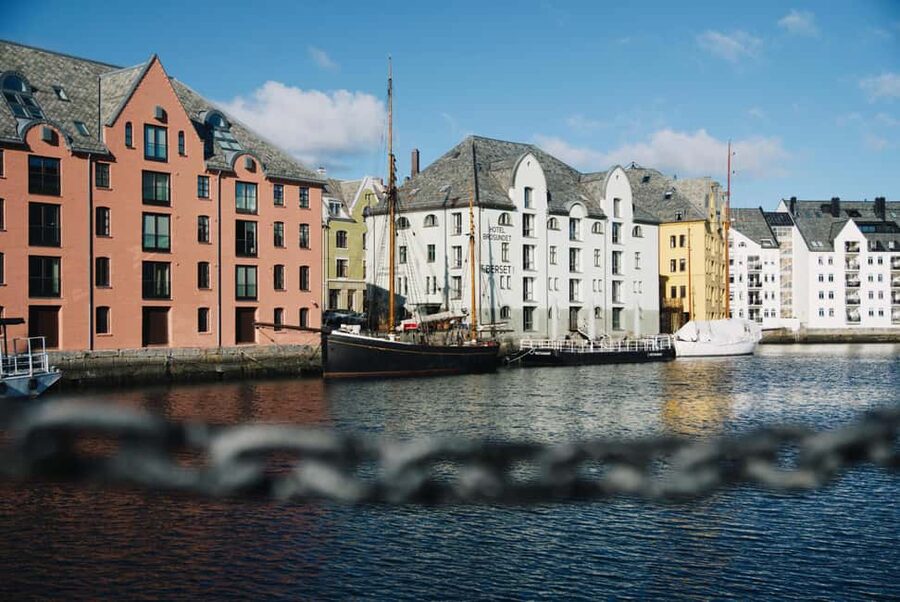
- The 1904 fire shaped the whole city center: Kongens gate is the clearest place to see Ålesund’s coordinated Art Nouveau rebuilding.
- The tour begins at the Fisherman Boy statue: You start beside the bridge, opposite the Jugendstilzentrum, with the sea and fishing trade setting the scene.
- Norwegian engineering gets real attention: Ferries, undersea tunnels, bridges, hydropower, and the country’s oil and gas economy are part of the story.
- The route includes a museum-park viewpoint: You get a higher view over the city and islands, along with a good place for photographs.
- Lukas offers a local perspective: He is Norwegian by choice rather than by birth, which gives his explanations of daily life a useful outsider-insider balance.
- This is a small, personal walk: English and German tours are available, with private groups of up to four people as an option.
Why Ålesund is best understood on foot
Ålesund is easy to admire from a distance. Its towers, curved gables, decorative details, and waterfront setting make it one of Norway’s most photogenic towns. But the city makes more sense when you connect the buildings to the disaster that created them and to the sea trade that supported the town long before the modern tourist arrives.
This walk does that in a sensible order. You begin with fishing and geography, move through the harbor, then turn inland toward the rebuilt center. Along the way, the guide shifts between local stories and national issues. That gives you a better idea of how people live in Norway, not just what the buildings look like.
I especially like this approach for a first morning in Ålesund. You get your bearings quickly, learn which streets deserve a second look, and can ask about restaurants, museums, viewpoints, or local customs while you still have time to use the advice.
The tour lasts two hours, which is enough time for substance without turning into an all-day march. It is a walking tour, not a museum admission or food outing, so wear good shoes and bring clothing for changing coastal weather.
A few more Alesund trips to weigh up
- 3 Hour Guided Food Walk Tour in Alesund, Norway
★ 5.0 · 124 reviews - Amazing city walk in Ålesund
★ 4.5 · 68 reviews - Ålesund: Guided Food Walking Tour
★ 4.9 · 59 reviews
Starting beside the Fisherman Boy
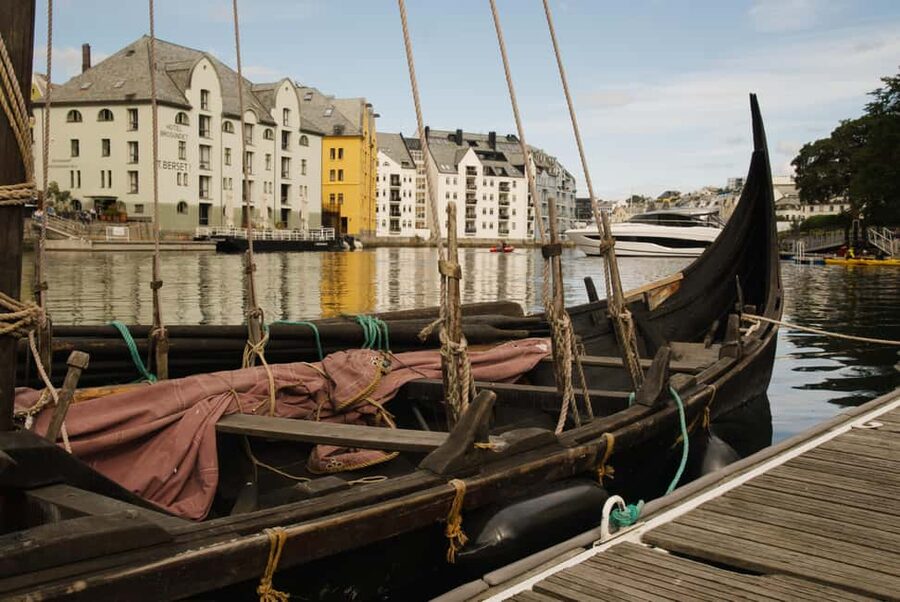
The meeting point is the large Fisherman Boy sculpture, known locally as Fiskergutten. It is next to the bridge and directly opposite the Jugendstilzentrum, the city’s Art Nouveau center. This is a practical meeting place because it is easy to identify and immediately puts you near the water.
Lukas begins with the origins of Ålesund and its strong connection to fishing. The clipfish trade is part of this opening story. Clipfish, or dried and salted cod, helped link the town to wider trade networks and explains why Ålesund developed as a maritime center rather than simply as an inland settlement.
The location also lets the guide explain Ålesund’s unusual setting between the sea, fjords, and mountains. You do not need a technical geography lesson to appreciate the point. The town’s position has always shaped its work, transport, buildings, and daily routines.
This opening is more useful than starting with a list of dates. You first understand why the town exists where it does. Then the architecture and modern infrastructure have something to attach to.
Ålesund Square and the story of rebuilding
The walk continues to Ålesund Square for about 15 minutes of guided sightseeing. This is where the city’s central character begins to come into focus.
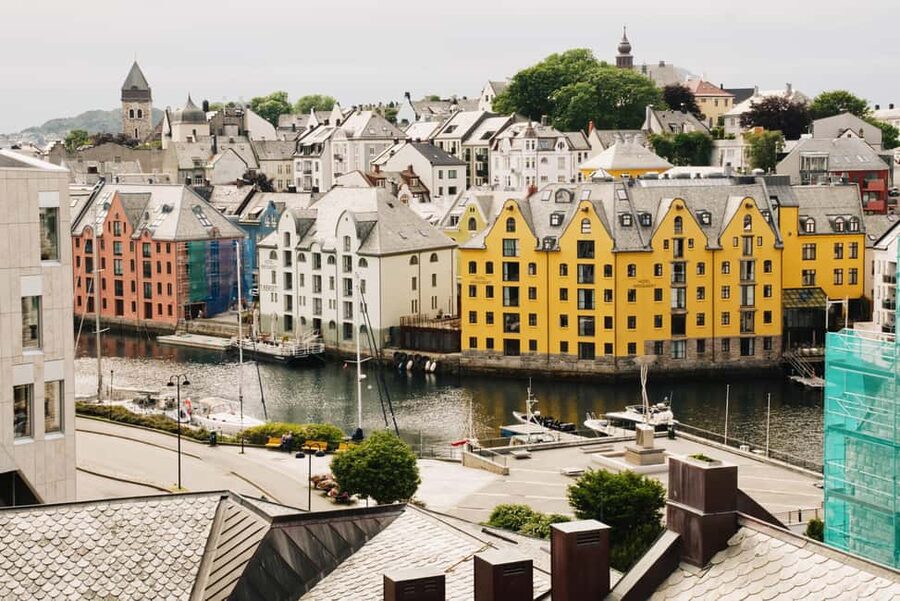
The great fire of 1904 destroyed much of Ålesund. The rebuilding that followed produced the Art Nouveau center you see today, with turrets, decorated façades, rounded forms, and symbolic details. The city was not rebuilt as a random collection of fancy buildings. It took shape during a period when new construction could express confidence, order, and hope after a major loss.
I find this one of the most valuable parts of the walk because Art Nouveau can otherwise become a hunt for pretty details. Lukas explains how the fire changed the city and how the new architecture reflected a fresh start. That turns the buildings into evidence of a particular moment in Ålesund’s past.
Keep your camera ready here. The central streets offer close views of decorative stonework, windows, towers, and façades. A guide can also point out details you might pass without noticing, especially when the light is changing or the street is busy.
Along the harbor, where Norway works
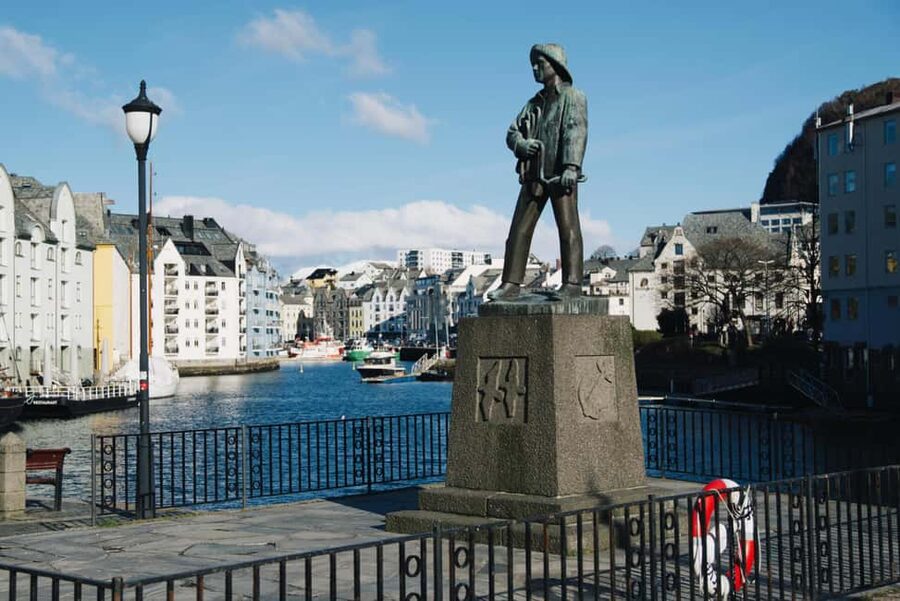
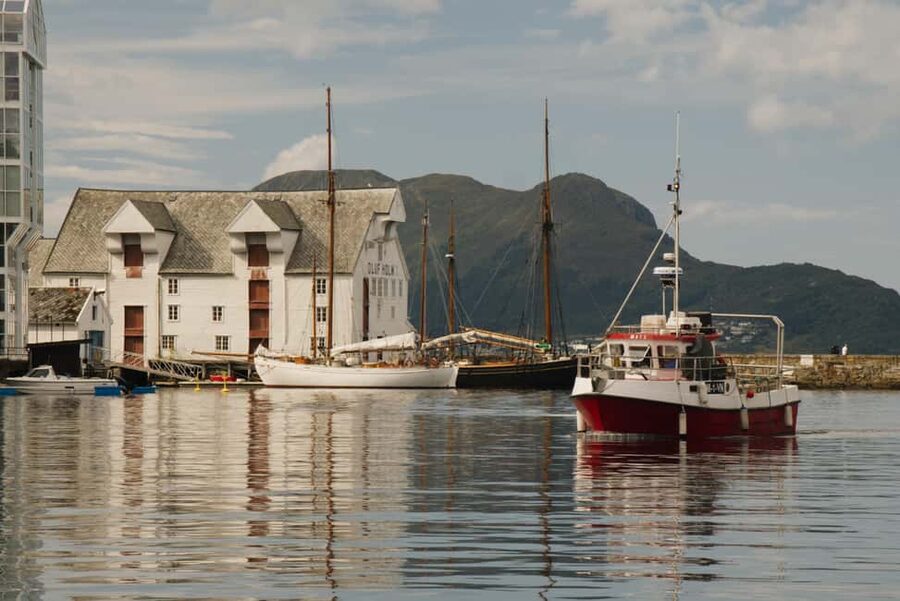
About 30 minutes are devoted to Ålesundregionens Havnevesen and the waterfront. This section broadens the tour beyond architecture and gives you a clearer view of Norway as a coastal country that relies on practical engineering.
You hear about car ferries, which have served as essential links for coastal communities. The discussion also covers tunnels running below the sea and bridges connecting islands and fjords. These projects are not just engineering curiosities. They show how Norway adapts transport to difficult geography, where water often interrupts the direct route.
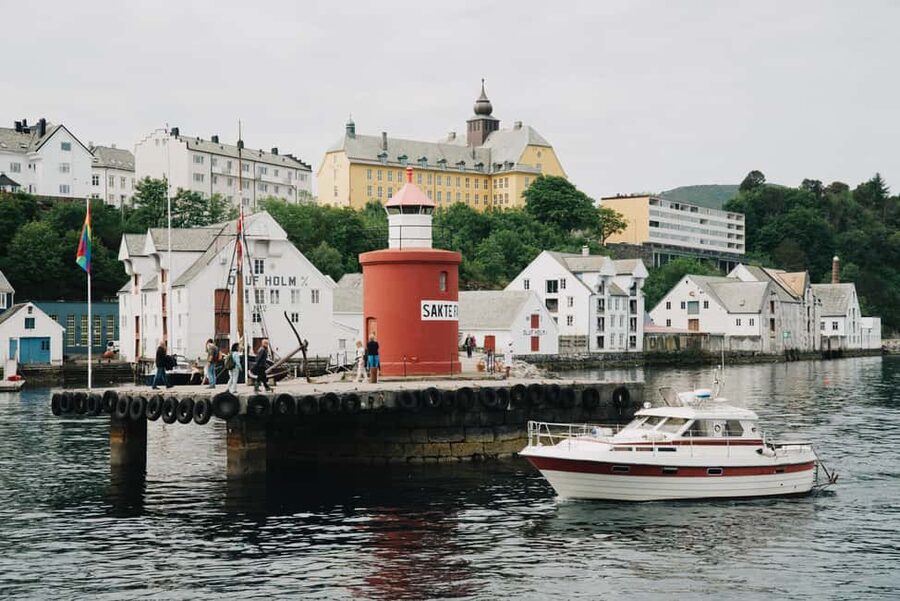
The harbor walk also offers some of the tour’s best photographs. You can look back toward the city’s Art Nouveau center while also seeing the maritime setting that helped it grow. The contrast matters: Ålesund is not an open-air architecture display. It is a working town shaped by boats, trade, roads, and the sea.
I like that this section gives you something to look for later. When you travel beyond Ålesund, ferries and tunnels may seem like routine parts of getting around. After this conversation, you are more likely to notice how much planning and money goes into keeping coastal Norway connected.
Same fjord country, a very different day out:
- Geiranger: Dalsnibba, Flydalsjuvet, Eagle Bend & Fjords Tour
★ 4.6 · 2,329 reviews - RIB Geiranger – Fjordsafari
★ 4.8 · 807 reviews - Geiranger: Guided Geirangerfjord Boat Tour
★ 4.7 · 728 reviews - Geiranger: City Sightseeing Hop-On Hop-Off Bus Tour
★ 3.7 · 546 reviews
Kongens gate and the Art Nouveau details
The route spends around 30 minutes on Kongens gate, one of the main places to appreciate Ålesund’s rebuilt architectural style. This is likely the most visually impressive part of the tour.
Look up as you walk. Turrets, ornamental lines, arches, and small symbolic elements create a strong sense of design. The buildings do not all look identical, and the pleasure comes from comparing their details rather than rushing past them.
Lukas organizes the story chronologically, linking the city’s move from a fishing-based economy toward its current role. That order helps you follow the changes without getting lost in disconnected facts. He also leaves room for questions, so you can steer the conversation toward architecture, Norwegian society, or the practical business of living on the coast.
The Art Nouveau portion is well suited to people who enjoy city walks, but it is not limited to architecture fans. If you are curious about how a town responds to disaster, how national prosperity affects local life, or why a city looks the way it does, this section gives you plenty to consider.
Museum Park for the view

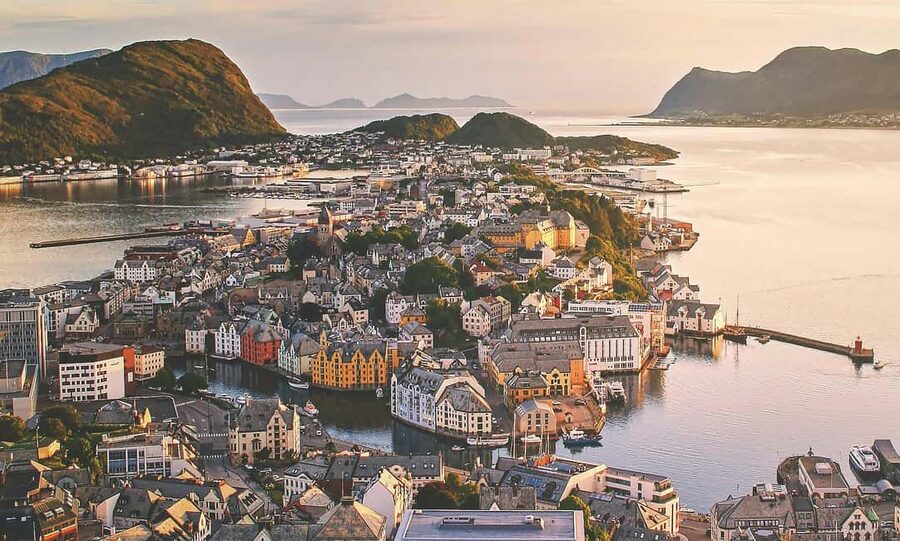
The museum park is used as a photo stop and viewpoint, with about 30 minutes of guided time. After the close-up façades of Kongens gate, this change of scale is welcome.
From the park, you can look back over the city and toward the surrounding islands. The view helps explain Ålesund’s setting in a way that street level cannot. You see how closely the built center, harbor, and water are linked.
This is also where Lukas’s photography can be especially useful. He may take photographs during the tour, and you can optionally buy a digital photo package for NOK 290, listed as about $25, €28, or £21. Treat that as an add-on, not part of the $61 tour price. If you already carry a good camera or phone, you may not need it. If you are traveling as a couple or family and want pictures of everyone together, it could be worthwhile.
The park includes some incline and stairs, so do not assume the viewpoint is fully easy-access. The operator specifically says the activity is not suitable for wheelchair users or people with mobility impairments.
From local history to modern Norway
The final parts of the walk include Tafjord Kraft Varmebenker and finish at Grimmerhaugen according to the route description. Here, the conversation turns more directly toward Norway’s modern economy and energy choices.
Hydropower is discussed as a green energy source. Oil and gas also enter the conversation, along with the Norwegian model of prosperity and the challenge of balancing tradition with progress. This is a useful addition because many visitors see Norway’s wealth, clean towns, and efficient transport without considering how those pieces connect.
Lukas’s perspective adds another layer. He chose Norway as his home rather than being born there, and he speaks about why the country’s nature, lifestyle, and culture persuaded him to stay. That can make the discussion of Norwegian life feel less like a collection of national stereotypes.
The tour also touches on Ålesund’s role in resistance during the Second World War, including statues connected with Norwegian resistance to the Nazis. This gives the city another dimension. Its story is not only about fishing, fire, and architecture. It also includes national conflict and the choices made by people living through occupation.
At the end, Lukas can point you toward restaurants in town. That is a small but useful benefit, especially if Ålesund is an early stop in your Norway trip and you have not yet learned the layout.
What the $61 price gets you
At $61 per person, this is not the cheapest way to spend two hours in Ålesund. You can walk the center on your own, photograph the façades for free, and visit selected attractions separately. The value comes from the connections a guide provides.
You are paying for a planned route, live explanations, local stories, time for questions, and a viewpoint you might otherwise miss. You also get a guide who can shift the emphasis depending on your interests. Ask about architecture and you can focus there. Ask about ferries, energy, wartime history, or Norwegian daily life and the conversation can move in that direction.
The price makes more sense for a first visit, a short stay, or a port day when you want a useful overview without spending half the day indoors. A private group of up to four people may also find the cost reasonable if personal attention matters.
The optional photographs change the final cost. The digital package is NOK 290, so decide before booking if you want to add it. It is not necessary to enjoy the walk.
Free cancellation up to 24 hours in advance and the option to reserve now and pay later make the booking less rigid. Starting times vary, so check availability rather than assuming a morning or afternoon departure.
Group size, pace, and practical limits
English and German tours are offered. Private or small-group choices are available, and private groups can include up to four people when you select the correct booking option.
A small group should suit anyone who likes to ask questions. The experience is designed around conversation rather than a fixed speech delivered to a large crowd. That matters in Ålesund because the most useful advice may be a quick explanation about a street, building, restaurant, or viewpoint that is not obvious from a map.
The pace is described as relaxed, but the route is still a walking route. Bring comfortable shoes and weather-appropriate clothing. Coastal weather can shift, and much of the experience takes place outdoors beside the water.
There are gentle inclines and stairs. If you bring a stroller, you need to carry it in some places, although the guide says he will help if needed. Wheelchair users and people with mobility impairments should choose a different activity.
The route information names Grimmerhaugen as the finish, while the meeting instructions also say the activity ends back at the meeting point. Confirm the exact ending point when you book, especially if you have a ship departure, restaurant reservation, or another timed activity afterward.
Who will get the most from this walk
I would choose this tour if you want context rather than a checklist. It suits first-time visitors, couples, curious solo travelers, and anyone who wants to understand how Ålesund’s architecture connects to fishing, trade, geography, and modern Norway.
It is also a good choice for photographers. You get the close detail of Art Nouveau façades, open harbor views, the island backdrop, and the museum-park lookout. The optional guide-taken pictures may help if you want images of yourself rather than only pictures of the city.
History fans will appreciate the 1904 fire and the Second World War discussion. People interested in public works will find the ferry, bridge, tunnel, and energy topics unusual for a city walk. Food-focused visitors can use the final restaurant advice, although snacks and drinks are not included.
I would skip it if you want a fully flat route, a silent photography walk, or a tour centered mainly on entering museums. This experience is about streets, views, conversation, and interpretation. Its appeal depends on your interest in listening as you walk.
Should you book the Ålesund city walk?
Book it if you have two hours and want Ålesund to make sense quickly. The strongest feature is the blend of Art Nouveau, waterfront life, and modern Norwegian society. Lukas does not treat the town as a pretty backdrop. He connects the fishing trade, the 1904 fire, wartime memory, transport engineering, energy, and everyday life.
The best timing is early in your stay, when you can use the guide’s restaurant and sightseeing tips afterward. Bring shoes with grip, dress for the weather, and allow for stairs. If you want personal attention, choose the small-group or private option, especially for a group of up to four.
At $61, it is worth the cost when you value explanation and conversation. If you only want to stroll and take your own photos, save the money and explore independently. For most first visits, though, this is a thoughtful way to meet Ålesund before setting off to see more of the coast.
FAQ
How long does the Ålesund city walk last?
The tour lasts two hours. Starting times vary, so check availability when booking.
Where does the tour begin?
It begins at the large Fisherman Boy statue, called Fiskergutten, next to the bridge and directly opposite the Jugendstilzentrum.
Where does the walk finish?
The route information lists Grimmerhaugen as the final stop. The meeting instructions also state that the activity ends back at the meeting point, so confirm the exact finish when booking.
What languages are available?
The live guide is available in English and German.
Is the tour private?
Private and small-group options are available. Private groups of up to four people are possible when you select the appropriate booking choice.
What does the tour cover?
It covers Ålesund’s fishing origins, the clipfish trade, the harbor, coastal infrastructure, the 1904 fire, Art Nouveau architecture, Norwegian resistance during the Second World War, hydropower, oil and gas, and modern Norwegian life.
Are food and drinks included?
No. Snacks and drinks are not included in the tour price.
Can I buy photographs taken during the walk?
Yes. An optional digital photo package is available for NOK 290, listed as about $25, €28, or £21.
Is the route suitable for wheelchair users?
No. The activity is listed as unsuitable for wheelchair users and people with mobility impairments because the route includes gentle inclines and stairs. Strollers must be carried in some places.
Just added around Alesund
- Sightseeing Tour in Trollstigen – Land of Trolls★ 4.0 · 128 reviews
- 6 Day Fjord Kayaking Trip Norway★ 5.0 · 14 reviews
- Sea Kayaking In Ålesund★ 4.5 · 99 reviews
- Seakayak And Hike in Ålesund★ 5.0 · 11 reviews
- Molde and Atlantic Ocean Road Audio Tour★ 3.0 · 35 reviews
- Molde – Atlantic Road Private Sightseeing tour★ 5.0 · 3 reviews
- Private tour from Ålesund to Geiranger up to 15 people★ 5.0 · 11 reviews
- 3 Hour Guided Food Walk Tour in Alesund, Norway★ 5.0 · 124 reviews
Walking Tours, compared.
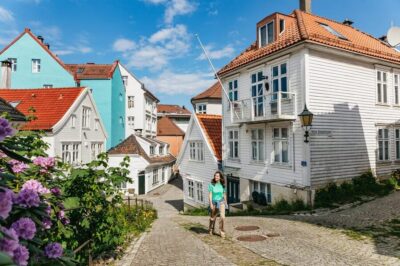
Past & Present Small Group Guided Walking Tour
Read our review →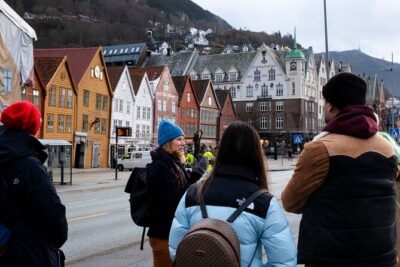
Walking Tour in Bergen of the Past and Present
Read our review →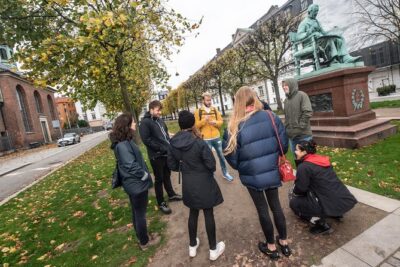

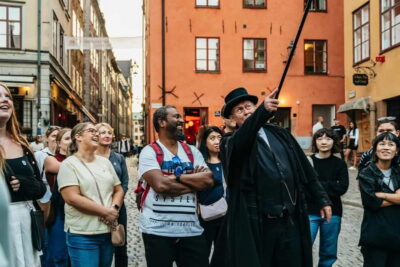
The Original Stockholm Ghost Walk and Historical Tour – Gamla Stan
Read our review →
Group Walking Tour – City Highlights – 2 Hours
Read our review →Browse the lists this tour appears in