

Reviewed · OLD TOWN WALKING TOURS
Gothenburg: Haga Old Town Walking Tour
Haga has made quite a journey, from a rough 19th-century district with a poor reputation to one of Gothenburg’s most appealing places for a stroll. This tour brings that change to life among wooden landshövdingehus, old lanes, cafes, and independent shops. I especially like the way guides connect neighborhood stories with modern Swedish life, and the useful food and sightseeing tips they give at the end.
The main thing to consider is the climb to Skansen Kronan, a former hilltop fort with excellent city views. The route is described as wheelchair accessible, but the steep uphill and downhill section can be difficult, so ask about the route at the start if anyone in your party has mobility concerns.
In This Review
- Key points at a glance
- Haga’s wooden streets tell Gothenburg’s story
- From rough district to fashionable Haga
- The route through Haga Nygata
- Local folklore and everyday Swedish culture
- The climb to Skansen Kronan
- How long does the tour take?
- Is $55 a fair price?
- Which guide might you get?
- Meeting point, language, and booking details
- Who will enjoy this Haga walk?
- Should you book the Haga Old Town Walking Tour?
- FAQ
- Where does the Haga Old Town Walking Tour meet?
- How long is the walking tour?
- Is the tour conducted in English?
- Is the tour wheelchair accessible?
- Does the tour include food, coffee, or fika?
- Can I cancel for a refund?
Key points at a glance
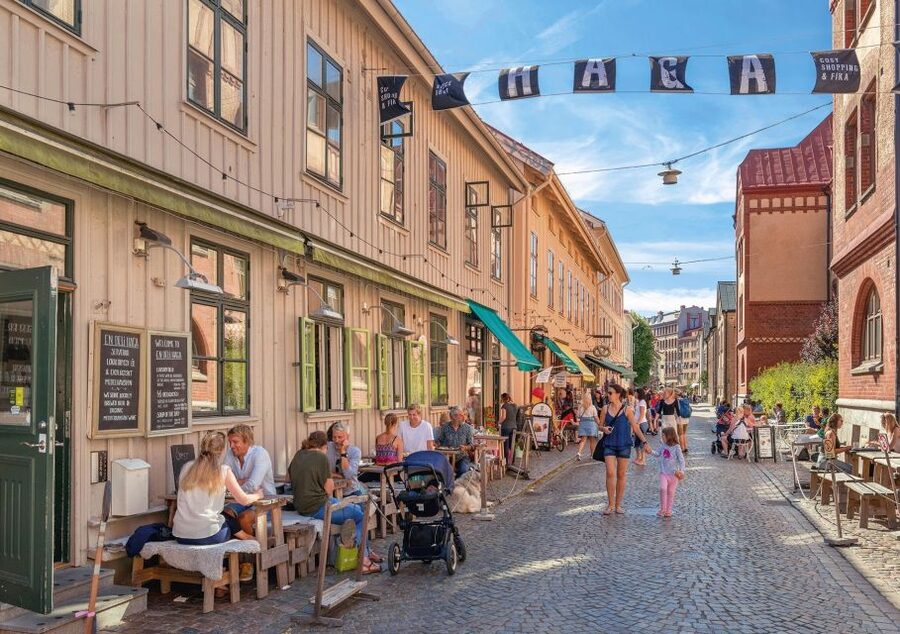
- Haga Nygata’s wooden houses: See Gothenburg’s distinctive landshövdingehus, with brick at street level and wooden upper floors.
- A neighborhood with a sharp change of fortune: Learn how Haga moved from slum district to fashionable cafe and shopping quarter.
- Skansen Kronan views: The tour may include a steep walk to the old fort above the city.
- Small-group feel: Some departures have been private or nearly private, allowing plenty of questions.
- More than architecture: Guides such as Sarah, Sara, Kalina, Luka, and David add local stories, Swedish customs, and practical recommendations.
- Good first look at Gothenburg: The tour gives you a useful sense of Haga and links it to the wider city.
Haga’s wooden streets tell Gothenburg’s story

Begin outside the main entrance to Haga Church, where you meet your English-speaking guide. This is a useful starting point because the church places you right beside one of Gothenburg’s oldest districts, rather than dropping you into the middle of a busy modern shopping area.
From here, the walk leads into Haga, founded in the mid-17th century. The neighborhood’s appeal is immediate. Haga Nygata is a pedestrian street lined with preserved wooden buildings, cafes, delicatessens, and small independent shops. It is easy to enjoy Haga as a pretty street scene, but the tour gives you reasons to look more closely.
The most distinctive buildings are the landshövdingehus, a Gothenburg building style with a ground floor made of brick and upper floors made of wood. This design was practical as well as attractive. The brick lower level helped reduce fire risk, while the wooden floors made construction more affordable.
Your guide points out individual buildings and explains why they matter. That detail is important. Without local context, the houses can blur into one charming row. With a guide, you begin to notice differences in age, design, use, and survival.
More Private Walking Tours in Gothenburg
- Gothenburg Private Walking Tour with a Local
★ 4.0 · 36 reviews - Make Your Own Tour – Guided Walking Tour
★ 4.5 · 32 reviews - Best of Gothenburg: Private Walking Tour with a Local
★ 4.6 · 24 reviews
From rough district to fashionable Haga
Haga was not always the polished neighborhood you see today. In the 19th century, it was known as a poor area with a seedy reputation. That past gives the district more character than a simple collection of pretty facades.
The tour explores how Haga changed over time. Today, its old buildings hold cafes, food shops, and independent businesses. The change is a good example of successful urban renewal, but it also gives you something to think about. A neighborhood can preserve its buildings while changing almost everything else around them.
I appreciate that the experience does not treat Haga as a frozen museum. Guides discuss how Gothenburgers live today, along with education, family life, parental leave, and other parts of Swedish society. Kalina, Sarah, and Sara were especially praised for answering questions about daily life in Sweden, not just reciting dates and building facts.
That makes the walk useful beyond Haga itself. You gain a clearer idea of the city as a place where people live, work, study, eat, and socialize. For a first day in Gothenburg, that local perspective is worth more than a quick list of monuments.
The route through Haga Nygata
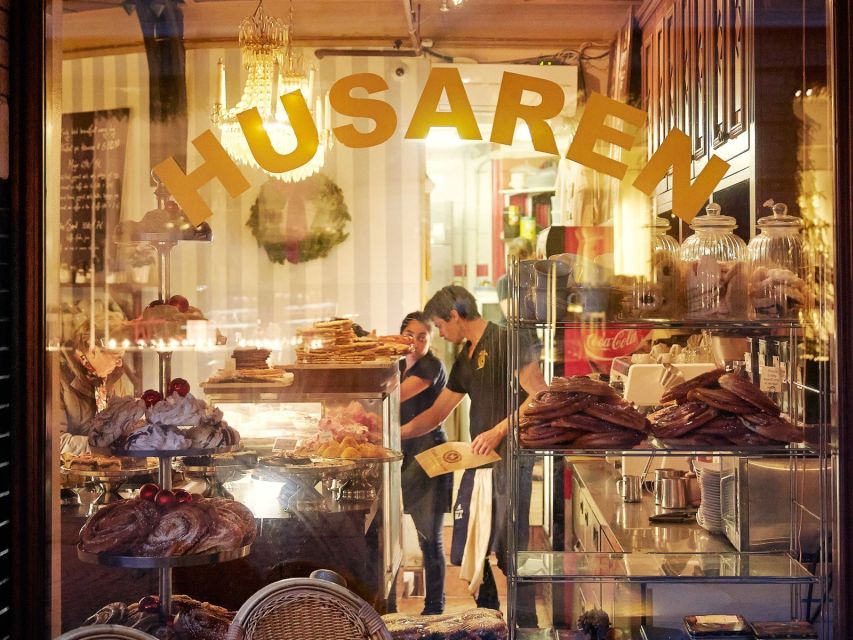
Haga Nygata is the natural heart of the walk. Since it is pedestrianized, you can focus on the buildings and street life without dealing with heavy traffic. The route is also easy to combine with your own exploring afterward.
Expect the guide to pause at selected houses and buildings rather than rush through every block. Each stop adds a piece of the district’s story. You may hear about the people who lived here, the way the neighborhood developed, and the forces that changed it.
The exact balance depends on your guide. Sarah and Sara are noted for clear storytelling and strong knowledge of both Haga and Gothenburg. Luka has been praised for making the walk informative and entertaining, while Kalina has added personal interest in the area and practical advice for the rest of a Gothenburg visit.
This is not a food tour, and cafe purchases are not included. Still, food is part of the experience. Haga’s cafes and traditional Swedish fika culture naturally come into the conversation, and guides regularly suggest places for coffee, cake, lunch, or dinner. One guide’s recommendation for coffee and cake became a memorable part of the day for a participant, while other guides offered restaurant tips matched to individual interests.
Save those suggestions in your phone. Haga is the sort of district where you may want to return after the walk, when you can browse at your own pace.
Local folklore and everyday Swedish culture
The tour’s strongest feature is its human scale. You are not only looking at architecture. You are hearing the stories, rumors, and local details that make a neighborhood feel lived in.
The guides bring in folklore and personal observations, then connect them to larger Gothenburg history. Some also discuss what it is like to live in Sweden today. Questions about university education, parental leave, and social benefits have led to long, useful conversations.
This open format works best if you arrive with a few questions of your own. Ask about Swedish customs, food, neighborhoods, or what to see next. Several guides have offered recommendations for churches, bars with views, restaurants, other districts, and authentic souvenirs.
The experience can feel almost private when bookings are light. Several departures had only one to three people, and guides continued with the tour even when just one person had booked. That can be excellent value if you enjoy conversation and want to adjust the pace.
On the other hand, you should not assume every departure will be private. The advertised experience is a guided walking tour, and group size can vary. If you prefer to listen quietly and move quickly, a private-feeling tour may feel slower than a self-guided walk.
More old town walking tours in Gothenburg:
- Walking Tour of Stockholm Old Town
★ 5.0 · 1,175 reviews - The Original Stockholm Ghost Walk and Historical Tour – Gamla Stan
★ 4.5 · 1,165 reviews - Stockholm: Old Town Walking Tour with Local Guide
★ 4.7 · 719 reviews - Walking Tour of Stockholm’s Old Town, Gamla Stan
★ 5.0 · 451 reviews
The climb to Skansen Kronan
One practical detail deserves more attention than it usually gets: the route can include Skansen Kronan, the former fort on the hill above Haga.
The reward is a broad view over Gothenburg. The fort adds a strong visual finish to the neighborhood walk and helps you understand Haga’s position within the city. Instead of seeing only the narrow streets, you get a higher perspective over Gothenburg.
The climb is steep. One participant had to remain near the bottom because a member of the party could not manage the uphill section. A guide adjusted the route and returned the same way so the group could stay together, but that flexibility may depend on the guide and circumstances.
If you use a wheelchair, walk with a cane, have knee problems, or simply dislike hills, ask about Skansen Kronan before setting off. The tour is listed as wheelchair accessible, but the fort approach is the clear point where accessibility and comfort may vary.
Wear sensible shoes, especially in wet weather. The walk is outdoors for its full duration, and Gothenburg weather can be rainy and windy. One guide adapted the departure time during a very wet day, while another kept a group engaged through rain and wind. Still, bring a waterproof layer rather than relying on luck.
How long does the tour take?
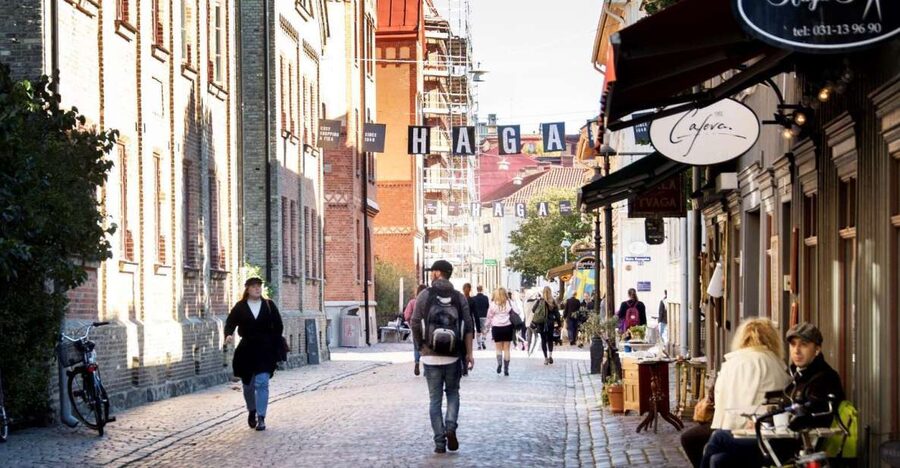
The details give both 1.5 hours and 2 hours, and actual experiences have lasted both lengths. One participant reported an exact two-hour walk, while the activity information lists a duration of 1.5 hours and describes a two-hour tour elsewhere.
Plan for roughly 90 minutes to two hours. If you have a train, lunch booking, museum reservation, or cruise departure, leave extra time afterward. The length can also depend on questions, group size, weather, and whether the guide includes the fort.
That flexible timing can be a benefit. A small group may allow more discussion, and a solo booking can turn into a relaxed conversation about Sweden and Gothenburg. But if your schedule is tight, confirm the expected finish time when you meet the guide.
Is $55 a fair price?
At $55 per person, this is not the cheapest way to see Haga. You can walk Haga Nygata on your own without paying an admission fee. The price makes sense only if you want interpretation, local conversation, and a better understanding of what you are seeing.
I think the value is strongest for a first visit. A guide helps you understand why the building style matters, how Haga changed, and where to go next. The restaurant and cafe suggestions can also save you from choosing at random in a popular district.
Small groups improve the value. When only one or two people booked, the guide could answer detailed questions and adjust the pace. Some guides even spent extra time showing additional places, though you should treat that as a generous possibility rather than part of the guaranteed schedule.
The tour includes the professional guide and the walking route. Food, drinks, and gratuity are extra. If you would rather spend the $55 on a full meal, museum, or fika stop, a self-guided visit may suit you better. If you want context and conversation, the cost is reasonable for a focused introduction.
Which guide might you get?
You cannot choose a specific guide from the information provided, but several names appear repeatedly in the experience: Sarah or Sara, Kalina, Luka, David, Helena, and Karen.
Sarah and Sara are frequently associated with clear explanations, local recommendations, and a warm approach to Swedish culture. Kalina has been praised for personal stories and a strong presentation of the district. Luka has a talent for making the material entertaining as well as informative.
David showed flexibility when there was confusion over the meeting point and used old pictures to support his stories. That is a useful touch in a neighborhood where the contrast between past and present matters.
The important point is that the quality depends partly on the individual guide. The strongest guides do more than list facts. They invite questions, use stories, and help you decide what to do after the walk.
Meeting point, language, and booking details
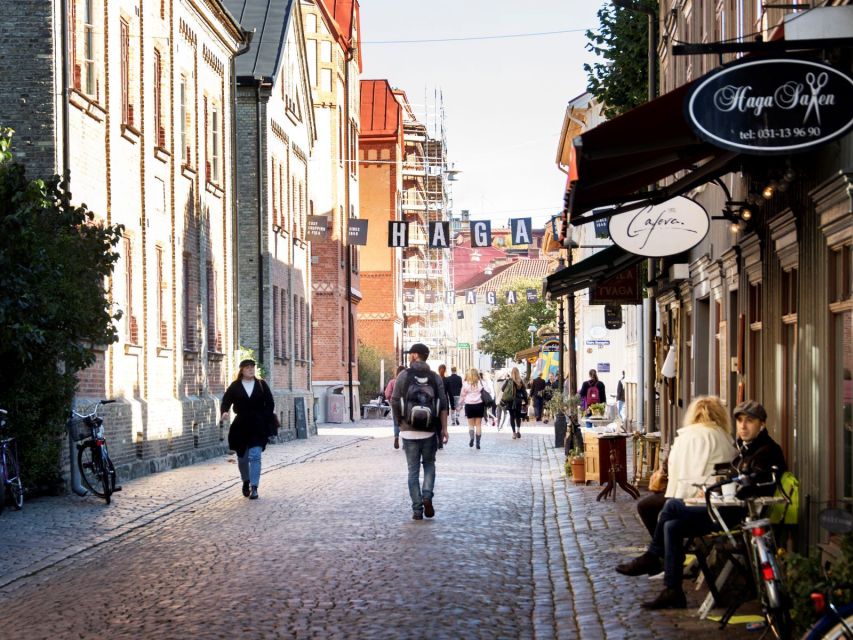
Meet outside the main entrance of Haga Church. Pay close attention to the confirmed meeting instructions, since one departure caused confusion when an earlier message mentioned Cafe Husaren on Haga Nygata while the guide was waiting at the church. The guide waited, but the tour began about 15 minutes late.
The tour is conducted in English with a live local guide. It is suitable for visitors who want a focused neighborhood introduction rather than a broad bus tour of Gothenburg.
You can cancel up to 24 hours before the start for a full refund, and the reserve-now, pay-later option keeps you from paying at the time of booking. Gratuity is not included. If the guide gives you a particularly helpful afternoon itinerary or spends extra time answering questions, a tip is appropriate.
Who will enjoy this Haga walk?
I would choose this tour if you are visiting Gothenburg for the first time, have only a few hours in the city, or like to understand a place before exploring it alone.
It is particularly good for:
- First-time visitors who want a clear introduction to Haga
- People interested in architecture and urban change
- Couples and solo visitors who enjoy asking local questions
- Food-minded visitors looking for cafe and restaurant ideas
- Anyone who wants Swedish culture explained through everyday life
- Small groups that prefer a personal pace
Families and older visitors should consider the hill to Skansen Kronan. The guide can adjust the route in some circumstances, but the climb is not a minor detail.
You might skip it if you have already spent a full day studying Haga, dislike guided walks, or want a tour with included food and drink. The main attraction is the guide’s explanation, not a special entry ticket or staged activity.
Should you book the Haga Old Town Walking Tour?
Book it if you want Haga to make sense, not just look pretty. The wooden houses, pedestrian streets, and cafes are easy to find, but a good guide adds the story of a poor district transformed into one of Gothenburg’s most popular quarters.
The strongest reasons to go are the small-group feel, the chance to ask about Swedish life, and the practical recommendations for coffee, dinner, churches, viewpoints, and later sightseeing. Just confirm the meeting point, allow up to two hours, and prepare for the steep walk to Skansen Kronan.
At $55, I see this as a worthwhile first-day orientation rather than an essential purchase for every Gothenburg itinerary. If Sarah, Sara, Kalina, Luka, or another strong local guide turns a short walk into a genuine conversation about the city, you get much more than a stroll down a pretty street.
FAQ
Where does the Haga Old Town Walking Tour meet?
You meet your guide outside the main entrance of Haga Church. Check the final meeting instructions carefully because one departure had conflicting information mentioning Cafe Husaren.
How long is the walking tour?
The activity information lists 1.5 hours, while other details describe a two-hour tour. Plan for approximately 90 minutes to two hours, with extra time if you have a fixed appointment afterward.
Is the tour conducted in English?
Yes. The tour has a live professional guide and is conducted in English.
Is the tour wheelchair accessible?
The activity is listed as wheelchair accessible. However, the route may include a steep climb to Skansen Kronan, so ask about that section before starting if mobility is a concern.
Does the tour include food, coffee, or fika?
No. Food, drinks, and cafe purchases are not included. Guides may recommend places for coffee, cake, restaurants, and other local stops.
Can I cancel for a refund?
Yes. You can cancel up to 24 hours in advance for a full refund. The reserve-now, pay-later option lets you book without paying immediately.
More Walking Tours in Gothenburg
- Gothenburg : Private Walking Tour with A Guide (Private tour)
★ 4.0 · 19 reviews - Historical Walking Tour in Restaurant and Bars in Central City
★ 5.0 · 9 reviews - Gothenburg: Express Walk with a Local in 60 minutes
★ 4.8 · 6 reviews - Gothenburg: Private Walking Tour with a Guide
★ 3.6 · 3 reviews
Just added around Gothenburg
- Explore the Instaworthy Spots of Gothenburg with a Local★ 5.0 · 3 reviews
- Discover Gothenburg’s most Photogenic Spots with a Local★ 4.5 · 7 reviews
- Private Boat Ride in Gothenburg with pickup★ 4.0 · 9 reviews
- Gothenburg : Private Walking Tour with A Guide (Private tour)★ 4.0 · 19 reviews
- Guided Brewery Tour on Bicycle★ 5.0 · 5 reviews
- Historical Walking Tour in Restaurant and Bars in Central City★ 5.0 · 9 reviews
- Landvetter Airport Bus Transfer Departure★ 3.5 · 158 reviews
- Haga Sightseeing Tour★ 4.0 · 11 reviews
Old Town Walking Tours, compared.

The Original Stockholm Ghost Walk and Historical Tour – Gamla Stan
Read our review →
Walking Tour of Stockholm’s Old Town, Gamla Stan
Read our review →


Old Town Guided Walking Tour (English / Deutsch)
Read our review →
Secrets of Gamla Stan Guided Tour w/ Fika Option
Read our review →Browse the lists this tour appears in