
Reviewed · 2-DAY EXPERIENCES
2-Day Small-Group Basic Skills Survival Course in Södermanland
This course turns the Swedish forest into your classroom. Over two days, you’ll learn how to make fire, build a shelter, find water, identify plants, read a map, and cook over open flames. I like that the teaching is practical rather than theatrical, and that instructor William mixes demonstrations with time for you to try each skill yourself.
I also like the small maximum group of eight and the fact that breakfast, lunch, dinner, transport, and needed course gear are included. The main catch is that two days can only introduce survival skills, not make you fully self-sufficient in the wild. You’ll need to be comfortable sleeping outdoors, working in changing weather, and getting your hands dirty.
In This Review
- Key points at a glance
- From Stockholm streets to Södermanland forest
- First lessons: priorities, fire, and shelter
- Learning to see food and plants differently
- Water collection, wildlife, fishing, and trapping
- Map reading and finding your way out
- Camp life and survival as a group
- What the two-day format really gives you
- What is included for $480.71
- Who should book this course?
- Practical details before you go
- Should you book the Södermanland survival course?
- FAQ
- Where does the survival course start?
- Where does the course take place?
- How long is the experience?
- What survival skills are covered?
- Are meals included?
- Is transportation included?
- How many people can join?
Key points at a glance
- Fire cooking and shelter building: Practice two of the most useful basic forest skills, then use the fire as part of camp life.
- A broad survival syllabus: Cover water collection, edible and toxic plants, wildlife tracking, fishing, trapping, map reading, and group leadership.
- William leads the course: Expect a mix of theory, demonstrations, practical work, patience, and humor.
- Small-group teaching: The course accepts no more than eight people, which gives you a better chance to ask questions and practice.
- Meals and private transport included: Breakfast, lunch, dinner, transport, and needed course gear are part of the listed price.
- Seasonal minimums apply: At least three participants are needed from October through April, and five from May through September.
From Stockholm streets to Södermanland forest
The experience starts at 9:00 a.m. outside True Nature Sweden AB on Tideliusgatan 62 in Stockholm. Private transportation then takes you out toward the forest in Södermanland, where the course is held entirely in the wilderness.
That transfer matters. You are not learning fire-making in a city park or watching a short demonstration beside a visitor center. The setting gives each lesson a real purpose. Trees become shelter material, fallen wood becomes fuel, the forest floor becomes a place to look for food, and the surrounding terrain becomes a test of your map-reading skills.
The exact driving time is not provided, so you should leave the morning open and avoid scheduling another activity close to the end of the course. The activity returns to the same Stockholm meeting point after the two days.
A few more Stockholm trips to weigh up
- 2-Day Small-Group Stockholm Archipelago Kayak Tour
★ 5.0 · 25 reviews - 2-Day Kayak Tour in the Stockholm Archipelago
★ 5.0 · 13 reviews - 2-Day Small-Group Stockholm Hiking Tours
★ 5.0 · 6 reviews
First lessons: priorities, fire, and shelter
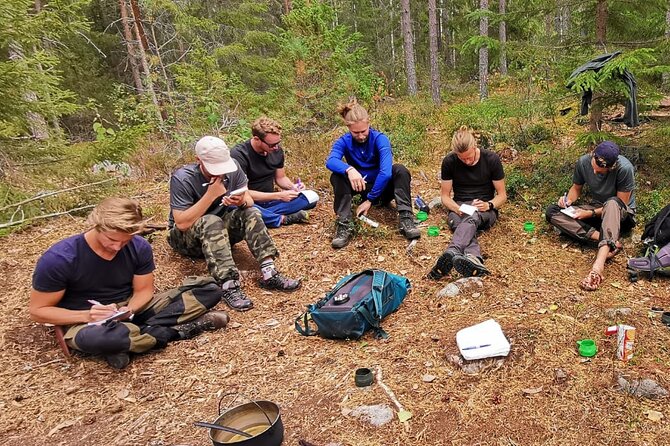
The course begins with a useful question: what do you need first when a situation goes wrong? The teaching focuses on three survival fundamentals and the order in which you should deal with basic needs. That is more useful than memorizing a long list of tricks because panic often comes from trying to solve everything at once.
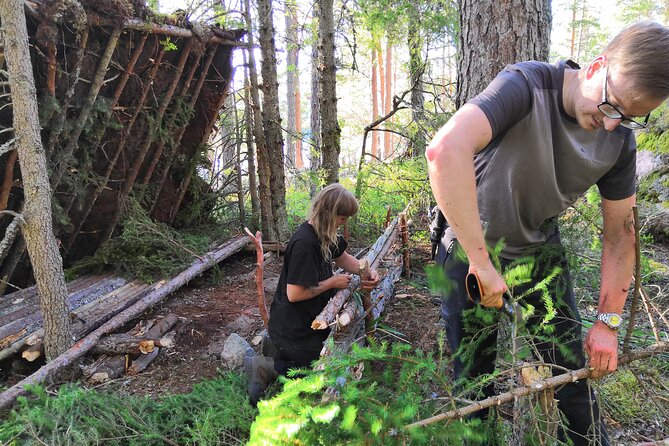
Fire is one of the central skills. You learn how to build one and what materials to use. The lesson is not only about warmth. A fire can support cooking and make a forest camp feel more manageable, which is why the food side of the course becomes part of the learning rather than a separate restaurant-style break.
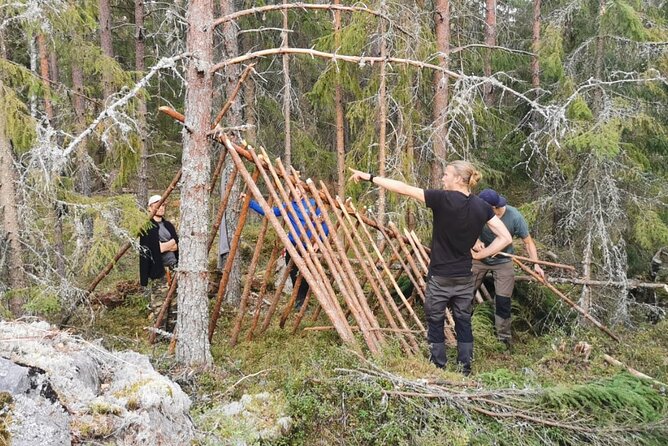
Shelter building is another hands-on task. You learn how to make a basic shelter and consider what the forest provides. One of the strongest parts of this kind of exercise is its directness: you can see at once whether your design gives protection, uses too much effort, or needs more material.
You should not expect a polished cabin or a luxury camp. The point is to understand the choices behind a simple shelter and to gain confidence using natural materials. If you are a beginner, that practical start should help. One mother and daughter joined with no previous experience and learned to make a shelter, use a compass, forage, and build a fire.
Learning to see food and plants differently
Food instruction covers what to eat, where to find it, and how to prepare it. The plant section introduces edible, toxic, and medicinal plants. This is one of the most valuable parts of the course, but also one where you should stay cautious.
Plant identification cannot be reduced to a quick guess based on leaf shape. The course gives you an introduction, not permission to eat anything that looks familiar in the woods. Treat the lessons as a starting point, pay close attention to the guide, and remember that a beginner should never rely on memory alone in a real emergency.
Cooking over the fire adds a welcome reward to the work. The included meals mean you do not need to pack a full menu, and the food itself becomes part of camp practice. You may find that this changes the mood of the course. Survival training sounds severe on paper, but preparing food over a fire makes it social and tangible.
The supplied feedback gives special emphasis to the food and fire cooking. One participant with professional high-end cooking experience was particularly impressed by the meals, which suggests that the food is not treated as an afterthought. Still, the main value is the method, not a gourmet dining promise.
Water collection, wildlife, fishing, and trapping
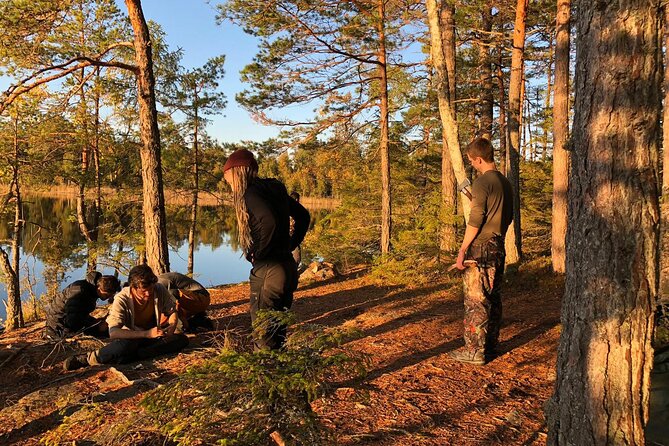
Water is treated as a separate survival need. You learn where to look for it and how to collect it. The information provided does not specify a particular purification system, filtration method, or equipment, so do not assume those techniques are included unless the provider confirms them.
Wildlife work includes tracking and discussion of animal dangers. This is a good reminder that survival is not only about building things. It also involves reading signs, understanding your surroundings, and knowing when to avoid a risk. The course aims to help you continue sensibly when a survival situation develops, rather than encourage reckless contact with wildlife.
Fishing and trapping are also included in the syllabus. These subjects broaden the course beyond the usual fire-and-shelter lesson, though two days will limit how far you can take each one. You should think of them as basic introductions to methods and decision-making, not a guarantee that you will secure a full meal from the forest.
That distinction is important. The course can show you how to approach several problems, but success in a real situation depends on weather, location, tools, time, and your ability to stay calm. Its best result is a more practical way of thinking.
Same fjord country, a very different day out:
- Stockholm: City Archipelago Sightseeing Cruise with Guide
★ 4.3 · 10,798 reviews - Stockholm: Skansen Open-Air Museum Admission Ticket
★ 4.5 · 3,427 reviews - Stockholm: Archipelago Boat Tour
★ 4.4 · 3,110 reviews - Stockholm: Highlights Boat Tour
★ 4.3 · 2,542 reviews
Map reading and finding your way out
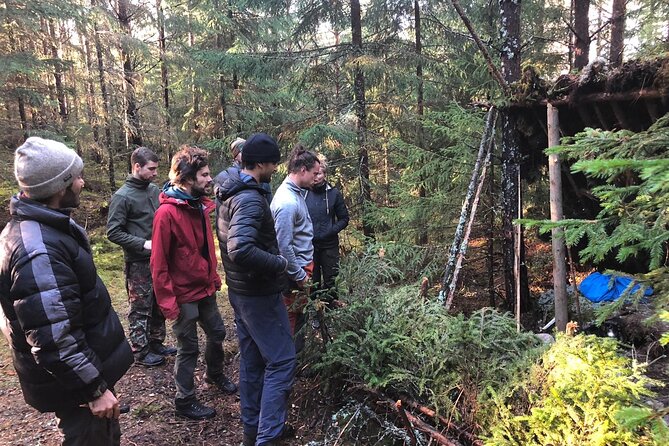
Orientation includes map reading, compass work, and finding your way through difficult situations. This may be the most immediately useful lesson for anyone who spends time hiking or exploring outside marked areas.
The course does not simply frame survival as a collection of bushcraft activities. It also asks how you get out. A shelter is useful, but knowing your location and choosing a safe route can prevent a bad situation from becoming worse.
One mother and daughter specifically learned how to use a compass during the course. That detail matters because navigation can feel abstract until you hold the compass, read the map, and relate both to the ground around you.
You should expect an introduction rather than an advanced navigation qualification. The information does not promise a formal certificate or a long-distance navigation exercise. Still, the chance to practice in the forest gives this topic more value than a classroom briefing.
Camp life and survival as a group
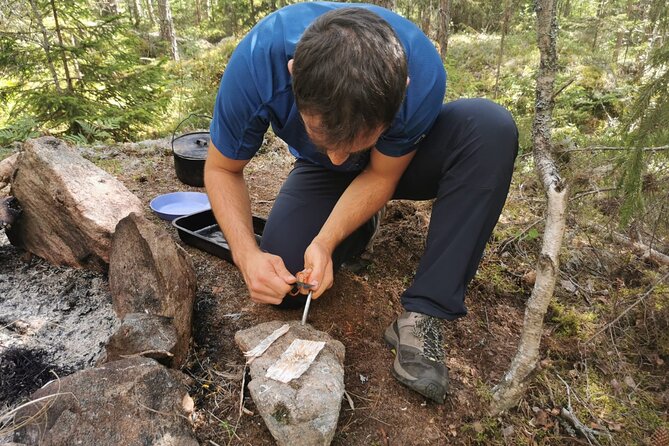
Encampment lessons cover simple ways to make life easier in a survival situation. The course also addresses group survival and leadership. These topics are easy to overlook, yet many emergencies involve more than one person.
A group needs decisions, task sharing, and someone willing to take responsibility without becoming overbearing. Working with up to eight people gives you a useful setting for that part of the course. You are not practicing alone with a guide who does everything for you.
The social side appears to be a real strength. The course is described as fun, practical, and informative, with plenty of group interaction. One participant expected a macho atmosphere but instead found a welcoming mix of people looking for a new experience. That makes this a better choice for beginners who may feel unsure about fitting into a traditional survival crowd.
William’s teaching style is another reason the course works for newcomers. He explains and demonstrates the steps, then gives people time to practice. His patience and humor help keep the experience from becoming a harsh test of toughness.
What the two-day format really gives you

Two days is long enough to build a shelter, work with fire, sleep in the forest, try basic foraging, practice orientation, and get a taste of several food and water skills. It is also short enough to fit into a Stockholm visit or a free weekend.
The trade-off is breadth. The syllabus is wide: fire, shelter, food, water, plants, wildlife, fishing, trapping, navigation, campcraft, and group leadership. You will touch many subjects, but you will not master all of them in 48 hours.
I would treat the course as a strong introduction. It can make the forest feel less mysterious and give you a useful framework for future practice. Several participants wanted to take a longer course afterward, which makes sense. Once you know the basics, a longer stay would give you more time to repeat the skills and work with less guidance.
Sleeping in the forest is an important part of the experience. It shifts the course from a daytime workshop to a real camp routine. You will notice the practical difference between learning how to make a fire and relying on that fire for warmth, cooking, and evening camp life.
What is included for $480.71
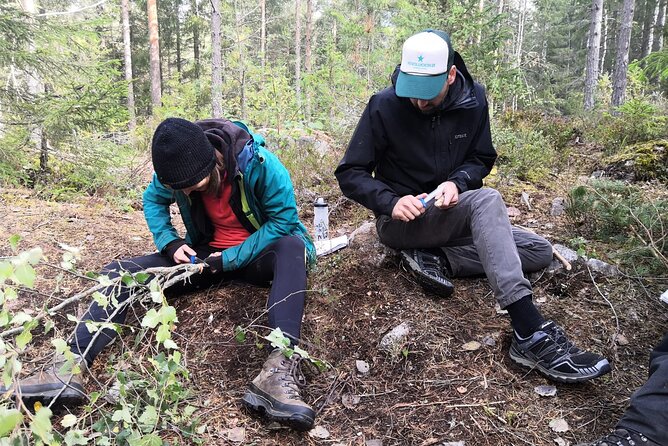
The listed price is $480.71 per person. That is not a cheap outdoor activity, but it includes more than instruction:
- Private transportation from Stockholm and back
- Breakfast
- Lunch
- Dinner
- Needed course gear
Those inclusions make the price easier to assess. You are paying for a small-group, 2-day course with an instructor, transport into the wilderness, three meals, and equipment for the activities. You also avoid arranging your own transport and buying food for the overnight stay.
There are extra charges to note. Optional camping gear rental is listed at 450 Swedish kronor per person, and backpack rental costs 100 kronor per person. Alcoholic drinks and travel insurance are not included.
The wording around equipment deserves a quick check before booking. The course says needed gear is included, yet camping gear rental is offered separately. Ask True Nature Sweden exactly what the included course equipment covers and what the optional camping package adds. That simple question can prevent surprises, especially if you do not already own outdoor equipment.
Who should book this course?
I would recommend it to you if you want a serious but approachable first step into Swedish forest survival. It suits curious beginners, couples, parents and adult children, solo bookers comfortable joining a small group, and anyone who wants more than a short outdoor demonstration.
It also fits people who learn by doing. You will get more from the course if you are willing to gather material, work with your hands, practice a technique more than once, and accept that your first shelter or fire may not be perfect.
The course may be less suitable if you want luxury camping, a polished sightseeing trip, or advanced wilderness certification. The accommodation is in the forest, and the syllabus is introductory. You should also consider the season. October through April requires a minimum of three participants, while May through September requires at least five. If that minimum is not met, you will be offered another date or experience, or a full refund.
Most people can participate, but the course information does not give detailed accessibility guidance. If you have mobility, medical, dietary, or equipment concerns, contact the provider before booking.
Practical details before you go
Your meeting point is True Nature Sweden AB, Tideliusgatan 62, 118 69 Stockholm. Start time is 9:00 a.m., and the activity ends back at that same meeting point.
Bring clothing suited to outdoor work and sleeping in a forest, though the exact packing list is not provided. Confirm what camping gear is included, what you need to bring, and whether any personal equipment is recommended.
The booking confirmation is provided at the time of reservation. Free cancellation is available up to 24 hours before the local start time. Within 24 hours, cancellations and changes are not accepted for a refund.
The small group maximum of eight is worth noting. It should give you more direct contact with William than a large class, but the experience still depends on the mix of people attending. Since group survival and leadership form part of the course, that shared setting is part of the lesson.
Should you book the Södermanland survival course?
Book it if you want a practical introduction that combines fire, shelter, food, plants, navigation, and camp life in one compact weekend. The strongest reasons are William’s patient teaching, the chance to practice rather than only watch, the small group, and the included transport and meals.
Skip it if you are seeking advanced survival training or comfortable camping with hotel-style service. Two days will give you a useful base, not complete independence in the forest.
For most beginners, I think the course offers a fair amount for the price, especially because transport, meals, and needed course gear are included. Go with realistic expectations, confirm the equipment details, and arrive ready to work. You should leave with more confidence, a better sense of priorities, and a new way to read the Swedish forest.
FAQ
Where does the survival course start?
It starts at 9:00 a.m. at True Nature Sweden AB, Tideliusgatan 62, 118 69 Stockholm, Sweden.
Where does the course take place?
The course is held entirely in the wilderness in the Södermanland area outside Stockholm.
How long is the experience?
The course lasts approximately two days and includes sleeping in the forest.
What survival skills are covered?
You learn basic fire-making, shelter building, finding and collecting water, food preparation, plant identification, wildlife tracking, fishing, trapping, map reading, orientation, encampment skills, and group leadership.
Are meals included?
Yes. Breakfast, lunch, and dinner are included in the listed price.
Is transportation included?
Yes. Private transportation is included, and the activity ends back at the Stockholm meeting point.
How many people can join?
The maximum group size is eight people. The course requires at least three participants from early October through late April and at least five from early May through late September.
Just added around Stockholm
- Stockholm: Evening Wildlife Safari with Midsummer Meal★ 4.2 · 130 reviews
- World War II Stockholm Old Town Walking Tour and Army Museum★ 4.6 · 4 reviews
- Stockholm: Archipelago Guided Boat & Walking Tour of Vaxholm★ 3.1 · 23 reviews
- Stockholm: Archipelago Islands Kayak Tour and Outdoor Picnic★ 4.9 · 150 reviews
- Stockholm: Underground Metro Art Ride with a Local Guide★ 4.6 · 39 reviews
- Vaxholm & Stockholm Archipelago: Guided Excursion, Day Trip★ 4.8 · 41 reviews
- Scandinavian Art, Architecture and Design Tour in Stockholm★ 4.5 · 11 reviews
- Stockholm: Sunset Hike in Tyresta National Park with Meal★ 5.0 · 79 reviews
2-Day Experiences, compared.

2-Day Small-Group Stockholm Archipelago Kayak Tour
Read our review →

Touring-Trekking Bicycle Rental in Tromso – 1 to 2 Days
Read our review →
2-day kayaking adventure around Vaxholm in Stockholm Archipelago – self guided
Read our review →
2-Day Round Trip from Bergen: THE GRAND SOGNEFJORD – fjords, waterfalls, glacier
Read our review →Browse the lists this tour appears in