
Reviewed · OLD TOWN WALKING TOURS
World War II Stockholm Old Town Walking Tour and Army Museum
Sweden’s World War II story is full of awkward choices, quiet courage, and sharp moral questions. This private Stockholm walk connects Swedish neutrality with German trade, Soviet bombings, refugee rescue, the Royal Palace, Parliament House, and Raoul Wallenberg’s work for Jewish people.
I like two things right away: the tour deals with Sweden’s wartime role instead of treating the country as a bystander, and the private format lets you ask direct questions in your chosen language. The three-hour option adds the Army Museum, which gives the political story a useful military and human setting.
The main drawback is the price: $205 per person is a serious spend for two or three hours, especially if you choose the shorter walk and skip the museum. You should also check which option you are booking, since Army Museum admission is included only on the three-hour tour.
In This Review
- Key points to know before booking
- Why Sweden’s wartime story deserves a closer look
- Meeting at the Lars Johan Hierta Monument
- Gamla Stan, the Royal Palace, and wartime decisions
- The Remembrance Path and Raoul Wallenberg
- How the Nobel Prize fits into the war
- What the three-hour Army Museum visit adds
- Private touring, languages, and group size
- Is $205 per person a fair price?
- Who should choose this Stockholm tour?
- Practical verdict: book the walk or the museum version?
- FAQ
- Where does the World War II Stockholm tour meet?
- How long does the tour last?
- Is the Army Museum included?
- What does the two-hour tour cover?
- Which languages are available?
- Is the tour private and wheelchair accessible?
Key points to know before booking
- Start at a free-press monument: Meet at the Lars Johan Hierta Monument on Riddarhustorget, a fitting place to begin a discussion of Swedish politics and public debate.
- Sweden’s neutrality is the central question: Learn how neutrality changed during the war and how it affected trade, foreign policy, and domestic politics.
- Raoul Wallenberg gets proper attention: Follow the Remembrance Path in Berzelii Park and hear about his effort to save tens of thousands of Jewish people.
- The short tour covers Gamla Stan: See the Royal Palace, Storkyrkan, Parliament House, war monuments, Holocaust memorials, and other important sites.
- The three-hour option includes the Army Museum: Its displays cover more than 500 years of Swedish wartime and peacetime history, with uniforms, weapons, documents, and Wallenberg material.
- It is a private group tour: One guide serves up to 25 people, with additional guides for larger groups.
Why Sweden’s wartime story deserves a closer look

Sweden is often reduced to one word in World War II discussions: neutral. That label is useful, but it leaves out the hard part. Neutrality did not place Sweden outside the war. It shaped trade, political decisions, refugee policy, public life, and the country’s relations with both Germany and the Allies.
This tour gives you a way to sort through those issues while walking through central Stockholm. You hear about the impact of the war on domestic politics and foreign trade, including the ways Swedish neutrality helped Germany. That is not a simple good-versus-bad story, and the tour is best suited to you if you want the uncomfortable questions included.
You also learn about the Soviet bombings of Sweden. The subject adds an important reminder: even a neutral country could feel the war directly. Sweden had to balance military risk, economic pressure, and humanitarian concerns while trying to avoid being pulled fully into the conflict.
The guide also places Scandinavia in the wider war. You hear about the German occupation of Denmark and Norway and the Swedish response to Jewish refugees escaping those occupations. The result is a regional story, not just a Stockholm walking tour with a few wartime facts added on.
More Old Town Walking Tours in Stockholm
- Walking Tour of Stockholm Old Town
★ 5.0 · 1,175 reviews - The Original Stockholm Ghost Walk and Historical Tour – Gamla Stan
★ 4.5 · 1,165 reviews - Stockholm: Old Town Walking Tour with Local Guide
★ 4.7 · 719 reviews
Meeting at the Lars Johan Hierta Monument
The tour begins at the Lars Johan Hierta Monument, Riddarhustorget 9. Hierta was a Swedish journalist associated with the development of free press, so the meeting point does more than provide an easy landmark. It opens the discussion with the connection between journalism, public opinion, and political pressure.
That is a smart start for a World War II tour. Before you look at monuments or royal buildings, you begin with the question of how a country talks about its choices. A private guide can adjust the introduction to your interests, spending more time on political history, Swedish society, or the refugee story as needed.
You should check your email 24 hours before the walk for final tour information. The meeting point is in Gamla Stan, so allow enough time to reach Riddarhustorget without rushing. The experience is wheelchair accessible, though the tour remains a walking visit through Stockholm’s Old Town.
Gamla Stan, the Royal Palace, and wartime decisions
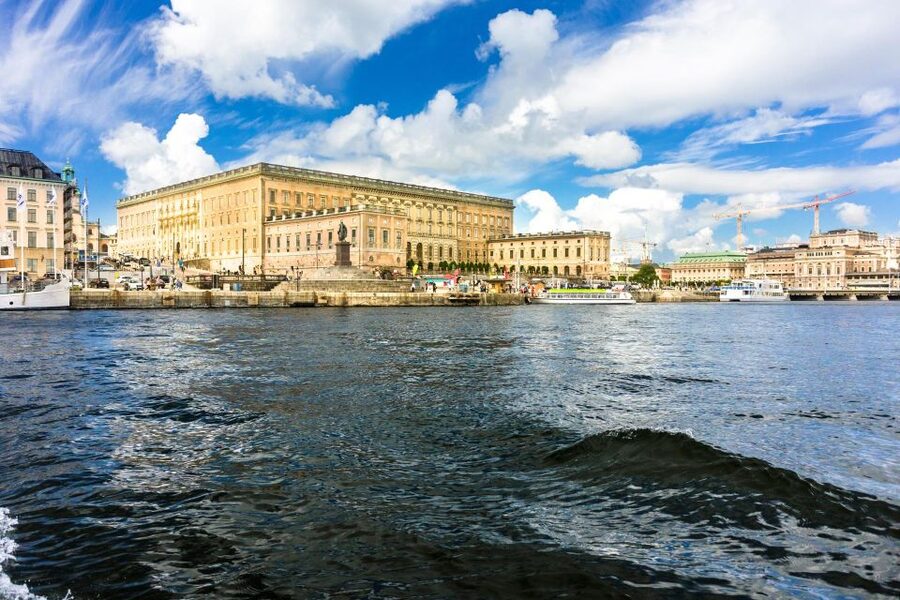
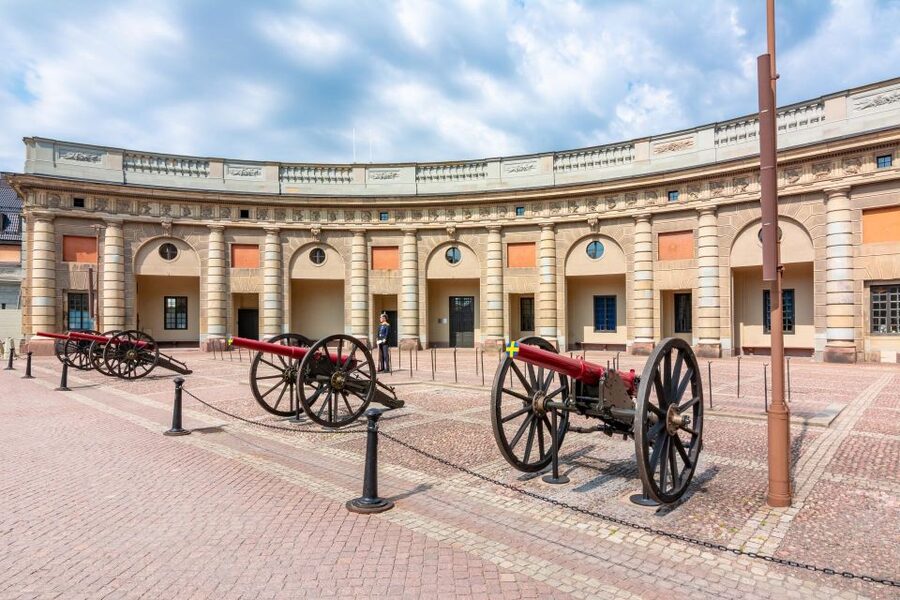
The Old Town provides the setting for the two-hour version. You walk through Gamla Stan while the guide explains Sweden’s position at the start of the war and how that position changed as the conflict continued.
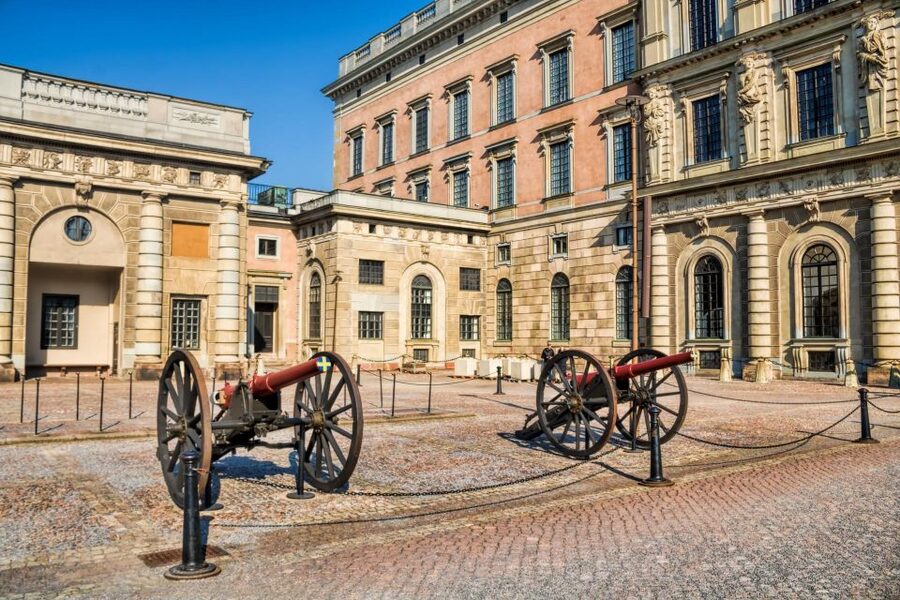
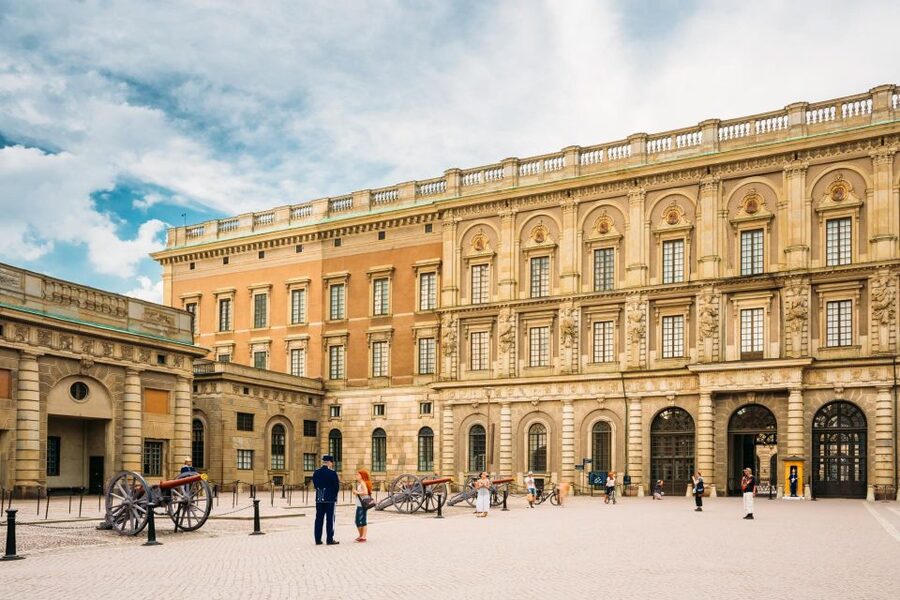
The Royal Palace gives you a way to consider the response of Sweden’s royal family. The tour also covers the government and the church, helping you see that wartime policy was not shaped by one institution alone. Those stops matter because they connect national decisions with the buildings and public bodies that represented Swedish authority.
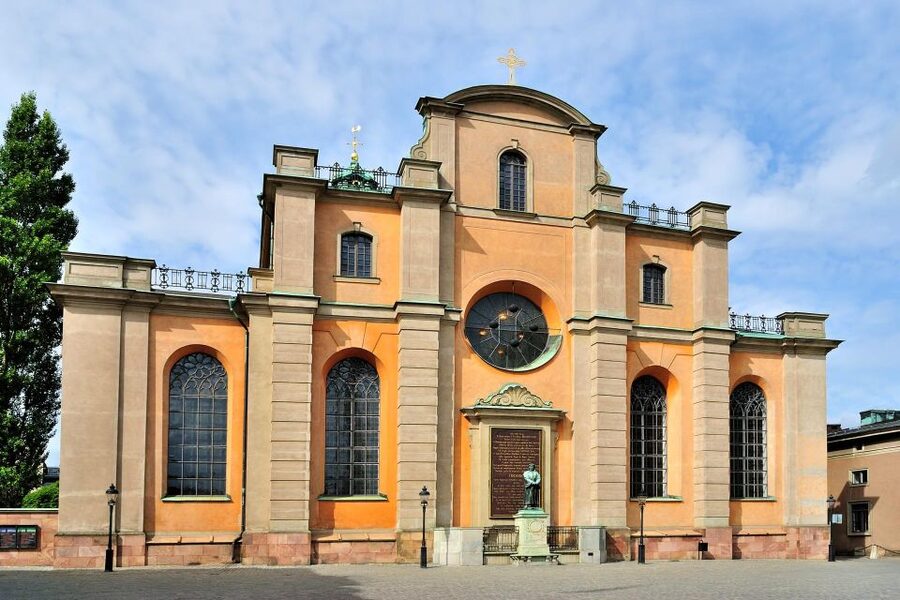
You also see Storkyrkan, Stockholm’s cathedral, and Parliament House. These are not presented only as attractive sights. They help frame questions about religion, law, public responsibility, and the role of elected government during a crisis.
The appeal here is not a long list of buildings. It is the way the guide links visible Stockholm to decisions that can otherwise feel distant. You can look at a palace or parliament building and then discuss how Sweden handled pressure from Germany, the Soviet Union, refugees, and its own population.
The two-hour walk is likely enough for you if you want an introduction to Sweden’s WWII role without spending most of an afternoon in a museum. It is also the better choice if your Stockholm schedule is tight. The tradeoff is that the visit stays mainly at the level of places, stories, and explanation. You do not receive the Army Museum’s objects and displays.
The Remembrance Path and Raoul Wallenberg
One of the strongest parts of the route is the Remembrance Path in Berzelii Park. Here the focus turns from state policy to individual action and the fate of Jewish people during the Holocaust.
The guide tells the story of Raoul Wallenberg, the Swedish diplomat who worked to save tens of thousands of Jewish people. His efforts give the tour a human center. Instead of discussing neutrality only through trade figures and government decisions, you hear about a person who acted to protect people facing persecution and murder.
This section is especially valuable because it also raises a difficult question: were Jewish refugees welcome in Sweden? The tour does not present Sweden’s wartime record as spotless. You learn about both the country’s restrictive or cautious choices and its humanitarian efforts, including the rescue of Jewish refugees escaping German occupation in Denmark and Norway.
The story is connected with monuments dedicated to World War II and the Holocaust. These stops give you time to consider memory as well as events. A monument cannot explain every detail, but with a good guide it can serve as a clear place to discuss what Sweden chose to remember publicly.
The Wallenberg story continues into the three-hour museum option. That gives the longer tour a useful link between outdoor memorials and indoor exhibits. If Wallenberg is the main reason you are interested, the extended version offers a fuller treatment.
More Private Walking Tours in Stockholm
- Best of Stockholm Walking Tour-3 Hours, Small Group max 10 people
★ 5.0 · 645 reviews - Walking Tour of Stockholm’s Old Town, Gamla Stan
★ 5.0 · 451 reviews - Stockholm: Old Town Historical Walking Tour
★ 4.9 · 344 reviews - Stockholm: Old Town Guided Walking Tour (English / Deutsch)
★ 4.7 · 284 reviews
How the Nobel Prize fits into the war
A less expected topic is the influence of World War II on the Nobel Prize awards. The tour brings the Nobel institution into the wider story of Swedish public life and international pressure.
This is a useful addition because it shows that the war affected more than borders, soldiers, and refugees. Cultural and scientific recognition also had to operate during a period when Europe was divided and normal international exchange had been badly damaged.
You should not book this as a Nobel Prize tour. The subject is one part of a wider WWII route, not the main focus. Still, it adds variety and helps show how political events reached into Sweden’s most respected institutions.
What the three-hour Army Museum visit adds
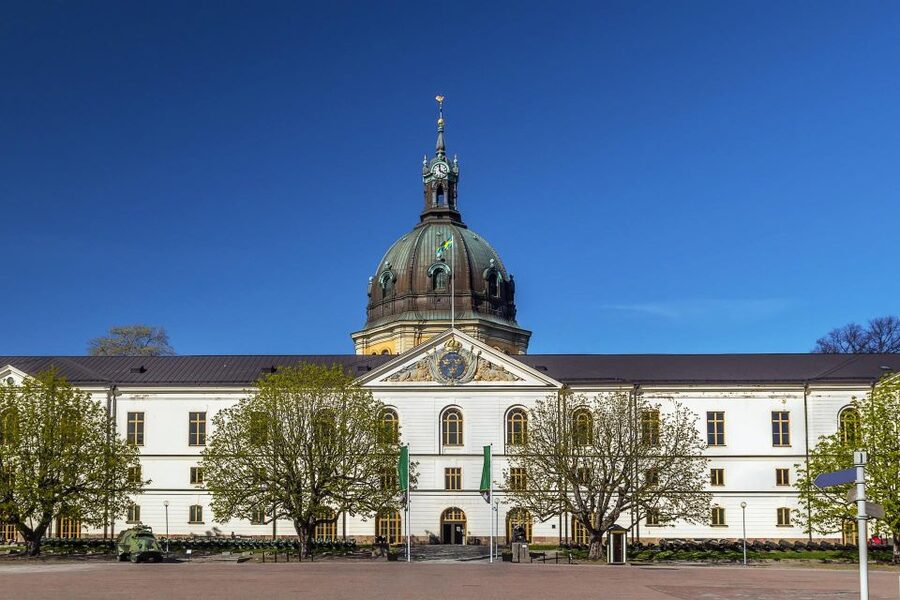
The extended tour includes tickets to the Army Museum. The museum covers more than 500 years of Swedish wartime and peacetime history, so it broadens the subject beyond the 1939 to 1945 period.
You can expect displays about the lives of soldiers, their families, and the general population. That human focus matters. Military history can become a parade of battles and equipment, but daily living conditions show how war affects people who are not making decisions in government offices.
The collections include historical documents, military uniforms, weapons, and trophies. These objects give you something concrete to examine after the walking portion. The Old Town route explains the political and moral setting; the museum adds physical evidence and a longer view of Swedish military life.
One exhibition is dedicated to Raoul Wallenberg. This makes the three-hour version more than a simple museum add-on. It lets you revisit the tour’s most important humanitarian story in a different setting, with historical material that may help you understand his work more clearly.
The museum is the obvious choice for history buffs, but it can also help you if you prefer objects to speeches. If you learn best through documents, uniforms, and weapons, the extra hour is likely worth considering. If your interest is mainly architecture, memorials, and a concise explanation of neutrality, the two-hour walk may suit you better.
Remember that the Army Museum is not included in the two-hour option. Tickets are included only in the three-hour tour. Check the exact option before paying, since the two versions cover different amounts of content.
Private touring, languages, and group size
This is a private group experience, with a licensed five-star guide in your chosen language. Available languages are English, Swedish, German, Italian, French, Spanish, and Russian.
The private arrangement is important at this price. You are not simply joining a large public walk and following a fixed script. You can ask how neutrality worked, press for more detail about Wallenberg, or request a clearer explanation of Sweden’s relationship with Germany and the Soviet Union.
The stated group limits are one guide for 1 to 25 people, two guides for 26 to 50, and so on. If your party is large, the cost may rise because additional guides are needed. For a small private group, the format should feel more personal, but the value depends on how much you want a tailored discussion.
The tour lasts two to three hours, depending on your selection. That is long enough for a focused history lesson without requiring a full day. Wear practical walking shoes and plan for an outdoor route through Gamla Stan, followed by the museum if you select the extended option.
Is $205 per person a fair price?
At $205 per person, this is not a budget sightseeing walk. The price makes the most sense for a small private group that wants a specialist WWII theme, a chosen language, and the chance to ask questions along the way.
The value is weaker if you only want a quick introduction to Stockholm’s main sights. The Royal Palace, cathedral, Parliament House, and parks are part of the route, but this is not a general city tour. Much of your time is devoted to neutrality, foreign trade, political decisions, refugees, the Holocaust, and Wallenberg.
The three-hour option gives you more for the money because Army Museum admission is included. You receive both an Old Town walking route and an indoor collection with documents, uniforms, weapons, and a Wallenberg exhibition. If you already plan to visit the museum, combining it with the private walk may make financial sense.
For couples, families, or a small group of friends with a strong interest in wartime history, the private format can justify the cost. For solo visitors or budget-minded visitors, $205 may feel high for a short activity. In that case, choose it only if this specific subject is a major priority.
Free cancellation up to 24 hours before the tour and the option to reserve now and pay later reduce the financial risk. Those policies are helpful, but they do not change the basic calculation: you are paying for focused interpretation and privacy, not a low-cost overview.
Who should choose this Stockholm tour?
I would recommend it to you if you want to understand Sweden’s place in World War II rather than simply see famous Stockholm buildings. It suits history-minded visitors, anyone interested in Holocaust remembrance, and people who want a more serious subject than a standard Old Town stroll.
The tour is also a good fit for families with older children or teenagers who can engage with moral and political questions. The combination of royal buildings, parliament, monuments, refugee stories, and museum objects gives you several ways into the subject.
The two-hour option works best when you want the main ideas and the outdoor route. Choose the three-hour version if you want military collections, the Wallenberg exhibit, and a fuller session on Swedish history.
You may want to skip it if your main goal is shopping, food, architecture, or a broad introduction to Stockholm. The guide can point out major landmarks, but the experience is built around war, neutrality, and humanitarian action.
Practical verdict: book the walk or the museum version?
Book this tour if you want a private, focused explanation of Sweden’s difficult wartime choices. I especially like the way it joins government policy with the personal story of Raoul Wallenberg, then gives you the chance to see memorials and, on the longer route, related museum material.
Choose two hours for a compact Gamla Stan route with the Royal Palace, Storkyrkan, Parliament House, monuments, and the Remembrance Path. Choose three hours if you want the strongest value and have room in your schedule for the Army Museum.
At $205 per person, this is a specialist experience rather than a casual add-on. For the right audience, the personal guide, language choice, and serious subject make it worthwhile. Just confirm the duration, museum inclusion, and group size before booking.
FAQ
Where does the World War II Stockholm tour meet?
The meeting point is in front of the Lars Johan Hierta Monument at Riddarhustorget 9, 111 28 Stockholm.
How long does the tour last?
The tour lasts either two or three hours, depending on the option you select.
Is the Army Museum included?
Army Museum admission is included in the three-hour tour only. It is not included in the two-hour option.
What does the two-hour tour cover?
The two-hour tour explores Gamla Stan and covers Sweden’s neutrality, wartime politics, foreign trade, the royal family, government, church, the Nobel Prize, refugee rescue, and Raoul Wallenberg. It also includes sites such as the Royal Palace, Storkyrkan, Parliament House, and the Remembrance Path.
Which languages are available?
The live guide is available in English, Swedish, German, Italian, French, Spanish, and Russian.
Is the tour private and wheelchair accessible?
Yes. It is a private group tour and is wheelchair accessible. The group limit is one guide for up to 25 people, with additional guides required for larger groups.
More Walking Tours in Stockholm
- Stockholm: Ghost Walk and Historical Tour
★ 4.7 · 2,206 reviews - The Nordic Food Walk Stockholm
★ 4.5 · 642 reviews - Stockholm: Old Town Walking Tour, stories and secrets
★ 4.8 · 275 reviews - Stockholm Old Town and the Vasa Museum, a Small Group Walking Tour.
★ 5.0 · 113 reviews
More Museums in Stockholm
- Stockholm: Skansen Open-Air Museum Admission Ticket
★ 4.5 · 3,427 reviews - Stockholm Pass: Save up to 50% – Includes Vasa Museum Ticket
★ 4.1 · 2,392 reviews - Stockholm: Nobel Prize Museum and Exhibition Entry Ticket
★ 4.3 · 994 reviews - Stockholm: Fotografiska Museum Entrance Ticket
★ 4.5 · 702 reviews
Just added around Stockholm
- Stockholm: Evening Wildlife Safari with Midsummer Meal★ 4.2 · 130 reviews
- Stockholm: Archipelago Guided Boat & Walking Tour of Vaxholm★ 3.1 · 23 reviews
- Stockholm: Archipelago Islands Kayak Tour and Outdoor Picnic★ 4.9 · 150 reviews
- Vaxholm & Stockholm Archipelago: Guided Excursion, Day Trip★ 4.8 · 41 reviews
- Stockholm: Underground Metro Art Ride with a Local Guide★ 4.6 · 39 reviews
- Scandinavian Art, Architecture and Design Tour in Stockholm★ 4.5 · 11 reviews
- Stockholm: Sunset Hike in Tyresta National Park with Meal★ 5.0 · 79 reviews
- Stockholm: Winter Kayaking, Swedish Fika and hot Sauna Experience★ 5.0 · 156 reviews
Old Town Walking Tours, compared.
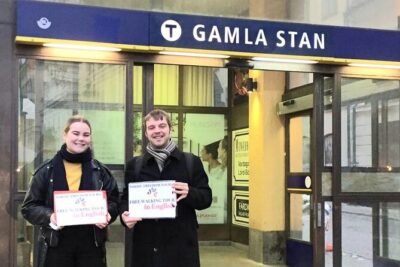
The Original Stockholm Ghost Walk and Historical Tour – Gamla Stan
Read our review →
Walking Tour of Stockholm’s Old Town, Gamla Stan
Read our review →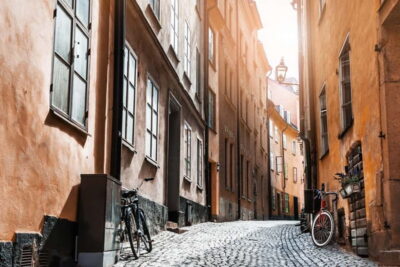
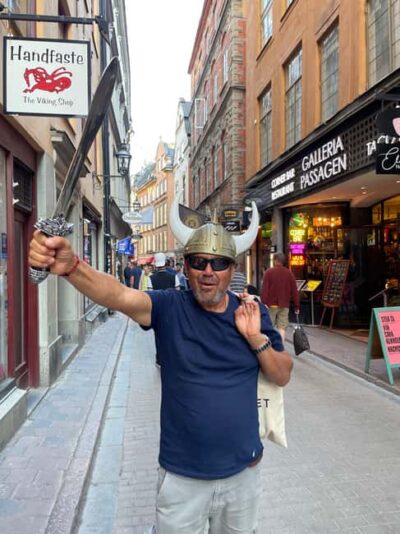
Old Town Guided Walking Tour (English / Deutsch)
Read our review →
Secrets of Gamla Stan Guided Tour w/ Fika Option
Read our review →Browse the lists this tour appears in