
Reviewed · PRIVATE WALKING TOURS
Aarhus: Surprise City Walking Tour with Local Guide
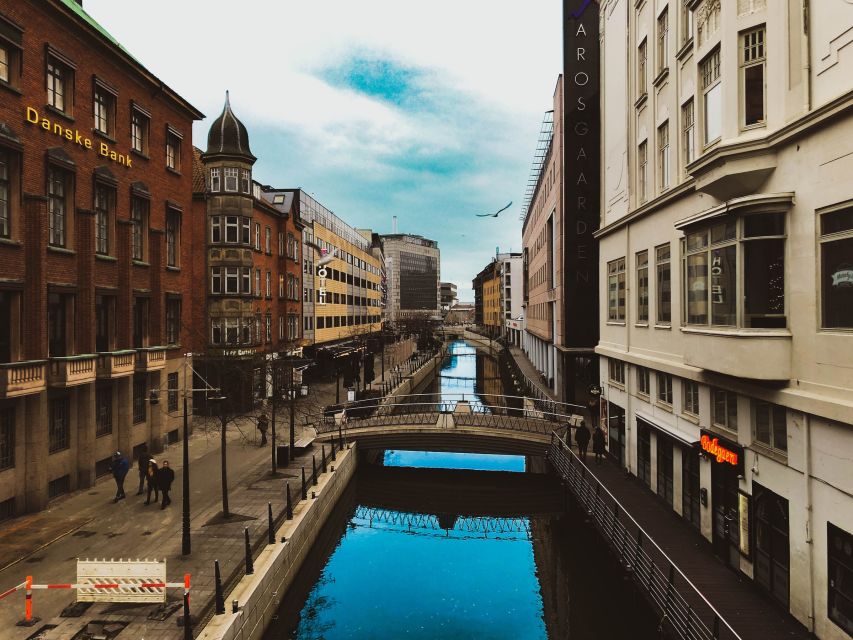
Aarhus reveals itself best on foot, and this tour links several of its most telling sights in a compact 90-minute walk. You move from the old lanes of Latinerkvarteret to the modern public library at Dokk1, with street art, cobblestones, and Denmark’s tallest church along the way.
I like the mix of old and new, especially the contrast between tiny Møllestien and the large, modern Dokk1 building. I also like the flexible format: you can book a private or small-group tour in English or Danish. The main caution is value. At $128 per person, you need a strong guide and an interactive walk to make the price feel right.
In This Review
- Key points to know before you book
- Starting in Aarhus’s oldest quarter
- Skovgaardsgade and Aarhus’s public art
- A slow walk down Møllestien
- Aarhus Cathedral and the city’s vertical landmark
- Dokk1 brings the walk into modern Aarhus
- What the guide adds to a short route
- Is $128 per person a fair price?
- Who will enjoy this Aarhus walk?
- Practical details for a smoother outing
- Should you book the Aarhus Surprise City Walking Tour?
- FAQ
- How long does the Aarhus walking tour last?
- What places does the tour visit?
- What languages are available?
- Is the tour private or shared?
- What is included in the price?
- Are food and drinks included?
- What should I bring?
- Can I cancel the booking?
Key points to know before you book

- Latinerkvarteret opens the tour with Aarhus’s oldest streets, narrow lanes, old buildings, and local stories.
- Skovgaardsgade bus station adds a modern art stop that breaks up the historic sightseeing.
- Møllestien is the prettiest short stretch, with cobblestones and a quaint, old-town feel.
- Aarhus Cathedral gives the walk a major landmark, and its tower is Denmark’s tallest church tower setting.
- Dokk1 finishes the route with contemporary Danish culture, books, public space, and modern architecture.
- The guide makes or breaks the experience, since the route itself is easy to follow and much of the value comes from the explanation.
Starting in Aarhus’s oldest quarter
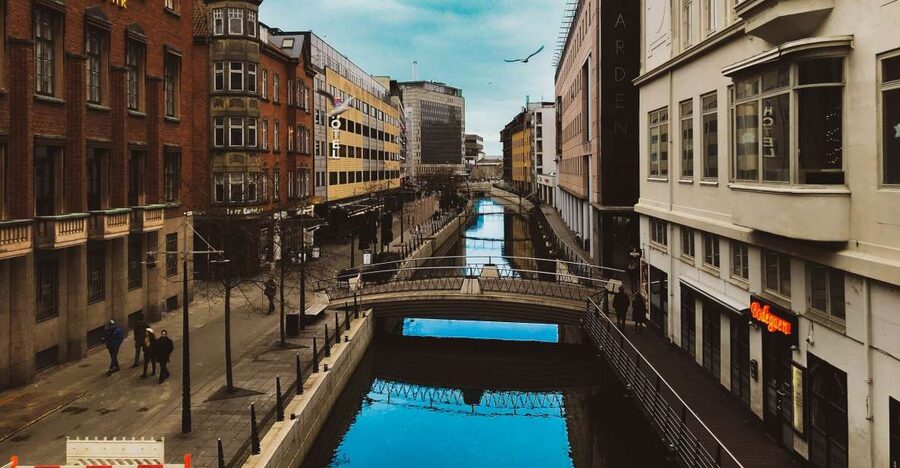
The tour begins in Latinerkvarteret, the oldest part of Aarhus. This is the right place to start because it gives you the city’s strongest sense of age and character before the route moves toward newer architecture.
Expect cobbled streets, narrow alleys, and historic buildings packed into a small central area. You are not covering a huge distance here. Instead, the point is to slow down and notice how the older street plan feels different from the broader, more modern parts of Aarhus.
I like this opening because it helps you get your bearings quickly. A local guide can explain how the city fits together, point out details you might walk past, and add stories that make the streets more than a pleasant backdrop.
The quality of this section depends heavily on the guide. Some guides assigned to the experience have been praised for strong city knowledge and for explaining Danish culture and politics. Mikel, for example, has been singled out as a guide who offers plenty of context, while Kate has been remembered for leading a warm, enjoyable walk.
That said, the experience is not a museum tour with a fixed script. One private booking was described as little more than a stroll, with limited answers to basic questions. If you want detailed history at every stop, ask your guide questions early and be clear about your interests.
More private walking tours in Aarhus:
- Aarhus Walking Tour: From Viking Village to Metropolis
★ 4.8 · 122 reviews - Historical Walking Tour in Aarhus
★ 4.5 · 35 reviews - Aarhus Walking Tour: Explore Top Sights & Hidden Gems
★ 4.0 · 34 reviews
Skovgaardsgade and Aarhus’s public art
The route then heads to the Skovgaardsgade bus station, where the art becomes more prominent. This is an unusual stop for a city walk. You are not simply being taken from one famous monument to the next. Instead, you get a look at an everyday public place with an eclectic collection of artwork.
That choice gives the tour a more local feel. A bus station is part of ordinary city life, and its art shows how Aarhus brings culture into public spaces. You can pause here for photos and look at the artwork without the pressure of a formal gallery visit.
I appreciate this stop because it adds variety. Historic streets can begin to blur together during a walking tour, while a modern art installation gives your eyes something different to work with. It also suits people who want more than a standard checklist of churches and old houses.
The drawback is that art is personal. If you prefer major monuments or formal galleries, this may feel like a brief side stop rather than a must-see attraction. The guide’s comments matter here, since the artwork itself may not explain why the location is important.
Bring a charged smartphone. The tour specifically recommends one, and it will be useful for photographs at the bus station, Møllestien, the cathedral, and Dokk1. Comfortable shoes are just as important, since the route includes cobblestones and takes place entirely outdoors apart from the public-library visit.
A slow walk down Møllestien
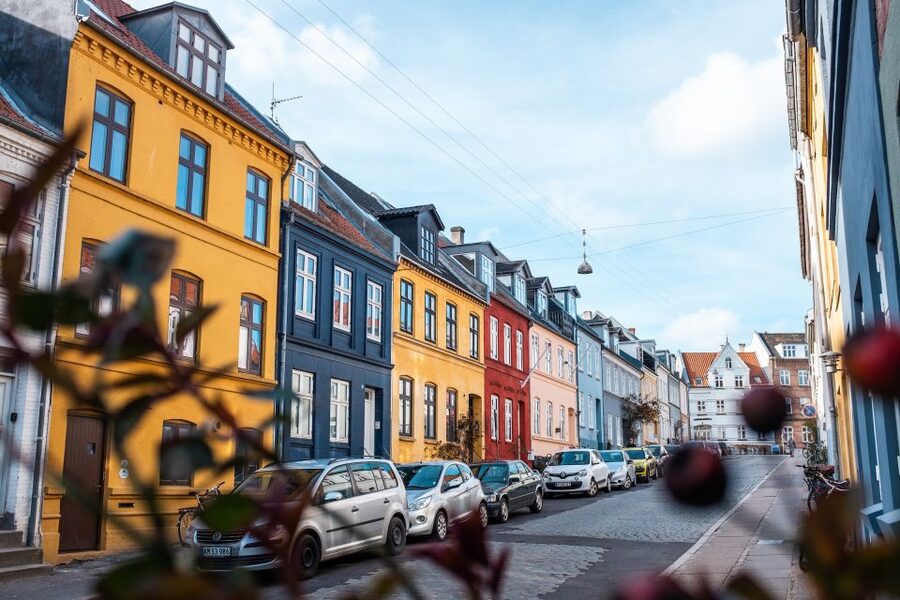
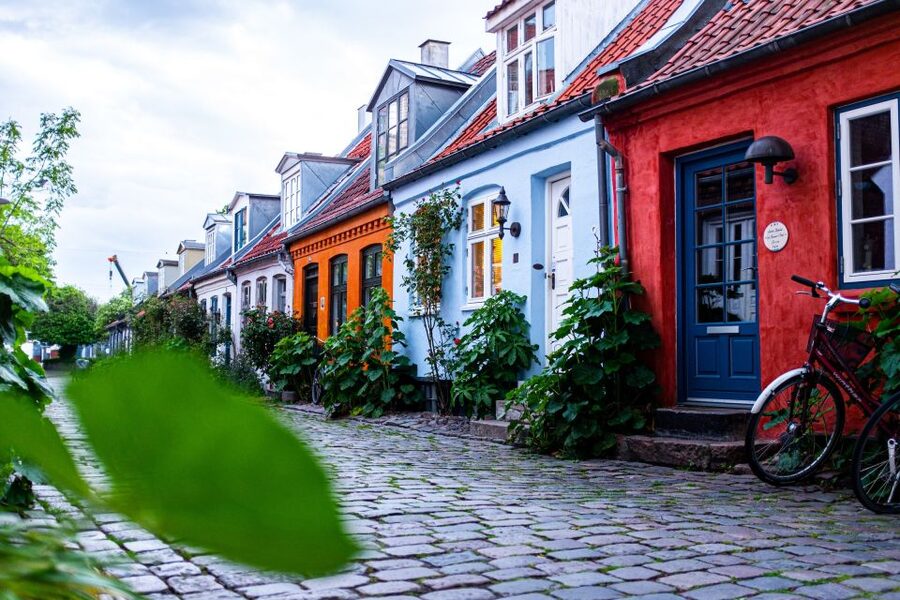
Møllestien is likely to be the most immediately charming part of the route. This quaint street is known for its cobblestones and compact old-town appearance, giving you the kind of scene many people hope to find when they first picture historic Denmark.
The short walk here is about atmosphere rather than a long list of sights. Look down at the uneven paving, up at the older facades, and along the narrow line of the street. It is a good place to take photographs, but it is also a good place to let the pace ease off.
I like that Møllestien follows the larger Latinerkvarteret section. The two stops work together: the quarter gives you a broader sense of old Aarhus, while Møllestien offers a more concentrated picture of it.
Cobblestones have a practical downside. They can be awkward for wheelchairs and difficult for anyone with limited mobility. The experience is not suitable for people with mobility impairments, so consider that restriction carefully before booking. Even able walkers should choose supportive shoes rather than thin sandals or hard-soled fashion shoes.
Rain can also change the mood. One booking took place in very heavy rain, and an indoor program would have been preferable. This tour has only a limited indoor element, so check the forecast and pack suitable rainwear if conditions look unsettled.
Aarhus Cathedral and the city’s vertical landmark
The route continues to Aarhus Cathedral, the tallest church in Denmark. This is the walk’s major architectural landmark and a useful counterpoint to the small scale of Møllestien.
After narrow streets and low buildings, the cathedral gives you a stronger sense of scale. You can look up at its tall structure and see how it anchors the center of Aarhus. Even if you do not enter the church, the exterior provides a clear landmark and a natural point for the guide to discuss the city’s religious and civic past.
The cathedral is also a good moment to ask questions. The tour is short, so the guide cannot offer an extended lecture at every stop. If church architecture, Danish religion, or local history interests you, say so. A flexible private walk can often shift its emphasis, and one booking was specifically praised for adapting to what the group wanted to see.
Do not expect every stop to receive equal time. Ninety minutes passes quickly, especially when the route includes five distinct areas. The cathedral works best as part of a larger introduction to Aarhus, not as a substitute for a dedicated church visit.
A few more Aarhus trips to weigh up
- Aarhus Private Walking Tour with a Local
★ 4.0 · 12 reviews - Surprise Walk of Aarhus with a Local
★ 4.5 · 4 reviews - Aarhus: Insta-Perfect Walk with a Local
★ 4.9 · 4 reviews - Aarhus: Express Walk with a Local in 60 minutes
★ 4.8 · 3 reviews
Dokk1 brings the walk into modern Aarhus
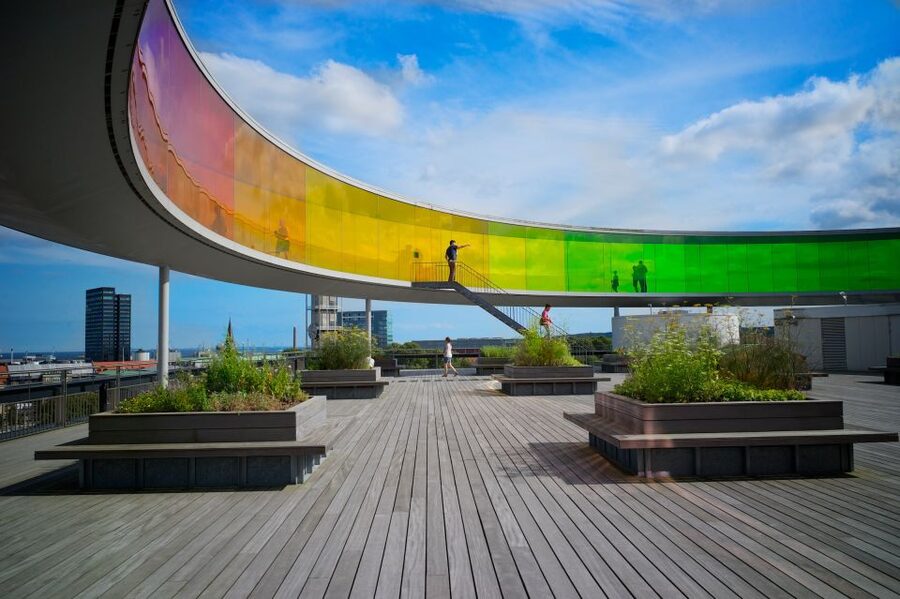
The final stop is Dokk1, Aarhus’s public library and a major cultural space. Its inclusion keeps the tour from ending in the past. After old lanes, cobblestones, and a historic cathedral, you finish in a modern setting centered on books, public life, and Danish culture.
I like this ending because it gives you a broader picture of Aarhus. The city is not only old streets and church towers. Dokk1 represents its present-day civic life and offers a different kind of public architecture from the historic center.
A library may sound less exciting than a palace or fortress, but that is precisely why it is useful. You get a look at a place designed for everyday community use rather than just sightseeing. The stop can also offer a little shelter from the weather, though you should not assume the entire tour takes place indoors.
Dokk1 is a fitting final point for anyone interested in how Denmark uses shared public spaces. The route does not simply show you pretty buildings. It moves from the historic core to public art and then to a modern cultural building, giving the walk a clear old-to-new structure.
What the guide adds to a short route
The sights are appealing, but most of them can be reached without a guide. The real reason to book is the local interpretation.
A good guide can connect Latinerkvarteret to the cathedral, explain why a bus station has public art, and show how Dokk1 reflects modern Danish civic life. You are paying for those links, not merely for the act of walking between addresses.
The strongest feedback points to guides who are friendly, flexible, and well informed about Aarhus and Danish culture. One guide was praised for explaining the Danish political system, which shows how the experience can move beyond buildings and dates when the right person is leading it.
Still, the standard may vary. A private format does not automatically mean a private-level depth of information. One group felt overcharged because the guide could not answer simple questions and provided too little historical explanation.
I would approach the walk as a conversation, not a lecture. Prepare two or three questions about Aarhus, Danish culture, food, art, or politics. That gives the guide a clear opening and helps you test whether the tour is matching your interests.
The language options are English and Danish. Private and small-group formats are available, which can make it easier to ask questions and adjust the pace. The exact guide is not guaranteed in the available information, so do not book solely because you hope for Mikel or Kate.
Is $128 per person a fair price?
At $128 per person, this is a costly 90-minute walk. The price includes the walking tour and guide, but not food, drinks, snacks, or personal expenses.
For a private booking, the price may make sense if you value personal attention and want to shape the conversation around your interests. It can also work for a small group that prefers a short introduction rather than a full-day city tour.
For a standard sightseeing walk, I would look closely at the group size before booking. If you are paying the full per-person rate for a private experience, you should expect more than a pleasant route. You should receive clear answers, useful local context, and some flexibility in what you see and discuss.
The route itself is compact and includes public streets and easily recognized landmarks. That means the guide’s skill carries much of the price. If the guide is excellent, the walk can help you understand Aarhus quickly. If the commentary is thin, you may feel you paid a premium for directions you could have followed on your own.
The overall rating is 4.2 from nine ratings, which suggests a generally positive but not perfect experience. The pattern is clear: the best experiences come from strong guides, while the weakest concern limited content and poor weather planning.
Who will enjoy this Aarhus walk?
I would recommend it most to first-time visitors who want a quick orientation and prefer walking to sitting on a bus. The route covers several central highlights without taking half a day.
It also suits you if you enjoy a mix of architecture, street scenes, public art, and local conversation. The inclusion of Skovgaardsgade and Dokk1 makes the tour less predictable than a route focused only on old buildings.
A private or small-group booking may suit couples, families, or friends who want to ask questions without competing with a large crowd. If Danish culture and politics interest you, tell the guide in advance or raise those subjects during the walk.
I would be cautious if you have mobility limitations, dislike uneven streets, or are visiting during wet weather. I would also think twice if your main goal is a long, detailed history lecture. The tour is short, and the amount of historical detail depends on the guide.
Food is mentioned as part of what you may appreciate in Aarhus, but no tasting is included. You will need to buy any food, drinks, or snacks yourself. Consider treating the walk as an introduction, then choosing a cafe or meal afterward based on the areas you have seen.
Practical details for a smoother outing
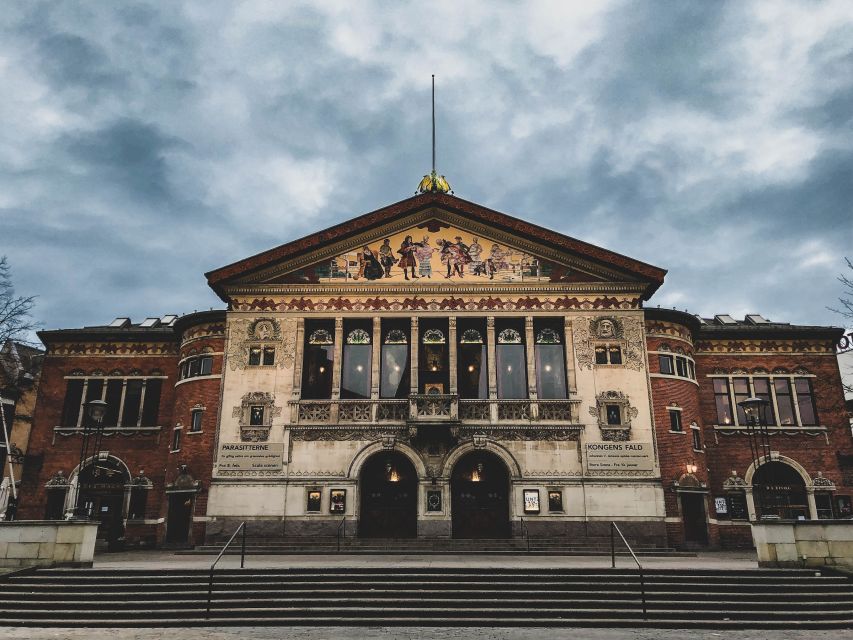
The tour lasts 90 minutes, so arrive ready to walk from the start. Wear comfortable shoes, especially because Møllestien and other central streets use cobblestones.
Bring a charged smartphone for photographs and general use. Since the route is mainly outdoors, dress for the forecast. Heavy rain has made the experience less enjoyable in the past, and there is no promise of a fully indoor alternative.
English and Danish are the available tour languages. You can choose a private or small-group format, depending on availability. Starting times vary, so check the available schedule before you commit to a specific day.
Free cancellation is available up to 24 hours before the tour for a full refund. You can also reserve now and pay later, which helps if your Aarhus plans are still shifting.
Should you book the Aarhus Surprise City Walking Tour?
Book it if you want a short, central introduction to Aarhus and care about having a local person connect the sights. The old quarter, Møllestien, cathedral, public art, and Dokk1 make a well-shaped route, and a strong guide can add useful insight into Danish culture and city life.
I would book the private or small-group option only if the price fits your budget and you plan to ask questions. At $128 per person, the guide must provide real value beyond a basic stroll.
Skip it if you need guaranteed deep historical detail, have mobility problems, or expect an indoor plan during bad weather. For everyone else, it is a worthwhile orientation when the guide is engaged and well prepared, but the high price makes guide quality the deciding factor.
FAQ
How long does the Aarhus walking tour last?
The tour lasts 90 minutes.
What places does the tour visit?
The route includes Latinerkvarteret, Skovgaardsgade bus station, Møllestien street, Aarhus Cathedral, and Dokk1 public library.
What languages are available?
The live guide can lead the tour in English or Danish.
Is the tour private or shared?
Private and small-group options are available.
What is included in the price?
The price includes the walking tour and guide.
Are food and drinks included?
No. Food, drinks, snacks, and personal expenses are not included.
What should I bring?
Bring a charged smartphone and comfortable shoes.
Can I cancel the booking?
You can cancel up to 24 hours in advance for a full refund. Reserve now and pay later is also available.
Just added around Aarhus
- Time travel in Aarhus★ 4.5 · 18 reviews
- Surprise Walk of Aarhus with a Local★ 4.5 · 4 reviews
- Explore Aarhus in 60 minutes with a Local★ 4.0 · 14 reviews
- Aarhus Walking Tour: Explore Top Sights & Hidden Gems★ 4.0 · 34 reviews
- Aarhus Self guided Mystery hunt Sabotage in Danish★ 4.5 · 3 reviews
- Aarhus Private Walking Tour with a Local★ 4.0 · 12 reviews
- Aarhus: Express Walk with a Local in 60 minutes★ 4.8 · 3 reviews
- Aarhus: Insta-Perfect Walk with a Local★ 4.9 · 4 reviews
Private Walking Tours, compared.

Past & Present Small Group Guided Walking Tour
Read our review →
Walking Tour in Bergen of the Past and Present
Read our review →

Group Walking Tour – City Highlights – 2 Hours
Read our review →
3h walking tour, small group max 10 people Copenhagen
Read our review →Browse the lists this tour appears in