

Reviewed · WALKING TOURS
Surprise Walk of Aarhus with a Local
Aarhus reveals itself quickly on this 90-minute city walk, moving from the waterfront and Dokk1 to cobblestone lanes, an alternative art center, and the huge Aarhus Cathedral. The route gives you a useful first look at the city without taking half a day.
I like the small group of up to eight, which leaves room for questions and changes in pace. I also like the practical local advice, especially the recommendation for Aarhus’ best rooftop terrace. The main drawback is the price: $126.29 per person is a lot for an hour and a half, even with personal attention.
In This Review
- Key Points
- Starting beside Christian X’s statue
- Dokk1 and the waterfront’s modern face
- An old railway station turned art center
- Møllestien and Aarhus’ postcard side
- The old quarter and its picturesque buildings
- Rooftop advice for a wider view
- Ending at Aarhus Cathedral
- What $126.29 buys you
- Who will get the most from this walk
- Practical details before you book
- Should you book Surprise Walk of Aarhus with a Local?
- FAQ
- How long does the Aarhus walking tour last?
- How many people can join the tour?
- Where does the tour begin?
- Where does the tour end?
- Is Dokk1 included in the route?
- Does the tour visit Møllestien?
- Are entry tickets included?
- Is the tour suitable for people with impaired mobility?
- Can the itinerary change?
- What is the cancellation policy?
Key Points
- Dokk1 gives you a modern start: See Aarhus’ library, public building, and culture center beside the waterfront.
- Møllestien supplies the old-Denmark mood: Walk a narrow cobblestone street lined with quaint houses.
- The guide adds personal context: Maj-Britt, who led one highly praised outing, is fluent in English and has a strong interest in Aarhus’ art scene.
- The group stays small: No more than eight people makes it easier to hear, ask questions, and adjust the pace.
- The walk ends at a major landmark: Aarhus Cathedral is Denmark’s longest and tallest church.
- The route is short but active: It suits a packed schedule, though the walking format is not recommended for people with impaired mobility.
Starting beside Christian X’s statue
The walk begins at the equestrian statue of Christian X in central Aarhus. This is a practical meeting point near the city center and public transportation, but you should allow a little extra time to find the statue and arrive ready to walk.
Your guide is an independent local, not a large tour company employee in a fixed script. That matters here. The route can adapt to your interests and walking pace, and the guide can spend more time on the subjects you care about. One guide, Maj-Britt, was praised for speaking fluent English, bringing an energetic manner, and knowing Aarhus’ art scene well.
You can also expect a small Danish specialty at the start. It is a minor touch, but it gives the meeting a friendly local flavor instead of making the first minutes feel like a roll call.
Because the tour is limited to eight people, you should be able to hear the guide without fighting through a crowd. A small group also makes it easier to ask about restaurants, neighborhoods, viewpoints, or what to see after the walk. The tradeoff is that the experience depends heavily on the individual guide. Local guides bring personality and useful knowledge, but no two outings will feel exactly alike.
A few more Aarhus trips to weigh up
- Aarhus Walking Tour: From Viking Village to Metropolis
★ 4.8 · 122 reviews - Historical Walking Tour in Aarhus
★ 4.5 · 35 reviews - Aarhus Walking Tour: Explore Top Sights & Hidden Gems
★ 4.0 · 34 reviews
Dokk1 and the waterfront’s modern face
One of the first major stops is Dokk1, located on the waterfront beside the Custom House. It combines a government building, public library, and culture center, making it a good symbol of modern Aarhus.
I like this stop because it gives the walk some balance. Aarhus is not presented only as old buildings and picturesque lanes. You also see a city that has invested in a large public space for culture, reading, and civic life.
The building is also a strong photo stop. You can take in its position beside the harbor and hear how it fits into the city center. Since the walk does not include entry tickets, transportation, museums, or monuments, the guide’s explanation is the main value here. You are getting orientation and context rather than a long indoor visit.
Do not expect a full tour of Dokk1. The schedule is tight, and the walk has several more stops ahead. If this building is your main reason for booking, ask the guide how much time the group will spend there. The route may change with weather and with the interests of the group.
An old railway station turned art center
The next stop is an old railway station that has been repurposed as an alternative art center. The name is not specified in the tour details, so you should treat this as a stop where the guide introduces a creative side of Aarhus rather than a formal museum visit.
This is one of the more distinctive parts of the route. Many short city walks stay with churches, squares, and royal buildings. This one makes room for a former transport site now used for alternative art. It gives you a glimpse of how older structures can take on new public roles.
The stop is also singled out as a good Instagram location. That may sound light, but it is useful if you want a quick photo opportunity on a short walk. You get something visually different from the usual church facade and historic street.
The limitation is clear: entry is not included for museums or monuments. If the art center charges admission or has an exhibition you want to see, you should plan to return on your own. The tour is designed to show you the place and explain its role, not provide a lengthy gallery visit.
Møllestien and Aarhus’ postcard side
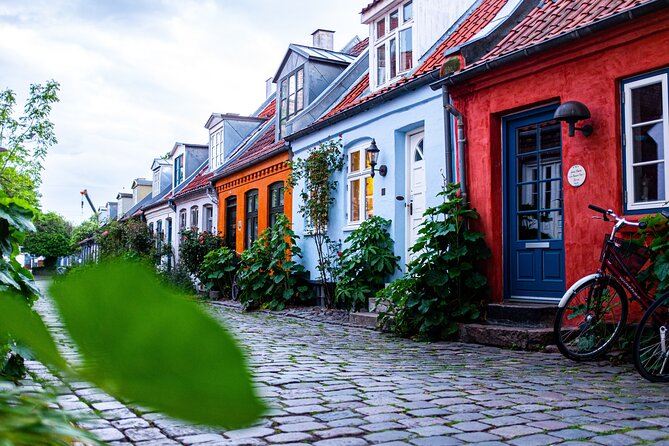
Møllestien brings you into the kind of setting many people hope to find in Denmark: a cozy cobblestone street with small, quaint houses. It is a compact change of pace after the waterfront and modern architecture.
I like this part because it lets you see Aarhus at street level. You are not just checking off famous buildings. You are walking through an older residential-feeling corner where the pavement, house fronts, and narrow scale create a more intimate picture of the city.
This is also where a guide’s local stories can help. The street may look simple at first, but anecdotes about its buildings and place in Aarhus can turn a quick photo stop into a better sense of how the city has changed.
Keep in mind that cobblestones are less forgiving than smooth pavements. The tour is not recommended for people with impaired mobility, and this section helps explain why. Even if you walk comfortably, wear sensible shoes. The route is short, but it is still an urban walking tour with several outdoor stops.
Same fjord country, a very different day out:
- Street Art and Rooftops of Aarhus, Denmark
★ 5.0 · 62 reviews - The Ancient Viking Stronghold of Aros: A Self-Guided Audio Tour in Aarhus
★ 4.0 · 36 reviews - Aarhus Craft BeerWalk
★ 4.7 · 19 reviews - Time travel in Aarhus
★ 4.5 · 18 reviews
The old quarter and its picturesque buildings
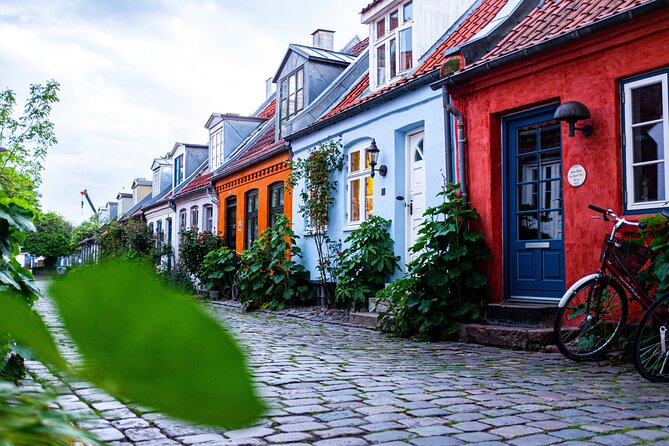
The walk continues through a well-known Aarhus quarter filled with old buildings. The exact quarter is not identified in the supplied details, so the guide will provide the local name and explain what makes it important.
This section works as a bridge between Møllestien and the cathedral. You get more time with older streets and building fronts, but without the pressure of entering a series of attractions. The focus is on seeing how the historic center fits together.
I would use this part of the walk to ask questions. A small group gives you a good chance to ask which streets are worth revisiting, where to find art, and what areas suit an evening stroll. The guide’s recommendations are one of the strongest reasons to choose this experience over a larger sightseeing group.
The pace may feel brisk if you want to stop for every photograph. The whole outing lasts about 90 minutes and includes several distinct places. You will get a broad introduction rather than a slow architectural study. That is useful on a first morning in Aarhus, but less ideal if you prefer long visits at each stop.
Rooftop advice for a wider view
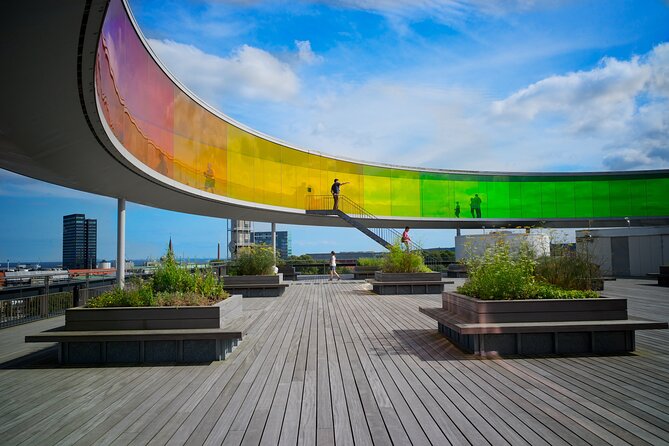
The walk includes advice about Aarhus’ best rooftop terrace. The terrace is not named in the information provided, and the tour does not promise a rooftop visit as a formal included activity. Think of this as a local recommendation you can use later.
That distinction matters. The guide can point you toward a view, but personal expenses and admission costs are not included. If the recommendation sounds appealing, ask about opening times, access, and any fee before changing your plans.
Still, this kind of tip can be worth more than another standard fact. You can return after the walk and see the city from above, using the street-level orientation you have just gained. For a short city introduction, one strong viewpoint recommendation may be exactly the sort of practical advice you want.
Ending at Aarhus Cathedral
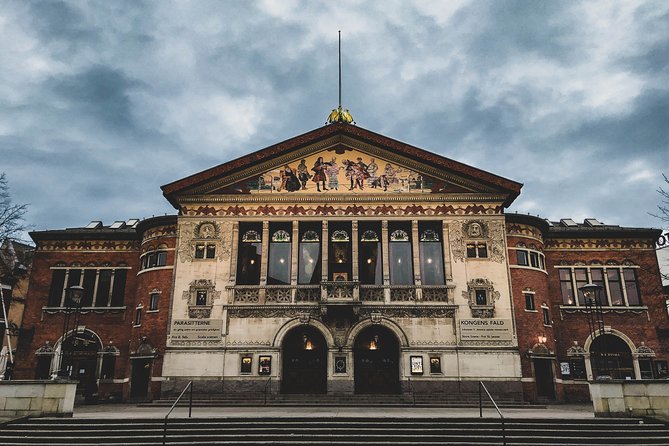
The final stop is Aarhus Cathedral on Store Torv. It is described as Denmark’s longest and tallest church, giving the walk a clear and memorable finish.
The cathedral is a useful endpoint for several reasons. It is a major landmark, it places you in a central square, and it leaves you near more of Aarhus for independent exploring. You are not dropped at an obscure edge of the city. You finish in a location that can work well for lunch, shopping, or a second walk.
The tour ends outside the cathedral unless you arrange otherwise through your own plans. Entry to monuments is not included, so check separately if you want to go inside. The guide can give you an introduction and explain why the church matters, but the 90-minute format does not allow for a detailed interior visit.
Ending here also gives the route a satisfying progression. You begin with a modern waterfront building, pass through art and old streets, and finish with one of Denmark’s most imposing churches. It is a compact way to see several different sides of Aarhus.
What $126.29 buys you
At $126.29 per person, this is not a cheap orientation walk. If you are comparing it with a large group tour or a self-guided route, the price will make you pause.
The value comes from the small format. With a maximum of eight people, you are paying for the chance to ask questions, adjust the pace, and receive recommendations shaped around your interests. The guide also provides local anecdotes rather than simply pointing at buildings.
I would consider the price easier to justify if you are staying only briefly, arriving in Aarhus without a plan, or placing a high value on personal advice. A 90-minute walk can save time by showing you which areas deserve a return visit.
The price is harder to justify if you mainly want a basic list of sights. You will not receive transport, museum admission, monument entry, or personal expenses as part of the cost. You also may not spend long inside any one attraction.
Group discounts are available, though the amount is not specified. If you are booking for several people, check the final total before assuming the discount will transform the value. Free cancellation is allowed up to 24 hours before the start time, which gives you some flexibility. Cancelling less than 24 hours ahead brings no refund, and changes inside that window are not accepted.
Who will get the most from this walk

I would choose this outing if you want a fast first look at Aarhus and prefer a person to help you make sense of the city. It is especially useful for:
- First-time visitors with only a short window
- People who want both modern architecture and older streets
- Art-minded visitors interested in the repurposed railway station
- Small parties that want room for questions
- Anyone looking for local recommendations beyond standard sights
- People who prefer a flexible pace over a fixed large-group route
You should think twice if you have impaired mobility, dislike cobblestones, or want extensive indoor sightseeing. The walk is outdoors, the stops may change with weather, and admission costs are separate.
The experience is also a good fit at the beginning of a stay rather than the end. Afterward, you will know where Dokk1, Møllestien, the old quarter, and Aarhus Cathedral are located. You can then return to the places that caught your interest.
Practical details before you book
Confirmation arrives at the time of booking, and a mobile ticket is available. The meeting point is the equestrian statue of Christian X in central Aarhus. The walk ends at Aarhus Cathedral, Store Torv, 8000 Aarhus.
Public transportation is nearby, but no transport ticket is included. Service animals are allowed, and most people can take part, subject to the walking demands and the mobility warning.
The route can adapt to the group’s interests and walking pace. Weather may also change the stops. That flexibility is useful, but it means you should not treat every point as guaranteed in exactly the same order.
Plan for outdoor walking and wear shoes that can handle cobblestones. Since the tour is only about 90 minutes, arrive ready to start rather than expecting a long break or a sit-down portion.
Should you book Surprise Walk of Aarhus with a Local?
Book it if you want a quick, personal introduction to Aarhus, especially if you have limited time and like receiving practical tips from a local. Dokk1, the alternative art center, Møllestien, the old quarter, and Aarhus Cathedral create a varied route in a short span.
Skip it if $126.29 feels too high for a 90-minute walk or if you want entry to museums and monuments included. The best reason to book is not the number of stops. It is the small group, the adaptable pace, the local stories, and advice you can use for the rest of your visit.
FAQ
How long does the Aarhus walking tour last?
The experience lasts approximately 1 hour and 30 minutes.
How many people can join the tour?
The group has a maximum of eight people.
Where does the tour begin?
It begins at the equestrian statue of Christian X in Aarhus, Denmark.
Where does the tour end?
The walk ends at Aarhus Cathedral on Store Torv, 8000 Aarhus.
Is Dokk1 included in the route?
Yes. The walk stops at Dokk1, the public library, government building, and culture center beside the waterfront.
Does the tour visit Møllestien?
Yes. You walk along Møllestien, a cobblestone street with quaint houses.
Are entry tickets included?
No. Tickets for transportation, museums, and monuments are not included.
Is the tour suitable for people with impaired mobility?
The experience is not recommended for people with impaired mobility.
Can the itinerary change?
Yes. The route can adapt to the group’s interests and walking pace, and stops may vary because of weather conditions.
What is the cancellation policy?
You can cancel for a full refund up to 24 hours before the experience begins. Cancellations or changes made less than 24 hours before the start time are not accepted and are not refunded.
Just added around Aarhus
- Time travel in Aarhus★ 4.5 · 18 reviews
- Explore Aarhus in 60 minutes with a Local★ 4.0 · 14 reviews
- Aarhus Walking Tour: Explore Top Sights & Hidden Gems★ 4.0 · 34 reviews
- Aarhus Self guided Mystery hunt Sabotage in Danish★ 4.5 · 3 reviews
- Aarhus Private Walking Tour with a Local★ 4.0 · 12 reviews
- Aarhus: Surprise City Walking Tour with Local Guide★ 4.2 · 9 reviews
- Aarhus: Express Walk with a Local in 60 minutes★ 4.8 · 3 reviews
- Aarhus: Insta-Perfect Walk with a Local★ 4.9 · 4 reviews
Walking Tours, compared.


Past & Present Small Group Guided Walking Tour
Read our review →
Walking Tour in Bergen of the Past and Present
Read our review →

The Original Stockholm Ghost Walk and Historical Tour – Gamla Stan
Read our review →
Group Walking Tour – City Highlights – 2 Hours
Read our review →Browse the lists this tour appears in