
Reviewed · PRIVATE WALKING TOURS
Beautiful Stockholm Small Group Walking Tour
Stockholm’s story unfolds in a compact walk from royal power to medieval streets. You begin at the Royal Swedish Opera, pass the Parliament and the Royal Palace, cross Riksbron for broad waterfront views, then finish among the narrow lanes and old houses of Gamla stan.
I like the small maximum of 10 people, which should make it easier to hear the guide and ask questions. I also like the clear mix of politics, royal history, architecture, and everyday Old Town atmosphere. The main drawback is the price: at $106.42 per person for about 1 hour 45 minutes, this is not a casual budget stroll. You are paying for a focused introduction, not a full-day sightseeing program.
In This Review
- Key points at a glance
- What this Stockholm walk actually covers
- Royal Opera and the royal setting at Gustav Adolfs torg
- Parliament and Sweden’s long move toward democracy
- Riksbron and Stockholm’s official waterfront
- Lejonbacken, Karl XII, and the Grand Hotel
- Slottsbacken and the Bernadotte dynasty
- Stortorget and the difficult story behind the pretty square
- Köpmangatan and medieval Gamla stan
- Is $106.42 a fair price for 105 minutes?
- Who will get the most from this walk?
- Should you book the Beautiful Stockholm Small Group Walking Tour?
- FAQ
- Where does the tour begin?
- Where does the tour end?
- How long is the walking tour?
- What language is the tour offered in?
- How many people can join the tour?
- How much does the tour cost?
- Are admission tickets included?
- Does the tour visit Stockholm’s Old Town?
- Is the tour suitable for everyone physically?
- Can I cancel for a full refund?
Key points at a glance
- Royal Stockholm in one walk: Begin at the Opera and Royal Palace, then connect Sweden’s monarchy with its modern constitutional system.
- A useful political history lesson: The Parliament stop explains the move from the four-estate Riksdag to today’s single chamber.
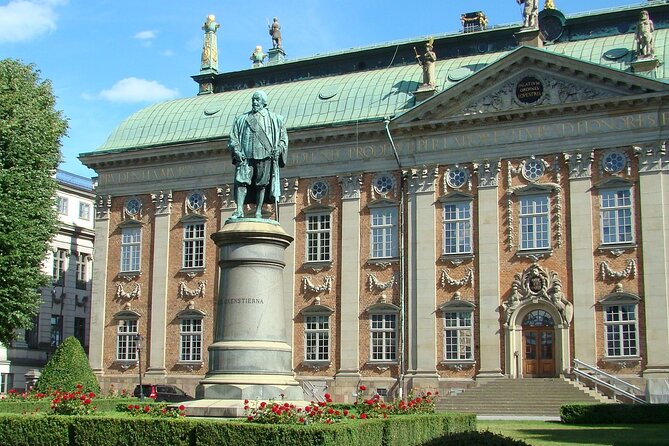
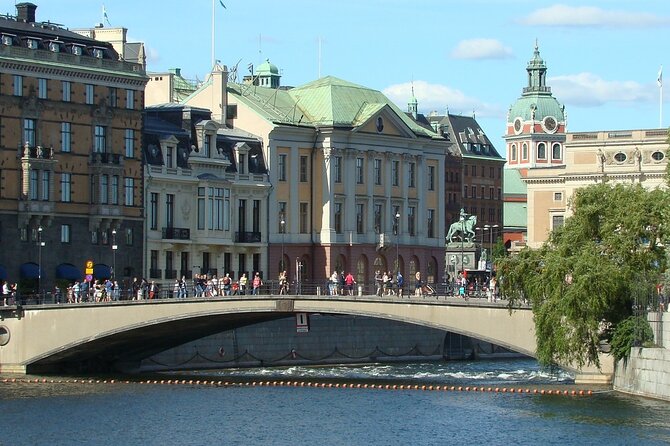
- Big views from Riksbron: Look toward Riddarholmen, government buildings, the House of Nobility, and Stockholm City Hall.
- A strong Old Town finish: Stortorget, Köpmangatan, Österlånggatan, and Skeppsbron bring medieval Stockholm into focus.
- Visual aids help: The guide uses images to explain architecture, a useful touch on a walking tour full of styles and dates.
- Easy onward plans: The walk ends near Kungsträdgården, with a tram connection toward Djurgården’s museums.
What this Stockholm walk actually covers
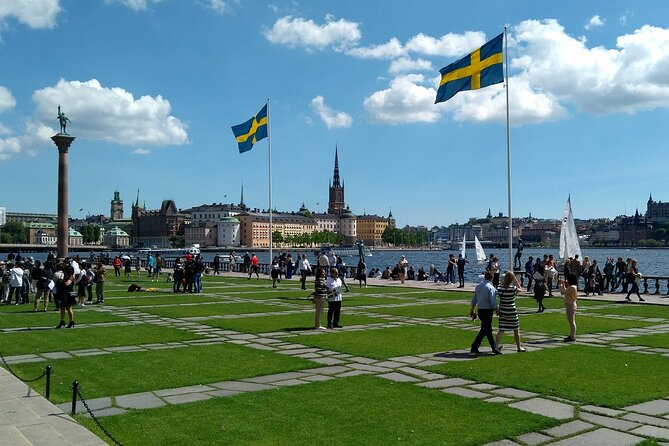
This is a history-and-architecture walk rather than a museum tour. You will not spend long periods inside major attractions, and the listed stops are presented with free admission. Instead, the guide uses streets, squares, bridges, statues, and building fronts as the classroom.
That format works well in Stockholm. The city’s royal quarter, government center, waterfront, and Old Town sit close together, so you can watch the character of the city change as you walk. The route also gives you a useful first look at the city before deciding which places deserve a separate visit.
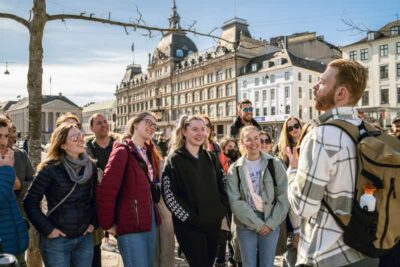
The group size is capped at 10. That matters here because several stops involve looking at details on distant buildings or hearing a story in an open square. One review specifically praised the friendly, personal guiding and the amount learned about Swedish history. Another noted that visual aids helped explain the architecture, especially on a windy day.
The experience is offered in English and lasts about 105 minutes. That is long enough for a solid orientation, but short enough to fit into a busy day in Stockholm.
More Private Walking Tours in Stockholm
- Walking Tour of Stockholm Old Town
★ 5.0 · 1,175 reviews - Stockholm: Old Town Walking Tour with Local Guide
★ 4.7 · 719 reviews - Best of Stockholm Walking Tour-3 Hours, Small Group max 10 people
★ 5.0 · 645 reviews
Royal Opera and the royal setting at Gustav Adolfs torg
The meeting point is Gustav Adolfs torg, where the Royal Swedish Opera provides a handsome opening scene. The guide begins with a short introduction to Sweden and Stockholm, including the country’s formal name, the Kingdom of Sweden.
The square quickly establishes the royal theme. The Royal Palace in front of you was built in the early 18th century in the Baroque style. Across the square, a classical building now used by the Ministry of Foreign Affairs was once the palace of the heir presumptive.
The Opera also brings in a colorful piece of Swedish culture. It figured in the opera The Masked Ball by Giuseppe Verdi, based on the life of Swedish King Gustav III. This is a good early reminder that the walk is not only about facades. The guide connects buildings to politics, personalities, and the events that shaped Sweden.
You receive about 15 minutes here. That is enough for orientation and exterior context, but not an opera performance or a detailed interior visit. If you want to see the Royal Palace rooms or explore the Opera house inside, plan that separately.
Parliament and Sweden’s long move toward democracy
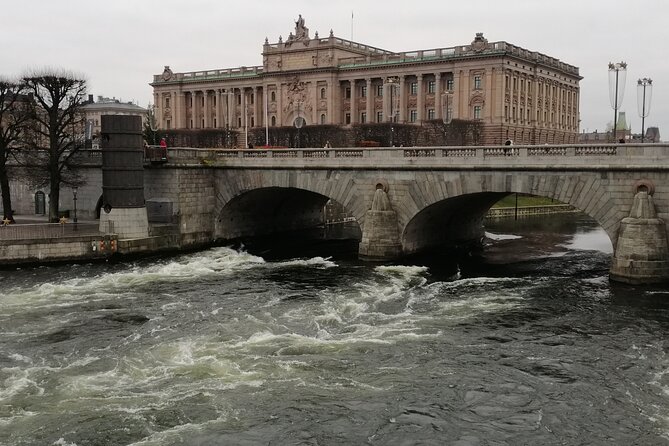
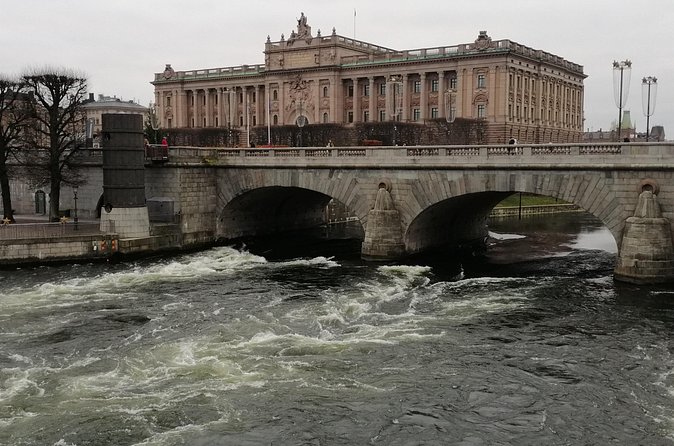
The next stop is the Parliament Building, or Riksdagshuset. Its Neo-Renaissance design includes a Neo-Baroque section, and construction took place from 1897 to 1905.
The building matters for more than its appearance. This is where the guide explains Sweden’s political development, starting with the Riksdag of the Estates. Nobility, clergy, burghers, and peasants met separately before presenting their views to the king. Until 1866, this body was the highest authority in Sweden next to the monarch.
The story then moves through several major changes. A two-chamber parliament replaced the old system in 1866, though voting rights were not equal for all citizens. General suffrage arrived in 1921 after a long political struggle led by liberals and socialists. In 1975, the two chambers became one, and the king’s role was confirmed as representative rather than governing.
I find this one of the most useful parts of the walk because it gives you a framework for understanding the royal buildings you have just seen. Sweden’s monarchy remains visible, but political power works through a modern parliamentary system. The 10-minute stop is brief, so expect a concise explanation rather than a full civics lecture.
Riksbron and Stockholm’s official waterfront
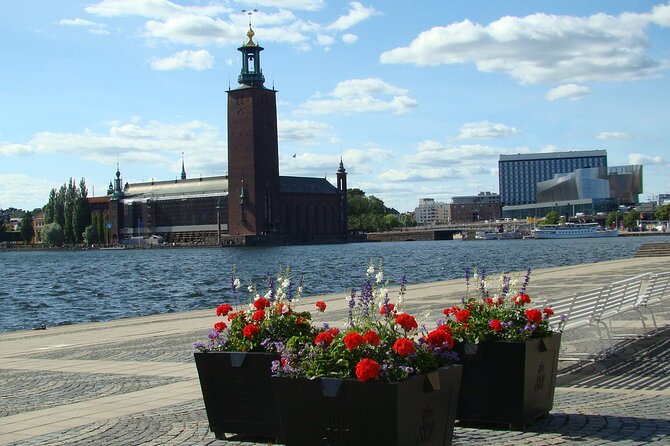
From Riksbron, the route opens up. The bridge gives you views toward Riddarholmen, the Prime Minister’s residence, government buildings, and the House of Nobility. Stockholm City Hall is also visible, the building associated with the annual Nobel Prize banquet.
This is a welcome change from the close architectural detail of the squares. You can pause, look across the water, and understand how Stockholm’s official buildings fit together. The guide’s job here is partly visual: point out the landmarks, explain their roles, and help you connect the city’s royal, political, and ceremonial centers.
The stop lasts around 15 minutes. Wind can be a factor on an exposed bridge. A previous tour day was described as very windy, so I would check the forecast and bring an extra layer, especially outside the warmer months. The route is not designed as a long waterfront walk, so the bridge visit gives you views without taking the tour far off course.
Same fjord country, a very different day out:
- Stockholm: City Archipelago Sightseeing Cruise with Guide
★ 4.3 · 10,798 reviews - Stockholm: Skansen Open-Air Museum Admission Ticket
★ 4.5 · 3,427 reviews - Stockholm: Archipelago Boat Tour
★ 4.4 · 3,110 reviews - Stockholm: Highlights Boat Tour
★ 4.3 · 2,542 reviews
Lejonbacken, Karl XII, and the Grand Hotel
Lejonbacken sits on the north side of the Royal Palace and is one of Stockholm’s best-known photo spots. From here, the palace feels especially imposing, and the broad approach gives the guide room to explain the period when Sweden was a major power in Northern Europe.
You will see the Royal Garden and its statue of Karl XII, remembered as the last of Sweden’s warrior kings. Nearby, the Financial District reflects the architectural changes of the late 19th and early 20th centuries, when several styles were flourishing in Stockholm.
The Grand Hotel adds another layer. It is Stockholm’s most prestigious hotel, and Nobel laureates stay there during the Nobel Prize ceremonies. This detail helps connect the city’s old royal center with its modern international identity.
The stop takes about 15 minutes. It is a strong place for photographs, but keep your expectations sensible. The tour gives you outdoor views and explanations, not a hotel visit or a detailed palace tour.
Slottsbacken and the Bernadotte dynasty
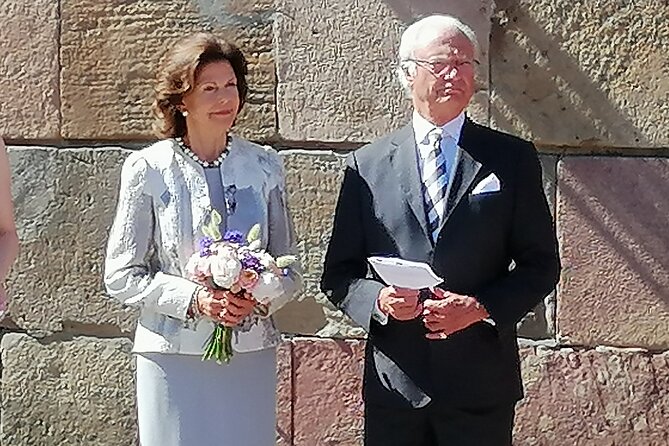
At Slottsbacken, you pass through the Royal Palace courtyard and make a short visit to the Palace Chapel. The chapel is where the royal family baptizes its children, giving this brief interior stop a direct link to the living monarchy.
Outside, a statue of Carl XIV Johan opens the door to one of Sweden’s most unusual royal stories. He began as a French soldier who rose in Napoleon’s army, then was adopted into the Swedish royal family. He became the first ruler of the Bernadotte dynasty, which still rules Sweden.
The story is especially interesting because Carl XIV Johan was brought to Sweden in hopes that he would help recover territory lost to Russia during the Napoleonic wars. Instead, he focused on diplomacy, infrastructure, and education. Sweden later marked 200 years of peace in 2014.
The guide also links this era to the industrial revolution, Sweden’s natural resources, and Swedish inventions that helped form the foundation of the welfare state. This is a lot of ground for a 10-minute stop, but it gives you a useful sense of how Sweden moved from military ambition toward stability and social development.
Stortorget and the difficult story behind the pretty square
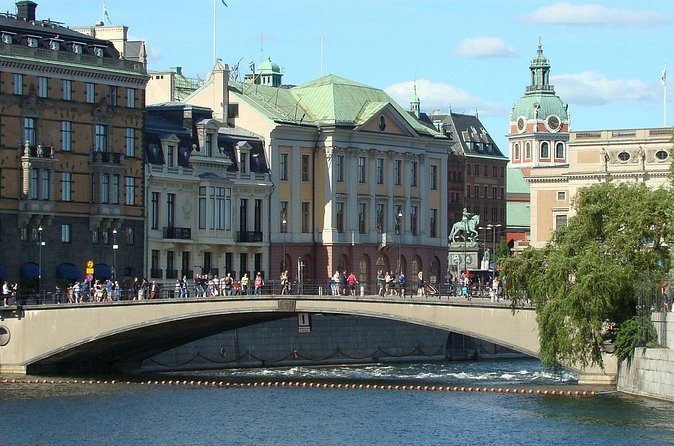
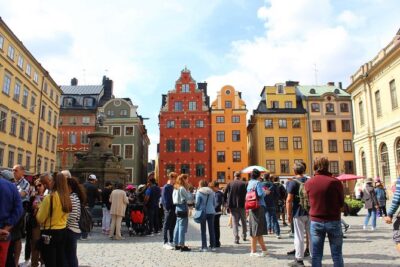
Stortorget is the central square of Gamla stan and the most photographed spot on the route. Its colorful buildings show 17th-century Scandinavian Renaissance and 18th-century Classicism, making it an obvious place to stop and look up.
The square’s beauty can hide a grim past. In November 1530, about 100 noblemen and priests were beheaded here by Danish King Christian II. In Sweden, he became known as Christian the Tyrant. The story explains why national identity and resistance to Danish rule remain important parts of Swedish history.
The Nobel Prize Museum is also located on Stortorget. The Swedish Royal Academies and other committees select winners in major fields of science and art. The square therefore brings together medieval power struggles, royal politics, and Sweden’s modern intellectual reputation in one compact setting.
You have about 15 minutes here. It is likely to be one of the busiest-feeling points on the walk because it is so recognizable, but the stop is still valuable. The guide can help you look past the postcard view and understand why the square matters.
Köpmangatan and medieval Gamla stan
From Stortorget, you walk along Köpmangatan, or Merchants Street. Written records mention the street as early as 1350, and the name points to its commercial past.
This is where the walk becomes less formal. Narrow alleyways give you a feel for medieval Stockholm, while Österlånggatan leads down toward Skeppsbron. Ships have loaded cargo along Skeppsbron since the 17th century, so the final part of the route connects the Old Town with Stockholm’s trading life.
The 20-minute Old Town section is the longest single stop. That is a good choice. The earlier portions explain institutions and royal figures, but the lanes of Gamla stan let you experience the city at street level. You get a sense of scale, movement, and how old routes still shape the modern center.
The tour ends at the southern end of Kungsträdgården, near the statue of Karl XII. This is a practical finish. Kungsträdgården is a pleasant park, and you can continue by tram toward Djurgården, the museum island. The Vasa Museum, Viking Museum, ABBA Museum, and Skansen are located there.
One point is worth clarifying: the tour touches on Viking history only briefly and mainly as background. Its main subject is Stockholm’s buildings, political story, royal connections, and medieval Old Town. If Viking history is your main goal, Djurgården’s museums will give you much more.
Is $106.42 a fair price for 105 minutes?
At $106.42 per person, this is an expensive short walking tour. The value depends on what you want from your first hours in Stockholm.
I can see the price making sense for someone who wants a private-feeling small group, a clear historical thread, and an English-speaking guide who can connect many landmarks in a short time. The group limit of 10 is a real advantage over a large street crowd, and the visual aids add something beyond simply pointing at buildings.
Still, you should know what you are buying. Admission is free at the listed stops, and the tour does not include extended visits to the Royal Palace, the Nobel Prize Museum, City Hall, or the museums on Djurgården. You are paying for the guide’s organization, explanations, and efficient route.
If you are comfortable reading about Stockholm on your own and mainly want to wander Gamla stan, the price may feel high. If you value context and want someone to explain why a statue, palace, parliament, or square matters, the focused format is easier to justify.
Who will get the most from this walk?
I would choose this experience for a first visit, especially if you want a quick orientation before exploring independently. The route gives you royal Stockholm, modern government, waterfront views, Nobel connections, and Gamla stan without requiring a full day.
It also suits anyone who likes architecture but wants more than a list of styles. The guide explains Baroque, Neo-Renaissance, Neo-Baroque, Scandinavian Renaissance, Classicism, and the architectural flowering around the turn of the 20th century.
The walk is a good fit for history-minded adults, couples, small groups, and cruise passengers with limited time in the city. It may also work well for someone who wants to continue to Djurgården afterward.
You should have a moderate level of physical fitness. The experience is a continuous walking route through central Stockholm, and the program includes bridges, squares, narrow lanes, and streets. Wear sensible shoes and allow time to get to Gustav Adolfs torg.
Confirmation is provided at booking, and the tour is near public transportation. You can cancel for a full refund up to 24 hours before the start time. Changes or cancellations made later are not accepted, based on local Stockholm time.
Should you book the Beautiful Stockholm Small Group Walking Tour?
Book it if you want a tightly planned introduction with strong historical connections and a group no larger than 10. The best parts are the Parliament explanation, the views from Riksbron, the royal stories around the Palace, and the final walk through Gamla stan.
Think twice if you want substantial interior visits or a low-cost stroll. The duration is short, the price is high, and many stops are outdoor viewing points. For the right person, though, this walk can give you the city’s basic shape quickly, leaving you free to spend the rest of your day following your own interests.
FAQ
Where does the tour begin?
It begins at Gustav Adolfs torg, 111 52 Stockholm, Sweden.
Where does the tour end?
It ends at the Karl XII statue at the southern end of Kungsträdgården, Stockholm.
How long is the walking tour?
The tour lasts approximately 1 hour and 45 minutes.
What language is the tour offered in?
The tour is offered in English.
How many people can join the tour?
The maximum group size is 10 people.
How much does the tour cost?
The listed price is $106.42 per person.
Are admission tickets included?
The listed stops have free admission. The experience does not state that admission to separate museums or extended palace visits is included.
Does the tour visit Stockholm’s Old Town?
Yes. The route includes Stortorget, Köpmangatan, narrow Old Town lanes, Österlånggatan, and Skeppsbron.
Is the tour suitable for everyone physically?
You should have a moderate level of physical fitness for this walking activity.
Can I cancel for a full refund?
Yes, if you cancel at least 24 hours before the experience start time. Cancellations or changes made less than 24 hours before the start are not accepted for a refund.
More Walking Tours in Stockholm
- Stockholm: Ghost Walk and Historical Tour
★ 4.7 · 2,206 reviews - The Original Stockholm Ghost Walk and Historical Tour – Gamla Stan
★ 4.5 · 1,165 reviews - The Nordic Food Walk Stockholm
★ 4.5 · 642 reviews - Walking Tour of Stockholm’s Old Town, Gamla Stan
★ 5.0 · 451 reviews
Just added around Stockholm
- Stockholm: Evening Wildlife Safari with Midsummer Meal★ 4.2 · 130 reviews
- World War II Stockholm Old Town Walking Tour and Army Museum★ 4.6 · 4 reviews
- Stockholm: Archipelago Guided Boat & Walking Tour of Vaxholm★ 3.1 · 23 reviews
- Stockholm: Archipelago Islands Kayak Tour and Outdoor Picnic★ 4.9 · 150 reviews
- Vaxholm & Stockholm Archipelago: Guided Excursion, Day Trip★ 4.8 · 41 reviews
- Stockholm: Underground Metro Art Ride with a Local Guide★ 4.6 · 39 reviews
- Scandinavian Art, Architecture and Design Tour in Stockholm★ 4.5 · 11 reviews
- Stockholm: Sunset Hike in Tyresta National Park with Meal★ 5.0 · 79 reviews
Private Walking Tours, compared.
Past & Present Small Group Guided Walking Tour
Read our review →
Walking Tour in Bergen of the Past and Present
Read our review →
Group Walking Tour – City Highlights – 2 Hours
Read our review →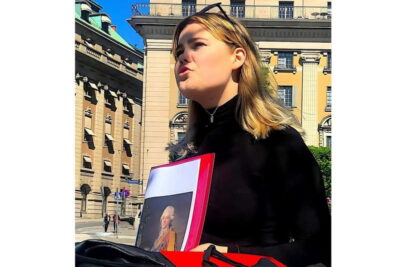
3h walking tour, small group max 10 people Copenhagen
Read our review →Browse the lists this tour appears in