
Reviewed · COPENHAGEN TOURS
Copenhagen Architecture and Sustainability Tour with local Guide
Copenhagen’s best lesson in modern city planning may come from a bicycle seat. This three-hour ride links harbor baths, clever rain-control parks, shared student housing, concert halls, and old industrial buildings, showing how the city is changing without leaving its past behind.
I like the small group of no more than 15 and the chance to cover about 11 kilometers without wrestling with city maps. I also like the mix of practical design and social ideas, from shared kitchens at Tietgen Residence Hall to a former church now serving as a community center.
The main consideration is physical effort. You will spend roughly an hour and five minutes cycling between stops, and summer crowds around the harbor can make the first section less relaxed than the quieter routes later on.
In This Review
- Key points at a glance
- Why this Copenhagen bike tour feels different
- Blox and Lille Langebro: Copenhagen’s new waterfront
- Islands Brygge and Tietgen Residence Hall
- DR Koncerthuset and Amager Fælled
- Cykelslangen and the logic of bike-first design
- Enghave Park turns stormwater into public space
- Absalon and the Meatpacking District
- Israel’s Square and Ørstedsparken
- What the $72.57 price gives you
- Who should book this ride
- Should you book the Copenhagen Architecture and Sustainability Tour?
- FAQ
- How long does the Copenhagen architecture and sustainability tour last?
- How far do you cycle?
- Is bicycle use included in the price?
- Are helmets provided?
- Can I book an e-bike or child seat?
- Are baskets and phone holders included?
- Where does the tour start and finish?
Key points at a glance
- About 11 kilometers by bike: You cover far more ground than on foot, with cycling time forming a large part of the three-hour outing.
- A city-planning tour, not a landmark checklist: The focus is on sustainability, public space, architecture, and how Copenhagen uses its harbor and parks.
- Small-group riding: The maximum group size is 15, a useful limit on busy bike paths.
- Free bicycle included: Children’s bikes can be requested, and helmets are free if you want one.
- Strong local guide element: Guides Jörn and Julia are specifically praised for making Copenhagen’s recent development clear and interesting.
- Extra equipment costs more: Phone holders and baskets cost 49 DKK each, while e-bikes, child seats, and cargo bikes require advance booking and added fees.
Why this Copenhagen bike tour feels different
Many city bike tours hurry between famous sights. This one takes a more thoughtful route through places you might otherwise pass without knowing why they matter.
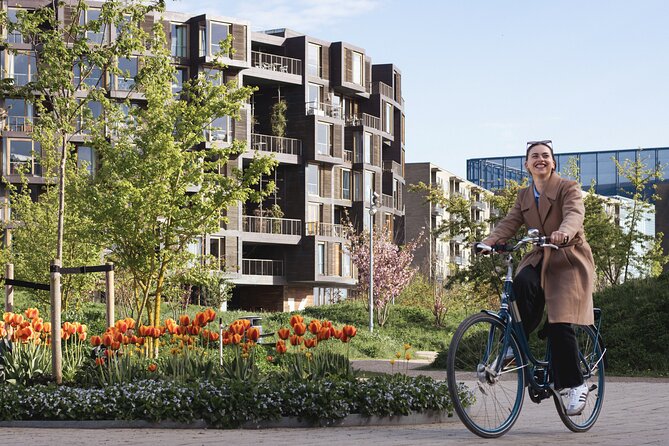
You will see buildings and public spaces as working parts of Copenhagen. A bridge is not just a handsome crossing. It may be part of the city’s effort to move people away from car traffic. A park is not only a place for a picnic. It may also hold back stormwater during cloudbursts.
That gives the ride a useful theme. You are not simply looking at new architecture. You are learning how Copenhagen handles housing, recreation, transport, polluted industrial land, harbor access, and heavy rain.
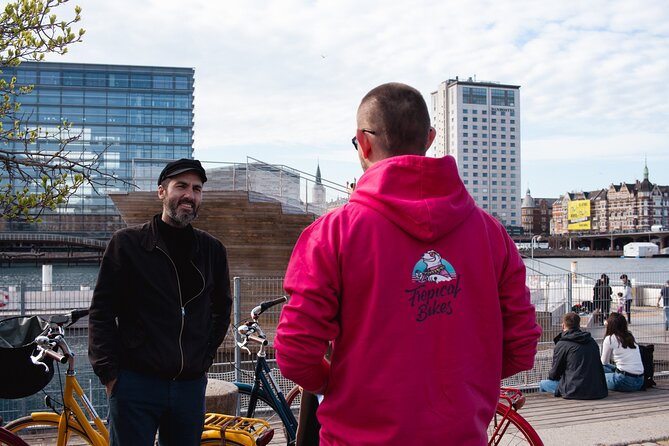
The tour starts at Tropical Bikes, at Vester Voldgade 2, near public transportation. Your bicycle is included, and you can ask for a free helmet. The route is in English, and the guide rides with you from stop to stop rather than waiting at fixed points.
The overall rating is 4.8 from 39 ratings, with 95 percent recommending the experience. That is a strong result, though the sample is not large enough to erase the practical issues of weather, cycling ability, and busy streets.
A few more Copenhagen trips to weigh up
- Copenhagen: Canal Cruise with Guide
★ 4.6 · 9,115 reviews - Copenhagen: Highlights 3 Hour Bike Tour with a Local Guide
★ 4.8 · 2,312 reviews - Copenhagen Sightseeing Classic Canal Tour With Live Guide
★ 4.5 · 1,906 reviews
Blox and Lille Langebro: Copenhagen’s new waterfront
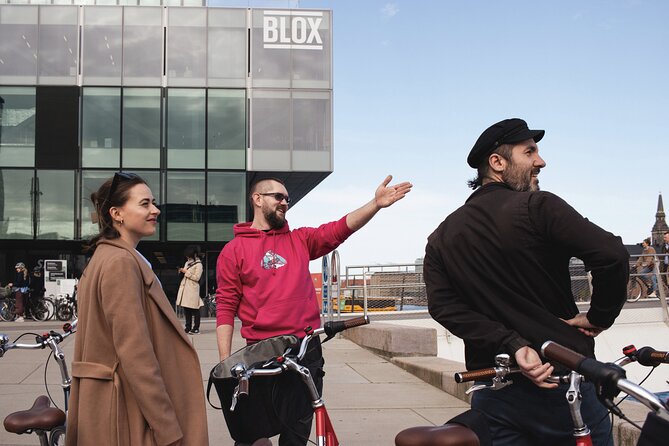
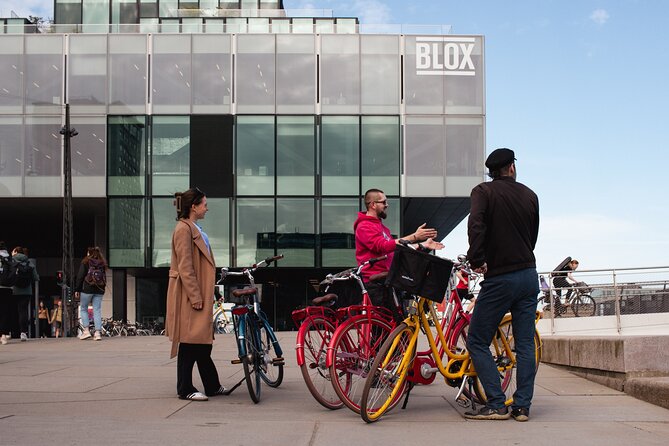
The first stop is Blox, a mixed-use building devoted to sustainability in both technical and social terms. The Danish Architecture Center, commonly known as DAC, is its most prominent tenant, with exhibitions about Copenhagen architecture.
You may have time to look at the building and learn about its purpose, but admission to the tour stop is free. If you want to study the current DAC exhibition in detail, check what is showing before you arrive, since the tour’s short visit is not the same as a full museum visit.
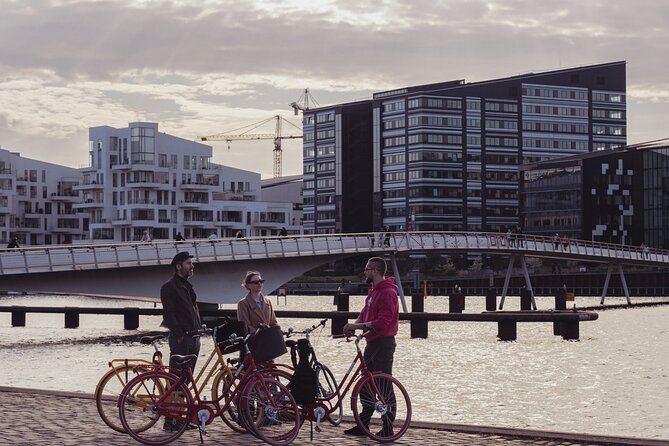
From Blox, the ride reaches Lille Langebro. This bridge links pedestrians and cyclists across the harbor and belongs to a newer group of crossings that have changed the water’s edge from a working merchant and naval harbor into a place for daily recreation.
This is a good early example of the tour’s main idea: infrastructure can shape city life. The bridge is useful, but it also gives people a direct reason to reach the harbor on foot or by bike.
The harbor area can be crowded, especially in summer. If you dislike riding near heavy foot traffic, pay close attention to the guide and expect this portion to feel less calm than the later sections.
Islands Brygge and Tietgen Residence Hall
At Havnebadet Islands Brygge, you see the result of a major change in Copenhagen’s relationship with its water. When the harbor bath opened in 2003, the waterfront began to function as a place for swimming and leisure, not only as a zone for ships and industry.
The stop lasts about 10 minutes, so think of it as a short explanation and look around rather than a swimming break. The tour does not list swimming time or entry as part of the outing.
The route then moves toward Tietgen Residence Hall, one of the clearest examples of social sustainability on the ride. Its roughly 400 inhabitants have private rooms with washrooms, while living rooms, kitchens, and other facilities are shared by some or all residents.
I find this stop especially useful because it shows sustainability as a social question, not just an energy-saving one. The building asks how private space and community life can work together, and how shared rooms can support the personal growth of residents.
You will not be taking a full architectural tour inside the residence hall. The value comes from the guide’s explanation and the chance to see the building as a model for student housing.
DR Koncerthuset and Amager Fælled
DR Koncerthuset brings the tour back to large-scale public architecture. Its main concert hall holds 1,800 seats and is home to the Royal Symphony Orchestra, with smaller stages and recording studios elsewhere in the building.
This stop is brief, about 10 minutes. You should expect an exterior-focused visit and context from the guide, not a concert or an extended interior tour.
The shift from concert hall to Amager Fælled is one of the route’s more striking changes. This open natural area once served as military training ground and a shooting range from the 1700s to the 1950s. It later became a garbage dump, part of an old joke about Amager as lorteøen, or shit island.
Today, Amager Fælled is a rare patch of relatively untouched nature inside Copenhagen, much of it on land reclaimed through artificial means. That contradiction makes the stop worthwhile. It is a reminder that city nature can have a complicated past and still become valuable public space.
The stop lasts about 15 minutes, longer than several of the building visits. It offers a pause from dense streets, though the ride still requires steady cycling afterward.
Same fjord country, a very different day out:
- Copenhagen: Hop-On Hop-Off Bus Tour with Boat Tour Option
★ 3.9 · 4,122 reviews - Private Walking Grand Tour of Copenhagen
★ 5.0 · 3,953 reviews - From Copenhagen: Lund and Malmö 2-Country Tour
★ 4.7 · 2,772 reviews - Copenhagen Highlights Walking Tour
★ 5.0 · 2,324 reviews
Cykelslangen and the logic of bike-first design
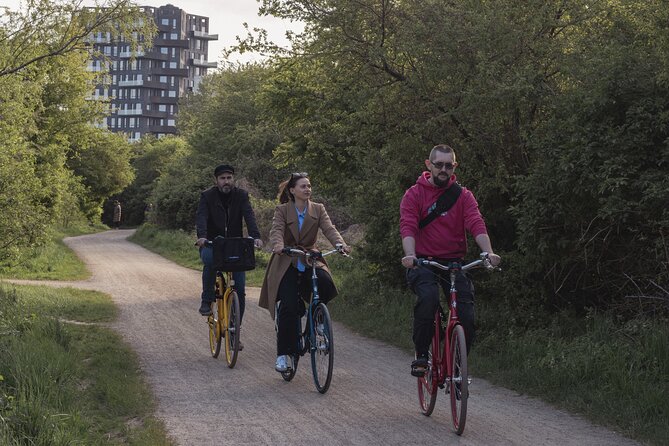
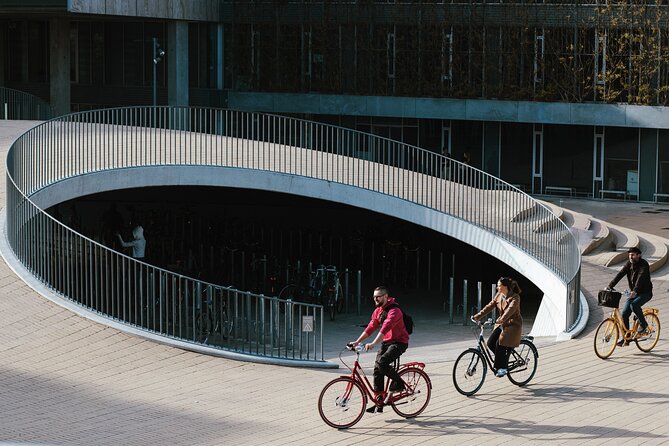
Cykelslangen, or the Bicycle Snake, is one of the tour’s most memorable pieces of infrastructure. Along with Bryggebroen, it was among the first new harbor crossings built exclusively for cyclists.
The design matters because it gives bicycle traffic its own route instead of forcing riders to share every crossing with cars and pedestrians. You will experience the bridge as part of the ride, not merely view it from a distance.
This is where Copenhagen’s bike culture becomes practical rather than decorative. The city’s reputation for cycling rests on routes that make riding efficient and direct, and Cykelslangen shows how a single crossing can improve connections between neighborhoods.
The ride is not a race. Still, you should be comfortable starting, stopping, steering, and following a guide through urban cycling conditions. The operator lists a moderate level of physical fitness, and that is a fair description.
A phone holder or basket is not included. Each costs 49 DKK, which is worth considering if you need navigation access, a place for a water bottle, or room for a small purchase.
Enghave Park turns stormwater into public space
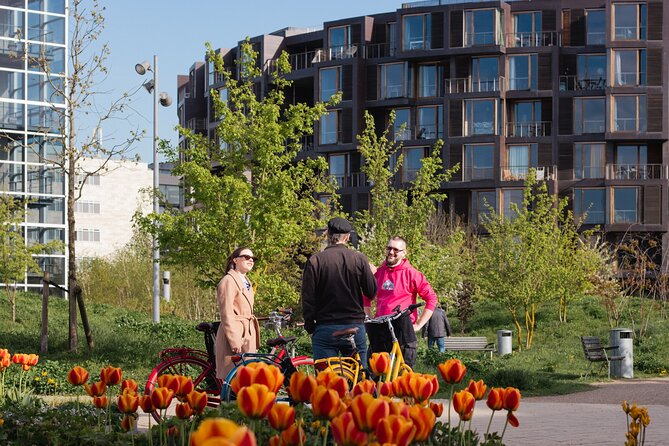
Enghave Park dates from the late 1920s and occupies land once used for allotment gardens. Its original design included a bandstand, a playground, sports fields, and a neoclassical layout.
Between 2017 and 2019, the park received a complete redesign. Its newer role is less obvious at first glance: it helps control torrential rain in Copenhagen.
This is one of the tour’s best examples of useful design that does not look like engineering. A park can remain a place for sports and relaxation while also helping the city handle sudden cloudbursts. The guide’s explanation gives you a new way to read ordinary public space.
The stop lasts about 10 minutes. It is a good place to notice the contrast between the park’s older formal plan and its newer work as part of the city’s water-control system.
Absalon and the Meatpacking District
Folkehuset Absalon occupies a former church that has been converted into a privately run community center. The stop is short, only about five minutes, but the idea is easy to grasp: an old building can gain a new social purpose instead of being discarded.
The Meatpacking District, or Kødbyen, gives you a different kind of reuse story. The city planned this area to create more sanitary and healthier conditions for the meat trade as Copenhagen grew. It expanded through several additions, leaving a record of industrial architecture from the 19th and 20th centuries.
This part of the route works well for people who enjoy cities as living documents. The buildings are not presented as isolated monuments. They show how public health, industry, urban growth, and later redevelopment have shaped one district over time.
The tour does not promise a meal or extended free time in Kødbyen. If you want to eat there, plan that for after the ride rather than counting on a restaurant stop during the three hours.
Israel’s Square and Ørstedsparken
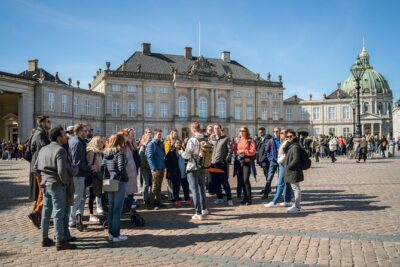
Israel’s Square, beside Torvehallerne, is now a meeting place for Copenhagen food lovers. Its earlier story is less polished. A farmers’ market occupied the area from the end of the walled city’s strict no-building policy in the 1890s until the 1950s, after which the square became a large parking lot.
The stop shows how public space can change with a city’s priorities. A place once given over to cars can regain a civic and food-related role.
Ørstedsparken provides the final major stop. It is an early example of urban reuse, created when Copenhagen’s old defenses outside the walls were transformed into a park after the fortifications were removed.
Parts of the former moat remain as a lake, while hills and crooked paths give the park a less formal feel than its defensive origins suggest. The park brings the tour back to a basic point: old infrastructure often survives in new forms.
After the stops, the remaining time is spent cycling back through Copenhagen to the starting point. The exact pace and timing are approximate, so do not schedule a tight appointment immediately after the tour.
What the $72.57 price gives you
At $72.57 per person, the cost is reasonable if you want a guided introduction to Copenhagen’s modern architecture and bike network in one outing. You receive a bicycle, a local English-speaking guide, and a carefully connected route that would take real planning to reproduce alone.
The value is less convincing if you only want famous sights or prefer to stop for long periods at each location. Most visits last about 5 to 15 minutes, while the ride itself takes roughly 65 minutes. You are paying for the route, the explanations, bicycle use, and the way the stops fit together.
Optional equipment can raise the price. An e-bike costs 249 DKK extra, a cargo bike 449 DKK, an e-cargo bike 649 DKK, and a child seat 119 DKK. Children’s bicycles come in different sizes, but you should contact the operator about availability before booking.
The small group helps protect the experience’s value. A maximum of 15 people is large enough to provide company but small enough for a guide to manage on city streets.
Who should book this ride
I would choose this tour early in a Copenhagen stay if I wanted to understand how the city works today. It gives you useful bearings across the harbor, Amager, Vesterbro, and central parks, while also pointing out places you might revisit later.
It suits adults interested in architecture, city planning, sustainability, public transport, cycling, or urban history. It also works for families with children who can ride confidently, provided the right bike is available.
You should think twice if you dislike cycling, have limited stamina, or want an indoor activity that runs in all weather. The tour requires good weather, and poor conditions can lead to a different date or a full refund.
The named guides Jörn and Julia have been praised for being friendly, clear, and good at explaining recent city development. Guide quality always affects a tour like this, but the comments suggest that the human side is one of its strongest features.
Should you book the Copenhagen Architecture and Sustainability Tour?
Book it if you want Copenhagen explained through its bridges, parks, housing, harbor, and reused buildings rather than through a standard list of postcard sights. The route is broad, the group is limited, and the cycling lets you see much more than a walking tour in the same time.
Skip it if you want extensive time inside buildings, a food tour, or a relaxed ride with very little traffic. For most reasonably fit visitors, though, the $72.57 fee buys a smart introduction to Copenhagen’s modern identity, with enough practical city knowledge to improve the rest of your stay.
Free cancellation is available up to 24 hours before departure. Any cancellation or change made later is not refunded, and the outing may be canceled if the minimum group size is not reached.
FAQ
How long does the Copenhagen architecture and sustainability tour last?
The tour lasts approximately three hours. About 65 minutes of that time is spent cycling between stops, and the listed stop visits generally last from 5 to 15 minutes.
How far do you cycle?
You cycle roughly 11 kilometers between the stops. The tour provider recommends a moderate level of physical fitness.
Is bicycle use included in the price?
Yes. Bicycle use is included, and children’s bicycles in different sizes are available by contacting the operator about availability.
Are helmets provided?
Free bike helmets are available upon request. You can ask for one before setting out.
Can I book an e-bike or child seat?
Yes. An e-bike costs 249 DKK extra, and a child seat costs 119 DKK extra. These special bike options should be reserved in advance.
Are baskets and phone holders included?
No. Bike extras are not included. A basket or phone holder can be booked for an additional 49 DKK per item.
Where does the tour start and finish?
The tour starts at Vester Voldgade 2, 1552 København, Denmark, and finishes back at the same meeting point. The location is near public transportation.
Just added around Copenhagen
- a day at North Zealand Castle Tour★ 4.5 · 19 reviews
- The Hunt For The Six Forgotten Giants★ 5.0 · 45 reviews
- Copenhagen Walking Tour with Food Testing (smorrebrod dish & snap)★ 4.5 · 10 reviews
- walking tour – Copenhagen and Christiansborg 3 hours★ 4.0 · 7 reviews
- The Philosopher’s Last Walk: An audio tour on the life of Søren Kierkegaard★ 4.5 · 5 reviews
- The Six Forgotten Giants Trolls Hunt with Minibus★ 4.5 · 27 reviews
- Small Group Guided Food Tour and Street Art Visit to Norrebro★ 5.0 · 9 reviews
- Malmö Full Day Private Trip, Sightseeing Tour & Lunch Option★ 5.0 · 93 reviews
Copenhagen Tours, compared.
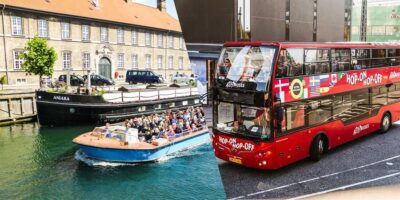
Hop-On Hop-Off Bus Tour with Boat Tour Option
Read our review →
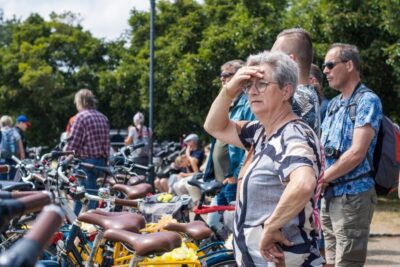
Highlights 3 Hour Bike Tour with a Local Guide
Read our review →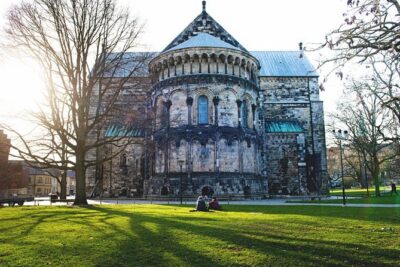
Hamlet and Sweden Tour – Two Countries in one day !
Read our review →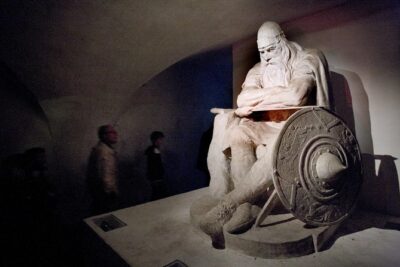
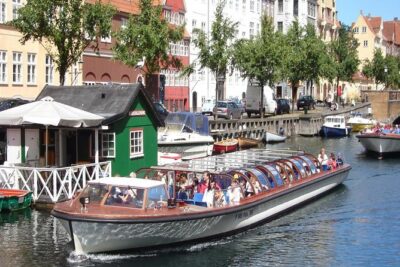
Copenhagen Sightseeing Classic Canal Tour With Live Guide
Read our review →Browse the lists this tour appears in