
Reviewed · COPENHAGEN TOURS
Copenhagen Card – DISCOVER 80+ attractions and public transport
Copenhagen’s best value is not one single sight. It is the freedom to move from a royal palace to a canal boat, then out to a Renaissance castle or modern-art museum without buying another ticket each time. The Copenhagen Card covers more than 80 attractions and public transport across a wide part of the region.
I especially like two things here: the transport coverage takes the guesswork out of buses, trains, Metro services, and harbor buses, and the attraction list reaches well beyond central Copenhagen. You can visit Rosenborg Castle in the morning, Louisiana Museum of Modern Art in the afternoon, and still use the same card for your ride home.
The catch is simple: you must use the card actively to make it pay. At $95.96 per person, a slow one-day visit may not offer enough admission savings, particularly if attractions are closed, fully booked, or have limited opening hours.
In This Review
- Key points to know before buying
- What the Copenhagen Card actually gives you
- The royal Copenhagen core
- Tivoli Gardens and the canal boat
- Churches, towers, and unusual city sights
- Art museums for different tastes
- Castles and royal day trips
- Science, music, design, and military history
- More specialized stops
- How to make the price work
- Digital use, bookings, and timing
- Should you buy the Copenhagen Card?
- FAQ
- How long can I use the Copenhagen Card?
- Is the Copenhagen Card physical or digital?
- Does public transport come with the card?
- Does the card include Tivoli Gardens?
- Do I need reservations for any attractions?
- Can children use the Copenhagen Card for free?
Key points to know before buying

- 80-plus attractions: Major stops include Tivoli Gardens, Rosenborg Castle, Christiansborg, Amalienborg, the National Museum, and the canal tour.
- Regional transport included: Use Copenhagen’s buses, trains, S-trains, Metro, and harbor buses throughout the covered area.
- Five time options: Pick 24, 48, 72, 96, or 120 hours, with the clock starting when you first use the card.
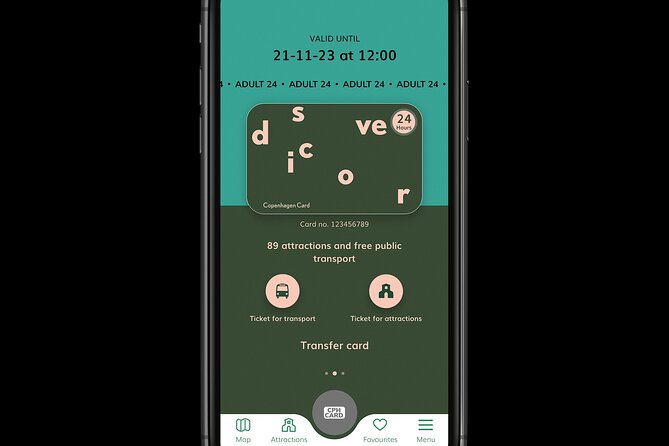
- Digital only: Download the Copenhagen Card app and enter the barcode number from your booking. There is no physical card.
- Excellent day-trip reach: Kronborg, Frederiksborg, Louisiana, Roskilde Cathedral, and the Viking Ship Museum are all part of the attraction network.
- Planning matters: Some sights need advance time slots, and many museums close on Mondays.
What the Copenhagen Card actually gives you
This is a sightseeing pass and a regional transport pass in one. You select the number of hours at purchase, then keep the card unused until you are ready to begin. Once activated on your smartphone, it is valid continuously for the stated period.
That detail matters. A 48-hour card lasts 48 hours from first use, not simply two calendar days. If you first scan it at 1 p.m. on Sunday, you can use it through roughly 1 p.m. Tuesday. That makes an afternoon arrival more manageable than a calendar-day pass.
The card is personal and tied to your phone. You need the Copenhagen Card app, and the code from your booking is used to redeem it. Keep your phone charged, since the pass is entirely digital and there are no physical replacements for a lost or damaged phone.
The public transport benefit is one of the strongest parts of the deal. You can ride buses, trains, S-trains, Metro services, and harbor buses in the covered Copenhagen region. This is useful not only for sightseeing, but also for reaching the airport and for day trips outside the center.
One practical warning: the transport QR code may not work like a contactless bank card at every Metro screen. Have the active pass ready in the app so you can show it if needed. The system covers the transport, but you still need to understand the difference between the Metro, S-train, and regular rail services.
Other Copenhagen days people book alongside this one:
- Copenhagen: Canal Cruise with Guide
★ 4.6 · 9,115 reviews - Copenhagen: Hop-On Hop-Off Bus Tour with Boat Tour Option
★ 3.9 · 4,122 reviews - Private Walking Grand Tour of Copenhagen
★ 5.0 · 3,953 reviews
The royal Copenhagen core

Start in the center with the sights that give you the quickest sense of Denmark’s monarchy and civic life.
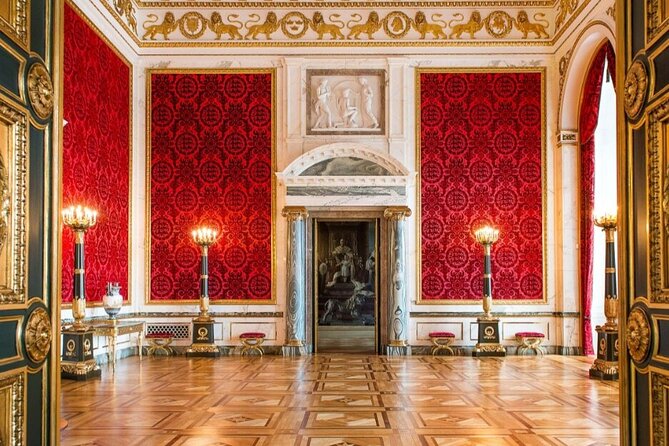
At Rosenborg Castle, you enter a compact royal palace built by Christian IV in the 1600s. Its greatest draw is the Crown Jewels, but the recreated interiors also show how Danish royalty lived and displayed power. Allow about an hour, and remember that palace rooms can feel crowded at the busiest times.
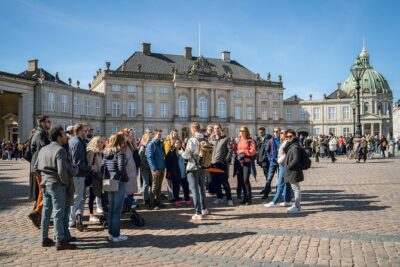
Amalienborg Palace Museum offers another view of royal life. Here you see recreated palace interiors and learn about the home of Denmark’s royal family. It pairs naturally with a walk through the surrounding palace square, though the museum itself is the main card benefit.
At Christiansborg Slot, you visit the official seat of the Queen. The complex gives you a different kind of royal experience, tied to state functions and the center of Danish government. Allow about an hour, and check current booking rules before you go because some parts may require a time slot during busy periods.
The National Museum of Denmark is the place to choose if you want a broad introduction to Danish culture and the country’s past. It covers far more than one period, so plan your route before entering rather than trying to see every room. One hour gives you a useful visit, but you could spend much longer here.
The Museum of Copenhagen narrows the focus to the capital itself. Exhibits trace Copenhagen from its Viking Age beginnings through fires, plague, construction booms, wartime damage, and the modern city. An interactive city model helps you understand how the different districts fit together.
Tivoli Gardens and the canal boat
Two included attractions are especially easy to combine with central sightseeing.
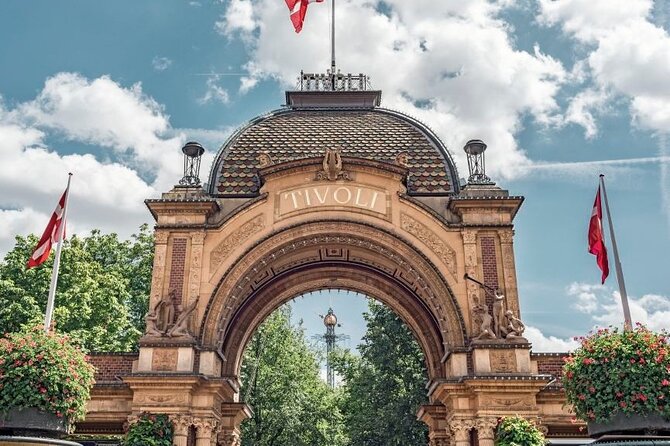
Tivoli Gardens is one of Europe’s oldest amusement parks. The card includes admission, but not every possible extra inside the park, so check what your visit covers before you arrive. Give yourself more than the listed hour if you want rides, food, gardens, or evening atmosphere.
Tivoli’s value depends heavily on timing. A short visit can work well during a packed sightseeing day, while a rainy day or an unexpected closure can weaken the calculation. Check opening dates and hours before making Tivoli the main reason for buying a 24-hour pass.
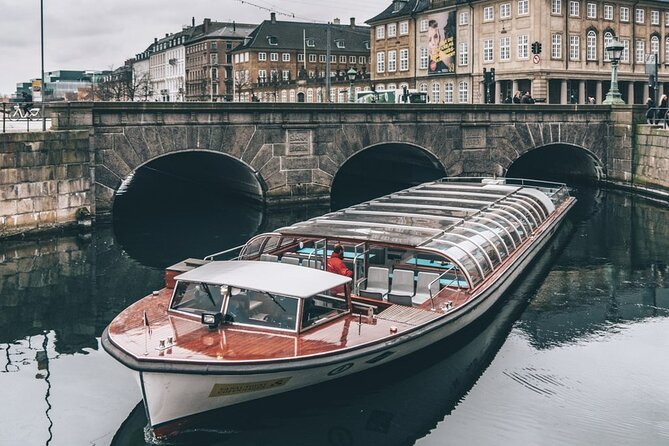
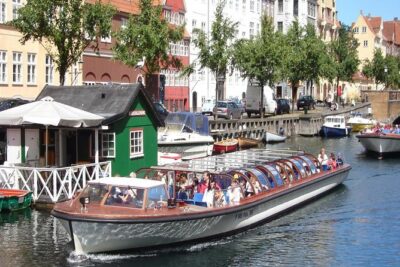
The Stromma canal tour is another strong use of the card. The boat gives you a different view of Copenhagen’s waterfront, bridges, and architecture, while saving your feet for the museums and palaces. The ride takes about an hour and is one of the easiest activities to fit into a busy day.
You may also use the harbor bus as part of the transport network. It is not the same as the guided canal tour, but it can be a pleasant practical way to move around the waterfront while keeping your transport costs down.
Churches, towers, and unusual city sights
Our Saviour’s Church is free to enter for everyone, but the card becomes useful if you want to climb its famous tower. The staircase winds up the serpentine spire, with about 400 steps to the top. The climb is a memorable Copenhagen experience, but you must book the tower in advance, especially when demand is high.
A two-hour wait for the tower can wreck a short visit. I would reserve a time before building your day around it, then use the card at nearby sights while keeping that appointment in mind.
The Round Tower requires special attention. A recent pass user reported that it was no longer included as of April 1, 2024. Since attraction partnerships can change, confirm its current status in the app before counting it toward your savings.
At Cisternerne, you leave daylight behind and enter a former underground water reservoir. The low light, damp air, and stone-like formations create an unusual setting for contemporary art installations. Thirty minutes may be enough for a quick visit, though the atmosphere encourages a slower look.
The Danish Architecture Center sits in the BLOX building on the waterfront. Exhibits, guided tours, and events examine Danish architecture and design, with material suited to both adults and children. It is a useful stop if you want to understand why Copenhagen’s buildings and public spaces feel so carefully considered.
The Royal Library, known as the Black Diamond, offers exhibitions in a dramatic harbor setting. Displays may cover literature, photography, cultural heritage, and major Danish figures such as Søren Kierkegaard. It is a good rainy-day stop and easy to combine with central walking routes.
Same fjord country, a very different day out:
- From Copenhagen: Lund and Malmö 2-Country Tour
★ 4.7 · 2,772 reviews - Copenhagen Highlights Walking Tour
★ 5.0 · 2,324 reviews - Copenhagen: Highlights 3 Hour Bike Tour with a Local Guide
★ 4.8 · 2,312 reviews - Hamlet and Sweden Tour – Two Countries in one day !
★ 5.0 · 2,223 reviews
Art museums for different tastes
The card is particularly strong for art lovers because the included museums cover old masters, Danish painting, French Impressionism, modern art, design, and large-scale installations.
At the National Gallery of Denmark, or SMK, you can move from Renaissance works to modern and contemporary art. The collection includes artists such as Rubens, Matisse, Munch, Anna Ancher, Vilhelm Hammershøi, and Danh Vo. One hour provides a sample, but this is a museum worth giving two or three hours if art is a major reason for your visit.
The Ny Carlsberg Glyptotek combines ancient objects from Egypt, Greece, Rome, and Etruscan culture with Danish and French art from the 19th century. Its central location makes it a practical choice between other city sights. Allow about an hour, or longer if you enjoy sculpture and archaeology.
The Hirschsprung Collection focuses on Danish art from the Golden Age through the Skagen painters and the Modern Breakthrough. Works by Eckersberg, Købke, Krøyer, and Hammershøi offer a more intimate picture of Danish painting than a large national museum can provide.
At Ordrupgaard, north of the city, you can see French Impressionists including Monet, Degas, and Gauguin, along with Danish works centered on Hammershøi and his contemporaries. The park includes art and architecture, so allow a full hour or more and account for the extra transport time.
Louisiana Museum of Modern Art is one of the pass’s best regional additions. About 40 kilometers north of central Copenhagen in Humlebæk, it combines modern art, architecture, sculpture, parkland, and views across the Sound. The Giacometti Hall and Jorn Room are permanent highlights, with changing exhibitions and occasional access to a Kusama Infinity room.
Louisiana takes planning because the journey uses part of your sightseeing day. It is not a quick central museum stop, but it can justify a longer card, especially when paired with another northern attraction.
Castles and royal day trips
The card earns its keep for many visitors through the castles outside central Copenhagen.
Kronborg Slot in Elsinore is the famous Hamlet castle. Built between 1574 and 1585 at the entrance to Øresund, it is one of northern Europe’s finest Renaissance castles. The rooms, fortifications, and waterfront position give it a strong sense of place. Allow about an hour, plus transport time.
Frederiksborg Castle in Hillerød was built in the early 1600s by Christian IV. Today, the Museum of National History fills its decorated rooms with portraits, history paintings, furniture, and decorative art covering Danish culture from the late Middle Ages to today.
The castle interiors are the main event, but the setting also adds value. You get grand rooms, changing exhibitions, and one of Denmark’s major portrait collections. It is a satisfying half-day trip when combined with nearby sights or a relaxed return to Copenhagen.
Roskilde Cathedral is a UNESCO World Heritage site and the burial place of 40 Danish kings and queens. Its decorated vaults and crypts cover about 1,000 years of Danish royal history. The cathedral makes an easy cultural pair with the Viking Ship Museum, also in Roskilde.
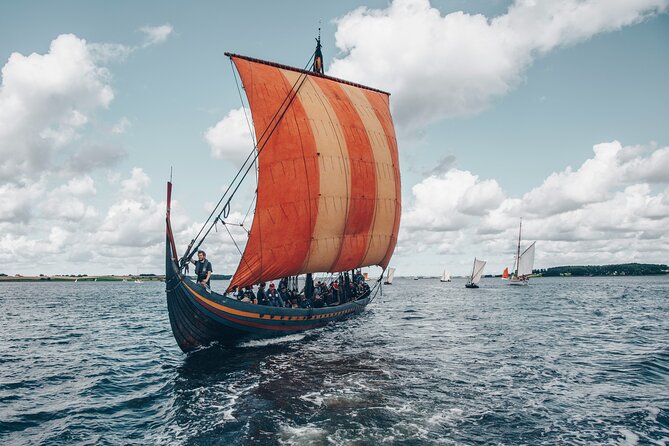
At the Viking Ship Museum, five original 1,000-year-old ships from the Skuldelev finds are displayed with the fjord as a backdrop. Reconstructions, boatbuilding, traditional maritime crafts, and hands-on activities add life to the archaeology. The museum is particularly good for families, but allow more than an hour if you want to see the workshops and boats properly.
For a longer regional outing, Lejre Land of Legends recreates settlements and workshops from the Stone, Iron, and Viking Ages. You can see a reconstructed Viking royal hall and watch old crafts in action. The two-hour visit works best when you have a 72-hour, 96-hour, or 120-hour card.
Science, music, design, and military history
The pass is not only for palaces and art.
At Experimentarium in Hellerup, science is hands-on and designed for all ages. You can touch, test, and play rather than simply read display panels. It is a smart choice for families, particularly on a rainy day.
The Planetarium offers exhibitions plus one film in the Dome. Its tilted dome, 8K visuals, and advanced sound system make it a good evening or bad-weather option, though you should check film times before going.
Designmuseum Danmark explains the ideas behind Denmark’s famous design tradition. Collections include work by Finn Juhl, Arne Jacobsen, Poul Kjærholm, Verner Panton, and Hans Wegner, along with glass, ceramics, fashion, textiles, and posters.
At Ragnarock, you follow popular music and youth culture from 1950s rock and roll through 1980s pop and modern sounds. It offers a change of pace from formal museums and can work well for older children and music fans.
The Danish War Museum covers military history from the 1500s to today. Samurai swords, armor, ship models, and modern drones show the changing tools of war, while the exhibits also address how conflicts shaped Denmark.
At the Museum of Danish Resistance, interactive exhibits place you in the difficult choices of the Second World War occupation. You can produce illegal newspapers, crack codes, and intercept phone calls. The dark setting and story-based format make this more active than a standard military museum.
More specialized stops
Several smaller attractions reward repeat visitors or anyone with a five-day pass.
Home of Carlsberg occupies the original brewery area and tells the story of Carlsberg from 1847 to the present. You must pre-book, and your card must already be active because the card number is needed for the reservation.
Thorvaldsen’s Museum presents the work of Bertel Thorvaldsen, Denmark’s world-famous sculptor. Its bold colors and grand interior were designed around the collection, and the museum has looked much as it did when it opened in 1848.
The Museum of Natural History has mineral halls, a large meteorite, and changing exhibitions about the natural world. Medical Museion takes a more challenging route, exploring the human body, disease, and medical treatment inside a former Royal Academy for Surgeons dating from 1787.
At Copenhagen Contemporary, large installations, performance art, and video works fill a former welding hall with 7,000 square meters of industrial space. The scale makes this a different art experience from the city’s painting museums.
The Ships on Holmen let you board the frigate Peder Skram and the fast attack craft Sehested. Together, they show Denmark’s naval role during the Cold War, including Peder Skram’s unusual combination of gas turbines and diesel engines.
You can also visit Classic Car House, which presents 20th-century vehicles as examples of design, engineering, and industrial craft. Karen Blixen’s home at Rungstedlund offers a quieter visit by the Sound, with the author’s house, garden, and bird sanctuary.
For an adult-only change of pace, Casino Copenhagen includes traditional casino games and about 150 slot machines. Admission is covered, but any gambling costs are your responsibility.
How to make the price work
At $95.96, I would not buy this pass simply because it includes 80 attractions. Most people will visit only a handful. I would first list the sights you truly want, add their individual admission prices, then include the cost of transport between them.
The card can pay off quickly when your plan includes a canal cruise, Tivoli Gardens, a royal castle, and several museums. It becomes even more useful when you take the train to Louisiana, Kronborg, Frederiksborg, Roskilde, or another attraction outside the center.
A 24-hour card needs the most discipline. One visitor used it for a canal cruise, Rosenborg Castle, the Workers’ Museum, Tivoli Gardens, and public transport, saving about $30 per person. That is a solid result, but it required a full day of movement.
For a 48-hour pass, begin early and group sights by area. Use Monday carefully, since many attractions are closed that day. The app allows you to filter attractions by opening day, which is one of the most useful planning tools.
A 72-hour or longer card gives you breathing room. You can include one regional day trip without sacrificing every central museum. The 120-hour option suits a packed five-day visit, but only if you plan to use the attractions regularly.
For children, each adult can bring two children ages 3 to 11 free, provided the free children’s cards are added to the order. Add those cards before the trip rather than assuming a child can simply follow an adult’s pass.
Digital use, bookings, and timing
Before activating, download the Copenhagen Card app and enter the barcode number. The purchased card remains valid for one year until activated, so you can buy ahead without starting the clock immediately.
Once active, the card is personal and non-refundable. Make sure the phone holding it is charged, and keep the app accessible when entering attractions or using transport.
Advance reservations matter at selected locations. Our Saviour’s Church tower requires a time slot, and Home of Carlsberg requires pre-booking after activation. Christiansborg may also require planning during busy periods.
Opening hours are just as important as admission prices. Many museums operate mainly during daytime hours, often around 10 a.m. to 5 p.m. A packed schedule may look good on paper but fail if two attractions close before you arrive.
The pass is offered in English, and confirmation arrives at booking. Service animals are allowed, most people can participate, and attractions are near public transport, making the card practical for a wide range of city breaks.
Should you buy the Copenhagen Card?
Buy it if you want three or more substantial attractions, expect to use public transport often, or plan a castle and museum program outside central Copenhagen. It is especially strong for a first visit lasting two to five days, when you can combine major sights with one or two regional trips.
Be cautious with the 24-hour version if you prefer a relaxed pace. Check Tivoli’s opening dates, reserve the tower at Our Saviour’s Church, and confirm the current inclusion of any attraction you consider essential.
My practical choice would be 48 or 72 hours for most sightseeing-focused visits. Use the first day for central palaces, the canal boat, and Tivoli, then reserve another day for museums or a regional castle. If your list includes Louisiana, Kronborg, Frederiksborg, and Roskilde, the longer cards offer the better chance of turning the $95.96 price into real savings.
FAQ
How long can I use the Copenhagen Card?
You can choose a 24, 48, 72, 96, or 120-hour card. It becomes valid when you first use it and then runs continuously for the selected number of hours.
Is the Copenhagen Card physical or digital?
It is 100 percent digital. Download the Copenhagen Card app and enter the barcode number from your booking to redeem it.
Does public transport come with the card?
Yes. The card includes public transport throughout the Copenhagen region, including buses, trains, S-trains, Metro services, and harbor buses.
Does the card include Tivoli Gardens?
Yes, admission to Tivoli Gardens is included. Check current opening dates and hours before planning your visit.
Do I need reservations for any attractions?
Yes. The tower at Our Saviour’s Church requires advance booking, and Home of Carlsberg must be pre-booked. Christiansborg may also require a time slot during busy periods.
Can children use the Copenhagen Card for free?
Each adult can bring two children ages 3 to 11 free, as long as the free children’s cards are added to the cart when purchasing the adult card.
Just added around Copenhagen
- a day at North Zealand Castle Tour★ 4.5 · 19 reviews
- The Hunt For The Six Forgotten Giants★ 5.0 · 45 reviews
- Copenhagen Walking Tour with Food Testing (smorrebrod dish & snap)★ 4.5 · 10 reviews
- walking tour – Copenhagen and Christiansborg 3 hours★ 4.0 · 7 reviews
- The Philosopher’s Last Walk: An audio tour on the life of Søren Kierkegaard★ 4.5 · 5 reviews
- The Six Forgotten Giants Trolls Hunt with Minibus★ 4.5 · 27 reviews
- The Forgotten Giants Private Tour★ 5.0 · 3 reviews
- Small Group Guided Food Tour and Street Art Visit to Norrebro★ 5.0 · 9 reviews
Copenhagen Tours, compared.
Hop-On Hop-Off Bus Tour with Boat Tour Option
Read our review →

Highlights 3 Hour Bike Tour with a Local Guide
Read our review →
Hamlet and Sweden Tour – Two Countries in one day !
Read our review →
Copenhagen Sightseeing Classic Canal Tour With Live Guide
Read our review →Browse the lists this tour appears in