
Reviewed · CITY TOURS
Copenhagen City Of Lights PhotoWalks Tour
Copenhagen changes character as daylight fades. On this private night photography walk, you follow the city from the last blue tones of evening into its illuminated streets, photographing Nyhavn, the Queen’s palace, the Opera House, Parliament, and other central sights.
I like the one-to-one format, since your guide can spend time on your camera rather than giving a standard group lesson. I also like the practical focus on aperture, shutter speed, ISO, composition, and long exposures, skills you can use long after Copenhagen.
The main catch is timing. A 6 to 9 pm departure can still fall before true darkness in summer, when Copenhagen stays light until well after 10 pm. You may get beautiful blue-hour pictures, but not a fully dark city in every season or departure slot.
In This Review
- Key points to know before you book
- Why Copenhagen works so well after sunset
- Starting at Nyhavn and finding the first composition
- From blue hour into the city lights
- Photographing the Queen’s palace and royal surroundings
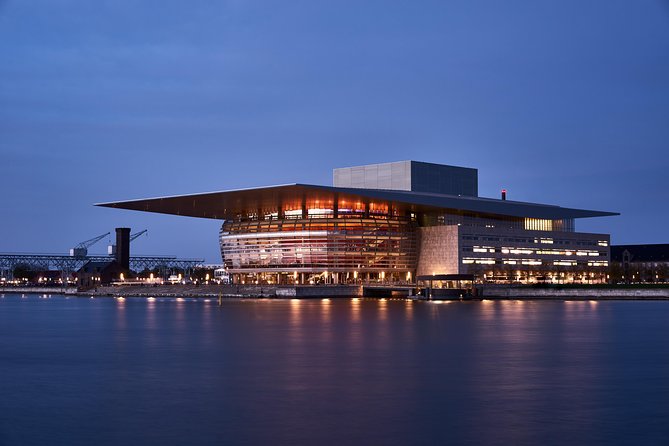
- The Opera House, Parliament, and changing architectural moods
- What you will actually learn with your camera
- Timing is the detail that may shape your experience
- The value of a private $233.63 booking
- Who will get the most from this walk
- Practical details before you set out
- Should you book the Copenhagen City of Lights PhotoWalks Tour?
- FAQ
- Where does the photography tour start?
- Where does the tour end?
- How long does the experience last?
- Is this a private tour?
- How many people can join the private booking?
- Is the tour offered in English?
- Do I need to bring a tripod?
- What happens if the weather is poor?
- What is the cancellation policy?
Key points to know before you book
- Private instruction: Your guide works only with your group, with up to three friends or family members included in the price.
- Tripod required: Longer exposures are central to the lesson, so you must bring your own tripod.
- Three hours on foot: The route begins and ends near the Memorial Anchor at Nyhavn, close to Kongens Nytorv Metro Station.
- Practical camera coaching: You learn manual settings, creative composition, light control, long shutter speeds, and basic post-processing tips.
- Copenhagen after dark: The walk focuses on the city’s illuminated landmarks rather than daytime sightseeing.
- All-weather operation: The tour runs in all weather, so proper clothing matters.
Why Copenhagen works so well after sunset
Copenhagen is a good city for an evening photo walk because many of its best-known sights sit within a compact central area. The route links colorful Nyhavn, royal architecture, the harbor, modern buildings, and civic landmarks without turning the lesson into a long sightseeing lecture.
The hour before night is especially useful for learning. During blue hour, the sky still carries color while streetlamps and building lights begin to glow. That balance gives you more detail than a pitch-black sky and often creates a stronger backdrop than a plain daytime view.
As darkness gathers, the lesson shifts. You start paying attention to reflections, bright windows, lines in the architecture, and the way artificial light changes the mood of familiar places. This is not simply a walk to photograph famous buildings. It is a chance to understand why the same view can look ordinary at noon and striking after sunset.
I would think of the tour as part sightseeing walk and part hands-on camera class. You see several major Copenhagen sights, but the real value comes from learning how to make decisions in changing light.
A few more Copenhagen trips to weigh up
- Copenhagen: 3-Hour City Highlights Bike Tour with Guide
★ 4.7 · 1,239 reviews - Copenhagen: Group Walking Tour – City Highlights – 2 Hours
★ 4.7 · 1,088 reviews - City Sightseeing Copenhagen Hop-On Hop-Off Bus Tour
★ 3.5 · 800 reviews
Starting at Nyhavn and finding the first composition
The meeting point is the Memorial Anchor at Nyhavn 1F. Nyhavn is a sensible place to start because its old houses, waterfront, and lights give you several kinds of subjects right away.
The canal-side buildings offer strong color and repeating lines. The water can help you work with reflections, while the lamps and windows give you bright points that test your exposure choices. Your guide can help you decide how much of the scene to include, where to place the horizon, and how to use perspective instead of simply pointing the camera at the most obvious building.
This is where the private setup makes a real difference. If you are new to photography, you can stop to ask basic questions without holding up a group. If you already shoot manually, you can ask for help refining an image rather than listening to an introduction you already know.
You will need to carry your equipment from the start. The tour requires a tripod because many evening scenes call for longer shutter speeds. A tripod also encourages you to slow down, check the edges of the frame, and make deliberate choices instead of taking quick handheld shots.
The route is described as laid-back, but it is still a three-hour walking activity. Wear shoes you can use comfortably for that length of time, and bring clothing suitable for the forecast. Since the tour operates in all weather, rain or wind can affect how pleasant it feels to work with a tripod and camera.
From blue hour into the city lights
The central idea of the walk is the transition between daylight and night. This gives you changing conditions rather than one fixed lighting setup.
At first, you may work with a relatively bright sky and illuminated buildings. As the sky darkens, your camera has to handle a greater difference between bright lamps and shadowed areas. That makes the session useful for learning exposure in a real setting.
You will cover manual controls such as aperture, shutter speed, and ISO. These settings are often taught as separate technical ideas, but evening photography shows how they work together. A longer shutter speed can record more light, but it also makes movement and camera shake more important. ISO can brighten a darker image, but it affects image quality. Aperture changes both light and the way the scene appears.
The guide can also show you how the light itself influences the photograph. A lamp behind you, a bright building at the edge of the frame, or a reflection in the canal can all alter the balance of an image. This kind of instruction is more useful than simply being told which setting to use, because the correct choice depends on the scene in front of you.
The experience is suitable for different skill levels. Beginners can gain confidence with manual controls, while experienced photographers can work on composition, perspective, and more controlled long exposures. The guide’s role is not only to identify the sights. It is to help you make better pictures of them.
Photographing the Queen’s palace and royal surroundings
The route includes the Queen’s palace, giving you a chance to work with formal architecture and broad, balanced compositions. Royal buildings can look impressive in person but flat in a photograph if you rely on a straight-on view.
This is a useful point in the walk to practice lines and symmetry. Your guide may help you find a stronger angle, use the surrounding space, or include light and shadow to give the frame more shape. The supplied information does not promise a fixed sequence or exact viewpoint, so the final composition will depend on the route and the conditions that evening.
The palace also shows why a private lesson can be more useful than a standard photo stop. You can spend extra time on a subject if you need it, or move on if your camera skills already feel comfortable. Since only your party takes part, the pace can be adjusted to your needs.
Keep in mind that the tour is designed around photography, not a formal visit inside the palace. The focus is on exterior views, light, framing, and the city around the building.
Same fjord country, a very different day out:
- Copenhagen: Canal Cruise with Guide
★ 4.6 · 9,115 reviews - Copenhagen: Hop-On Hop-Off Bus Tour with Boat Tour Option
★ 3.9 · 4,122 reviews - Private Walking Grand Tour of Copenhagen
★ 5.0 · 3,953 reviews - From Copenhagen: Lund and Malmö 2-Country Tour
★ 4.7 · 2,772 reviews
The Opera House, Parliament, and changing architectural moods
The Opera House brings a different kind of subject to the route. Its modern form contrasts with the older buildings around Nyhavn and the royal setting. That contrast gives you a chance to practice clean lines, unusual perspectives, and color relationships.
The guide also points out Parliament and other central sights. These landmarks help turn the walk into a broad introduction to Copenhagen’s architectural character. You are not limited to one postcard view. You work with old houses, civic buildings, modern structures, waterfront scenes, and illuminated streets.
The lesson on creative composition covers perspective, lines, and color. Those ideas matter most when the subject is familiar. Instead of taking the same standard image found on every postcard, you can try moving your viewpoint, using a line to lead the eye, or balancing warm artificial light against the cooler evening sky.
Night photography also gives ordinary details more importance. Reflections, silhouettes, windows, and the glow around a streetlamp can become part of the composition. The guide’s artistic eye is an important part of the experience here. One published account gave four out of five points and specifically praised the female guide’s patience, artistic sense, and help with the photographer’s camera. That is a useful sign for anyone who wants patient, practical coaching rather than a rushed walk.
What you will actually learn with your camera
The tour covers several skills, but the best part is how directly they connect to the places you visit.
Manual settings are the foundation. You learn how aperture, shutter speed, and ISO affect the picture and how to adjust them as the evening changes. The guide can help you move beyond automatic mode and understand why a particular setting works.
Long exposures are especially important. The required tripod lets you keep the camera steady while the shutter remains open longer. This can help record darker scenes and create a smoother, more considered image. It also means you need to watch for movement and make sure the camera is stable before pressing the shutter.
Composition gives the technical lesson a purpose. You work with perspective, lines, color, and the placement of major buildings in the frame. A good exposure cannot rescue a weak composition, so this part is valuable for beginners and experienced photographers alike.
Light control helps you read the scene. Evening photography often includes bright lamps, lit windows, dark corners, and reflective surfaces in one frame. Learning how to balance those elements can make your images more natural and less flat.
Post-processing tips are included as well. The information does not specify which editing program or how much editing time is provided, so you should view this as guidance rather than a full editing class. Still, knowing how to make sensible adjustments after the walk can help you finish the images you take.
Timing is the detail that may shape your experience
The most important practical question is when your three hours begin. The supplied experience information includes a 6 to 9 pm example, and one four-out-of-five assessment pointed out that Copenhagen can remain light until well after 10 pm in summer.
That does not make the tour useless in summer. Blue hour and the transition into evening can produce excellent photographs, and the city lights begin to matter before full darkness. But the name City of Lights may set the wrong expectation if you want deep-night scenes with a black sky.
Check the expected sunset time for your date before booking. In a season with earlier sunset, the same time range should give you more darkness. In late spring and summer, you may spend much of the session in evening light rather than true night.
This timing issue is the clearest weakness of the experience, and it is easy to manage if you know about it in advance. If your priority is learning to photograph changing light, the timing can be a benefit. If you want fully dark streets and bright city lights from the first minute, look carefully at the date and start time.
The value of a private $233.63 booking
The listed price is $233.63 per person. That sounds high for a three-hour walk, but the value depends on how many people are in your party and how much you want individual instruction.
This is a private activity, and up to three friends or family members can join at no added charge according to the supplied details. For one person, the cost is a serious investment in a short lesson. For a small group that shares an interest in photography, the per-person value improves because you receive private guiding while dividing the total cost among the group.
You are paying for a professional photographer guide, personal camera help, route planning, and the chance to practice at several important Copenhagen sights. You are not paying for equipment rental, since you must bring a tripod, and there is no admission cost listed for the walk itself.
I would book it when you have a camera you want to understand better and when you care more about useful instruction than the cheapest way to see Copenhagen at night. If you simply want a quick introduction to the city, the price is harder to justify. If you are sharing the booking with up to three companions, the private format makes more sense.
Who will get the most from this walk
This tour suits a new photographer who wants help leaving automatic mode. You can ask about every control as the light changes and get immediate advice while photographing real buildings.
It also suits an experienced photographer who wants a local guide’s eye for angles and city scenes. The guide can help you find better compositions and work with long exposures, rather than spending the evening explaining basic camera terminology.
The tour is less suitable if you do not have a tripod. The requirement is not a minor suggestion. Longer exposures are part of the planned lesson, so arriving without one would limit what you can practice.
It may also be a poor fit if you want a fast-paced list of attractions or a fully scripted history tour. The walk is built around photography, and the sights serve as subjects for the lesson.
Practical details before you set out
You receive confirmation when booking, and the activity is offered in English. The start and end point is the Memorial Anchor at Nyhavn 1F, 1051 København, near public transportation and Kongens Nytorv Metro Station.
The walk ends back at the meeting point, which makes it easier to continue your evening from central Copenhagen. Bring your camera, tripod, suitable clothing, and enough battery power for three hours of use. A tripod and longer exposures can make battery demands more noticeable, though no battery guidance is specified by the operator.
The activity runs in all weather. Check the forecast and dress for the actual conditions rather than assuming an evening beside the water will feel mild. Since the tour is on foot, comfortable footwear will help.
Free cancellation is available if you cancel at least 24 hours before the local start time. Cancellations or changes inside that window are not refunded or accepted.
Should you book the Copenhagen City of Lights PhotoWalks Tour?
Book this experience if you want private, hands-on photography help and already have, or can bring, a tripod. The best reasons to choose it are the individual instruction, the changing evening light, and the chance to practice on major Copenhagen sights instead of learning only in a classroom.
Think twice if you mainly want a dark-night sightseeing walk, especially in summer. The 6 to 9 pm timing can begin while the sky is still bright, so check sunset before committing.
For a small group of photographers, the $233.63 price can be fair because the guide’s attention is reserved for your party. For a solo visitor seeking a simple city stroll, it is a costly choice. For anyone hoping to leave Copenhagen with stronger manual camera skills and a set of atmospheric city images, it offers a focused and practical evening.
FAQ
Where does the photography tour start?
The tour starts at the Memorial Anchor, Nyhavn 1F, 1051 København, Denmark.
Where does the tour end?
The walk ends back at the meeting point near Nyhavn and Kongens Nytorv Metro Station.
How long does the experience last?
The photography walk lasts approximately three hours.
Is this a private tour?
Yes. Only your group participates, and the guide can focus on your photography needs.
How many people can join the private booking?
You can bring up to three friends or family members, included in the price.
Is the tour offered in English?
Yes. The experience is offered in English.
Do I need to bring a tripod?
Yes. A tripod is required because the tour includes longer exposures for night scenes.
What happens if the weather is poor?
The tour operates in all weather conditions, so you should dress appropriately.
What is the cancellation policy?
You can cancel at least 24 hours before the local start time for a full refund. Cancellations or changes made less than 24 hours before the start are not accepted or refunded.
Just added around Copenhagen
- a day at North Zealand Castle Tour★ 4.5 · 19 reviews
- The Hunt For The Six Forgotten Giants★ 5.0 · 45 reviews
- Copenhagen Walking Tour with Food Testing (smorrebrod dish & snap)★ 4.5 · 10 reviews
- walking tour – Copenhagen and Christiansborg 3 hours★ 4.0 · 7 reviews
- The Philosopher’s Last Walk: An audio tour on the life of Søren Kierkegaard★ 4.5 · 5 reviews
- The Six Forgotten Giants Trolls Hunt with Minibus★ 4.5 · 27 reviews
- The Forgotten Giants Private Tour★ 5.0 · 3 reviews
- Small Group Guided Food Tour and Street Art Visit to Norrebro★ 5.0 · 9 reviews
City Tours, compared.
City Archipelago Sightseeing Cruise with Guide
Read our review →
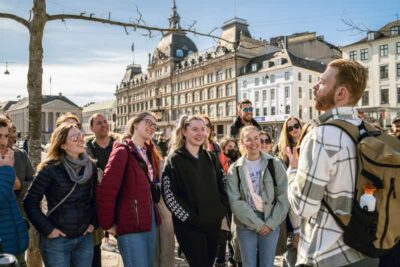
Group Walking Tour – City Highlights – 2 Hours
Read our review →
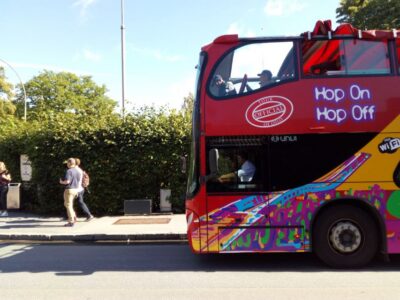
City Sightseeing Copenhagen Hop-On Hop-Off Bus Tour
Read our review →
Browse the lists this tour appears in