
Reviewed · COPENHAGEN TOURS
Copenhagen: Guided Architecture and Sustainability Tour
Copenhagen’s best architecture tour may be the one that gets you out of the postcard centre. Over three hours and roughly 17 kilometres by bike, you’ll follow the city’s shift from old industrial quarters to carefully planned districts where bridges, public spaces, housing, and cycling routes shape daily life.
I like two things right away: the route shows you places you probably would not reach on foot, and the subject is bigger than pretty buildings. Guides such as René, Jörn, John, and Josephine explain how Copenhagen’s planning choices affect ordinary life. The main consideration is that this is a real bike ride, not a gentle roll around a single neighbourhood. One past rider also found that group management could be better, with some people getting separated.
In This Review
- Key points to know before you book
- Why a bicycle makes sense for this Copenhagen tour
- Blox and Lille Langebro: a useful start by the harbour
- Islands Brygge: harbour swimming and public life
- Karen Blixens Plads and Ørestad: a newer Copenhagen
- Tietgen Residence Hall and Amager Fælled
- Gemini Residence and Cykelslangen: design you use every day
- Kaktus Towers and Enghave Plads
- Israels Plads and the ride back
- What the guides add to the experience
- Is $70 a fair price?
- Who will enjoy this ride most?
- Should you book the Copenhagen architecture bike tour?
- FAQ
- How long does the Copenhagen architecture and sustainability tour last?
- How far will I cycle?
- Where does the tour start?
- Where does the tour finish?
- What languages are available?
- Is a guide included?
- Are bicycles provided?
- Are children’s bicycles available?
- Is a helmet included?
- Can I cancel for a refund?
Key points to know before you book
- 17 kilometres of cycling: You’ll cover a good stretch of Copenhagen, with regular stops for explanations and photos.
- Architecture beyond the centre: The route reaches Blox, Ørestad, Amager Fælled, Kaktus Towers, and former industrial areas.
- Sustainability in daily life: You’ll look at bike routes, public spaces, harbour use, housing, and urban planning rather than buildings alone.
- Local guides with personality: René has been praised for safety and clear explanations, while Jörn, John, and Josephine bring their own stories and humour.
- Bikes and practical support included: Helmets, several adult frame sizes, children’s bikes by request, rain ponchos, luggage storage, and lounge access are provided.
- Good value for design-minded visitors: At $70, the tour costs more than a basic bike rental, but includes a guide, route planning, context, and access to areas you might not find alone.
Why a bicycle makes sense for this Copenhagen tour
Copenhagen is built for bikes, and that changes how you see it. On foot, the city’s modern districts can feel scattered. By bicycle, the spaces between them become part of the story. You cross bridges, follow harbour paths, pass housing projects, and see how cycling is treated as everyday transport rather than a special activity for visitors.
The route begins at Tropical Bikes on Vester Voldgade 2A, unless the option you book gives you a different starting point. You receive a bike, helmet, and basic preparation before setting off. Adult bikes are offered in 48, 51, and 56 centimetre frame sizes. Children’s bikes in 24 and 26 inch sizes are available, but you need to reserve them ahead of time.
I appreciate the practical setup. You can leave luggage at the shop, use the toilets, and wait in a comfortable lounge before or after the ride. Rain ponchos are included if the weather turns wet, though you should still wear suitable clothing and comfortable shoes because the tour runs in all weather.
This is not suitable if you cannot ride a bike. You should also be comfortable cycling for several hours, even though the frequent stops break up the distance.
A few more Copenhagen trips to weigh up
- Copenhagen: Canal Cruise with Guide
★ 4.6 · 9,115 reviews - Copenhagen: Highlights 3 Hour Bike Tour with a Local Guide
★ 4.8 · 2,312 reviews - Copenhagen Sightseeing Classic Canal Tour With Live Guide
★ 4.5 · 1,906 reviews
Blox and Lille Langebro: a useful start by the harbour
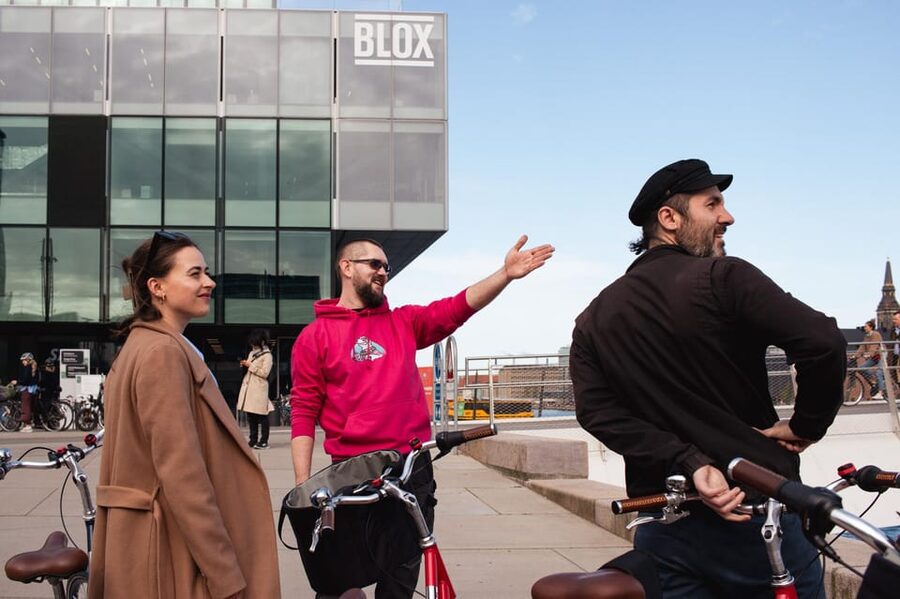
The first major stop is Blox, a contemporary building beside Copenhagen’s harbour. It provides an early lesson in how the city has placed new cultural, work, and public functions along the waterfront rather than treating the harbour as a working edge that ordinary people should avoid.
You’ll spend about 10 minutes here with the guide. That is enough time to look at the building and hear how new architecture fits into an older city. The value of this stop is not just the design. It introduces the tour’s main question: how can a city add new buildings without losing its public spaces and connection to the water?
A short ride brings you to Lille Langebro, a striking pedestrian and cycle bridge. The stop lasts about five minutes, but the bridge matters because it shows how Copenhagen gives cyclists and walkers direct routes through the city. You see architecture and transport working together, rather than roads taking priority over everyone else.
The brief stop also keeps the tour moving. You won’t spend all morning standing in front of one building while the rest of Copenhagen waits outside.
Islands Brygge: harbour swimming and public life
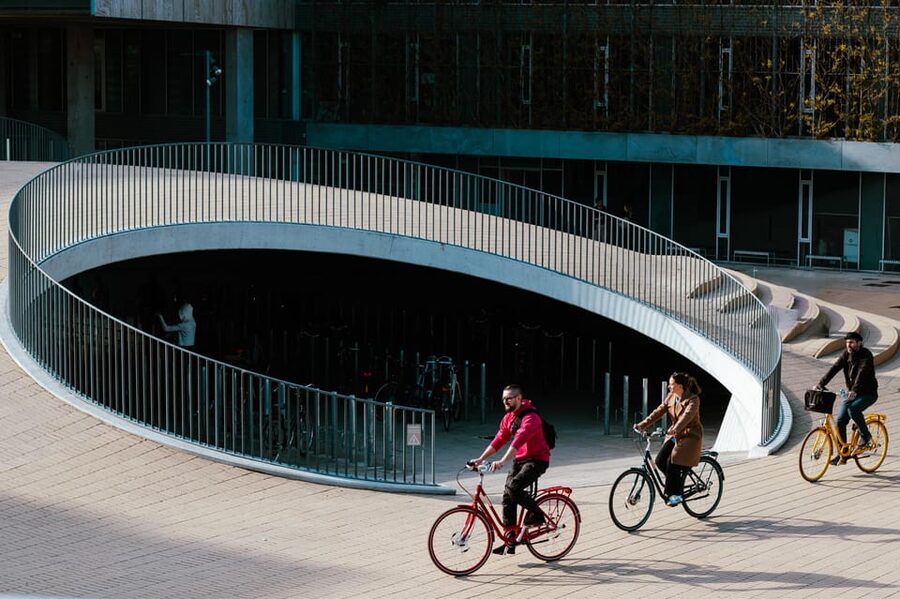
At Havnebadet Islands Brygge, you’ll see one of Copenhagen’s clearest examples of the harbour becoming a place for public recreation. The harbour bath is not simply a photo stop. It shows how water, open space, and city life can be linked in a way that feels useful to residents.
You’ll have around 10 minutes for the guide’s explanation. The stop helps you understand why Copenhagen’s waterfront redevelopment is about more than offices and expensive apartments. Public access is part of the plan, and the harbour becomes somewhere people can spend time rather than merely pass by.
This section of the ride is also a good reminder that sustainability has a human side. Cleaner transport and energy-efficient buildings matter, but so do places where people can meet, exercise, and enjoy the city without paying an entrance fee.
Karen Blixens Plads and Ørestad: a newer Copenhagen
The ride continues toward Karen Blixens Plads, a large public square associated with Copenhagen’s newer university district. You’ll stop for about 10 minutes and look at how broad open areas can serve both movement and community use.
From here, the route passes through Ørestad. The scheduled scenic section is short, around five minutes, but the district is one of the tour’s main subjects. Ørestad is known for bold contemporary buildings and planned development, making it a useful place to discuss the benefits and limits of building a new urban district from the ground up.
You’ll see an effort to combine modern design with sustainable living. That does not mean every part will suit your taste. New districts can feel more spread out and less traditionally cosy than Copenhagen’s older streets. Still, Ørestad gives you a clear view of the city’s willingness to test new ideas in housing, public space, and transport.
The guide’s explanation is important here. Without context, you might simply see unusual shapes and large buildings. With context, you can ask why the district was planned this way and how design affects the people who live and work there.
Same fjord country, a very different day out:
- Copenhagen: Hop-On Hop-Off Bus Tour with Boat Tour Option
★ 3.9 · 4,122 reviews - Private Walking Grand Tour of Copenhagen
★ 5.0 · 3,953 reviews - From Copenhagen: Lund and Malmö 2-Country Tour
★ 4.7 · 2,772 reviews - Copenhagen Highlights Walking Tour
★ 5.0 · 2,324 reviews
Tietgen Residence Hall and Amager Fælled
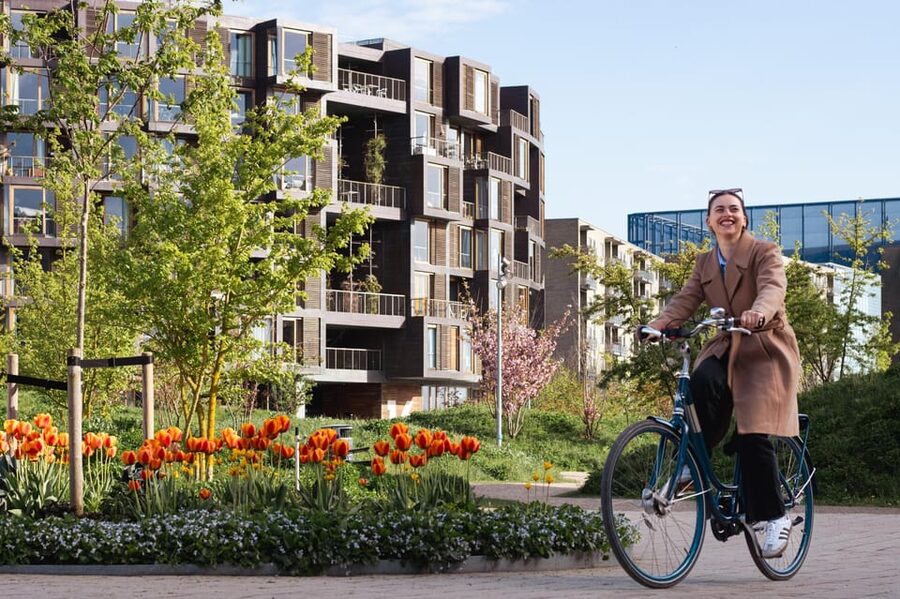
Tietgen Residence Hall is one of the route’s most memorable architectural stops. You’ll spend about 10 minutes hearing how its circular form and shared design relate to student housing. This is the kind of building that rewards a guide because a quick photograph cannot explain how the form is meant to shape communal life.
The stop also shows that sustainable design is not limited to solar panels or technical equipment. Housing layout, shared facilities, access to outdoor areas, and the relationship between private rooms and common spaces all influence how a building works.
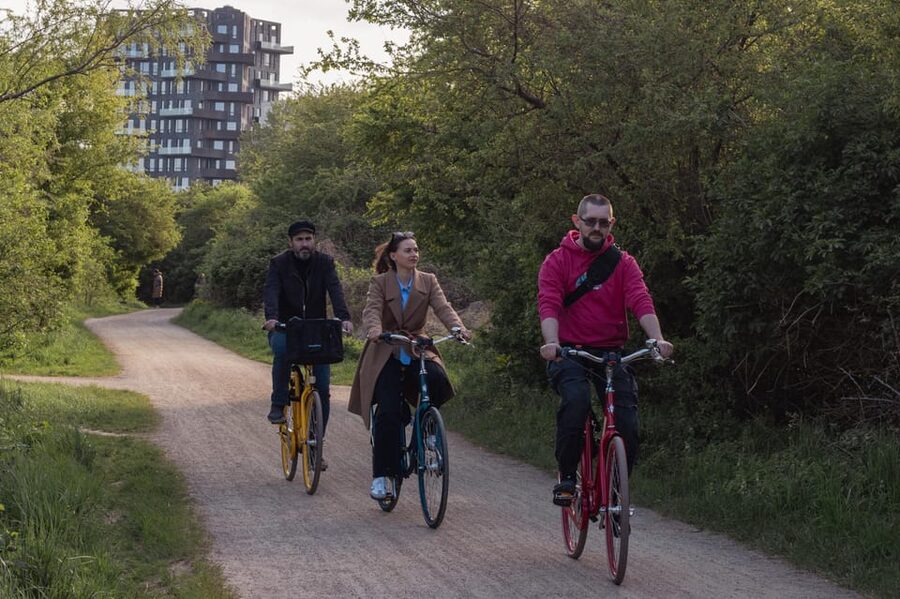
Next comes Amager Fælled, where the tour shifts from dense construction to open countryside-like surroundings. The guide spends about 10 minutes here. This contrast is one of the route’s strengths. You see that Copenhagen’s planning story includes both new development and the effort to retain open areas near the city.
For you, this is a welcome change of pace. After several buildings and bridges, the open setting gives your eyes a rest and helps show the pressure involved in city planning. Copenhagen must make room for housing and transport while deciding which open spaces should remain available.
Gemini Residence and Cykelslangen: design you use every day
The E/F Gemini Residence is another example of industrial structures finding a new role. The building’s form reflects the conversion of former industrial space into housing, and the guide uses the stop to explain how older structures can be reused rather than simply cleared away.
You’ll spend about 10 minutes here. I find this kind of stop especially useful because it connects architectural preservation with practical city growth. Keeping an old building is not automatically sustainable, but adapting existing structures can give a district a sense of continuity while reducing the need to start from scratch.
Cykelslangen follows as a scenic cycling section of about five minutes. This elevated cycling route is one of the most enjoyable riding moments on the tour. It lets you experience Copenhagen’s cycling network directly instead of hearing about it from a pavement beside a busy road.
The ride itself is part of the lesson. A good cycle route must be direct, comfortable, and easy to understand. When you use one, you notice how much more attractive cycling becomes when the infrastructure is designed for it.
Kaktus Towers and Enghave Plads
Kaktus Towers brings you back to bold new housing. You’ll stop for about 10 minutes to look at the towers and discuss their place in Copenhagen’s current building boom. The unusual forms make an immediate impression, but the more useful question is how such buildings fit into a wider district and serve the people who use them.
This is one area where your personal taste may differ from the guide’s interpretation. The tour does not ask you to admire every new building. Instead, it gives you a way to think about density, housing, design, and the trade-offs involved in adding people to a growing city.
At Enghave Plads, the focus shifts to a public square shaped for daily use. You’ll have another 10-minute guided stop. The square helps bring the tour back to ground level after the high-rise architecture. Here, the important issue is how a public place feels and functions, not just how it looks in a photograph.
The route’s mix of grand buildings and ordinary urban spaces is valuable. It shows that a city’s success depends on streets and squares as much as on landmarks.
Israels Plads and the ride back
The final major stop is Israels Plads, where you’ll spend about 10 minutes. The area illustrates how a formerly less inviting urban space can be reworked into a place for public use while still reflecting the city’s older fabric.
This is a fitting final stop because it brings together several themes from the ride: renewal, public space, movement, and the effort to connect old Copenhagen with new construction. You are not left with a list of buildings. You get a clearer sense of how decisions about squares, streets, cycling, housing, and harbour access shape the city.
After Israels Plads, you return to Tropical Bikes on Vester Voldgade 2A, with the exact drop-off arrangement depending on the option you choose. The three-hour schedule includes many short talks, so you should expect a steady rhythm of riding, stopping, listening, and moving on.
What the guides add to the experience
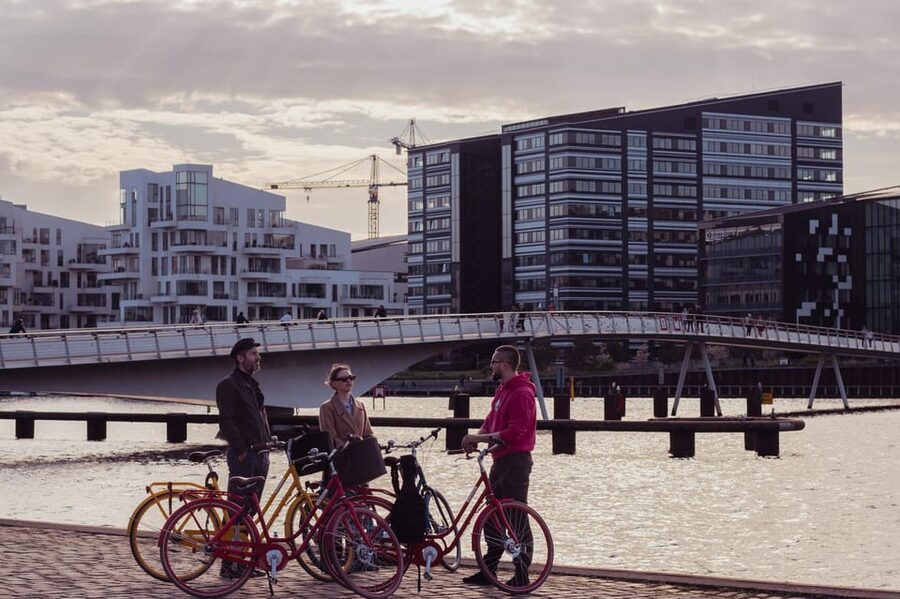
The guide can make or break an architecture tour, and this one depends heavily on the person leading your group. René has been praised for keeping riders comfortable and safe while explaining Copenhagen’s work toward sustainability and better daily life.
Jörn has been described as bringing extra detail beyond what you could find online, and John has focused on the difficult choices Copenhagen faced while changing its urban direction. Josephine combines architectural knowledge with humour, which helps keep the subject from becoming too formal.
The common thread is a personal explanation rather than a dry catalogue of architects and dates. You should expect discussion of political choices, social goals, and the way design affects residents. The guides speak English or German.
One practical caution: stay alert to the group and the guide’s position, especially at crossings or after a scenic stretch. A past rider reported that some people became separated, so it is sensible to keep the riders ahead of you in sight and speak up if you need to slow down.
Is $70 a fair price?
At $70 per person, this is not the cheapest way to ride around Copenhagen. You could rent a bicycle for less and follow your own route. The question is what you want from the day.
The price includes a local guide, bicycle, helmet, rain poncho, luggage storage, and access to the lounge and toilets. It also gives you a planned 17 kilometre route linking parts of the city that are easy to miss. For someone interested in architecture, urban design, or sustainable transport, that added context makes the price reasonable.
You can buy a basket or phone holder on site for 49 DKK each. Special upgrades cost extra: an e-bike is 249 DKK, a cargo or tandem bike is 449 DKK, an e-cargo bike is 649 DKK, and a child seat is 119 DKK. Children’s bikes are included, but must be reserved in advance.
I would consider the e-bike upgrade if you are unsure about the distance or want to save energy for listening and sightseeing. If you regularly cycle, the standard bike should be enough.
Who will enjoy this ride most?
You should book this tour if you want to understand why Copenhagen is often held up as a model for cycling and urban planning. It suits architecture enthusiasts, design students, urban policy fans, and curious visitors who have already seen the central sights.
It also works well for people who want a more personal introduction to the city. You’ll hear how planning choices affect daily routines, not just how a building looks from outside. The stops at the harbour and Amager Fælled give the tour more range than a route limited to central landmarks.
Families can join if everyone can cycle the full distance. Reserve children’s bikes or a child seat beforehand. You should think twice if you dislike group rides, are not comfortable in city cycling conditions, or want a slow tour with long periods at each building.
The tour starts in any weather, so Copenhagen’s changeable conditions matter. Wear layers, comfortable shoes, and clothing that can handle rain. Free cancellation up to 24 hours before the start and the option to reserve now and pay later make planning easier.
Should you book the Copenhagen architecture bike tour?
I would book it if you want to see how Copenhagen works rather than simply photograph its famous centre. The strongest parts are the combination of cycling infrastructure and architecture, the harbour redevelopment, and the clear focus on how public choices affect ordinary life.
I would not choose it if your main interest is historic architecture. The emphasis is strongly on modern buildings, recent urban change, and sustainable planning. You also need enough cycling stamina for 17 kilometres and a willingness to stay with the group.
For the right visitor, $70 buys more than a bike ride. It buys a route, a local perspective, and a way to understand why Copenhagen feels so different from many other European capitals. That makes it a smart choice for your first or second day, when you can use what you learn to see the rest of the city with sharper eyes.
FAQ
How long does the Copenhagen architecture and sustainability tour last?
The tour lasts three hours.
How far will I cycle?
You will cycle roughly 17 kilometres in total.
Where does the tour start?
The main starting location is Tropical Bikes at Vester Voldgade 2A in Copenhagen. The meeting point can vary according to the option booked.
Where does the tour finish?
The listed drop-off location is Tropical Bikes at Vester Voldgade 2A. The exact arrangement can depend on the option you choose.
What languages are available?
The tour is offered in English and German.
Is a guide included?
Yes. A local guide is included.
Are bicycles provided?
Yes. Adult bicycles are provided in 48, 51, and 56 centimetre frame sizes.
Are children’s bicycles available?
Yes. Children’s bicycles with 24 and 26 inch frames are available, but you need to reserve them beforehand.
Is a helmet included?
Yes. A helmet is included with the tour.
Can I cancel for a refund?
You can cancel up to 24 hours in advance for a full refund. You can also reserve now and pay later.
Just added around Copenhagen
- a day at North Zealand Castle Tour★ 4.5 · 19 reviews
- Copenhagen Walking Tour with Food Testing (smorrebrod dish & snap)★ 4.5 · 10 reviews
- walking tour – Copenhagen and Christiansborg 3 hours★ 4.0 · 7 reviews
- The Hunt For The Six Forgotten Giants★ 5.0 · 45 reviews
- The Philosopher’s Last Walk: An audio tour on the life of Søren Kierkegaard★ 4.5 · 5 reviews
- The Six Forgotten Giants Trolls Hunt with Minibus★ 4.5 · 27 reviews
- Malmö Full Day Private Trip, Sightseeing Tour & Lunch Option★ 5.0 · 93 reviews
- The Forgotten Giants Private Tour★ 5.0 · 3 reviews
Copenhagen Tours, compared.
Hop-On Hop-Off Bus Tour with Boat Tour Option
Read our review →
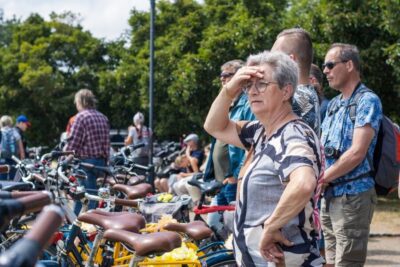
Highlights 3 Hour Bike Tour with a Local Guide
Read our review →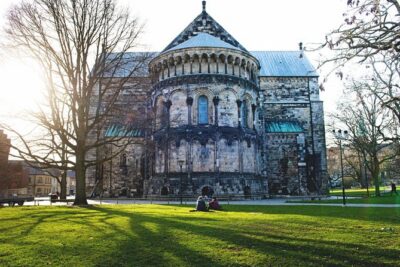
Hamlet and Sweden Tour – Two Countries in one day !
Read our review →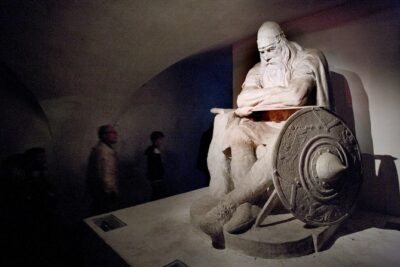
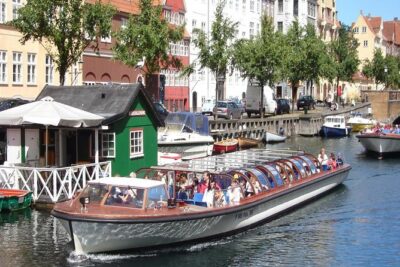
Copenhagen Sightseeing Classic Canal Tour With Live Guide
Read our review →Browse the lists this tour appears in