
Reviewed · KAYAKING TRIPS
Culinary Kayaking Adventure – Saint Anna Archipelago of Sweden
The best part of this four-day trip is the combination of quiet island paddling and serious camp cooking. You move through Sweden’s Saint Anna Archipelago, forage wild plants, sleep on uninhabited islands, and help turn simple local ingredients into memorable meals over a fire.
I like the practical base-camp setup, which lets you paddle out on daily expeditions without packing and unpacking every few hours. I also like the guides’ hands-on approach: Tomas or Thomas handles the kayaking and wilderness side, while Helena leads the cooking and foraging. The main drawback is clear: this is still a physical camping trip, and wind, rain, cold gear, and long paddling days can affect the experience.
In This Review
- Key points about this Saint Anna kayaking trip
- Why the food changes the whole kayaking experience
- Day one: wooden houses, sea meadows, and the first camp
- Day two: bird sanctuaries and a new kind of island
- Day three: the exposed outer archipelago
- Day four: canals, cabins, and the return to the mainland
- What camping is really like here
- Guides, group size, and the social side
- The price and what you receive for $1,954.27
- Getting to Norrköping before the 10:00 pickup
- Who should book this trip?
- Should you book the Saint Anna Culinary Kayaking Adventure?
- FAQ
- Where does the tour begin?
- How long does the experience last?
- Is transportation included?
- Can beginners join the kayaking trip?
- How many people can join?
- What is the minimum age?
- Is camping included?
- Are meals included?
- Will the trip reach the outer archipelago?
- Can I cancel for a refund?
Key points about this Saint Anna kayaking trip
- Four days through changing island scenery: Paddle from forested inner islands to bird-rich middle waters and, weather permitting, the exposed outer archipelago.
- Food is the main event: Forage sorrel, chives, juniper berries, oregano, mushrooms, berries, and other edible plants, then use them in camp meals.
- Beginner kayakers are welcome: You need genuine interest in cooking, but previous kayaking experience is not required.
- Small, social group: A maximum of eight people makes it easier to share cooking jobs and get personal help on the water.
- Comfortable wilderness camping: The equipment includes good tents, sleeping pads, and a carefully arranged camp kitchen.
- Simple transport plan: Pickup and drop-off are included from Norrköping, with private transfers connected to the kayaking route.
Why the food changes the whole kayaking experience

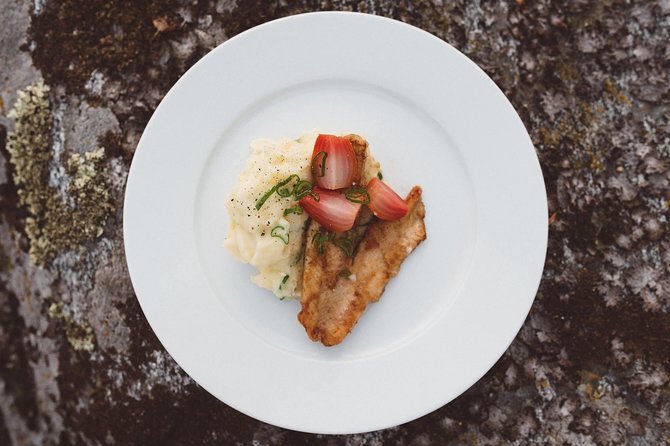
Many sea-kayaking trips treat meals as fuel. This one makes food part of the reason to go.
You are not simply handed a plate at the end of the day. You help collect ingredients, prepare preserves, gather kindling or other cooking materials, and work with the group around the fire. Helena’s cooking is a major part of the trip, with meals that are ambitious enough to feel surprising in a camp setting.
The plants named for the trip give you a sense of the range: sorrel, orpine, chives, juniper berries, oregano, ground-ivy, rose hips, hawthorn, barberries, mushrooms, and other wild greens. Some are used fresh. Others become jam, pickles, sauces, or seasoning for later meals.
I especially like this approach because it gives the scenery a purpose. A sea meadow is not just a pretty place for lunch. It becomes a place to notice salt-resistant plants and understand how people once used the islands. A deciduous grove is not only shade after a paddle. It is also a place to look for berries, mushrooms, and herbs.
The included food is substantial: three breakfasts, three lunches, and three dinners, along with coffee or tea and alcoholic beverages. You should still think of this as a shared cooking holiday, not a restaurant-style tour. The point is to take part.
More city sightseeing cruises in Sweden:
- Guided 5-Day Kayak & Wildcamp the Archipelago of Sweden
★ 5.0 · 73 reviews - 5-Day Kayak & Wildcamp the Archipelago of Sweden – Self-guided
★ 5.0 · 48 reviews - 4-Day Kayak & Wildcamp the Archipelago of Sweden – Self-guided
★ 5.0 · 16 reviews
Day one: wooden houses, sea meadows, and the first camp
Pickup begins at 10:00 a.m. in Norrköping. From there, the route heads into the inner part of the archipelago, where large forested islands, old wooden houses, and traditional coastal scenery create a gentle start.
This first section is a good introduction for a beginner. You paddle through sheltered water and gradually get used to the equipment, the rhythm of the group, and the maze-like shape of the islands. The inner archipelago has more trees and larger islands than the outer waters, so it feels protected and easier to read.
After a short paddle, you stop beside a sea meadow for lunch. This is one of the more distinctive habitats in Saint Anna, with plants that tolerate salt along the water’s edge. You forage for edible greens and fruit such as rose hips, hawthorn, and barberries.
The trip then continues through the inner islands. By late afternoon, you reach camp, where the culinary guide is already preparing the evening meal and ingredients for the following days. Everyone helps cook. You might work with sorrel, orpine, chives, or juniper berries, then sit down to a meal made from the day’s work.
That shared effort matters. If you want a holiday where you can simply arrive at a ready-made dinner, this will feel like work. If you enjoy learning by doing, the first evening sets the right tone.
Day two: bird sanctuaries and a new kind of island
Day two begins with the possibility of a calm sea reflecting the sky. A morning swim is offered as a refreshing start, although you should treat it as an option rather than a central feature of the trip.
After breakfast, you paddle through bird sanctuaries and clusters of small islands. Sea eagles are a likely sight, and seals are possible if luck and conditions cooperate. The beauty here comes from scale and openness: there are many islands, but very little development.
The group aims to reach its next camp in the early afternoon. This is not simply a repeat of the first campsite. The setting changes from pine trees and moss to deciduous forest, open glades, and areas grazed by animals.
That change gives the foraging a new character. You look for mushrooms and berries, then collect wild herbs such as oregano and ground-ivy for dinner. The work is guided, so you are not expected to know which plants are safe or useful on your own.
A base camp is one of the smartest features of the trip. The group can paddle out to explore, then return to a fixed camp rather than carrying every item to a new site each night. You still camp on islands and take part in the outdoor routine, but the arrangement removes some of the strain of a fully mobile expedition.
Day three: the exposed outer archipelago
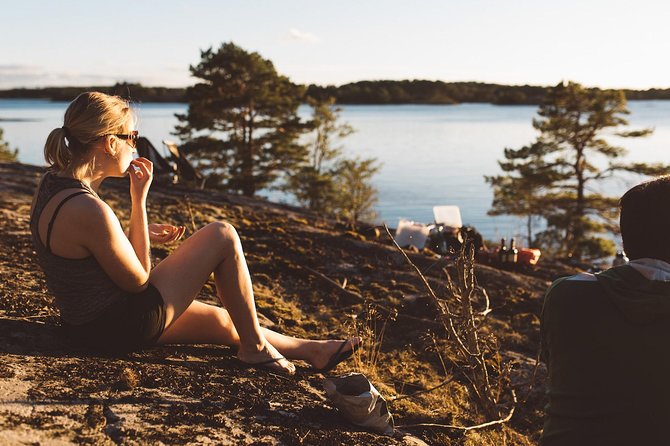
If weather allows, day three reaches the outer archipelago. The setting changes sharply. Instead of larger wooded islands, you find hundreds of tiny, barren islands with sparse wind-shaped pines and plants adapted to salt and exposure.
This is likely to be the most dramatic paddling day. The blue horizon stretches around you, and the sense of solitude increases. It is also the day most affected by wind and water conditions, so the final route cannot be treated as fixed.
The itinerary describes this as a strenuous paddle. That warning deserves attention. Beginners are welcome, but beginner-friendly does not mean effortless. You should be comfortable spending several hours in a kayak and helping with camp tasks afterward.
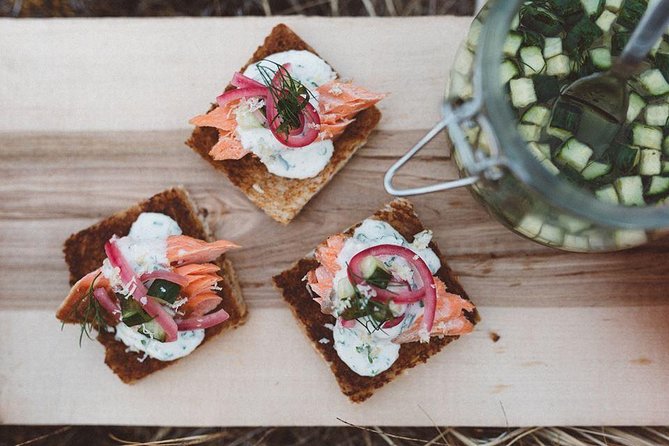
Back at camp in the late afternoon, a local fisherman arrives with the catch of the day. The final evening becomes a proper feast, with the wider Do the North crew invited to join. This gives the trip a social finish and adds a local connection to the food.
The seafood meal also brings the cooking theme full circle. You have gathered plants from the islands, learned outdoor techniques, and then shared a meal based on a local catch. It is a more memorable ending than another standard camp dinner.
More kayaking trips in Sweden:
- Tromsø: Winter Sea Kayaking Tour with Wildlife Sightings
★ 4.9 · 333 reviews - Eggum: Lofoten Islands Midnight Sun Kayak Tour
★ 4.9 · 322 reviews - 1-Day Small-Group Stockholm Archipelago Kayak Tour
★ 5.0 · 266 reviews - Stavanger: Guided Kayaking in Lysefjord
★ 4.9 · 200 reviews
Day four: canals, cabins, and the return to the mainland
The last morning starts with breakfast and camp packing. You paddle toward a different mainland site from the one used at the beginning, passing more bird sanctuaries as the route winds toward its finish.
A narrow canal carries you out of the island maze. Then the scenery changes quickly, with cabins and old houses appearing in a bay. That gradual return to settlement gives the final paddle a satisfying shape: wilderness first, daily life later.
You finish at Tyrislöts Sommarlanthandel, listed as the final stop. The precise timing can depend on the day’s conditions and paddling pace, but the full activity is described as approximately four days.
The farewell message of the trip is practical rather than grand. After learning how to cook outdoors and use wild ingredients, you leave with ideas for taking those skills home. You do not need to become a full-time forager to get value from it. Even learning how to plan a camp kitchen, season a meal with local plants, or cook well in wet weather can make future outdoor trips better.
What camping is really like here
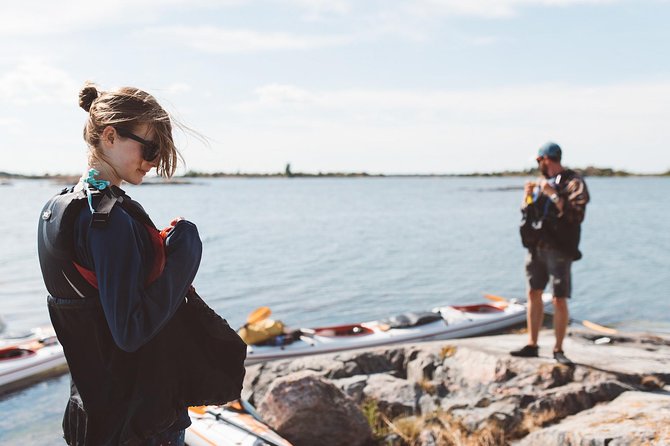
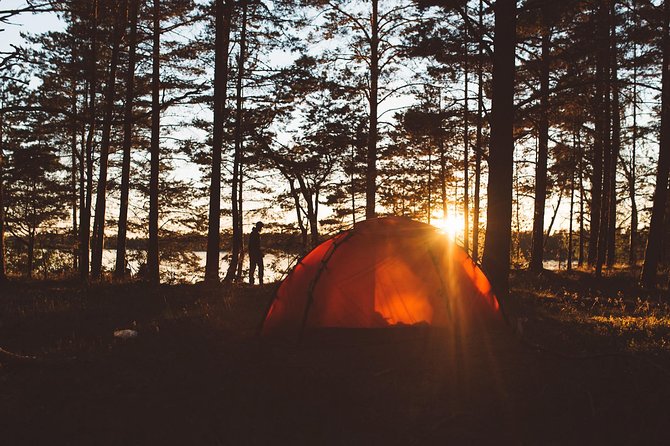
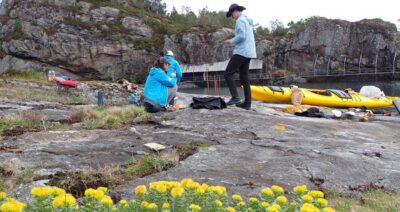
The camping is on uninhabited islands, but the available equipment is designed to make the nights more comfortable than basic backpacking. A past group found the tents and sleeping pads notably good, and the camp included a handmade birch-bough table for meals.
That detail says something about the style. The setup is not luxurious, but care goes into making the campsite welcoming. You can expect to help with tents, meals, and camp routines, while the guides handle the larger safety and logistical picture.
Weather remains the wild card. One group experienced rain for roughly 36 hours, yet the cooking continued. Another participant needed extra help after arriving without enough warm clothing. Pack for damp and cool conditions, even if the forecast looks kind.
A wrist injury was handled with a makeshift birch splint, and a water taxi was arranged so that the injured person could leave while the rest of the group paddled back. That does not remove the need for caution, but it shows that the route has some practical flexibility when problems arise.
Guides, group size, and the social side
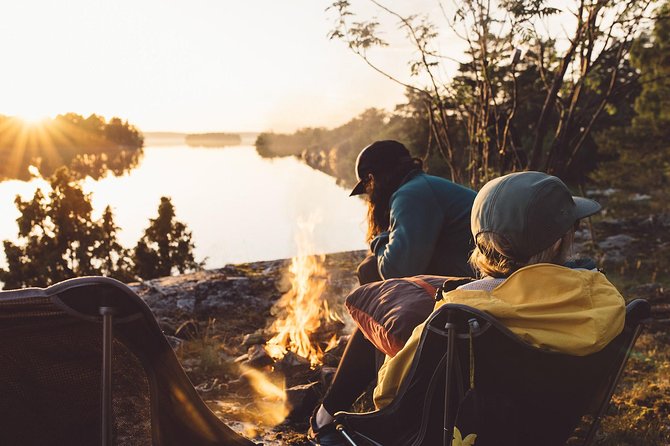
The maximum group size is eight people. For this type of trip, that is a useful limit. You can get direct help with paddling technique, participate in the cooking without standing in a long queue, and get to know the rest of the group quickly.
The guide team includes a kayaking and wilderness guide named Tomas or Thomas in the trip material, Rob in the kayaking and cooking account, and Helena as the chef. Rob is also described as a whittling tutor, which adds another small outdoor skill to the mix.
The tone is hands-on and relaxed, but you are expected to pitch in. That means a willingness to wash, chop, gather, set up, and share responsibility. The group dynamic will matter. A friendly group can make the chores enjoyable, while a person who prefers privacy and complete independence may find the communal setup tiring.
You do not need to be an expert kayaker. You do need genuine interest in cooking and a willingness to be active outdoors. The minimum age is 18, and the maximum listed weight is 120 kilograms.
The price and what you receive for $1,954.27
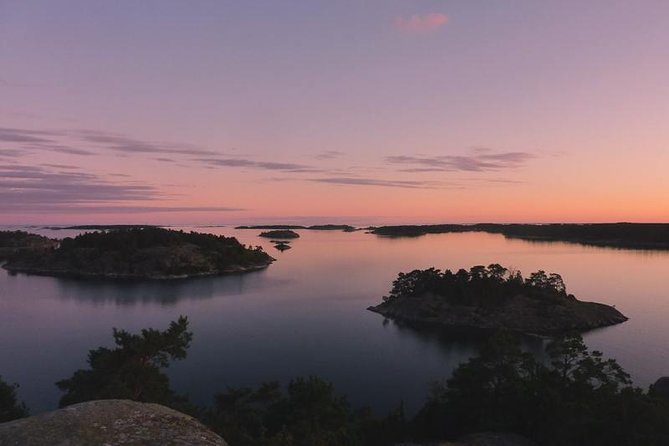
At $1,954.27 per person, this is not a cheap weekend paddle. The price makes more sense when you count what is included: pickup and drop-off, private round-trip transfers, a driver or guide, a local guide, camping equipment, three breakfasts, three lunches, three dinners, coffee or tea, and alcoholic beverages.
Flights and airport transfers are not included. You also need to arrange your own overnight stay if you arrive in Norrköping the night before, which is recommended because pickup is at 10:00 a.m.
The value depends on what you are comparing it with. If you only want kayak rental and a campsite, this trip costs much more. If you want a small-group guided route, food instruction, foraging, transport, camp equipment, and several carefully planned meals, the price is easier to justify.
I would also factor in the time saved. You do not have to plan the route through the archipelago, source the kayaks, organize food, find appropriate camping spots, or work out how to move between Norrköping and the coast. The provider handles those pieces, leaving you to focus on paddling and camp life.
Getting to Norrköping before the 10:00 pickup
Norrköping is the meeting hub. Pickup is available at the train station or at a hotel or hostel of your choice, and staying the night before is recommended.
Stockholm Skavsta Airport is the simplest air connection listed. An airport shuttle takes about 55 minutes to Norrköping. From Stockholm Arlanda Airport, a direct train takes about two hours.
If you fly with KLM into Linköping City Airport, Linköping is about 25 minutes by train from Norrköping, followed by a short taxi ride from the airport to the train. You should allow enough time for these connections rather than trying to arrive just before pickup.
The tour provides hotel pickup and drop-off, but flights and airport transfers are your responsibility. Confirmation is provided at booking, and free cancellation is available if you cancel at least 24 hours before the local start time.
Who should book this trip?
I would choose this for an adult who likes several things at once: sea kayaking, simple camping, local food, foraging, and social group work. It suits someone who wants a real activity holiday but does not want to organize every detail independently.
It is especially good for food-focused couples, friends, and families with adult children. One family used the trip for a birthday celebration, and the shared cooking gave the group plenty to do together beyond paddling.
I would think twice if you dislike wet weather, shared chores, exposed water, or changing plans. The outer archipelago depends on conditions, and the longest paddle can be demanding. Bring warm layers and rain protection, and do not assume a sunny forecast will last for four days.
Should you book the Saint Anna Culinary Kayaking Adventure?
Book it if the idea of collecting island herbs, cooking over a fire, sleeping on a quiet island, and paddling through bird sanctuaries sounds better than a standard sightseeing tour. The strongest reason to go is the balance: active days, thoughtful food, nature, and a small group that works together.
Skip it if you want a soft adventure with hotel rooms and restaurant meals. This is a proper outdoor trip, even with good tents, comfortable pads, private transfers, and excellent support.
For the right person, the food is not a bonus added to kayaking. It is the thread that ties the whole four days together.
FAQ
Where does the tour begin?
Pickup begins in Norrköping at 10:00 a.m. You can be collected at the train station or at a hotel or hostel of your choice.
How long does the experience last?
The experience lasts approximately four days.
Is transportation included?
Hotel pickup and drop-off, a driver or guide, and a private round-trip transfer are included. Flights and airport transfers are not included.
Can beginners join the kayaking trip?
Yes. Beginners are welcome, but you should have a genuine interest in cooking and be prepared for active days on the water.
How many people can join?
The maximum group size is eight people.
What is the minimum age?
The minimum age is 18.
Is camping included?
Yes. The experience includes camping on islands, with tents and sleeping pads provided.
Are meals included?
Three breakfasts, three lunches, and three dinners are included, along with coffee or tea and alcoholic beverages.
Will the trip reach the outer archipelago?
The route reaches the outer archipelago if weather conditions allow. That section includes smaller, exposed islands and can involve a strenuous paddle.
Can I cancel for a refund?
You can cancel at least 24 hours before the local start time for a full refund. Cancellations or changes made less than 24 hours before the start are not accepted for a refund.
More Canoes & Kayaks in Sweden
- Stockholm City Kayak Tour
★ 5.0 · 194 reviews - Bergen: Øygarden Islets Guided Kayaking Tour
★ 4.8 · 190 reviews - Stockholm: Guided Kayak City Tour & Optional Midsummer Meal
★ 4.6 · 170 reviews - Stockholm: Winter Kayaking, Swedish Fika and hot Sauna Experience
★ 5.0 · 156 reviews
Just added around Sweden
- Hop On – Hop Off Bus Visby★ 4.0 · 101 reviews
- Visit the Sami and Reindeer in a Day Trip from Abisko★ 4.5 · 13 reviews
- Airport Transfer: Airport ARN to Stockholm by Business Car★ 4.0 · 3 reviews
- Arlanda Express Train Airport and Stockholm City Transfer★ 5.0 · 3 reviews
- Snowmobile tour★ 5.0 · 13 reviews
- Guided 5-Day Kayak & Wildcamp the Archipelago of Sweden★ 5.0 · 73 reviews
- Minivan Arrival Transfer Stockholm Airport ARN to Stockholm City★ 4.5 · 8 reviews
- Stockholm Top attractions all-inclusive Gran Tour Winter Edition★ 5.0 · 6 reviews
Kayaking Trips, compared.
Winter Sea Kayaking Tour with Wildlife Sightings
Read our review →
1-Day Small-Group Stockholm Archipelago Kayak Tour
Read our review →
Guided Kayak City Tour & Optional Midsummer Meal
Read our review →
Winter Kayaking, Swedish Fika and hot Sauna Experience
Read our review →Browse the lists this tour appears in