
Reviewed · CRUISES & BOAT TOURS
From Stavanger: Lysefjord Sightseeing RIB Boat Tour
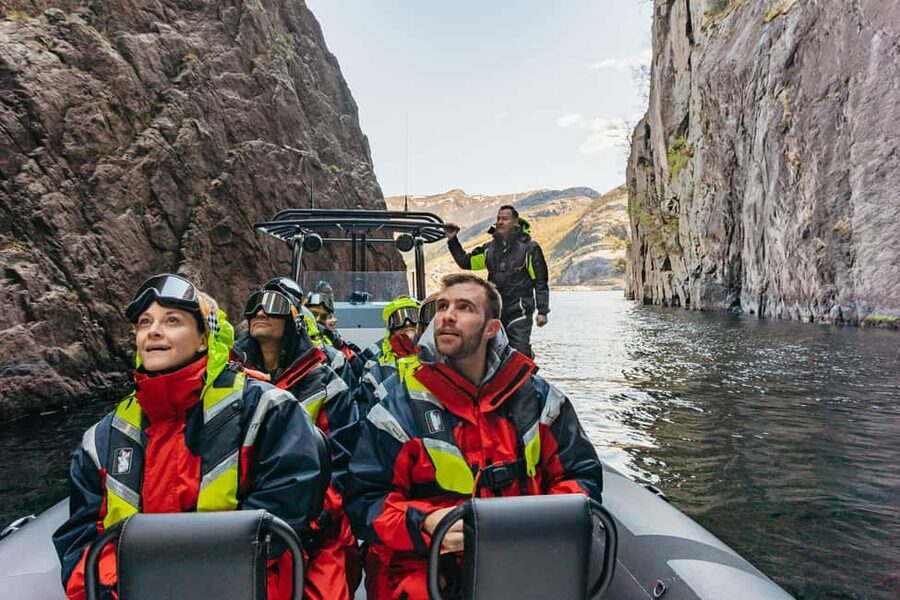
Lysefjord looks most impressive from a small, fast boat. This two-hour RIB trip leaves Stavanger harbor, cuts across the water, then slows beneath 600-meter cliffs, waterfalls, caves, and Pulpit Rock. It gives you both the thrill of speed and time to stop for photos.
I like the close approach to Hengjanefossen Waterfall, and I like the guides’ mix of local stories, geology, and practical sightseeing. The main drawback is simple: wind, rain, and rough water can limit views, and the ride can feel bumpy if the weather turns.
In This Review
- Key points before you book
- Why a RIB is a smart way to see Lysefjord
- Finding the boats at Strandkaien 37
- The gear makes a real difference
- The first 30 minutes: leaving Stavanger behind
- Lysefjord, shaped by ice
- Fantahala and Vagabond Cave
- Pulpit Rock from the water
- Hengjanefossen, also called Whisky Falls
- The 30-minute ride back to Stavanger
- Is $136 good value?
- Who will enjoy this most?
- Weather, photos, and practical planning
- Should you book the Lysefjord RIB tour?
- FAQ
- Where does the Lysefjord RIB tour start?
- How long does the tour last?
- What languages are available?
- Is protective clothing provided?
- What should I bring?
- Can children join the tour?
- Is the tour suitable for people with back problems or pregnant women?
- What happens if the weather or a delay affects the schedule?
Key points before you book
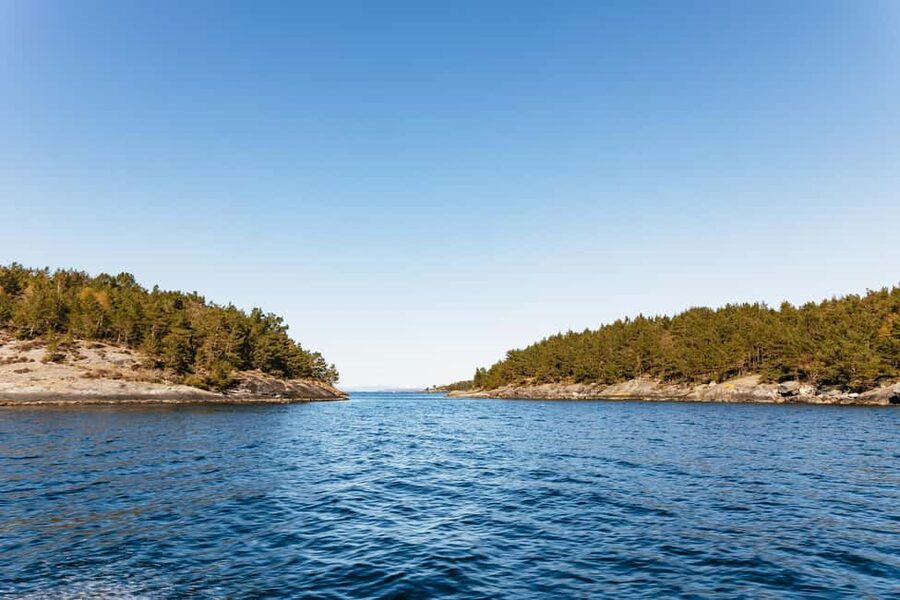
- A fast ride and a scenic cruise in one: The boat moves quickly on the outward and return legs, then slows at the main sights.
- Pulpit Rock from below: You see the famous 600-meter-high plateau from the fjord rather than from the hiking trail.
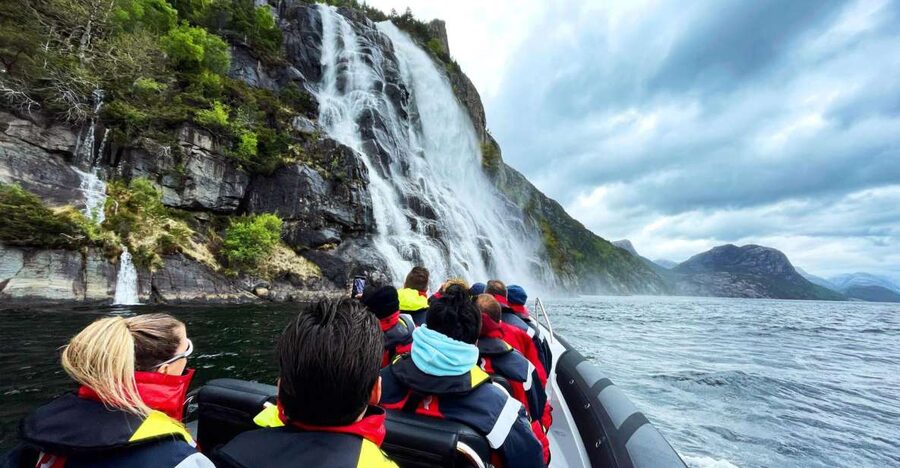
- Waterfall close-up: The boat approaches Hengjanefossen, also called Whisky Falls, where spray and falling water become part of the experience.
- Warm gear is supplied: You receive a lifejacket, floating suit, gloves, and goggles, with equipment available in different sizes.
- Useful for cruise schedules: The departure point is near Stavanger’s cruise harbor, and the timing is arranged to get cruise passengers back on time.
- Wildlife is possible, not promised: Seals, porpoises, sea eagles, mountain goats, and even whales may appear, but sightings depend on luck.
Why a RIB is a smart way to see Lysefjord
A standard sightseeing boat lets you sit back and watch the fjord pass by. This RIB does something different. You sit low over the water, feel the speed, and get close to the rock walls and waterfalls. The boat can turn and stop more easily than a large vessel, which matters when the guide points out a cave or wildlife.
The best part is the change of pace. The boat can run at roughly 35 knots on faster sections, according to one passenger’s account, but it slows for Pulpit Rock, Fantahala, and the falls. You are not simply bounced around for two hours. The ride has quiet viewing periods built into it.
I also like the scale of the experience. Two hours is enough to reach the main Lysefjord sights without taking up an entire day. If Stavanger is one stop on a cruise or a short Norway visit, that compact timing is a real advantage.
The tradeoff is comfort. A RIB is open to wind and spray, even with protective clothing. You should expect a sporty ride, not a gentle floating excursion. Anyone with back problems, and pregnant women, should not book it. Children under six are not permitted.
Other Stavanger days people book alongside this one:
- Stavanger: Scenic Fjord Cruise to Lysefjord and Preikestolen
★ 4.6 · 5,791 reviews - Stavanger: Fjord Cruise to Lysefjord and Pulpit Rock
★ 4.8 · 1,357 reviews - From Stavanger: RIB Tour to Lysefjord
★ 4.9 · 1,288 reviews
Finding the boats at Strandkaien 37
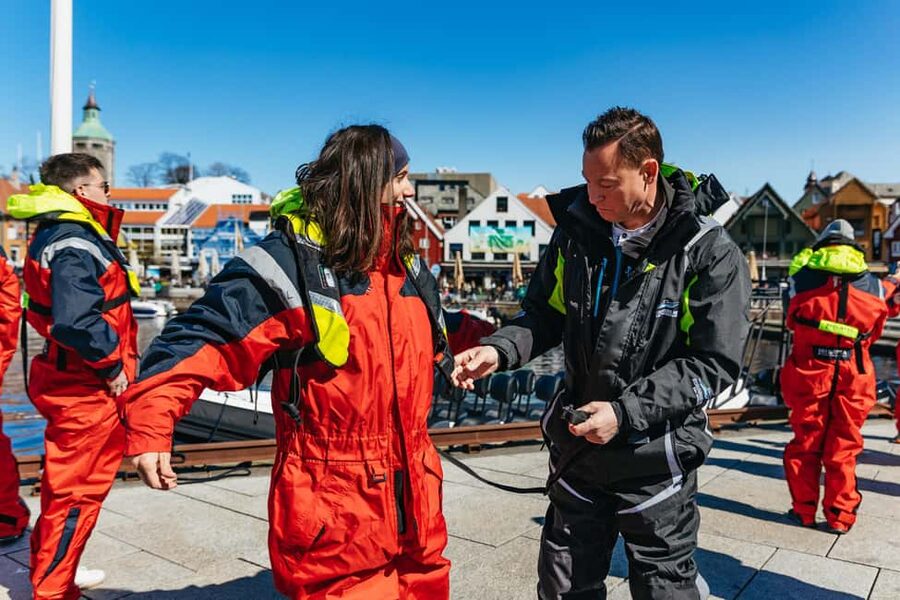
The meeting point is at Stavanger’s city harbor, at Strandkaien 37. Look for the white RIB boats on a floating dock in the center of the marina.
A glass, one-story building with triangular roofs sits beside the operator. That is the Stavanger fish market. Nearby, you will see a large pillar topped by an abstract steel statue. These landmarks make the dock easier to find, especially when the harbor is busy with cruise passengers.
The activity ends at the same place. That makes the trip easy to fit around a walk through central Stavanger, a meal near the harbor, or a ship departure. Still, give yourself enough time to locate the dock and get suited up. The exact starting time depends on availability.
The gear makes a real difference
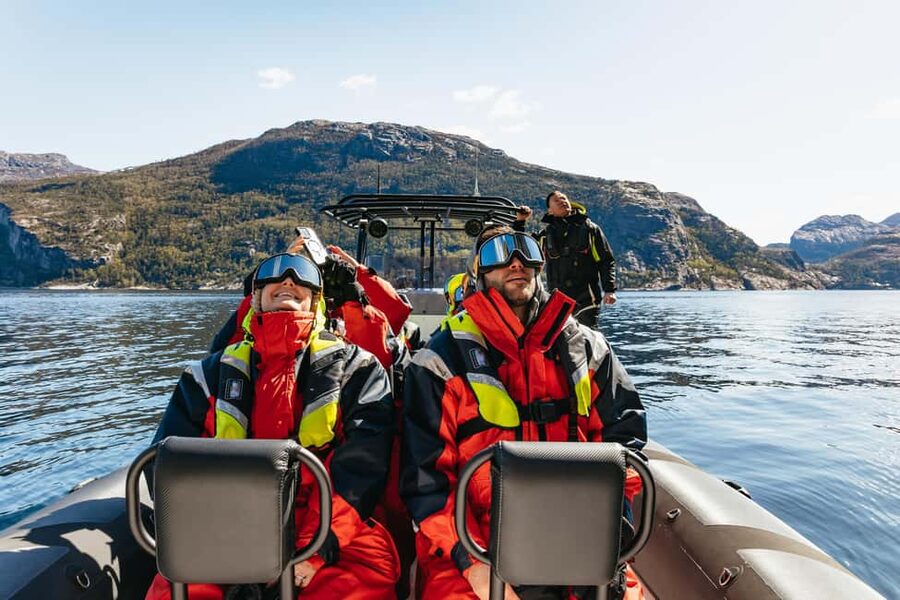
The operator supplies a lifejacket, floating suit, gloves, and goggles. In wet or windy weather, the full-body suit is especially helpful. Several people found the gear kept them warm even in rain, but you should not treat it as a substitute for sensible clothing.
Wear outdoor layers and sturdy, preferably waterproof footwear. A jumper under the suit is useful on a cold day. Bring a snug hat if you have one, since some people found the supplied equipment warm but still wished for extra head protection.
Secure everything before the boat leaves. Loose hats and cameras can be lost quickly once the RIB picks up speed. Sunglasses are useful in bright weather and help block wind. Earplugs or earbuds may also be worth packing, since the engine and wind can be loud.
The suits come in different sizes, and goggles are provided. On warmer days, the operator may provide only a lifejacket rather than the thick floating suit. That means you should still dress for exposure to wind, even if the weather feels mild on land.
The first 30 minutes: leaving Stavanger behind
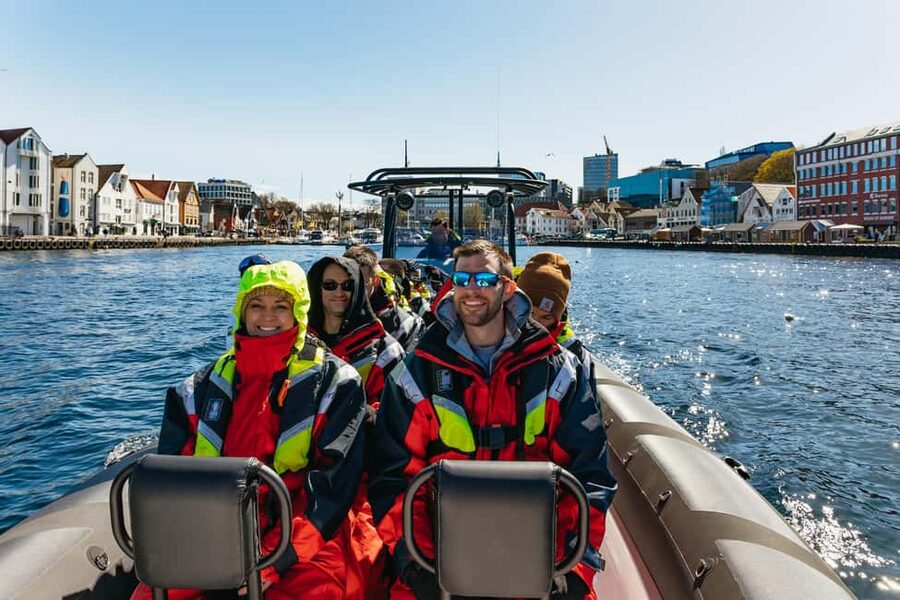
The opening speedboat section takes about 30 minutes. This is where you get the first taste of the boat’s character. The RIB moves briskly away from Stavanger, and the ride itself becomes part of the sightseeing rather than just transportation.
At this stage, the wind can feel strong. Hold your camera securely and keep your goggles ready. The water may feel smooth on a calm day, but conditions can change. One sunny outing was described as surprisingly gentle, while a rainy day produced a bumpier ride and reduced visibility.
Your guide handles the driving and commentary. The live tour is offered in English and Norwegian. An audio guide is also available in German, Italian, French, Spanish, and Dutch, which gives non-English speakers another way to follow the trip.
Guides explain what you are seeing as the boat moves into the fjord. Several guides have been praised for clear storytelling and a friendly manner. Stig is one name that comes up, with passengers especially appreciating his local information and the extra stop near a fish farm.
Same fjord country, a very different day out:
- Lysefjord RIB Safari from Stavanger
★ 5.0 · 665 reviews - Haugesund Shore Excursion: Åkrafjorden & Langfoss waterfall
★ 4.5 · 554 reviews - Guided hike to Pulpit Rock Preikestolen
★ 5.0 · 390 reviews - Lysefjorden & Pulpit Rock RIB-Safari from Stavanger
★ 5.0 · 374 reviews
Lysefjord, shaped by ice
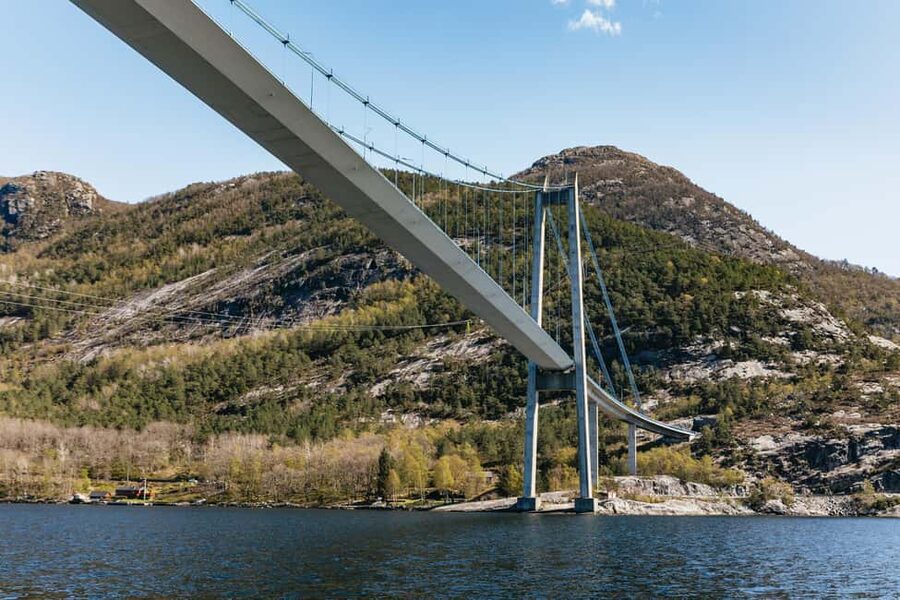
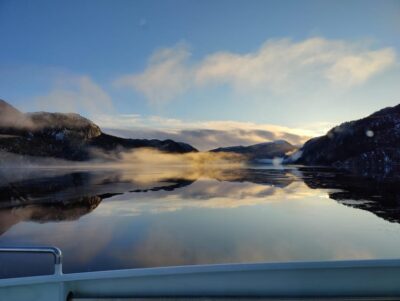
Once you enter Lysefjord, the ride changes from open-water speed to a more measured cruise. The fjord’s steep sides were shaped by the last ice age, which carved the deep water and sharp cliffs you see today.
That geological explanation adds useful context. The cliffs are not simply tall rocks surrounding a scenic inlet. Their shape tells the story of massive ice movement over a long period. Your guide connects those broad natural forces with smaller local stories about people who lived and worked around the fjord.
Keep your eyes on the cliff edges and waterline. Native wildlife can appear along the route, including seals, porpoises, sea eagles, and mountain goats. Whales are also possible, though no sighting is guaranteed. You may spend part of the ride scanning the water, but the scenery remains the main event.
The guided stops matter here. Without them, the fjord can become a series of impressive views that blur together. With commentary, the caves, waterfalls, fish farms, and rock formations have a clearer place in the story.
Fantahala and Vagabond Cave
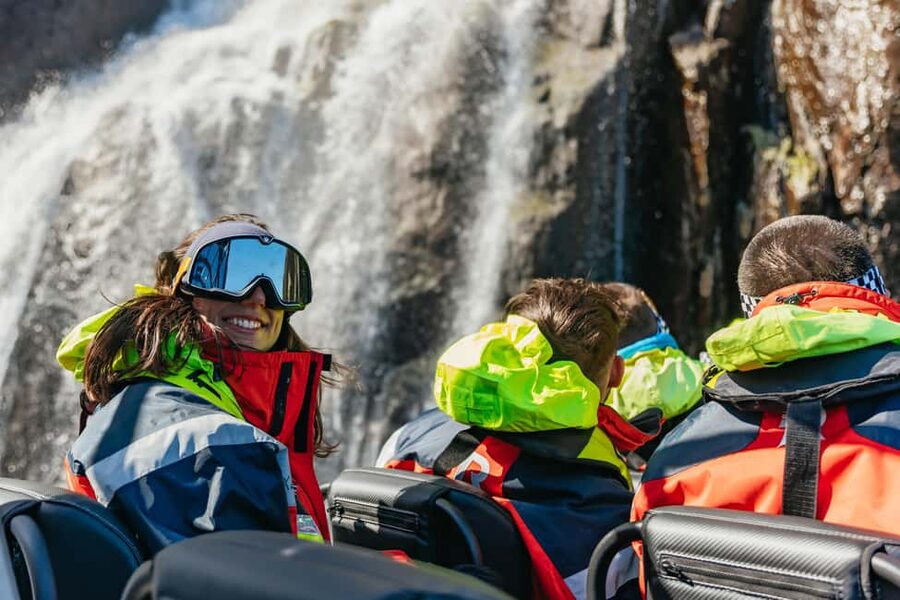
Fantahala is a short sightseeing stop of about 10 minutes. The name is linked with Vagabond Cave, an old hideout associated with tax evaders. The guide uses this place to share one of the fjord’s more colorful human stories.
Do not expect a long walk or a visit inside the cave. This is a boat-based viewing stop. The RIB slows or pauses so you can look toward the rock and take photographs while hearing the explanation.
That brief pause is typical of the trip. You get a concentrated look at several places rather than a long stay at one attraction. If you prefer to explore on foot, this tour will feel limited. If you want to cover the fjord’s main sights without hiking, the format works well.
Pulpit Rock from the water
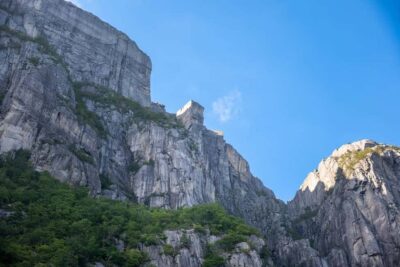
Pulpit Rock is the landmark most people have in mind when they book this trip. The famous plateau rises about 600 meters above the fjord. From the RIB, you look upward from the water, which gives the rock a different scale from the familiar viewpoint seen in photographs.
The boat spends about 10 minutes here, with the guide explaining the site and allowing time for pictures. That is enough for a good look, but not enough for an extended photo session if the boat is full or the weather is poor.
This is not a replacement for hiking to Pulpit Rock. You will not stand on the plateau or see the view from above. Instead, you get the easier and faster version: a dramatic look at the cliff from below, with no long uphill walk.
Visibility is the important variable. In clear weather, the rock should be the visual center of the trip. In low cloud or heavy rain, it may be partly hidden. One outing had so much cloud and rain that the rock could not be seen. The operator cannot control that, so book this experience for the boat ride and fjord scenery as a whole, not for one guaranteed photograph.
Hengjanefossen, also called Whisky Falls
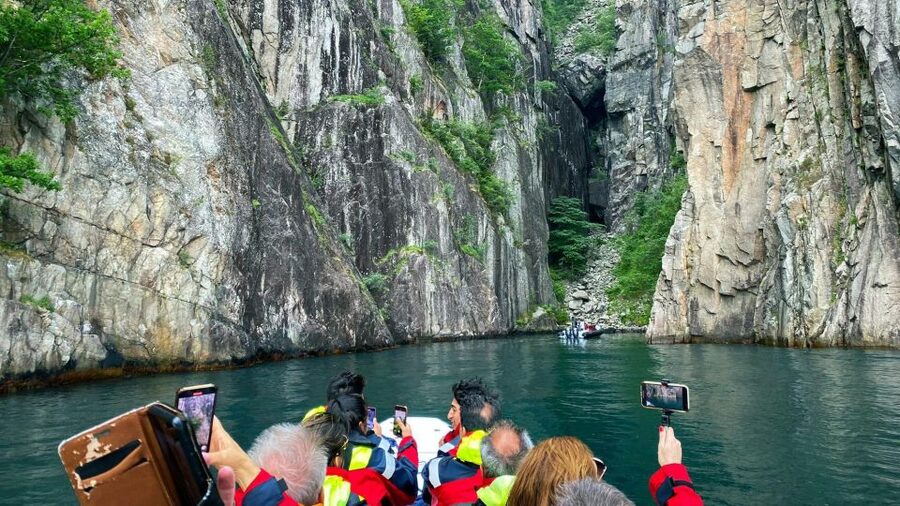
The waterfall stop is one of the most memorable parts of the route. Hengjanefossen drops about 75 meters beneath the remains of an old moonshine distillery, which explains the nickname Whisky Falls.
The RIB can approach close to the falling water. On a clear day, you will see the full height of the cascade against the rock. In damp weather, spray adds to the fun, though your protective suit and goggles become even more useful.
The stop lasts around 10 minutes. The guide may offer you a chance to take a drink near the waterfall if you are up for it, but alcohol and drugs are not allowed as part of the activity, and smoking is prohibited. The practical point is to enjoy the close view, not expect a long shore stop.
Waterfalls are often best after rain, but wet weather can also make the ride rougher and hide Pulpit Rock. That is the balance of a fjord trip: rain can improve one sight while spoiling another.
The 30-minute ride back to Stavanger
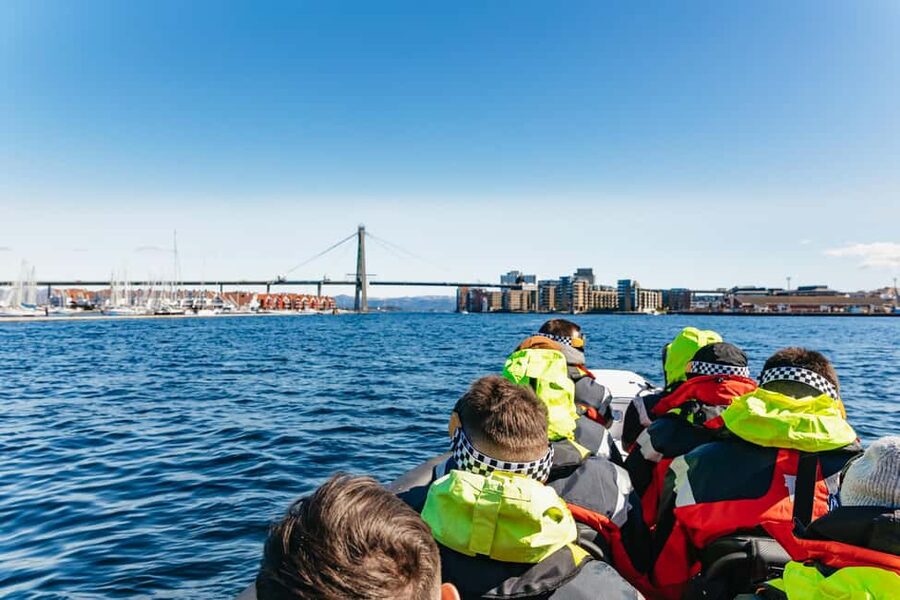
After the main sightseeing stops, the RIB heads back toward the harbor. The return section takes about 30 minutes and is often the fastest, most playful part of the trip.
This is when you feel the boat’s acceleration and its response to waves. Several people particularly enjoyed the high-speed run back, while others noted that crossing another boat’s wake added a sudden jolt. If you are prone to motion sickness, the trip may still be manageable in calm conditions, but you should understand that this is an active ride.
The return is also a chance to enjoy the fjord without trying to photograph every rock. Put the camera away, keep your gear secure, and watch the water and cliffs. The boat returns to Strandkaien 37, so you finish where you started.
Is $136 good value?
At $136 per person, this is not a cheap harbor cruise. The price makes more sense when you consider what is included: a two-hour route into Lysefjord, a RIB boat, a live guide, and protective equipment.
You are also paying for access to several sights in a short window. Reaching Pulpit Rock, Fantahala, Vagabond Cave, and Hengjanefossen independently would require more time and planning. For someone with only one day in Stavanger, the trip packs a lot into two hours.
The value is strongest if you want speed, close views, and interpretation. It is weaker if you want a quiet ride, a long stop at each location, or the lowest-cost way to see the water. A large ferry may suit you better if comfort and shelter matter more than excitement.
The tour is also useful for cruise passengers. Its schedule is designed around cruise timing, and if a delay occurs, the operator will shorten the trip to get you back on time. That is reassuring, though it also means the advertised sightseeing time is not an absolute guarantee in disrupted conditions.
Who will enjoy this most?
I would choose this for active adults, older children over six, couples, families with school-age children, and anyone who wants a scenic outing with some adrenaline. The format works especially well for a first visit to Stavanger, since you see the region’s best-known fjord sights without committing to a full-day excursion.
It is a good match for people who enjoy photography but do not want to hike to Pulpit Rock. The boat stops at key viewpoints, and the guide gives you time to take pictures. A partly full boat offers more room to shift position, while a full boat may feel crowded when everyone wants the same view.
I would not choose it for someone who needs a gentle, stable ride. The operator specifically excludes people with back problems and pregnant women. Anyone concerned about motion sickness should consider the forecast and ask themselves how comfortable they are with speed, wind, and wakes.
The guide’s role is another reason to book. This is not just a driver pointing at cliffs. The commentary covers ice-age geology, local characters, tax evaders, old industry, waterfalls, wildlife, and places such as fish farms. Guides including Stig have been singled out for making the stops clear and entertaining.
Weather, photos, and practical planning
Norwegian weather can change the character of the tour. Sun brings broad views and easier photography. Rain may produce stronger waterfalls but can bring cloud, spray, and rougher water.
Pack outdoor layers even if Stavanger feels mild. Wear a close-fitting hat, bring sunglasses, and use the supplied goggles when the wind rises. Keep cameras attached to you, not loose in a pocket. Waterproof boots and extra layers are sensible additions.
The tour does not allow smoking, alcohol, or drugs. It is not suitable for children under six. Free cancellation is available up to 24 hours before departure, and you can reserve while paying later, which helps if your Norway plans are still shifting.
Should you book the Lysefjord RIB tour?
Book it if you want the most exciting compact introduction to Lysefjord. The combination of a fast RIB ride, close waterfall views, Pulpit Rock from below, local stories, and supplied cold-weather gear gives you a lot in two hours.
Skip it if you want a calm, sheltered cruise or if back comfort is a concern. Also think twice if seeing Pulpit Rock clearly is your only goal, since cloud can hide it.
For most physically comfortable visitors with limited time in Stavanger, I think the price is fair. You get scenery, speed, and a guide who adds meaning to what you see. Just dress warmly, secure your camera, and accept that the weather is part of the Norwegian deal.
FAQ
Where does the Lysefjord RIB tour start?
Meet at Strandkaien 37 at Stavanger’s city harbor. Look for the white boats on a floating dock in the center of the marina, near the Stavanger fish market and a large pillar topped with an abstract steel statue.
How long does the tour last?
The total duration is two hours. The route includes about 30 minutes of speedboat travel at the beginning, roughly one hour in Lysefjord, short sightseeing stops, and about 30 minutes back to Stavanger.
What languages are available?
The live guide speaks English or Norwegian. An audio guide is included in German, Italian, French, Spanish, and Dutch.
Is protective clothing provided?
Yes. The operator provides a lifejacket, floating suit, gloves, and goggles in a range of sizes. On warmer days, you may receive a lifejacket instead of the thicker floating suit.
What should I bring?
Bring outdoor clothing, layers, a secure hat, and sunglasses. Waterproof boots can be useful, and cameras and hats should be firmly secured to you.
Can children join the tour?
Children under six cannot join this activity. The provided information does not state a maximum age.
Is the tour suitable for people with back problems or pregnant women?
No. The activity is not suitable for people with back problems or pregnant women because the RIB ride can be fast and bumpy.
What happens if the weather or a delay affects the schedule?
The route may be shortened if needed to keep cruise passengers on time. Poor weather can also reduce visibility or make the water rougher, and wildlife sightings are not guaranteed.
Just added around Stavanger
- Stavanger: Waterfalls, Caves and Rock Tour By Sea★ 4.0 · 145 reviews
- The Pulpit Rock Air★ 4.5 · 8 reviews
- Discover Sensational Stavanger: Self-Guided Audio Tour★ 3.5 · 7 reviews
- Stavanger Kjerag Hike with Guide and Transportation★ 5.0 · 9 reviews
- Stavanger Private Walking Tour with a Local★ 4.5 · 20 reviews
- Preikestolen | Pulpit Rock – Hike with a local guide★ 5.0 · 84 reviews
- Scenic tour to Steinsfjellet, locals at Kringsjå & Rising Tide★ 5.0 · 48 reviews
- Kjerag Low-Season Hike + Packed Lunch★ 5.0 · 3 reviews
Cruises & Boat Tours, compared.
City Archipelago Sightseeing Cruise with Guide
Read our review →
Scenic Fjord Cruise to Lysefjord and Preikestolen
Read our review →
Scenic Fjord Cruise with Audio Guide Commentary
Read our review →
Hop-On Hop-Off Bus Tour with Boat Tour Option
Read our review →
Tromsø’s Top-Rated Fjord & Fishing Cruise – All-Inclusive
Read our review →Browse the lists this tour appears in