
Reviewed · MORNING
Good Morning, Copenhagen: Feel The Danish Hygge & Happiness
Copenhagen’s hygge is easiest to understand away from the grand sights. This 3.5-hour walk leads you through yellow row houses, crooked lanes, quiet squares, royal gardens, and cafés while connecting daily Danish life with ideas about trust, comfort, equality, and happiness. Along the way, you taste Danish pastry and flødeboller, a chocolate-covered marshmallow treat.
I like the small maximum group of 10, which gives your guide room to answer questions and adjust the conversation. I also like the mix of places: you get Rosenborg Castle and Christiansborg Palace, but you also wander through Krusemyntegade, Pistolstræde, and Magstræde, where Copenhagen feels more lived-in.
The main thing to consider is the pace and purpose. This is a relaxed cultural walk, not a full sightseeing tour with interior visits. A few people have found the four-hour flow slightly rushed, while others felt the focus on treats left less time for Danish history. If you want palace interiors or a detailed chronology of Copenhagen, choose another tour or add one afterward.
In This Review
- Key things to know before you book
- Starting among Nyboder’s yellow houses
- Krusemyntegade and Copenhagen’s quiet side
- Danish pastry as a lesson in everyday hygge
- The King’s Garden and Rosenborg Castle
- Pistolstræde and the flødeboller pause
- Nikolaj Kunsthal and Copenhagen’s changing faith
- Christiansborg, Danish politics, and Jante law
- Magstræde and the city’s old-world texture
- Coffee, a final treat, and useful local advice
- What the $82.23 price really covers
- Who will enjoy this Copenhagen walk
- Should you book Good Morning, Copenhagen?
- FAQ
- How long does the Good Morning, Copenhagen tour last?
- How large is the group?
- What language is the tour offered in?
- What food and drinks are included?
- Does the tour enter Rosenborg Castle or Christiansborg Palace?
- Where does the tour start and finish?
- Can children join the tour?
Key things to know before you book
- Hygge is the subject, not just the decoration: The walk explains how comfort, shared food, trust, and everyday habits fit into Danish culture.
- You see major sights from outside: Rosenborg Castle, Christiansborg Palace, Nyboder, and Nikolaj Kunsthal are viewed from the street or surrounding grounds.
- Local sweets are part of the route: Expect Danish pastry, flødeboller, and coffee or tea, with additional food and drinks at your own cost.
- The group stays intimate: The maximum is 10 people, a useful size for questions and conversation.
- The route mixes famous and quiet Copenhagen: Royal gardens and parliament sit alongside cobbled lanes and tucked-away streets.
- You finish in the city center: The tour ends on Læderstræde, close to artisan shops and useful for continuing your day on foot.
Starting among Nyboder’s yellow houses
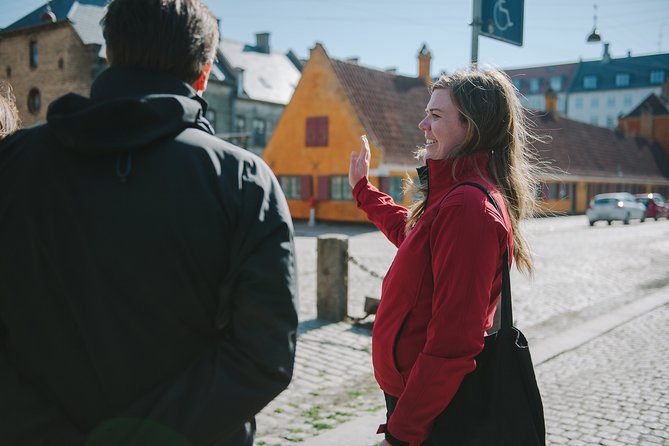
The morning begins at Krokodillegade 21, near Nyboder, one of Copenhagen’s most distinctive historic districts. The yellow houses were built for naval personnel, and their repeated facades give the area a calm, orderly look that feels very different from the city’s busier streets.
This opening stop is brief, about 15 minutes, but it sets the tone. Your English-speaking guide introduces the group and begins with local stories rather than a list of dates. Guides have included Therese, Oskar, Laura, Peter, Sandra, Karoline, and others, all presented as local Copenhageners. One guide, Magnus, also drew on experience serving in the Royal Guard.
That local point of view matters. You are not simply hearing that hygge means coziness. You are being shown how the idea connects to Danish homes, food, social habits, and the way people use public spaces. In a group this small, you can ask about customs that puzzle you, from Danish social rules to the meaning of Jante law.
Wear shoes suited to cobblestones. Copenhagen is flat, but an easy route can still become tiring when much of it is on old stone streets.
A few more Copenhagen trips to weigh up
- Morning hike in Abisko National Park
★ 5.0 · 239 reviews - Abisko National Park: Scenic Morning Hike with Transfer
★ 4.7 · 172 reviews - Kiruna: Morning Husky Sled Ride with Coffee Break
★ 4.8 · 118 reviews
Krusemyntegade and Copenhagen’s quiet side
From Nyboder, the walk enters some of the oldest parts of central Copenhagen. Krusemyntegade is a good example of the route’s appeal. Its cobblestones and older houses create the kind of setting that makes the Danish idea of slowing down easier to grasp.
The tour does not rush from one headline sight to the next. Instead, your guide points out small details in streets, timber-framed buildings, and pockets of greenery. These pauses help you see why Copenhagen often feels comfortable at a human scale. The walk is not only about what a building is, but about how the city is arranged and used.
This section lasts around 10 minutes, though the overall route includes plenty of walking between stops. Some people use the tour as their first look at Copenhagen, then return later to spend more time at places that catch their interest. That is a sensible plan because many stops are short and focused on explanation rather than extended sightseeing.
Danish pastry as a lesson in everyday hygge
Food arrives early, and that is one of the tour’s strengths. You stop to sample a Danish pastry, a small but effective way to connect culture with ordinary pleasure. Pastries are not treated as a decorative extra. Your guide explains their place in Danish childhood and adult routines, giving the snack a bit of social context.
The tasting takes about 20 minutes. It is a chance to sit or pause, ask questions, and meet the other people in your group. Several guides, including Therese, Laura, and Peter, have been praised for combining local stories with humor and warmth. That personal style suits this tour better than a stiff lecture would.
Keep your expectations sensible. The food included is a tasting, not a meal. If you want a full breakfast, eat before you arrive or plan another stop afterward. The included coffee or tea and pastry make the price easier to justify, but you should not book this as a food tour.
The King’s Garden and Rosenborg Castle
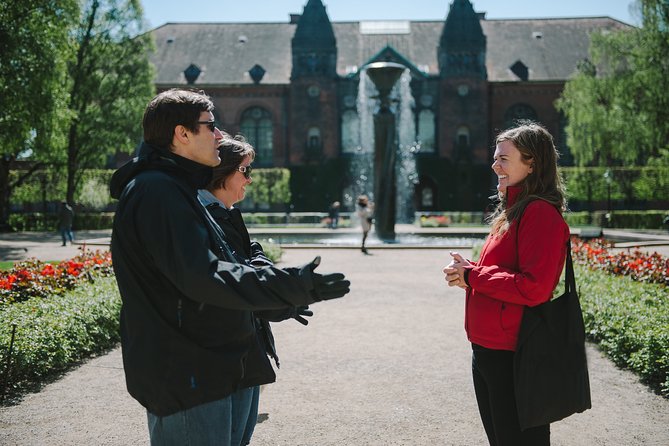
Kongens Have, or the King’s Garden, provides a welcome green pause in the center of town. The park began as a royal garden and later became one of the world’s early public parks. Your guide uses the setting to tell a more dramatic story involving ambitious kings, mental illness, and unsuitable love triangles.
That approach is useful because it keeps the history memorable without turning the morning into a classroom. The garden stop lasts about 15 minutes, enough to take in the paths and setting while hearing how a royal space became public.
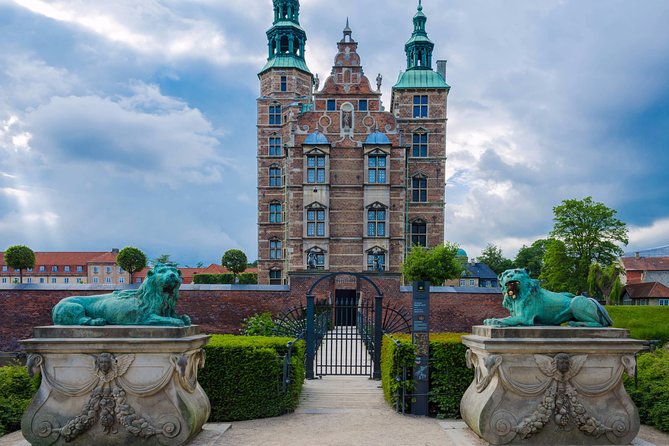
Next comes Rosenborg Castle, built by King Christian IV in the 17th century. The castle is small and visually striking, more like a carefully designed royal retreat than a vast palace complex. Your guide discusses Christian IV’s ideas and the castle’s place in Copenhagen.
You view Rosenborg from outside. No admission ticket is included, and the tour does not enter the castle. If the interior is high on your list, plan a separate visit. This tour gives you the story and the exterior view, but not the crown jewels, rooms, or museum displays inside.
Same fjord country, a very different day out:
- Copenhagen: Canal Cruise with Guide
★ 4.6 · 9,115 reviews - Copenhagen: Hop-On Hop-Off Bus Tour with Boat Tour Option
★ 3.9 · 4,122 reviews - Private Walking Grand Tour of Copenhagen
★ 5.0 · 3,953 reviews - From Copenhagen: Lund and Malmö 2-Country Tour
★ 4.7 · 2,772 reviews
Pistolstræde and the flødeboller pause

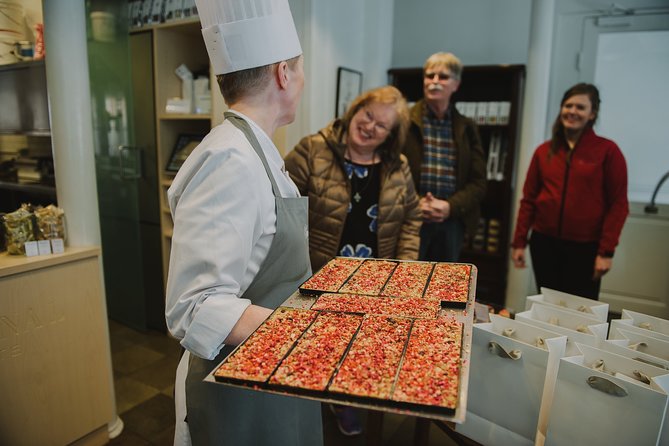
Pistolstræde is one of the route’s more atmospheric stops. This tucked-away lane offers a quiet break from the city center’s active pedestrian streets. You sit down while your guide brings out flødeboller, a Danish sweet made with a soft marshmallow center and chocolate coating.
The stop takes about 20 minutes. Your guide explains why this treat is tied to Danish childhood and how shared sweets fit into hygge. It is a small detail, but it makes the cultural theme concrete. Instead of hearing broad claims about happiness, you are looking at a familiar object and learning how people associate it with comfort and time together.
The route then highlights the contrast between quiet side lanes and one of Europe’s busiest pedestrian streets. That change in sound and pace is part of the experience. You notice how quickly Copenhagen can shift from a calm alley to a crowded shopping area.
The food remains modest. You receive treats along the way, but additional food and drinks are not included. One person found the quantity minimal, while still enjoying the walk and the snacks. I would see the tastings as conversation starters, not as a substitute for lunch.
Nikolaj Kunsthal and Copenhagen’s changing faith
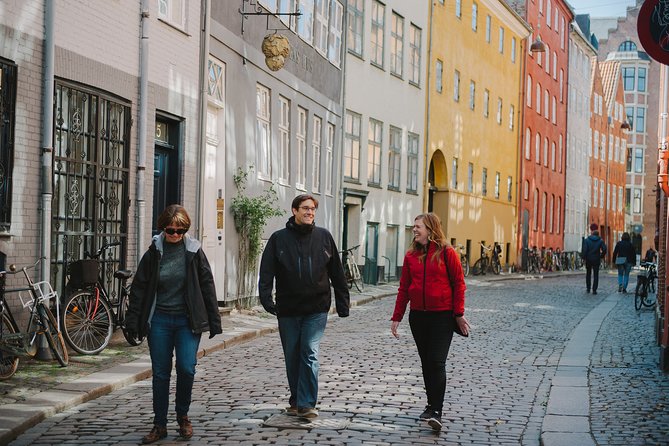
At Nikolaj Kunsthal, the route turns into a quiet cobbled square. You look up at the tall spire above what appears to be a church, then hear how the building functions in modern Copenhagen and how Danes view religion from outside the church.
This is another exterior stop. You do not enter Nikolaj Kunsthal, and the visit is mainly about the building, the square, and the discussion around religion and culture. It adds useful balance to the more familiar royal stories. Danish identity is not presented as one simple package. The guide connects public life, tradition, and modern attitudes in a way that invites questions.
There is also a practical rhythm to the stop. While you take photographs, the guide steps into a nearby shop. The tour then continues through the center toward Christiansborg.
Christiansborg, Danish politics, and Jante law
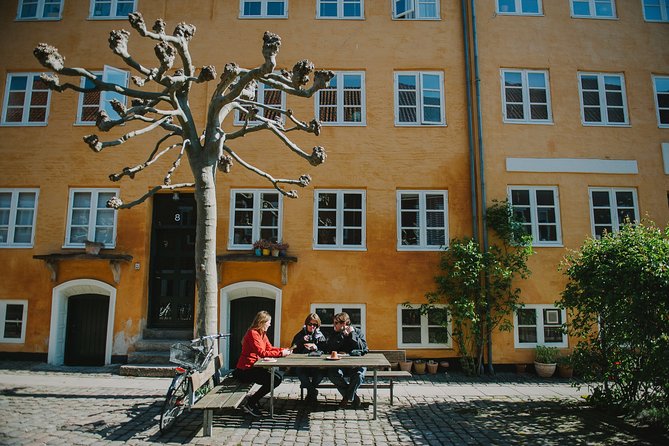
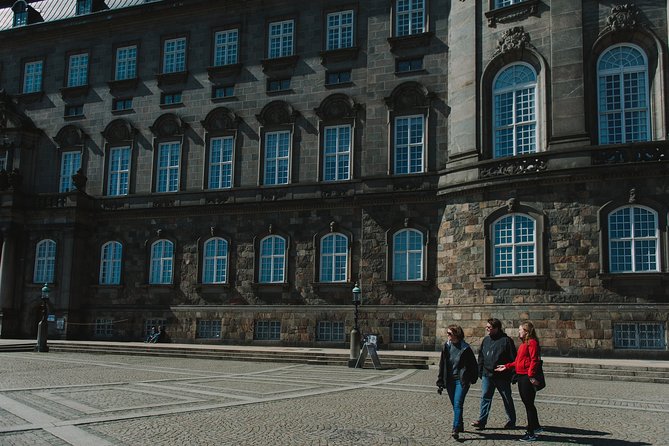
Christiansborg Palace is the home of Denmark’s parliament today, and it is the place where the tour gives its clearest explanation of modern Danish society. Your guide discusses Danish politics, the welfare system, and Jante law, a cultural idea that discourages people from acting as if they are better than others.
The stop lasts about 20 minutes. It is not a formal political lecture, and the tour does not enter the palace. Instead, you get a plain-language explanation of ideas that shape Danish life, including the high level of trust often associated with Denmark.
This section is valuable if you want more than pretty streets and pastries. It tries to explain why the country is often linked with high happiness scores. Still, the emphasis varies with the guide. Some guides have spent more time on happiness and social trust, while others have focused more on city history and daily culture. If happiness is your main reason for booking, ask questions directly. Guides such as Oskar have been able to expand on the subject when prompted.
Do not expect a full explanation of every part of the welfare state. The tour gives you a useful introduction, then leaves you to explore the subject further.
Magstræde and the city’s old-world texture
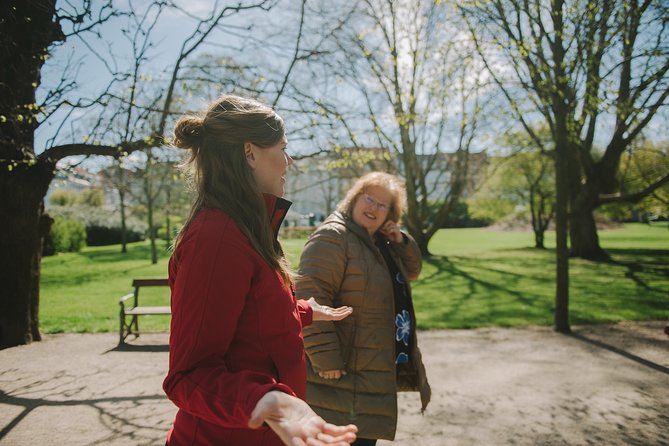
On the return route, Magstræde offers another short but attractive look at old Copenhagen. The lane is known for its small scale and older character, making it easy to picture how shared streets and familiar meeting places can support a sense of community.
The stop lasts only about five minutes, so this is a quick look rather than a long history lesson. Bring your camera, but do not block the narrow passage while taking photographs. The route works best when you let the guide point out the details and keep moving with the group.
This is also where the tour’s two themes meet. You have seen royal power, parliament, religion, and city planning. Now you are back in a modest street where the setting itself carries much of the mood.
Coffee, a final treat, and useful local advice
The tour ends at a café on a quiet central street, close to Læderstræde and its artisan shops. Here you receive coffee or tea and a sustainable slice of Copenhagen as a small souvenir. The final 20 minutes offer time to sit, talk, and ask your guide for recommendations.
This ending is practical. Instead of leaving you at a major square with a quick goodbye, the guide can suggest places to eat, neighborhoods to visit, or sights worth returning to. One guide even directed a group to a good lunch spot after the walk. Take advantage of this moment, especially if it is your first morning in Copenhagen.
The end point is central, so you can continue exploring on foot. The exact café setting may vary, but the tour finishes in Copenhagen’s city center rather than returning to Nyboder.
What the $82.23 price really covers
At $82.23 per person, this is not the cheapest way to walk around Copenhagen. You are paying for a local English-speaking guide, a small group, several tastings, and three and a half hours of explanation and company.
The value improves if you use the tour as an orientation. You see several important areas without paying separate admission fees, learn which places deserve a return visit, and finish with personal suggestions for the rest of your stay. You also avoid the common problem of a large group where questions get lost.
The value is weaker if you mainly want food or access inside monuments. The treats are enjoyable but limited, and the tour does not include entry to Rosenborg Castle, Christiansborg Palace, Nikolaj Kunsthal, or the other buildings viewed along the route.
It is often booked well ahead, around 47 days in advance on average, so reserve early if your Copenhagen dates are fixed. Free cancellation is available until 24 hours before the start time. Changes or cancellations inside that window are not accepted for a refund.
Who will enjoy this Copenhagen walk
I would choose this for a first visit, especially if you want to understand how Copenhagen feels rather than simply collect photographs. It suits adults, families, and people who enjoy conversation, small tastings, and local customs.
Children aged six through 11 can join at the listed child rate. Children under six can join free, but you need to tell the provider when booking. The tour is also suitable for someone who prefers a gentle walking pace. An 85-year-old participant was able to enjoy the route with a family member, though you should still be comfortable walking for several hours and standing on city streets.
The tour is less suited to anyone who wants a fast checklist of every major sight. It can feel like a whistle-stop walk at times, particularly when the group covers several districts in one morning. Rain is another consideration. Wear suitable shoes and bring an umbrella or rain jacket. Service animals are allowed, and the route is near public transportation.
Should you book Good Morning, Copenhagen?
Book it if you want a friendly introduction to Danish culture, a small group, local stories, and a few well-chosen sweets. Guides such as Therese, Laura, Oskar, Peter, Karoline, and Sandra have brought different strengths, but the format gives each guide room to explain Copenhagen in a personal way.
Skip it if your priority is entering castles, eating a large amount of food, or studying Danish history in detail. In that case, use this as a starting walk and add separate visits to Rosenborg and Christiansborg.
For most first-time visitors, the best reason to book is the combination of quiet lanes, major sights, coffee, and conversation. It gives you a feel for the city before you spend the rest of your trip choosing where to linger.
FAQ
How long does the Good Morning, Copenhagen tour last?
The tour lasts approximately 3 hours and 30 minutes.
How large is the group?
The tour has a maximum of 10 people.
What language is the tour offered in?
The tour is offered in English with a native English-speaking guide.
What food and drinks are included?
Coffee or tea and a Danish pastry are included. The route also includes a tasting of Danish flødeboller. Additional food and drinks are not included.
Does the tour enter Rosenborg Castle or Christiansborg Palace?
No. Rosenborg Castle, Christiansborg Palace, Nikolaj Kunsthal, the King’s Yellow Houses, and the other listed buildings are experienced from outside only.
Where does the tour start and finish?
The tour starts at Krokodillegade 21, 1326 København K, Denmark. It ends on Læderstræde in Copenhagen city center, near artisan shops.
Can children join the tour?
Yes. Children aged six through 11 are accepted at the listed child rate. Children under six may join free, but you must inform the provider when booking.
Just added around Copenhagen
- a day at North Zealand Castle Tour★ 4.5 · 19 reviews
- The Hunt For The Six Forgotten Giants★ 5.0 · 45 reviews
- Copenhagen Walking Tour with Food Testing (smorrebrod dish & snap)★ 4.5 · 10 reviews
- walking tour – Copenhagen and Christiansborg 3 hours★ 4.0 · 7 reviews
- The Six Forgotten Giants Trolls Hunt with Minibus★ 4.5 · 27 reviews
- The Philosopher’s Last Walk: An audio tour on the life of Søren Kierkegaard★ 4.5 · 5 reviews
- Malmö Full Day Private Trip, Sightseeing Tour & Lunch Option★ 5.0 · 93 reviews
- The Forgotten Giants Private Tour★ 5.0 · 3 reviews
Morning, compared.

Abisko National Park: Scenic Morning Hike with Transfer
Read our review →
Sunrise Zen Husky Tour (10:00 to 13:00 – sitting on the sled)
Read our review →

3-Hour Shared Arctic Morning Floating Experience in Norway
Read our review →
Preikestolen Sunrise Hike with Breakfast Buffet
Read our review →
Odda: Trolltunga Via Ferrata, Sunset and Sunrise
Read our review →Browse the lists this tour appears in