

Reviewed · PRIVATE WALKING TOURS
Kristiansand: Guided Cultural Walking Tour
Kristiansand’s best feature is its easy-to-read city plan. Founded by Danish King Christian IV in 1641, the town still follows a neat grid, so this two-hour walking tour gives you a quick look at harbor life, fortifications, old wooden streets, and the modern center without wasting time getting lost. I like the coastal walk to Christiansholm Fortress, and I like the chance to see Posebyen, one of Northern Europe’s largest collections of low wooden houses. The main drawback is the price: $125 per person is a serious sum for a short walk, especially if your guide gives only a light introduction.
I also like that the tour works well for a cruise stop. You meet outside the terminal and finish near the center, where you can keep exploring. Small groups can be a real plus here. One guest had a private tour, while another group of two finished early and continued independently. Still, the experience depends heavily on the guide. Some visitors found the guide friendly and helpful, while others felt the commentary was thin and the guiding unprofessional.
In This Review
- Key points to know before you book
- Why Kristiansand works so well on foot
- Starting at Fiskebrygga and the harbor
- Christiansholm Fortress and the coastal defenses
- Ocean views, the city beach, and river Otra
- Entering Posebyen, Kristiansand’s wooden old town
- City Square and Kristiansand Cathedral
- The guide makes the biggest difference
- Is $125 a fair price for two hours?
- Who should take this walk?
- Should you book the Kristiansand cultural walking tour?
- FAQ
- Where does the Kristiansand walking tour meet?
- How long does the tour last?
- What language is the tour offered in?
- What sights are included on the route?
- Does the tour include a visit inside the cathedral?
- Is Christiansholm Fortress visited during the tour?
- What should I bring?
- Is the tour suitable for people with mobility impairments?
- Can I cancel the booking?
Key points to know before you book
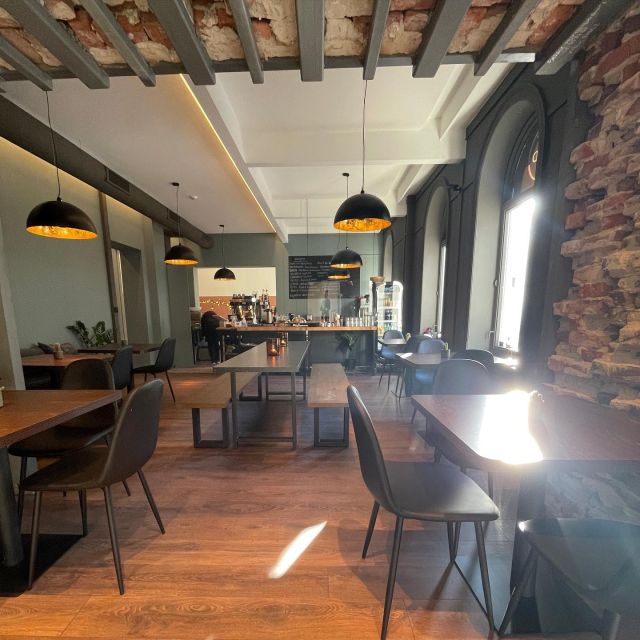
- Posebyen gives you Kristiansand’s most distinctive streets: See traditional low wooden houses, small shops, and cafes in a protected old neighborhood.
- The route mixes city sights with open views: Walk beside the ocean, marina, city beach, and river Otra.
- Christiansholm Fortress adds military history: The coastal fortification helps explain Kristiansand’s original role as a trading and defense town.
- The tour begins at the cruise terminal: Look for the representative holding a Kristiansand Tours sign near the souvenir store.
- A small group can improve the experience: The guide may have more time for your questions, though the quality of the commentary can vary.
- Comfortable shoes matter: This is a rain-or-shine walking tour, and it is not suitable for people with mobility impairments.
Why Kristiansand works so well on foot
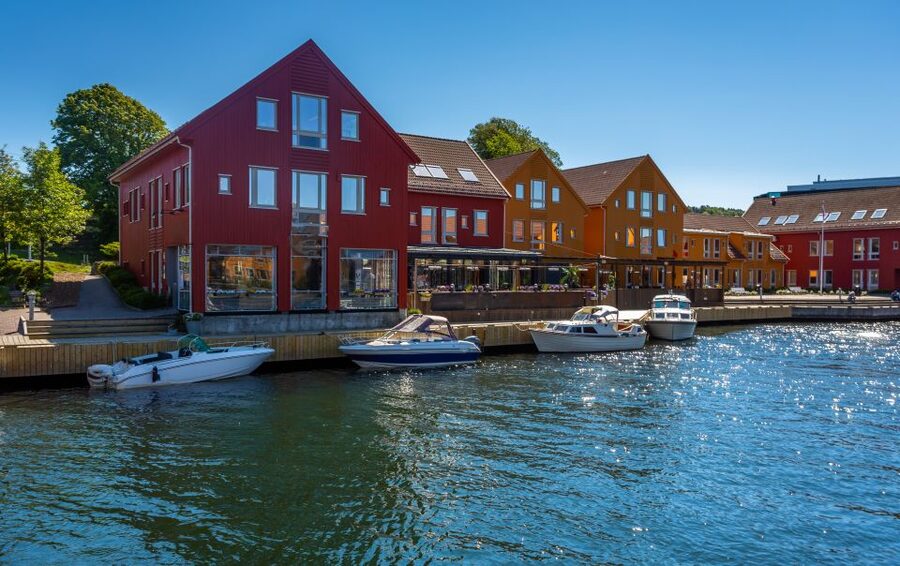
Kristiansand was planned in 1641 as a trading town and a fortified port. The city has changed since then, but its central grid remains in place. For you, that means the center feels orderly and manageable, with many major sights within a short walk of one another.
I find a guided walk especially useful when a city has several layers packed into a small area. Here, you move from fish market and marina to fortress, beach, river, wooden homes, and cathedral square. The route is not a long-distance hike. It is a compact introduction to the city center, with enough variety to keep the two hours moving.
The walk also gives you useful orientation for the rest of your visit. Once you know where Fiskebrygga, Posebyen, the cathedral, and the city square are, it is easier to return to the places that catch your eye. If you are visiting from a cruise ship, that first sense of direction can be worth a lot.
The tradeoff is depth. The route covers much ground in a short time, so you should expect an overview rather than a long historical lecture at every stop. If your guide is engaging, the pace can feel lively and personal. If the commentary is limited, you may feel that you could have followed the same streets with a map.
More private walking tours in Scandinavia:
- Private Walking Grand Tour of Copenhagen
★ 5.0 · 3,953 reviews - Copenhagen Highlights Walking Tour
★ 5.0 · 2,324 reviews - Bergen: Past & Present Small Group Guided Walking Tour
★ 4.9 · 1,609 reviews
Starting at Fiskebrygga and the harbor
The meeting point is outside the cruise terminal, near the souvenir store. A representative holds a sign reading Kristiansand Tours. Arrive a few minutes early because the tour starts on time, and a late arrival could be awkward once the group has moved away from the terminal.
From there, the route heads toward Fiskebrygga, the local fish market. This is a good first stop because it introduces Kristiansand as a port city rather than simply a collection of old buildings. The harbor area connects commerce, boats, restaurants, and the waterfront in one place.
You will then walk along the coastline toward Christiansholm Fortress. The route follows promenade paths beside the ocean and marina. These open stretches are among the walk’s best features. You get room to look out over the water, watch the shape of the harbor, and see how the city relates to the coast.
The harbor section also gives you a break from close urban streets. That matters on a walking tour. A route made only of buildings can blur together, but the water provides a clear change of scene. Bring a jacket if the weather looks uncertain, since the tour operates rain or shine and the waterfront may feel exposed.
Christiansholm Fortress and the coastal defenses
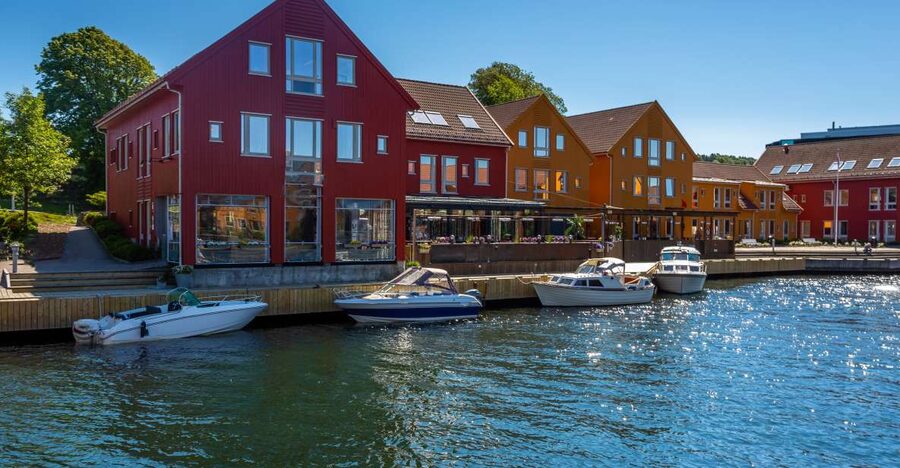
Christiansholm Fortress, also called Christiansholm Festning, is one of the clearest reminders of Kristiansand’s original purpose. The settlement was not founded only as a pleasant seaside town. It was also meant to support trade and protect an important coastal position.
The walk takes you along the oceanfront and marina toward the fortification. Even if you are not deeply interested in military history, the location makes the stop worthwhile. You can see why a coastal defense would be placed here, with broad views toward the water and access to the port.
The supplied details do not promise a full interior tour or a long visit inside the fortress, so plan on seeing it as part of the walking route rather than treating this as a dedicated fortress experience. Your guide should provide the local context, but the amount of detail may vary.
This is one reason I would ask questions as you go. Ask how the fortress fit into the town’s early defenses, or how the port shaped Kristiansand’s growth. A small group may give you a better chance to do that. One person had the guide to themselves, which can turn a standard route into a more personal conversation.
Ocean views, the city beach, and river Otra
After the fortress area, the walk continues along the waterfront, past the city beach, and up beside the river Otra. This portion gives the tour a pleasant rhythm: open water, boats, sand, and then the river corridor before the route turns back toward older streets.
The ocean and river views are not just decoration. They help you understand Kristiansand’s setting. The city’s identity is tied to water on several sides, and the route lets you see the harbor, the coast, and the river in a single outing.
You should also use this part of the walk to slow down and look around. The itinerary is designed to cover many sights, but the water is where you may want a few quiet minutes. The guide controls the timing, so do not expect a long stop at every viewpoint. Still, this section is likely to be one of the most pleasant parts of the tour for anyone who enjoys a city with a strong waterfront.
The city beach is another useful point of orientation. Its presence so close to the central sights shows how compact Kristiansand is. You are not being taken far outside town. The tour stays focused on the central area, which is helpful when your time is limited.
A few more Scandinavia trips to weigh up
- Stockholm: Ghost Walk and Historical Tour
★ 4.7 · 2,206 reviews - Walking Tour in Bergen of the Past and Present
★ 5.0 · 1,575 reviews - Politically Incorrect Private Highlights Walking Tour
★ 5.0 · 1,244 reviews - Walking Tour of Stockholm Old Town
★ 5.0 · 1,175 reviews
Entering Posebyen, Kristiansand’s wooden old town
Leaving the beach, the route turns toward Posebyen, whose name translates directly as Bagtown. This is where the look of Kristiansand changes. The open waterfront gives way to older streets and low wooden buildings.
Posebyen contains one of Northern Europe’s largest collections of traditional low-built wooden houses. That makes it the most distinctive architectural stop on the route. The buildings are not simply old scenery. They show the scale and materials of an earlier town, when homes and businesses were built in a very different style from the larger structures found in the center.
Your guide is expected to explain the theories behind the neighborhood’s unusual name. Since the exact story is presented as a matter of competing theories, listen for the explanation rather than assuming there is only one accepted answer. This is the sort of small local detail that is hard to pick up from a quick self-guided walk.
Posebyen also shows how an old neighborhood can keep changing. Small boutiques and cafes are moving into older buildings, giving the area new uses without erasing its basic character. You might enjoy browsing after the tour, but the walk itself is mainly about seeing the streets and hearing their background, not shopping.
This section is especially suitable for photographers and architecture fans. The houses are close together, the scale is human, and the change from the waterfront is easy to notice. If you prefer grand monuments, Posebyen may feel modest. If you like ordinary streets that reveal how a city once lived, it may be the strongest part of the tour.
City Square and Kristiansand Cathedral
The final major part of the route leads to the city square, where Kristiansand Cathedral is located. After the small wooden streets of Posebyen, the square gives you a more formal urban setting.
The cathedral is an important visual marker in the center, and the square helps tie together the city’s grid plan. This is a sensible place to end because you are near other central streets and can continue on your own afterward.
The information provided does not promise a detailed interior visit, a service, or a special cathedral program. Think of this stop as a chance to see the building and understand its position in the city center. If you want more time inside, ask your guide whether you can return after the walk.
Once the guided portion ends, you can accompany the guide back to the starting point or stay in the center. I prefer the second option if your schedule allows. Ask for recommendations before you separate, especially if you want help choosing a cafe, returning to Posebyen, or finding your way back toward the harbor.
The guide makes the biggest difference
The tour is offered in English with a live guide. No guide names are provided, so you cannot choose a particular person when booking. That is worth noting because the feedback is mixed.
The strongest praise centers on friendliness and personal attention. One participant had the guide to themselves and found the experience enjoyable because the guide was friendly. A small group of two also received a friendly introduction and plenty of information, though the walk ended early because the group was so small.
On the other hand, some visitors felt the tour lacked content or that the guide did not handle questions well. Another person described the guide as unprofessional. Those comments do not mean every departure will be weak, but they do show the risk of paying a premium for a live guide in a small city that is easy to navigate.
I would approach the tour with realistic expectations. You are buying local explanation, company, and a planned route. You are not guaranteed a scholar’s lecture or a private historical consultation. If your guide is warm and well prepared, the experience can be an easy and pleasant introduction. If you enjoy researching sights in advance and walking at your own pace, you may get more value from exploring independently.
Is $125 a fair price for two hours?
At $125 per person, this is expensive for a two-hour city walk. The fee includes the guide, but not food, drinks, admissions, or transportation. Since the route focuses on public streets, waterfront paths, the fortress exterior, Posebyen, and the cathedral area, the price rests almost entirely on the quality of the guiding.
The cost is easier to justify in a few situations. If you are stepping off a cruise ship and want a structured introduction with a guaranteed English-speaking guide, the convenience may matter. If you are traveling alone, a friendly small-group walk can also make the city feel more welcoming. And if local stories are important to you, a guide can point out details you might pass without noticing.
The value is weaker if you have plenty of time, are comfortable using a map, or mainly want photographs of the waterfront and wooden houses. One visitor found the route easy to follow with Google Maps after the tour. That is a useful warning: Kristiansand’s center is manageable on your own.
The free cancellation option up to 24 hours before the start gives you some flexibility, and you can reserve now and pay later. Those policies reduce booking risk, but they do not change the basic price question. I would book for the guide and the human context, not because the sights themselves are difficult to reach.
Who should take this walk?
This tour suits cruise passengers, first-time visitors, solo visitors, and anyone who wants a quick introduction before exploring alone. It also works for people who like mixing architecture, coastal views, and local stories rather than spending two hours inside a single museum.
You should be comfortable walking outdoors for the full two hours. Comfortable shoes are essential, and you need to be ready for changing weather because the tour runs rain or shine. The activity is not suitable for people with mobility impairments.
Families may appreciate the short duration and changing scenery, but the tour’s appeal depends on how much the children enjoy walking and listening. The information supplied does not specify a child age range or a private family format, so ask before booking if that matters to you.
I would skip it if you need step-free access, want a slow photography walk, or expect a highly detailed academic tour. I would also think twice about the price if you have already visited Kristiansand and only want to revisit the same central sights.
Should you book the Kristiansand cultural walking tour?
Book it if you have a short port stop and want a ready-made route through the city’s most useful sights. The walk connects Fiskebrygga, Christiansholm Fortress, the oceanfront, river Otra, Posebyen, the city square, and the cathedral in two hours. That is a good outline of central Kristiansand.
For the best chance of value, arrive early, wear comfortable shoes, ask questions, and request local suggestions before the tour ends. Keep the rest of your day flexible so you can return to Posebyen or the waterfront at your own pace.
My call is cautious but positive for first-time cruise visitors who value a guide. At $125, it is not a bargain, and the uneven guiding reports mean you should not book expecting a guaranteed masterclass. If you are happy to explore with Google Maps, save the money and walk the route yourself. If you want company, orientation, and local explanation in a compact format, this can be a useful start.
FAQ
Where does the Kristiansand walking tour meet?
The meeting point is outside the cruise terminal, near the souvenir store. A representative will hold a sign reading Kristiansand Tours.
How long does the tour last?
The tour lasts two hours. Starting times depend on availability.
What language is the tour offered in?
The tour is offered in English with a live guide.
What sights are included on the route?
The route includes Fiskebrygga, Christiansholm Fortress, the oceanfront, marina, city beach, river Otra, Posebyen, the city square, and Kristiansand Cathedral.
Does the tour include a visit inside the cathedral?
The information confirms that you will visit the city square where the cathedral is located. It does not confirm a guided interior visit.
Is Christiansholm Fortress visited during the tour?
The route walks to Christiansholm Fortress and along the nearby coastal paths. The information does not confirm a special interior admission or extended fortress tour.
What should I bring?
Bring comfortable shoes. The tour takes place outdoors in all weather, so suitable clothing for rain or sun is also sensible.
Is the tour suitable for people with mobility impairments?
No. The tour is listed as not suitable for people with mobility impairments.
Can I cancel the booking?
You can cancel up to 24 hours in advance for a full refund. You can also reserve now and pay later.
Just added around Scandinavia
- Stockholm: Evening Wildlife Safari with Midsummer Meal★ 4.2 · 130 reviews
- Wilderness Tour with Snowmobile & Ice Fishing★ 4.9 · 28 reviews
- World War II Stockholm Old Town Walking Tour and Army Museum★ 4.6 · 4 reviews
- Vossevangen: Nærøyfjord Full-Day Guided Kayaking Trip★ 4.8 · 4 reviews
- West Sweden: Sea Kayak Delight in Nature Reserves★ 5.0 · 6 reviews
- From Svolvær: Whale Watching Day Trip to Andenes★ 3.8 · 27 reviews
- Voss: Family Rafting on the Vosso River★ 4.7 · 23 reviews
- Voss: Thrilling Whitewater Rafting Guided Trip★ 4.6 · 56 reviews
Private Walking Tours, compared.

Past & Present Small Group Guided Walking Tour
Read our review →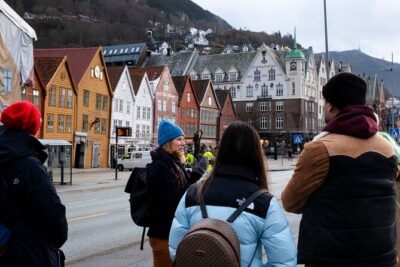
Walking Tour in Bergen of the Past and Present
Read our review →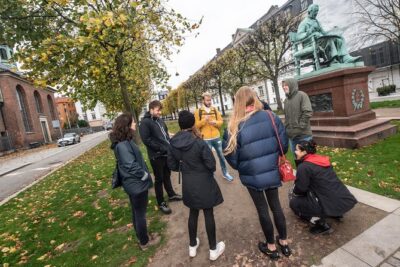
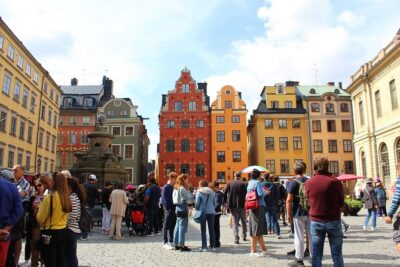

Group Walking Tour – City Highlights – 2 Hours
Read our review →
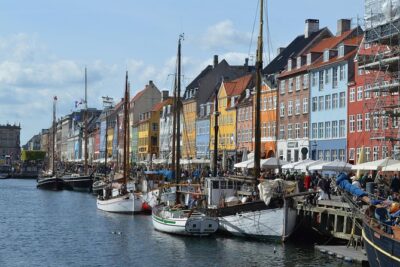
3h walking tour, small group max 10 people Copenhagen
Read our review →Browse the lists this tour appears in