
Reviewed · COPENHAGEN TOURS
Life on Copenhagen’s Streets: Philip’s crazy life
Copenhagen’s polished center has a harder story beneath it, and Philip Larsen tells that story from personal experience. This 90-minute walk links busy Nørreport, old squares, nightlife streets, and City Hall with his account of addiction, homelessness, crime, bad choices, and the long work of finding a way back.
I like the direct human scale of the tour, and I like that it ends beside the metro at Rådhuspladsen, making it easy to fit into a day of sightseeing. The main consideration is emotional: Philip’s story includes painful and disturbing subjects, and this is not a light city stroll. You also do not enter Copenhagen Cathedral.
In This Review
- Key points to know
- Why this Copenhagen walk feels different
- Starting at Nørreport Station, Copenhagen’s busiest transport hub
- The Church of Our Lady and the limits of the route
- Gammeltorv, the Old Square
- Studiestræde, where Copenhagen changes character
- Rådhuspladsen, the final stop by the metro
- What Philip’s storytelling adds
- Is $30.62 a fair price?
- Who should book this walk?
- Practical details before you reserve
- Should you book Life on Copenhagen’s Streets?
- FAQ
- How long does the tour last?
- Where does the tour start?
- Where does the tour end?
- Is Copenhagen Cathedral included?
- What language is the tour offered in?
- Can I cancel for a full refund?
Key points to know
- Philip Larsen leads the walk: Expect a personal account told openly and honestly, with time for questions.
- Five central Copenhagen stops: The route runs from Nørreport Station through the Old Square and Studiestræde to City Hall Square.
- A small-group format: The maximum group size is 20, which gives the walk a more personal feel than a large city tour.
- A serious look at the city: The focus is homelessness, drug abuse, crime, choices, help, and recovery rather than monuments alone.
- A simple 1:30 pm schedule: The tour lasts about one and a half hours and finishes beside the Rådhuspladsen metro.
- Good value for a different kind of city tour: At $30.62 per person, the price pays for access to a lived story and guided conversation, not paid entry to sights.
Why this Copenhagen walk feels different
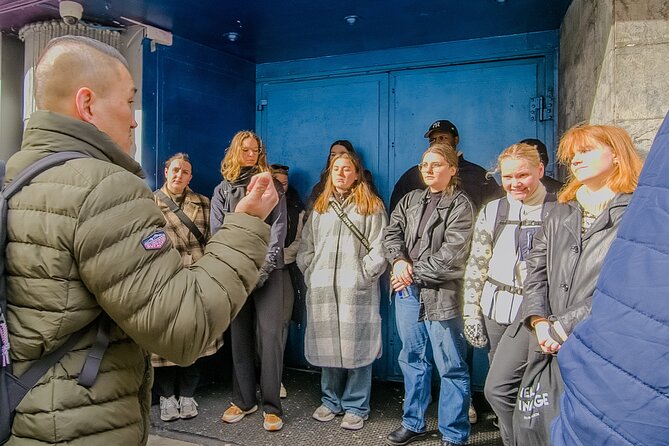
Most central Copenhagen walks explain architecture, royalty, canals, and design. This one uses the city streets as the setting for Philip Larsen’s life story. The places matter, but they are not the main attraction. Nørreport, Gammeltorv, Studiestræde, and Rådhuspladsen become reference points for a conversation about the less visible side of city life.
Philip’s account is described as unusually frank. He speaks about a happy childhood, decisions that changed his path, time spent close to homelessness and crime, and the struggle to move forward. He also talks about the importance of reaching out for help. That gives the walk a clear purpose: it is not meant to shock you for an hour and send you away. It asks you to think about how quickly an ordinary life can change, and how recovery can remain possible.
I especially like the balance between hard facts and hope. The story includes the parts of his past that he is least proud of, but it does not end in despair. You should expect a serious tone, though Philip is also presented as a thoughtful guide who welcomes questions and helps keep the conversation comfortable.
The route itself is straightforward. Each of the five stops is scheduled for about 15 minutes, with walking between them. That rhythm gives you enough time to listen without remaining in one place for too long. You are not sitting in a lecture hall. You are moving through the same public spaces where ordinary Copenhagen life continues around you.
Other Copenhagen days people book alongside this one:
- Copenhagen: Canal Cruise with Guide
★ 4.6 · 9,115 reviews - Copenhagen: Hop-On Hop-Off Bus Tour with Boat Tour Option
★ 3.9 · 4,122 reviews - Private Walking Grand Tour of Copenhagen
★ 5.0 · 3,953 reviews
Starting at Nørreport Station, Copenhagen’s busiest transport hub
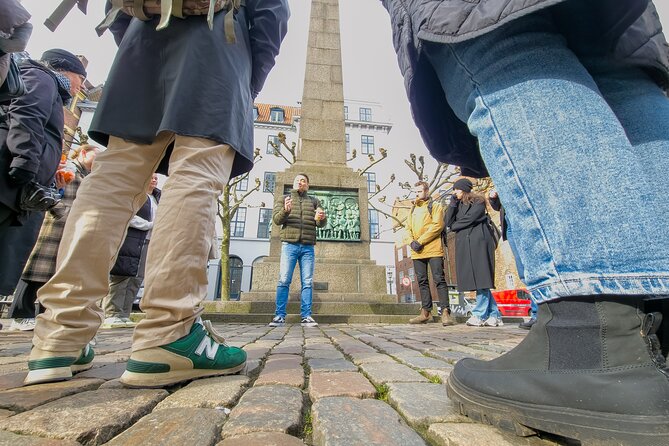
The meeting point is at Nørre Voldgade 82, near Nørreport Station. This is a practical place to begin because Nørreport is served by public transportation and is described as Denmark’s busiest station, with about 250,000 daily travelers.
That number gives Philip a useful opening setting. Nørreport is not a quiet historical corner. It is a place of constant movement, commuters, shoppers, students, and people passing through. Beginning here puts the walk in the middle of everyday Copenhagen rather than in a carefully prepared sightseeing bubble.
You should arrive ready to walk and listen. The first segment lasts about 15 minutes, and the tour then moves toward the Church of Our Lady. Since the activity starts at 1:30 pm, it fits neatly between a morning visit to another part of the city and an evening meal.
Nørreport is also a good place to meet because you can reach it by public transportation. Still, take a moment to check the exact starting point before setting out. A major station has several exits and surrounding streets, and the meeting address is on Nørre Voldgade.
The Church of Our Lady and the limits of the route
The second stop is the Church of Our Lady, Copenhagen’s Lutheran cathedral, known in Danish as Vor Frue Kirke. The walk pauses here for about 15 minutes, but you do not enter the church.
That detail matters if you are comparing this with a conventional cathedral tour. The church provides an important central-Copenhagen setting, but admission is not part of the experience and the itinerary specifically excludes an interior visit. If you want to see the inside, plan a separate visit around the walk.
The value here is not a guided examination of religious art or architecture. Instead, the cathedral is one of several familiar landmarks that frame Philip’s story. You will be hearing about the human side of Copenhagen while standing near one of its most important public buildings.
This stop may feel brief if you are hoping for a detailed cathedral explanation. On the other hand, keeping the focus outside helps the tour maintain its subject. The walk is about Philip’s experiences and the city around them, not a full survey of Copenhagen’s historic buildings.
Gammeltorv, the Old Square
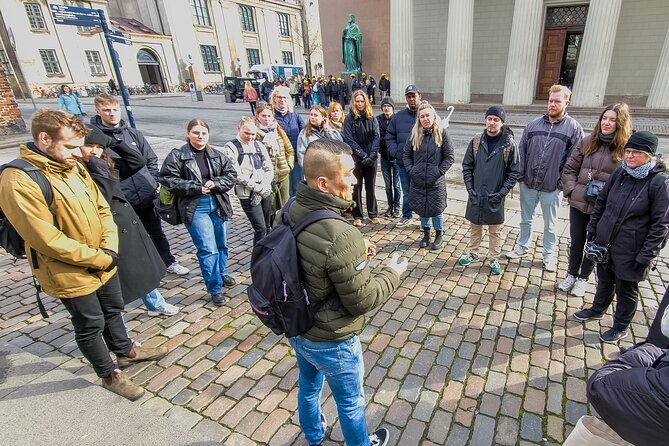
From the cathedral, the group continues to Gammeltorv, or the Old Square. It is identified as Copenhagen’s oldest square, and the stop lasts about 15 minutes.
Gammeltorv is a useful change of setting. After the transport hub and cathedral, the group reaches one of the city center’s oldest civic spaces. The route shows how Philip’s story is placed within Copenhagen’s public heart, where centuries of ordinary life, trade, law, celebration, and hardship have overlapped.
You should not expect a paid attraction here. The square is a free outdoor stop, so the experience remains easy on the feet and uncomplicated on the budget. The guide’s storytelling is the reason to pause.
This is also where the tour’s format becomes clear. Philip does not simply point out a building, give a date, and move on. He uses each place as a prompt for personal reflection. You are encouraged to ask questions, and the conversation can feel more like a guided exchange than a scripted sightseeing talk.
That format will suit you if you want context that is personal and social. It may not suit you if you prefer a tightly packed list of historical facts or a tour built around major interiors.
Same fjord country, a very different day out:
- From Copenhagen: Lund and Malmö 2-Country Tour
★ 4.7 · 2,772 reviews - Copenhagen Highlights Walking Tour
★ 5.0 · 2,324 reviews - Copenhagen: Highlights 3 Hour Bike Tour with a Local Guide
★ 4.8 · 2,312 reviews - Hamlet and Sweden Tour – Two Countries in one day !
★ 5.0 · 2,223 reviews
Studiestræde, where Copenhagen changes character
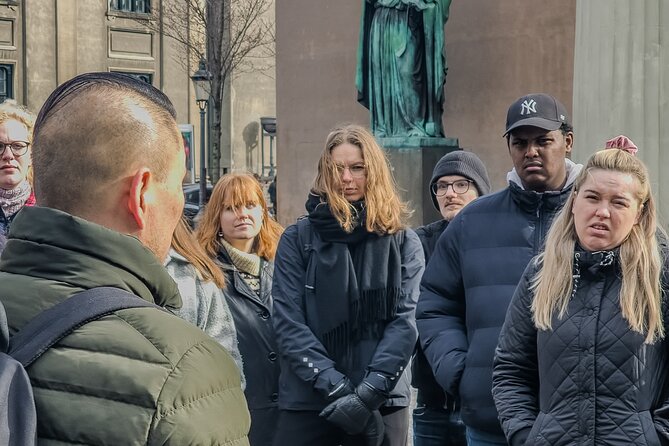
The fourth stop is Studiestræde, a central street lined with shops, cafés, bars, clubs, and restaurants. The group spends about 15 minutes here.
This is one of the most telling parts of the route because it places the conversation in an active entertainment district. Studiestræde can represent the Copenhagen that many people seek out after dark, but Philip’s story encourages you to think about what happens alongside that public nightlife.
The stop also gives the walk a more varied feel. You are no longer moving only among formal civic buildings and historic squares. Shops, cafés, bars, clubs, and restaurants make the city feel immediate and lived in. The contrast between a visitor’s evening out and the difficult experiences Philip describes is part of the point.
I would pay close attention here if you want to understand the tour’s central idea. Drug abuse, homelessness, and crime are not presented as distant problems belonging to another place. Philip’s experience shows how they can affect a person who once had an ordinary childhood and how one decision can alter the direction of a life.
The route does not promise a solution to those problems. It offers a personal account, thoughtful discussion, and an emphasis on asking for help. That makes the stop educational, but not in a formal classroom sense.
Rådhuspladsen, the final stop by the metro
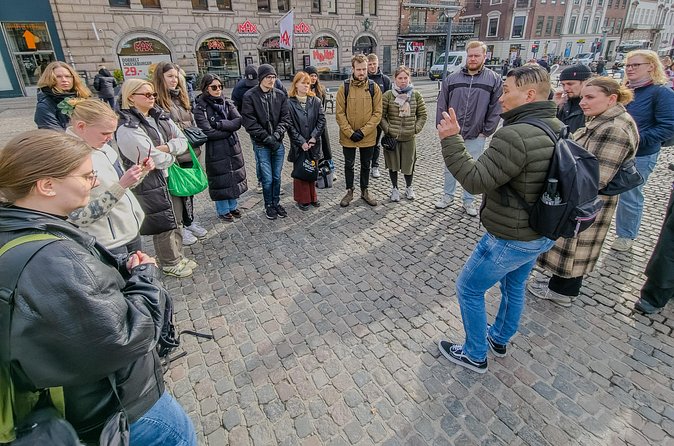
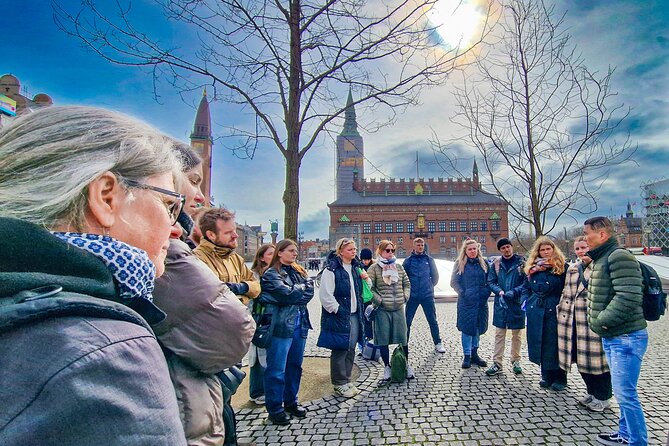
The tour ends at Rådhuspladsen, or City Hall Square, after another scheduled 15-minute stop. Copenhagen City Hall dominates the square, and the building was constructed in the early 20th century.
This is a practical ending point. The tour finishes next to the metro at Rådhuspladsen, so you can continue to another part of Copenhagen without retracing the route. You might also use the square as a place to pause after the discussion before deciding what to do next.
Ending at City Hall Square gives the walk a broad public setting. The route has moved from a major station through old Copenhagen and an entertainment street, then back into one of the city’s main civic spaces. The progression fits the subject: Philip’s story is personal, but the questions it raises belong to the wider community.
The advertised duration is approximately one hour and 30 minutes. One account of the walk describes it running closer to two hours, so I would avoid scheduling a tight appointment immediately afterward. The official timing remains 90 minutes, but a generous guide and an active question period can stretch the experience.
What Philip’s storytelling adds
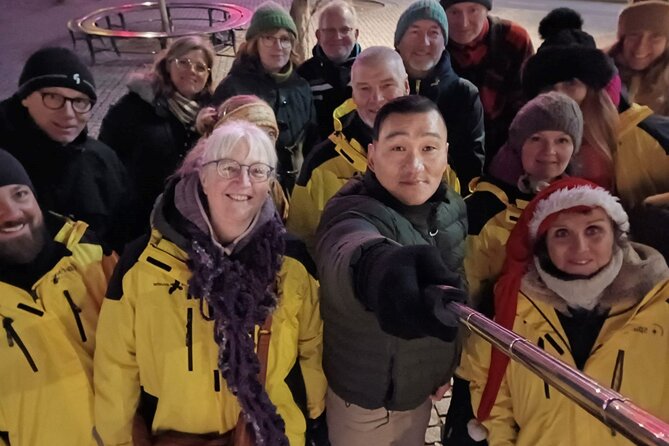
The most praised part of this experience is Philip’s delivery. He is described as a strong storyteller who speaks with skinless honesty, including details that do not present him in the best light. That kind of openness can be more affecting than a polished, carefully edited account.
Philip also appears to be comfortable with questions. That matters because the subjects are sensitive. You may want to ask how a particular period began, what kind of support helped, or how he thinks about past decisions today. A guide who welcomes questions can make the walk feel respectful rather than preachy.
The story is not only about suffering. Philip also stresses the importance of reaching out for help, and the message includes the possibility of recovery. Several descriptions of the experience call it thought-provoking and educational, especially for younger people and school groups.
That does not mean every part will feel easy. You may hear about homelessness, drug abuse, crime, and life on the edge. If you are traveling with children, consider their age and comfort with these subjects before booking. The activity information says most people can participate, but that is a physical participation note, not a promise that the material suits every age or temperament.
Some published comments about Street Voices walks also name guides Christian and Bertram and describe similarly personal tours. The specific experience here is presented with Philip, so confirm the assigned guide if Philip’s story is the reason you are booking.
Is $30.62 a fair price?
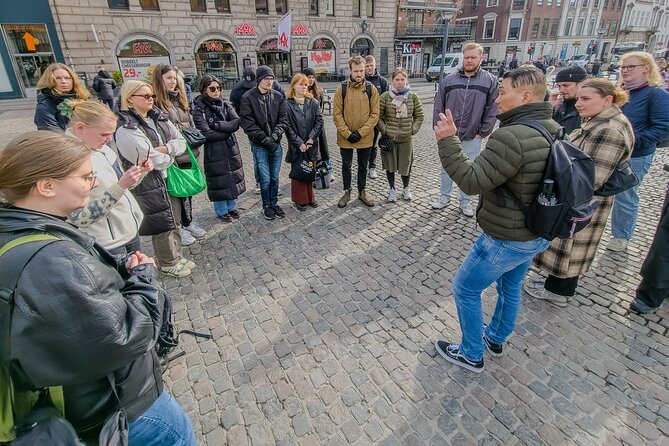
At $30.62 per person, this is not the cheapest way to walk around Copenhagen. You could explore Gammeltorv, Studiestræde, and City Hall Square on your own for nothing, and the tour does not include admission to the cathedral or another paid attraction.
That comparison misses the main value, though. You are paying for a guided personal account, a planned route, and time for discussion. Philip’s story is the experience. The buildings and streets provide the setting rather than the product.
I see the price as reasonable for someone who values an authentic human perspective more than a long list of landmarks. It is less convincing for a first-time visitor who wants an overview of Copenhagen’s royal, artistic, and architectural highlights. A standard city tour would cover more conventional sightseeing material.
The small maximum of 20 people also helps. It is not a private walk, but it is far more manageable than a huge group. You have a better chance to hear clearly and ask a question without needing to compete with a crowd.
Because all listed stops are outdoors and admission is free or not included, your budget goes toward the guide’s time and experience. That makes the decision personal. If you want a story-led walk that may change how you see the city, the cost is defensible. If you mainly want entry to sights, it is not the right purchase.
Who should book this walk?
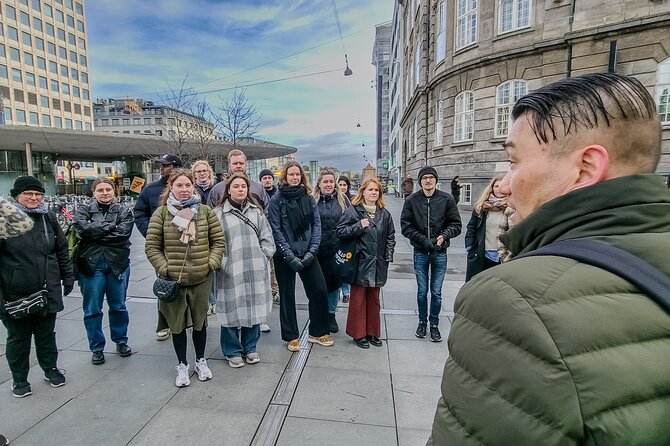
I would recommend it to adults who want to think about Copenhagen beyond its postcard image. It is also a strong option for school groups, exchange programs, and anyone interested in social issues, rehabilitation, or the human effects of addiction and homelessness.
The walk may work well for people who have already seen the main sights and want a different angle. It can also be a meaningful choice early in your visit because it may affect how you understand the streets afterward.
You should be ready for a frank conversation, not entertainment in the usual sense. The word crazy in the title points to an intense life story, but the experience is not described as a comedy or a sensational show. The most useful attitude is curiosity with respect.
I would hesitate to book it for a group seeking light sightseeing, a detailed architecture tour, or a child-focused activity. The cathedral is not entered, and the route does not include a long list of formal attractions.
The walk is conducted in English. Service animals are allowed, public transportation is nearby, and the activity states that most people can participate. Since the route is on city streets, you should still be comfortable walking between five outdoor stops for about 90 minutes.
Practical details before you reserve
The meeting point is Nørre Voldgade 82, 1358 København, Denmark, with a 1:30 pm start. The end point is Rådhuspladsen, 1599 Copenhagen, next to the metro at City Hall Square.
You receive confirmation when booking. The activity has a maximum of 20 people, and it requires a minimum number to operate. If that minimum is not met and the tour is canceled, you are offered another date or experience, or a full refund.
Free cancellation is available if you cancel at least 24 hours before the start time. A cancellation made less than 24 hours before the start time is not refunded, and changes inside that window are not accepted. The cut-off follows Copenhagen local time, so check your timing carefully if you are booking from another country.
Should you book Life on Copenhagen’s Streets?
Book this walk if you want Philip Larsen’s personal story to shape your view of Copenhagen. The route is easy to follow, the group size is limited, the ending is convenient, and the price is fair for a serious, conversation-based experience rather than a paid-attraction tour.
Skip it if you want cheerful sightseeing or a detailed tour inside Copenhagen Cathedral. For the right audience, this is a memorable way to meet the city through one person’s difficult past, honest reflection, and continuing hope.
FAQ
How long does the tour last?
The scheduled duration is approximately one hour and 30 minutes. One account of the experience describes a walk lasting about two hours, so leave some extra time afterward.
Where does the tour start?
The meeting point is Nørre Voldgade 82, 1358 København, Denmark, near Nørreport Station. The start time is 1:30 pm.
Where does the tour end?
The tour ends at Rådhuspladsen, or City Hall Square, next to the Rådhuspladsen metro station.
Is Copenhagen Cathedral included?
No. The route stops at the Church of Our Lady, but the church is not entered. Admission is not included.
What language is the tour offered in?
The experience is offered in English.
Can I cancel for a full refund?
Yes, if you cancel at least 24 hours before the experience start time. Cancellations or changes made less than 24 hours before the start time are not accepted for a refund.
Just added around Copenhagen
- a day at North Zealand Castle Tour★ 4.5 · 19 reviews
- The Hunt For The Six Forgotten Giants★ 5.0 · 45 reviews
- Copenhagen Walking Tour with Food Testing (smorrebrod dish & snap)★ 4.5 · 10 reviews
- walking tour – Copenhagen and Christiansborg 3 hours★ 4.0 · 7 reviews
- The Philosopher’s Last Walk: An audio tour on the life of Søren Kierkegaard★ 4.5 · 5 reviews
- The Six Forgotten Giants Trolls Hunt with Minibus★ 4.5 · 27 reviews
- Malmö Full Day Private Trip, Sightseeing Tour & Lunch Option★ 5.0 · 93 reviews
- The Forgotten Giants Private Tour★ 5.0 · 3 reviews
Copenhagen Tours, compared.

Hop-On Hop-Off Bus Tour with Boat Tour Option
Read our review →
Highlights 3 Hour Bike Tour with a Local Guide
Read our review →
Hamlet and Sweden Tour – Two Countries in one day !
Read our review →
Copenhagen Sightseeing Classic Canal Tour With Live Guide
Read our review →Browse the lists this tour appears in