
Reviewed · HIKING & TREKKING
Lofoten Islands: Guided Hiking Into the Wilderness – Uphill
This is a proper uphill outing, not a gentle nature walk. You start beside the sea at Gimsøystraumen and climb toward a 550-meter mountain top, with broad views opening up as you gain height. I like the small-group format and the steady help from a local guide, especially when the weather turns quickly.
I also like that the tour gives you more than a marked path and a summit photo. Your guide can explain local wildlife and culture, adjust the pace, and stop for pictures. Guides such as Paul bring useful knowledge of both Norway and the route. The main drawback is simple: this hike demands a moderate level of fitness, and Lofoten weather can change from sun to rain in one morning.
In This Review
- Key points at a glance
- A real climb from Gimsøystraumen to 550 meters
- Meeting the guide at the red building
- The first 2.5 hours: steady uphill walking
- A 20-minute summit break for views and photos
- The 1.5-hour return to Gimsøystraumen
- What the guide adds beyond navigation
- Is $136 good value for this hike?
- Who should book the uphill route?
- What to pack for a comfortable day
- My verdict: book it if you want an active Lofoten day
- FAQ
- How long does the hike take?
- How high does the route climb?
- What difficulty level is the hike?
- Where do I meet the guide?
- Is the tour conducted in English?
- Are walking poles included?
- What should I bring?
- Can children or wheelchair users join?
Key points at a glance
- 550-meter uphill climb: Start at sea level and work your way to a scenic mountain top.
- 3.5 to 4 hours on the trail: The pace depends on group fitness and how often you stop.
- Intermediate difficulty: The path is described as simple and in good condition, but the uphill effort is real.
- Local English-speaking guide: Learn about nature, wildlife, and Norwegian culture while you walk.
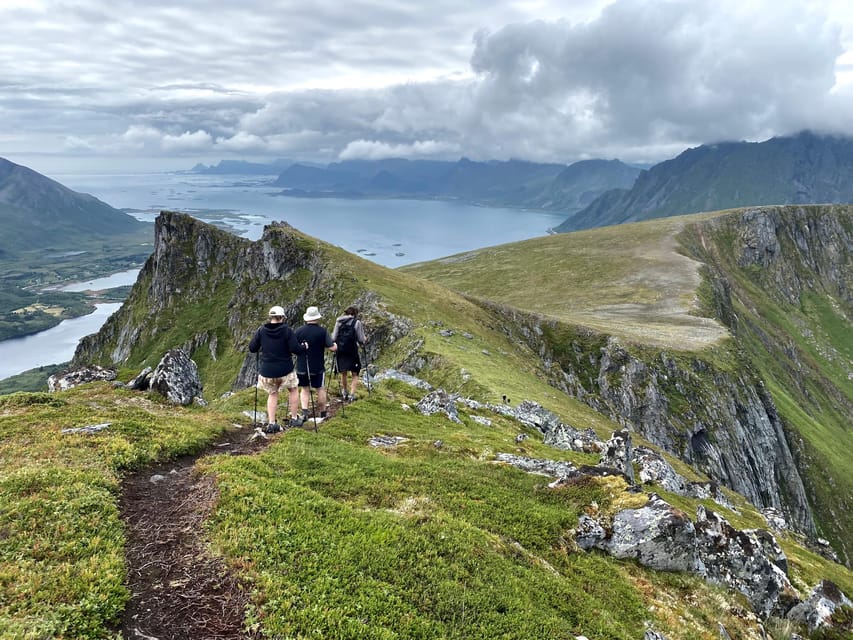
- No exposed sections reported: The route offers mountain views without the exposed zones some Lofoten hikes have.
- Walking poles included: Bring your own boots, food, water, and weatherproof clothing.
A real climb from Gimsøystraumen to 550 meters
The appeal here is the change in viewpoint. You begin at the Gimsøystraumen rest area, close to sea level, with the bridge and water nearby. By the time you reach the top, you have worked through a full 550 meters of uphill walking. That gives the outing a satisfying shape: easy to understand, physically honest, and rewarding even if you are not an experienced mountain hiker.
This is not a technical climb. The route is rated intermediate, and the trail has been described as simple and in good condition. Still, the sustained ascent will test you more than a flat coastal stroll. You need comfortable hiking shoes, enough water, and clothing that lets you move without overheating.
I would think of this as a half-day mountain walk rather than a casual sightseeing stop. The advertised timing is about 3.5 to 4 hours, including breaks and a photo stop. A fitter group may move more quickly, while a mixed group will naturally take longer. That flexibility is useful, since rushing uphill is a poor way to enjoy Lofoten.
A few more Scandinavia trips to weigh up
- From Tromsø: Snowshoeing Hike with Picnic Lunch and Photos
★ 4.8 · 637 reviews - From Tromsø: Guided Husky Snowshoe Hike and Husky Camp Visit
★ 4.9 · 555 reviews - From Tromsø: Snowshoe Hike in the Arctic
★ 4.9 · 467 reviews
Meeting the guide at the red building
You meet at the large parking area at Gimsøystraumen, overlooking the bridge. The guide waits by the red building at the rest area. This is a clear meeting point, but do not arrive without checking your route to Gimsøystraumen first, especially if you are driving on a tight schedule.
The tour begins with a 15-minute safety briefing. That is time well spent. You can confirm the pace, ask about the route, sort out layers, and tell the guide if you need more frequent pauses. The provider offers private outings and small groups, so the feel should be more personal than a large coach excursion.
English is the stated tour language. The guide’s role is not just to point toward the summit. You get help with the trail, local nature information, and practical advice as the conditions change. Paul is named as one guide associated with the experience, and his approach includes slowing down on harder sections and allowing time for photographs.
A guide can make a difference in Lofoten because the weather and terrain can be demanding even on a trail that is not technically hard. You are not left to judge every turn or manage the pace alone. That support is especially useful if you have some hiking experience but are less familiar with Norwegian mountain routes.
The first 2.5 hours: steady uphill walking
After the briefing, the main uphill section takes about 2.5 hours. You will move from the coastal starting point toward higher ground, with the view changing as the trail rises. The route is designed for people who want a good workout, so the climb is the central event rather than a minor part of a sightseeing day.
This is where your clothing and footwear matter most. Hiking shoes or boots give you better comfort and grip than ordinary trainers. Bring a backpack with water and snacks or sandwiches, since there is no promise of food or drink along the way.
The guide can adapt the pace to the group’s fitness. That does not remove the climb, but it can make it more manageable. If you are used to regular walking but not mountain ascents, take the first part calmly. A slow start leaves more energy for the higher sections and the return walk.
The path has been described as straightforward and in good condition, with no exposed sections. That will reassure anyone who dislikes narrow ledges or airy drops. Even so, you should not treat the route as effortless. The uphill grade, changing weather, and uneven outdoor ground still call for care.
Keep your camera ready, but do not spend the entire climb looking through it. The setting changes as you gain height, and your guide may point out details you would miss while watching your feet. Stops also help you catch your breath without turning the walk into a race.
A 20-minute summit break for views and photos
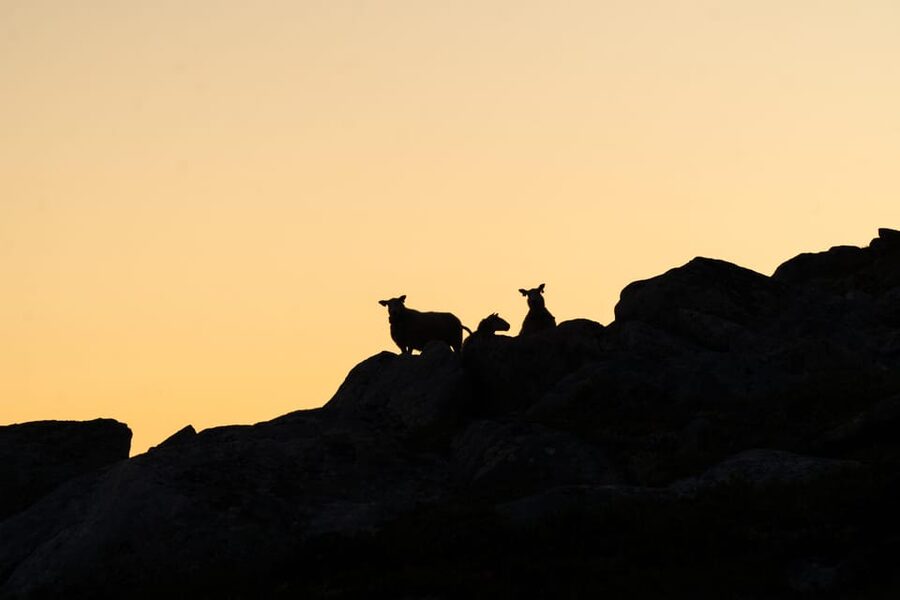
The planned break lasts about 20 minutes and works as both a rest and a photo stop. By then, you should have earned time to enjoy the wider view from the mountain top. The exact visibility depends on the day, and this is where Lofoten’s famously changeable weather can shape the experience.
Rain at the summit is not unusual. One recent outing reached the top just as rain began, but proper trekking shoes and a waterproof jacket kept the problem manageable. That is a useful lesson for planning: clear skies at the parking area do not guarantee dry conditions above.
Bring a waterproof outer layer even if the forecast looks kind. You should also wear clothing in layers, so you can remove a fleece during the climb and put it back on when you stop. Windproof and waterproof layers are specifically recommended for the peak.
The summit stop is short enough to keep the day moving, but long enough for photos and a snack. If you want a long picnic with plenty of time to sit around, this may feel brief. If you prefer a focused hike with a clear turnaround, the timing makes sense.
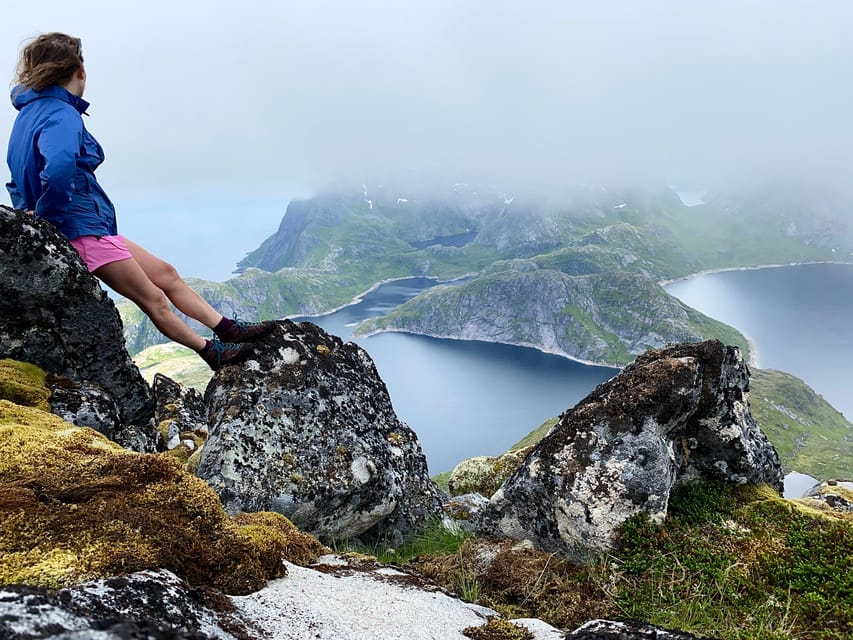
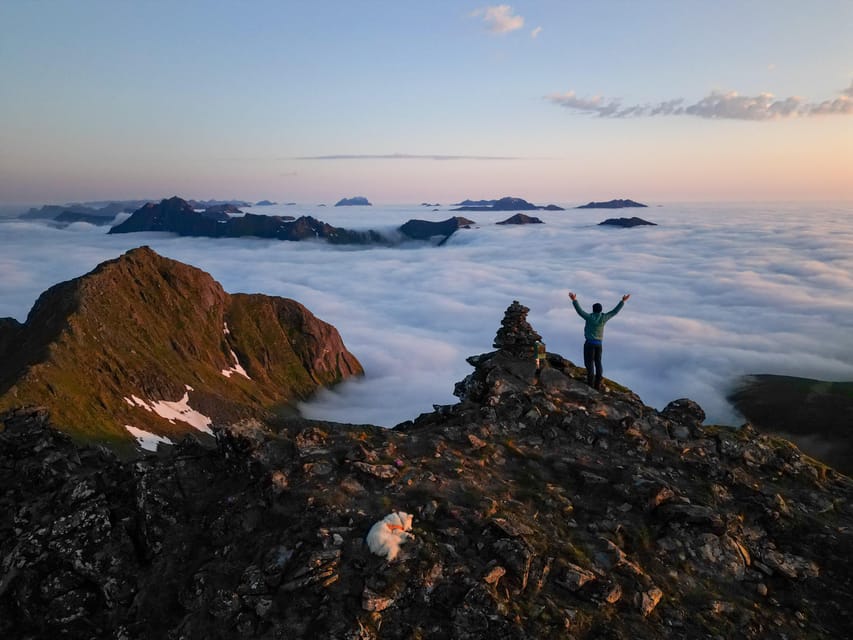
The views are the main payoff. You can expect scenic mountain and coastal sightlines during the route and from the top, though clouds may soften or hide them. In Lofoten, that uncertainty is part of the bargain. A gray summit does not make the walk pointless, but you should book this for the exercise and the setting, not for a guaranteed postcard view.
Same fjord country, a very different day out:
- Stockholm: City Archipelago Sightseeing Cruise with Guide
★ 4.3 · 10,798 reviews - Copenhagen: Canal Cruise with Guide
★ 4.6 · 9,115 reviews - From Bergen: The Original Fjord Cruise to Mostraumen
★ 4.7 · 8,440 reviews - Tromsø: Reindeer Sledding & Feeding with a Sami Guide
★ 4.8 · 6,417 reviews
The 1.5-hour return to Gimsøystraumen
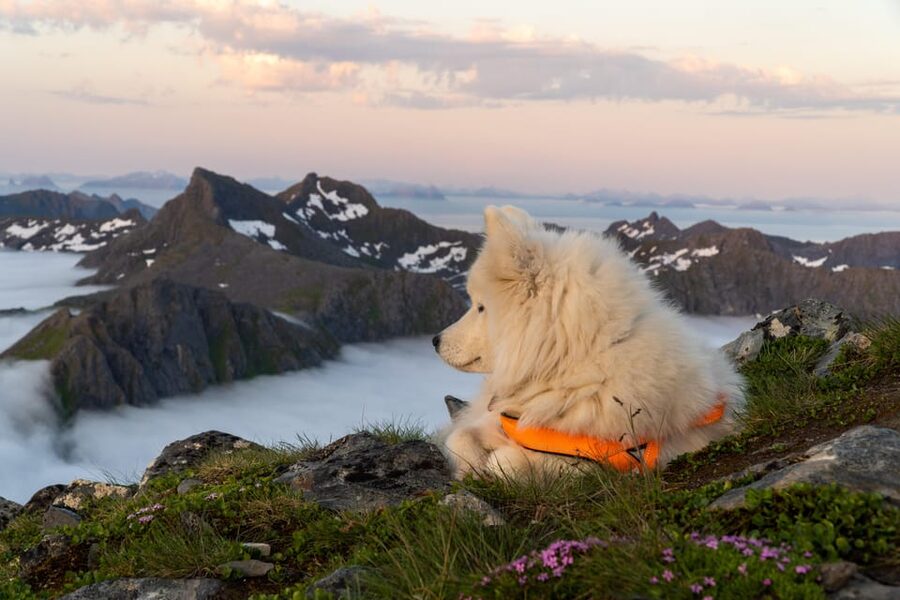
The final hiking section takes about 1.5 hours and brings you back to the starting point. Downhill walking uses your legs differently from the climb. If your knees are sensitive, trekking poles can help with balance and control. Walking poles are included, which is a practical benefit.
You will want to keep your waterproof layer close rather than buried at the bottom of your bag. Weather can shift during the return, and wet rock or soft ground may make the descent slower. The guide can adjust the pace and pause where needed.
The return also gives you another chance to see the route from a different angle. Details that were behind you during the ascent may open up as you descend. The walk ends back at Gimsøystraumen, so you do not need to arrange a separate pickup from the mountain.
A three-and-a-half-hour day on a mountain can leave you pleasantly tired. It may not be the right choice immediately before a demanding multi-day trek, but it fits well into a Lofoten visit when you want one active day without committing to a much longer route.
What the guide adds beyond navigation
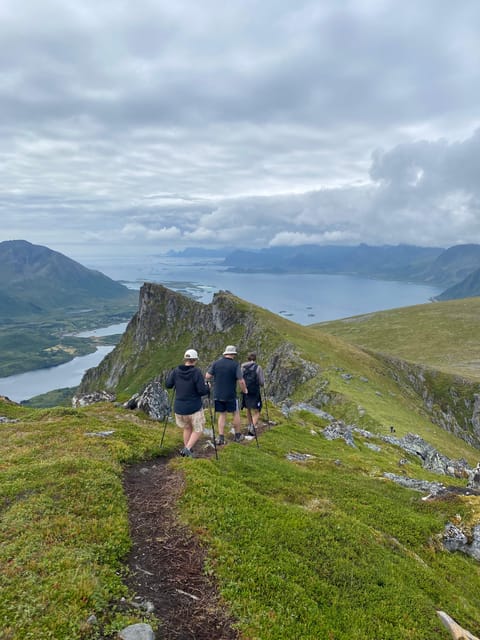
The guide is a major part of the value. You are not only paying for someone to lead you uphill. The experience includes local information about wildlife and culture, plus help reading the conditions and managing the pace.
That matters because you may notice a bird, plant, or distant feature without knowing its place in local life. A local nature guide can add meaning to the view and help you understand the area beyond taking photos. The information is also delivered while you walk, so the day stays active.
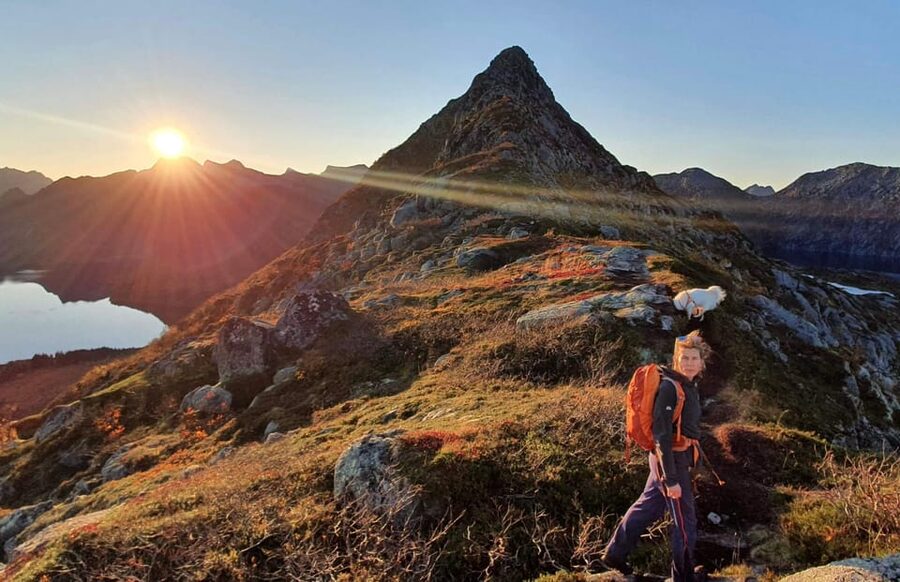
The personal approach is clear in the small details. One guide brought a dog after asking the group first, which is a considerate touch if you enjoy dogs but important to confirm if you do not. Paul was also willing to slow down for difficult parts and photography. Those choices point to a flexible guiding style rather than a fixed march to the summit.
You should still tell the guide about your fitness level at the start. The tour is not suitable for people with a low level of fitness, heart problems, or children under 12. The route is not designed for wheelchair users.
Is $136 good value for this hike?
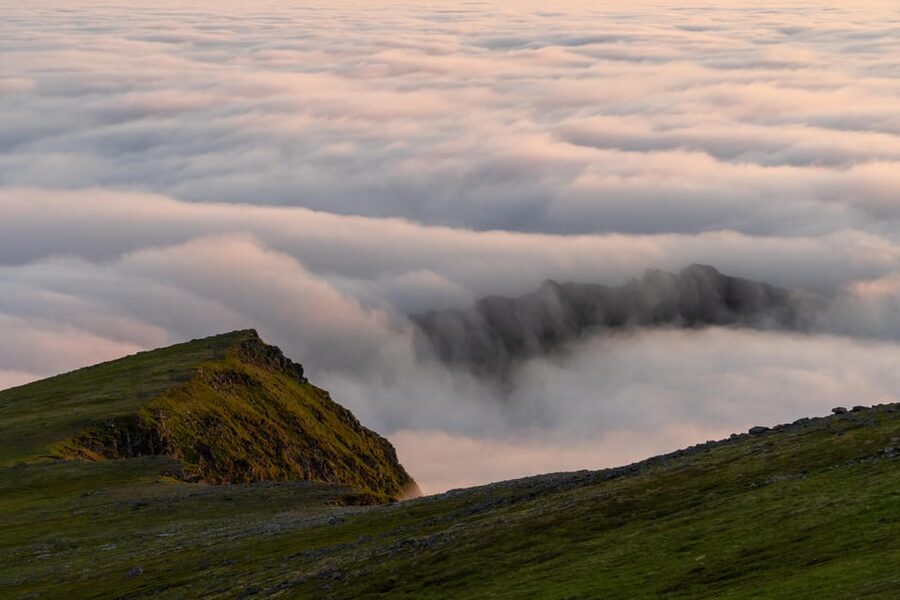
At $136 per person, this is not the cheapest way to walk in Lofoten. You are paying for a full guided outing, not transport, a meal, or a collection of included attractions. The price makes the most sense if you value a private or small-group setting, local guidance, walking poles, and the confidence of having support on an uphill route.
For a strong hiker who is comfortable navigating alone, the cost may feel high. You could prefer to choose your own pace and stop whenever you like. But if you are unsure about Norwegian mountain conditions, want help with the route, or would rather focus on the scenery than navigation, the guide adds real value.
The flexible timing also helps. The walk takes around 3.5 to 4 hours, but the group’s fitness and breaks shape the day. A private or small group can make that adjustment more easily than a large scheduled party.
Free cancellation is available up to 24 hours before the start for a full refund, and you can reserve now and pay later. Those terms reduce some of the risk when your Lofoten plans depend on weather. For dates or discount pricing not shown, contact Polar-folk.com by WhatsApp or email.
Who should book the uphill route?
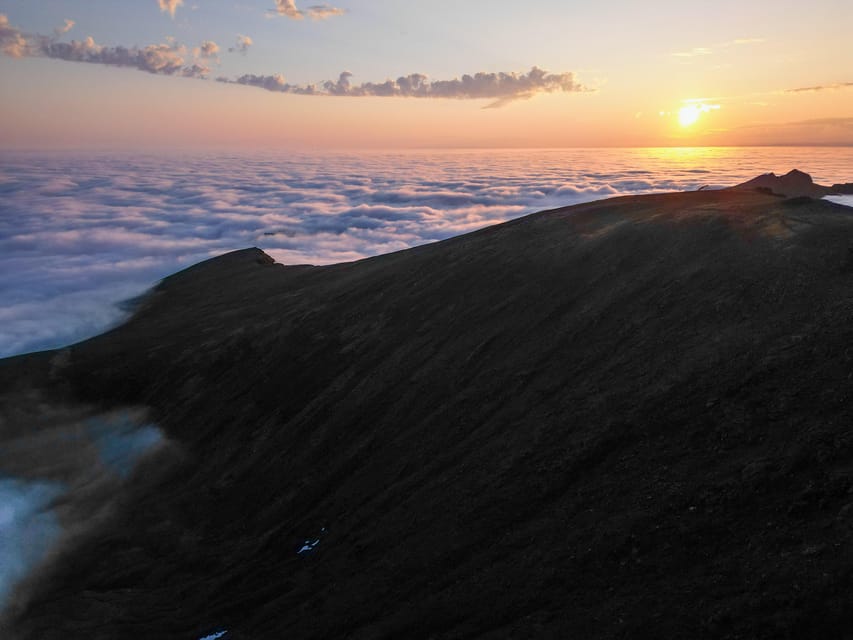
I would recommend this hike to adults and older teens who walk regularly and want a clear physical challenge. You do not need to be an expert mountaineer, but you should be ready for a sustained climb and a total outing of up to four hours.
It is a good match if you want:
- A mountain top reached on foot rather than by vehicle
- Scenic views without exposed trail sections
- A guide who can explain local nature and culture
- A flexible pace in a private or small group
- A useful introduction to hiking in Lofoten
I would choose another activity if you have heart problems, poor fitness, or difficulty with uphill walking. Children under 12 are not accepted, and wheelchair users cannot take part.
The route also depends on your attitude toward weather. If light rain ruins your day, wait for a settled forecast or choose a less weather-dependent plan. If you bring the right layers and accept that Lofoten can offer four seasons in a morning, the conditions become part of the experience rather than a surprise.
What to pack for a comfortable day
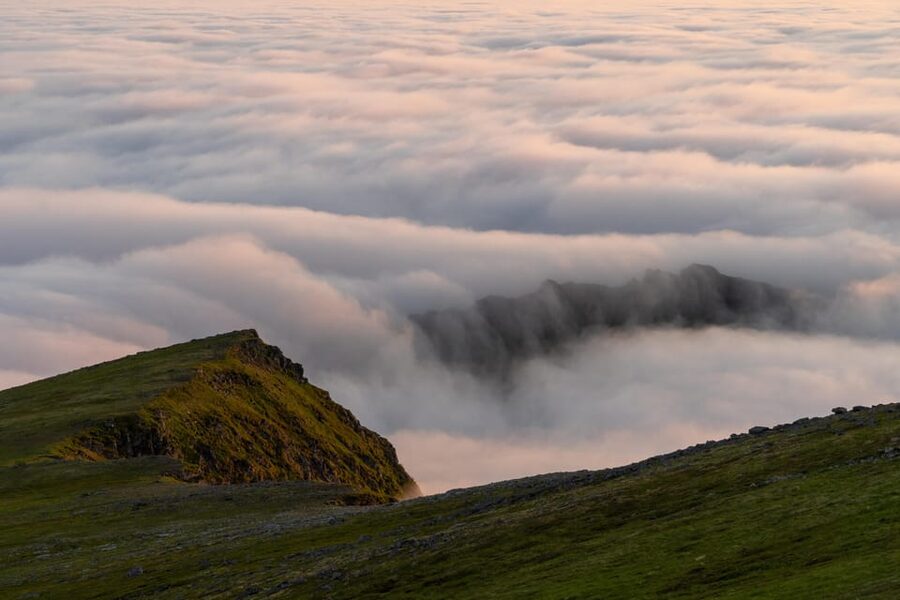
Your packing list should be simple but serious. Wear hiking shoes or boots, hiking pants, and comfortable outdoor clothing. Carry water, snacks or sandwiches, and extra layers in a small backpack.
Your essential kit:
- Hiking shoes with good support
- Windproof and waterproof outer layers
- Warm layers for the summit
- Water bottle
- Snacks or a sandwich
- Hiking pants
- A small backpack
- Camera or phone for the photo stop
Do not rely on the clothing you wear for a town day. A jacket that handles a short shower may not be enough for wind and rain at 550 meters. Layering is the key practical tip here. You can cool down during the climb, then add warmth when you stop.
My verdict: book it if you want an active Lofoten day
Book this tour if you want to work for your views and prefer a guide-led mountain outing over a casual walk. The route offers a clear goal, a manageable but serious climb, local nature and culture, and support from an English-speaking guide.
The strongest reasons to choose it are the small-group flexibility, the well-maintained and non-exposed route, and the guide’s willingness to adjust the pace. The main caution is the uphill effort and uncertain weather. Bring proper footwear, waterproof clothing, food, and enough water, and you will be prepared for the day Lofoten gives you.
FAQ
How long does the hike take?
The hike takes approximately 3.5 to 4 hours, depending on the group’s fitness and the number of breaks.
How high does the route climb?
The hike starts at sea level and reaches approximately 550 meters above sea level.
What difficulty level is the hike?
It is an intermediate hike with a sustained uphill route. It is intended for people willing to have a good workout.
Where do I meet the guide?
Meet at the rest area and large parking lot at Gimsøystraumen, overlooking the bridge. The guide waits at the red building.
Is the tour conducted in English?
Yes. English is the stated tour language.
Are walking poles included?
Yes. Walking poles are included in the tour.
What should I bring?
Bring hiking shoes, water, snacks or a sandwich, comfortable outdoor clothing, hiking pants, extra layers, and windproof and waterproof rain gear.
Can children or wheelchair users join?
Children under 12 and wheelchair users cannot take part. The hike is also not suitable for people with heart problems or a low level of fitness.
Just added around Scandinavia
- Stockholm: Evening Wildlife Safari with Midsummer Meal★ 4.2 · 130 reviews
- Wilderness Tour with Snowmobile & Ice Fishing★ 4.9 · 28 reviews
- World War II Stockholm Old Town Walking Tour and Army Museum★ 4.6 · 4 reviews
- Vossevangen: Nærøyfjord Full-Day Guided Kayaking Trip★ 4.8 · 4 reviews
- West Sweden: Sea Kayak Delight in Nature Reserves★ 5.0 · 6 reviews
- From Svolvær: Whale Watching Day Trip to Andenes★ 3.8 · 27 reviews
- Voss: Family Rafting on the Vosso River★ 4.7 · 23 reviews
- Voss: Thrilling Whitewater Rafting Guided Trip★ 4.6 · 56 reviews
Hiking & Trekking, compared.
Guided Husky Snowshoe Hike and Husky Camp Visit
Read our review →

Preikestolen (Pulpit Rock) Hike with Local Guide
Read our review →
Browse the lists this tour appears in