
Reviewed · WILDLIFE
Skjervøy: Birds and Wildlife of Arctic Norway
The most exciting part of this Skjervøy trip is the search itself. From a steady Rib, you scan the fjords for white-beaked dolphins, harbor porpoises, seals, otters, eagles, seabirds and the occasional passing whale. Nothing is guaranteed, but that uncertainty is part of a real wildlife outing rather than a staged show.
I like the local setting and storytelling, especially the chance to connect the sea and mountains with Sami and Norwegian life. I also like that thermal suits, mittens, goggles and life vests are provided, since Arctic weather can change fast. The main drawback is simple: wildlife sightings depend on weather, season and luck, and one outing may produce wonderful scenery but no major animal sighting.
In This Review
- Key points at a glance
- What this Skjervøy wildlife cruise is really about
- A 9:30 morning on the fjord
- White-beaked dolphins, porpoises and smaller marine mammals
- Whale timing matters more than the brochure image
- Spring and summer turn the fjords into a bird watch
- Local stories add meaning to the wildlife
- Is $165 a fair price?
- Weather is part of the decision
- Who will enjoy this most?
- Booking advice for a better morning
- Should you book Explore 70 Degrees?
- FAQ
- Where does the Skjervøy wildlife cruise take place?
- How long does the activity last?
- Where do I meet the guide?
- What wildlife might I see?
- Can I see whales all year?
- What birds might appear during the cruise?
- Is transport from Tromsø included?
- What equipment does the price include?
- Is the tour conducted in English?
- Who cannot join the activity?
Key points at a glance
- White-beaked dolphins and harbor porpoises can appear year-round, with seals and otters also possible.
- Whale sightings are seasonal and uncertain, with winter feeding ending around late January and occasional juvenile humpbacks later on.
- Spring and summer bring the strongest bird interest, including puffins, guillemots, razorbills, little auks, Arctic terns and ducks.
- A three-hour Rib cruise runs from 9:30 to 12:30, giving you a focused morning on the fjords.
- Thermal suits, mittens, goggles and life vests are included, a useful benefit at $165 per person.
- The company holds a Norwegian Varde quality certificate for whale watching, and the activity returns to its Skjervøy meeting point.
What this Skjervøy wildlife cruise is really about
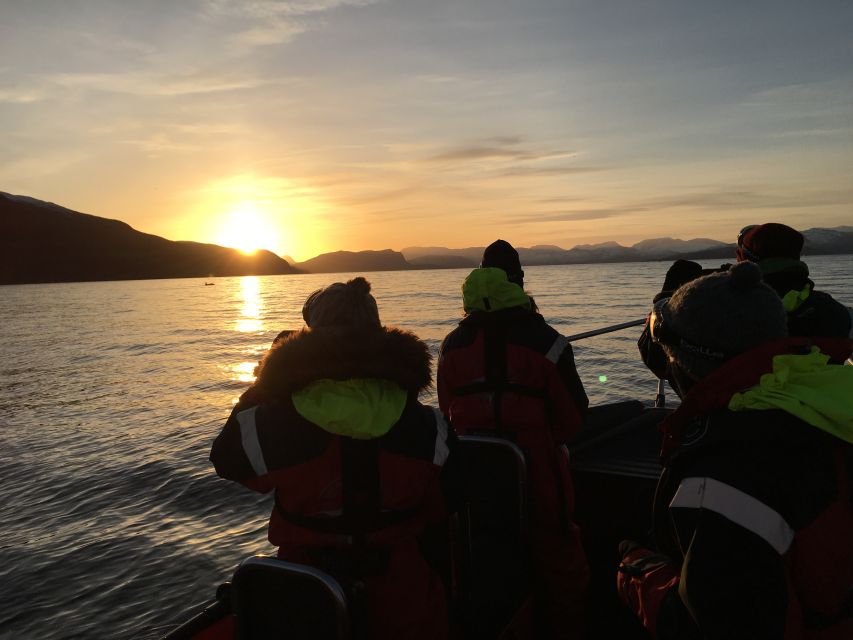
This is a nature search, not a guaranteed whale encounter. You board a safe, steady Rib and travel through the fjords around Skjervøy, keeping watch over the water and nearby shores. The guide looks for movement, splashes, wings and animal shapes, while also explaining the area’s wildlife and human story.
That format suits you if you enjoy paying attention to small details. A dolphin fin may appear only briefly. An eagle may be perched on land rather than soaring overhead. A seabird colony may offer more action than a whale on a particular morning.
I appreciate that the company does not limit the outing to whales. The focus includes marine mammals, birds and land animals, so the experience has several possible rewards. Moose and reindeer are commonly seen in the area, and the crew also keeps an eye out for them while moving through the fjords.
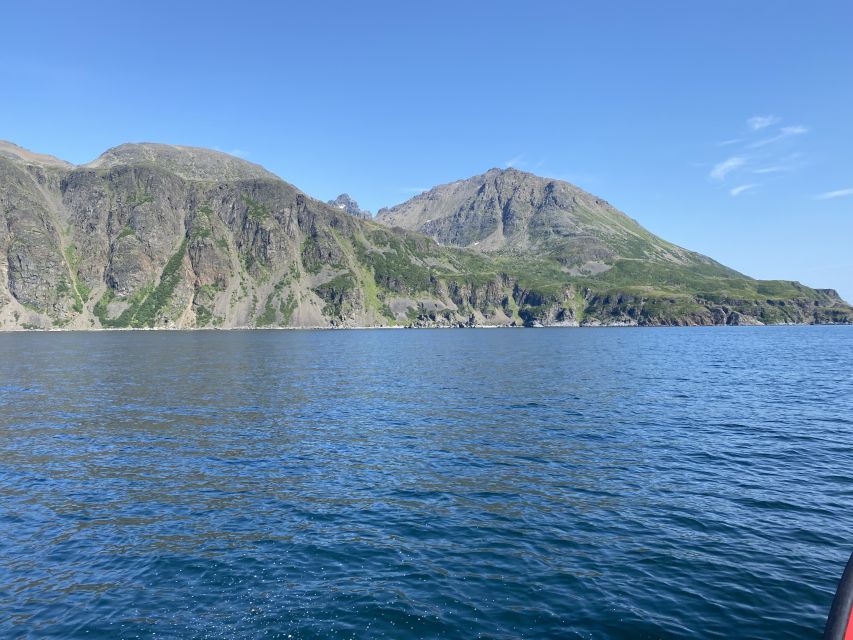
The setting is the Barents Sea region of northern Norway. You are not simply crossing open water and hoping for a famous species. You are exploring a northern fjord system where the season affects nearly everything, from whale activity to bird numbers and daylight conditions.
A few more Scandinavia trips to weigh up
- Tromso Snowshoeing – Valley, Fjord Views, Wildlife, Meal & Pickup
★ 5.0 · 398 reviews - From Svolvaer: Trollfjorden Wildlife RIB Cruise
★ 4.8 · 355 reviews - Tromsø: Winter Sea Kayaking Tour with Wildlife Sightings
★ 4.9 · 333 reviews
A 9:30 morning on the fjord
The advertised trip lasts three hours, from 9:30 to 12:30. You meet at the provider’s location in Skjervøy. Look for the red door and large windows marked with the activity provider’s name. The outing finishes back at the same meeting point.
A morning departure has practical advantages. You have the rest of the day free, and the timing creates a clear plan for a short stay in Skjervøy. It also means you should arrive prepared rather than treating this as a casual walk to the harbor.
The exact route depends on conditions and animal activity. The crew may focus on water where dolphins and porpoises are likely, scan shorelines for seals, otters, moose or reindeer, and watch cliffs or rocky areas for birds and eagles. The experience is intentionally responsive to what the fjords offer that day.
The journey to Skjervøy itself matters. The available information specifically notes that reaching Skjervøy can be part of the effort, and one account describes the trip there as worthwhile but dependent on weather. You need to arrange your own transport to and from Tromsø, since that transfer is not included in the $165 price.
White-beaked dolphins, porpoises and smaller marine mammals
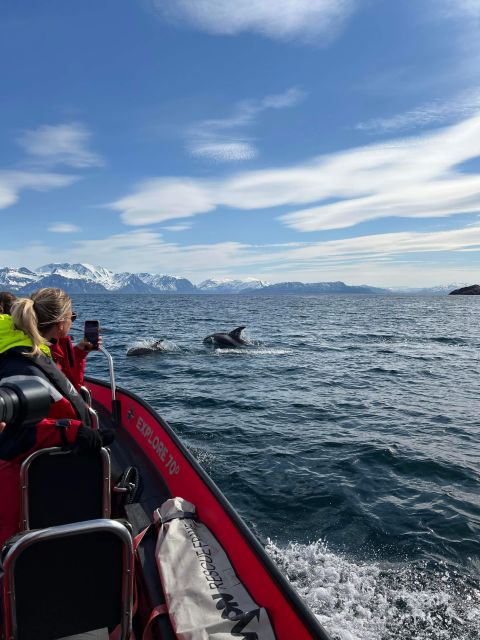
The most dependable wildlife targets are the resident white-beaked dolphins and harbor porpoises. They are described as common in the area throughout the year, although common does not mean certain on every three-hour departure.
White-beaked dolphins can make a sighting feel dramatic because they travel in groups and may surface near the boat. Harbor porpoises are smaller and less showy, so you need to keep watching the water rather than expect a large leap or splash.
Seals and otters are also possible. These animals can be harder to spot, particularly if they are resting near shore or moving quietly through the water. I like that the crew includes them in the search because it gives the outing a broader purpose than simply counting whale species.
The boat is a Rib, described as safe and steady. That matters in a northern fjord, where you may spend much of the trip seated, looking from side to side and reacting to sudden sightings. Still, a Rib is an open marine craft, and the activity is not suitable for people with back problems. You should take that warning seriously.
Whale timing matters more than the brochure image
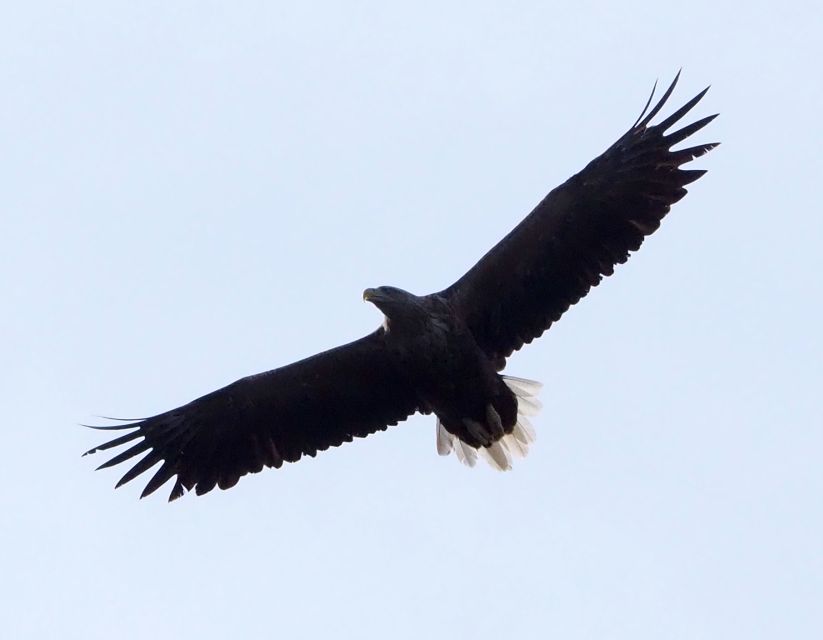
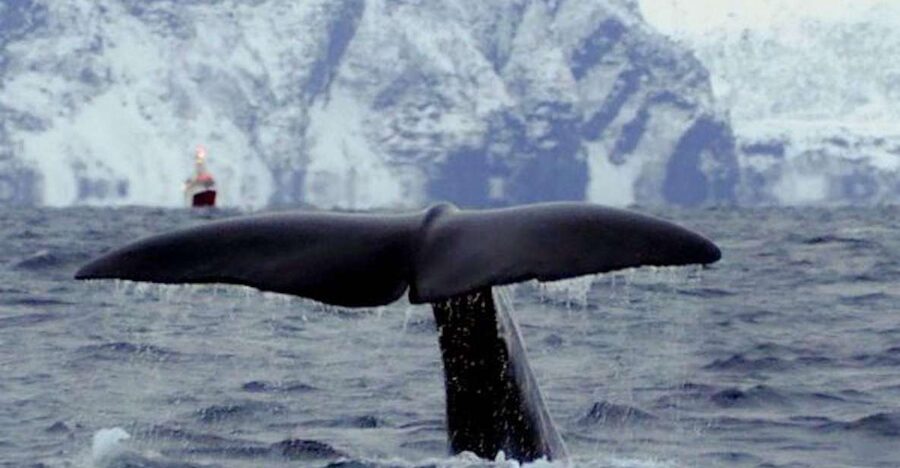
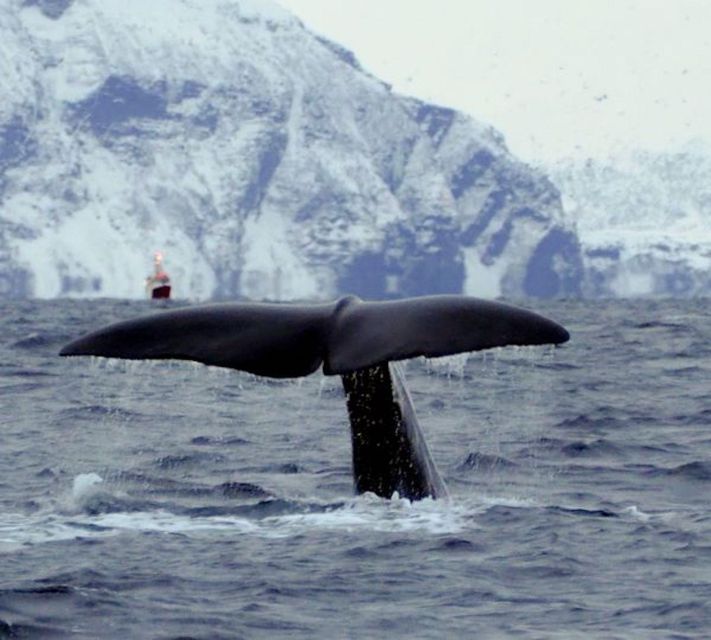
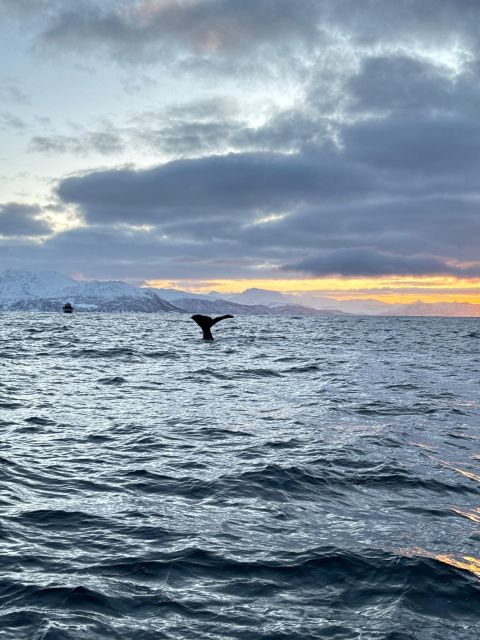
Whales are the most tempting reason to book, but they are also the least predictable part of the outing. The winter whales finish their feeding period in the fjords around Skjervøy at the end of January. After that, whales and other cetaceans may still pass through from time to time.
Juvenile humpback whales and other traveling whales can occasionally be seen moving through the fjord system. That is a very different promise from a regular whale-feeding trip. You might see a whale, but you should not book this departure on the assumption that one will appear.
This seasonal distinction helps you plan honestly. If whales are your only goal, check the current conditions and timing carefully before paying. If you are happy to trade certainty for a wider search involving dolphins, birds, eagles and land animals, the outing makes more sense at any time of year.
The company holds a Norwegian Varde quality certificate for whale watching. That indicates a formal Norwegian quality standard connected with this type of activity, which is a useful sign when you are comparing operators. It does not change the wild nature of the animals, though. No certificate can control weather or summon a whale.
Same fjord country, a very different day out:
- Stockholm: City Archipelago Sightseeing Cruise with Guide
★ 4.3 · 10,798 reviews - Copenhagen: Canal Cruise with Guide
★ 4.6 · 9,115 reviews - From Bergen: The Original Fjord Cruise to Mostraumen
★ 4.7 · 8,440 reviews - Tromsø: Reindeer Sledding & Feeding with a Sami Guide
★ 4.8 · 6,417 reviews
Spring and summer turn the fjords into a bird watch
Birdlife is a major reason to consider this trip outside the main winter whale period. The area can produce a long list of seabirds, including puffins, guillemots, razorbills, little auks, Arctic terns, eider ducks and long-tailed ducks.
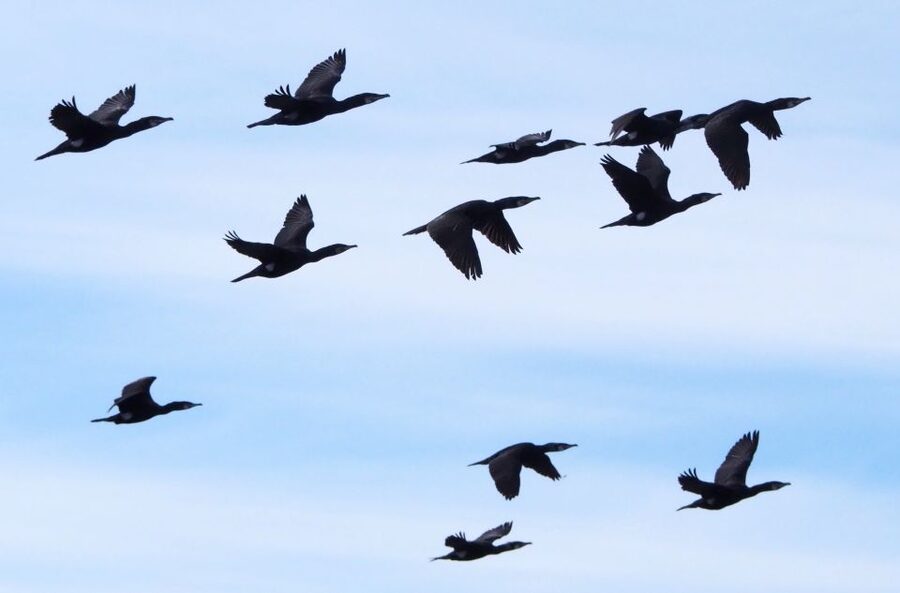
The bird experience changes with the season. Spring and summer are described as the strongest period for birdlife, so you should put more weight on this part of the outing if you visit then. Eagles and cormorants are also important targets, with their large size and strong wing movement making them easier to appreciate from a moving boat.
A boat gives you a different angle from a roadside stop or town walk. You can look toward rocky shores, islands and open water, where seabirds feed and rest. You may need patience, since the guide cannot promise every listed species on every trip.
Bring warm clothes even though the operator supplies protective gear. Thermal suits help, but you still want a warm base layer underneath. Mittens and goggles are included, which is especially helpful when the boat is moving and cold air reaches your face and hands.
Local stories add meaning to the wildlife
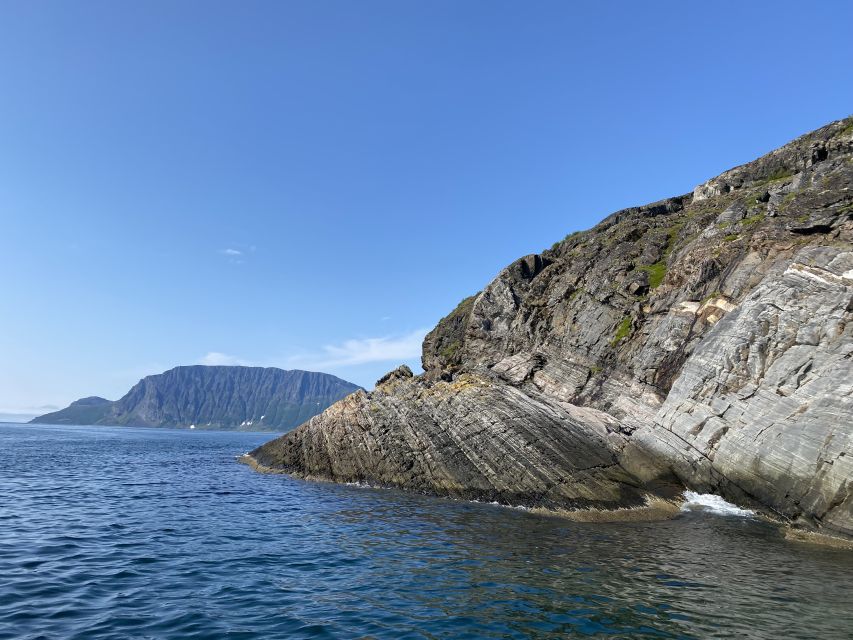
The guide does more than identify animals. The company places importance on telling the story of the area and introducing you to the Sami and Norwegian people who have shaped life around these fjords over many generations.
That cultural context gives the outing more depth without taking it away from the wildlife. You can see the sea as a place for animals, but also as a working and living environment connected to local communities. The guide speaks English and Norwegian, and the tour is conducted in English for visitors.
The emphasis on local hosting is one of the experience’s strongest features. A local company is better placed to explain the area in practical terms, from the seasonal pattern of animals to the relationship between the fjords and nearby communities. The crew also aims to give each person attention and make sure you feel looked after on the water.
No individual guide names are provided, so you should not expect to book a named guide in advance. What is clear is that your guide is trained, professional and local, with English-language support.
Is $165 a fair price?
At $165 per person, this is not a cheap morning activity. The value depends on what you want from it and how you reach Skjervøy.
The price covers a three-hour wildlife cruise, a local English-speaking guide, safety equipment, thermal suits, mittens and goggles. It also includes the benefit of a company with a Norwegian Varde quality certificate for whale watching. Those inclusions reduce the amount of specialized cold-weather gear you need to bring or rent.
Food and drinks are not included, and transport to and from Tromsø is separate. If you are already in Skjervøy, the price is easier to assess because the activity itself is the main expense. If you are planning a special trip from Tromsø just for this outing, calculate the full transport cost before deciding.
I would call it reasonable for a small, specialist wildlife experience if you value local guiding and proper Arctic equipment. I would not call it good value if you need a guaranteed whale sighting. The strongest value comes from treating it as a broad wildlife and culture cruise, with whales as one possible reward.
Weather is part of the decision
You need realistic expectations about Arctic weather. One account describes a boat trip that took place between two snow showers, producing a well-timed run through better conditions. That detail captures the nature of the experience: a small weather window can make a big difference.
Snow, wind and low visibility can affect both comfort and animal sightings. You might spend part of the trip watching the weather as much as the water. The provided thermal suits, goggles and mittens help, but they do not turn a rough day into a calm one.
This is why flexible booking is useful. You can reserve now and pay later, and cancellation is free up to 24 hours in advance for a full refund. That gives you room to check the forecast and adjust your plan, within the stated cancellation window.
Do not consume alcohol or drugs before the activity. Intoxication is not allowed. Children under six cannot join, and people with back problems should choose another activity.
Who will enjoy this most?
I would recommend this cruise to you if you like wildlife but do not need a guaranteed checklist. It is especially suitable for people who enjoy short boat trips, bird watching, local stories and the changing conditions of northern Norway.
It also works well for a visitor who wants several possible subjects in one outing. Dolphins, porpoises, seals, otters, birds, eagles, moose, reindeer and seasonal whales all belong to the search. That variety gives the morning a better chance of feeling worthwhile even when one species stays hidden.
You may want to skip it if you are uncomfortable on an open boat, have back problems or are booking only for whales after January. The trip is also less appealing if you need food, drinks or Tromsø transport built into the price.
The activity is wheelchair accessible according to the supplied information. You should still confirm the practical boarding arrangements directly, especially because the boat is a Rib and the tour takes place on the water.
Booking advice for a better morning
Check the season before you focus on the animal list. Spring and summer are the best period for the full range of birdlife. Around the end of January and afterward, whale sightings become occasional rather than central, although dolphins and porpoises may still be present year-round.
Pack warm clothing even with the supplied equipment. Wear layers, and expect the need for protection against cold air, spray and snow. Bring only what you can keep secure on a small boat.
Plan your transport carefully. The activity begins and ends at the Skjervøy meeting point, while transport back and forth to Tromsø is not included. Look for the red door and large windows with the company name when you arrive.
Finally, leave room in your expectations. A wildlife trip can produce a spectacular dolphin encounter, a striking eagle or a sky full of seabirds. It can also produce a quiet fjord, snow showers and no major animal sighting. The operator’s own description is refreshingly clear about that uncertainty.
Should you book Explore 70 Degrees?
Book this Skjervøy cruise if you want a local, flexible wildlife search with good cold-weather equipment and cultural storytelling. Its broad focus gives you more than one reason to keep watching, and the three-hour length is manageable for most people who are comfortable on a Rib.
Think twice if your only goal is a guaranteed whale sighting, especially after the winter feeding period ends around late January. At $165, the outing earns its value through the local guide, equipment, certified whale-watching quality and range of possible wildlife, not through certainty.
For the right kind of nature outing, that is a fair trade. You set out to see what the Barents Sea and Skjervøy fjords choose to show you.
FAQ
Where does the Skjervøy wildlife cruise take place?
The activity takes place around Skjervøy in Arctic Norway, in the Barents Sea region and nearby fjords.
How long does the activity last?
The cruise lasts three hours, from 9:30 to 12:30.
Where do I meet the guide?
Look for the red door and large windows marked with the activity provider’s name. The trip ends back at the same meeting point.
What wildlife might I see?
Possible sightings include white-beaked dolphins, harbor porpoises, seals, otters, whales, eagles, cormorants, seabirds, moose and reindeer.
Can I see whales all year?
Whales may sometimes be seen after the winter whale feeding period ends around late January, including juvenile humpback whales and other passing cetaceans. Sightings are not guaranteed.
What birds might appear during the cruise?
Possible birds include puffins, guillemots, razorbills, little auks, Arctic terns, eider ducks, long-tailed ducks, eagles and cormorants.
Is transport from Tromsø included?
No. Transport to and from Tromsø is not included.
What equipment does the price include?
The price includes thermal suits, life vests, mittens and goggles, along with a professional local guide.
Is the tour conducted in English?
Yes. The live guide speaks English. The guide team also has Norwegian language skills.
Who cannot join the activity?
Children under six are not permitted, and the activity is not suitable for people with back problems. Alcohol and drugs are not allowed.
Just added around Scandinavia
- Stockholm: Evening Wildlife Safari with Midsummer Meal★ 4.2 · 130 reviews
- Wilderness Tour with Snowmobile & Ice Fishing★ 4.9 · 28 reviews
- World War II Stockholm Old Town Walking Tour and Army Museum★ 4.6 · 4 reviews
- Vossevangen: Nærøyfjord Full-Day Guided Kayaking Trip★ 4.8 · 4 reviews
- West Sweden: Sea Kayak Delight in Nature Reserves★ 5.0 · 6 reviews
- From Svolvær: Whale Watching Day Trip to Andenes★ 3.8 · 27 reviews
- Voss: Family Rafting on the Vosso River★ 4.7 · 23 reviews
- Voss: Thrilling Whitewater Rafting Guided Trip★ 4.6 · 56 reviews
Wildlife, compared.
Tromso Snowshoeing – Valley, Fjord Views, Wildlife, Meal & Pickup
Read our review →
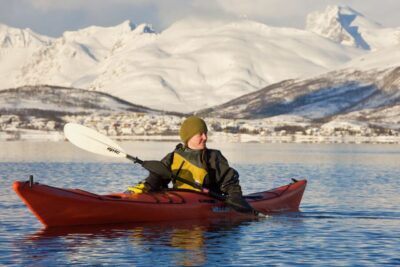
Winter Sea Kayaking Tour with Wildlife Sightings
Read our review →
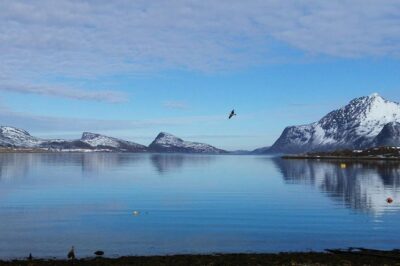
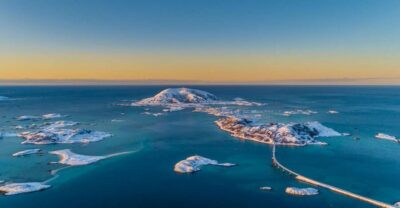
Arctic Wildlife & Fjord Sightseeing Tour by Car
Read our review →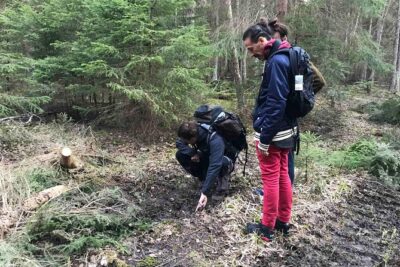
Evening Wildlife Safari with Campfire Dinner from Stockholm
Read our review →
Browse the lists this tour appears in