
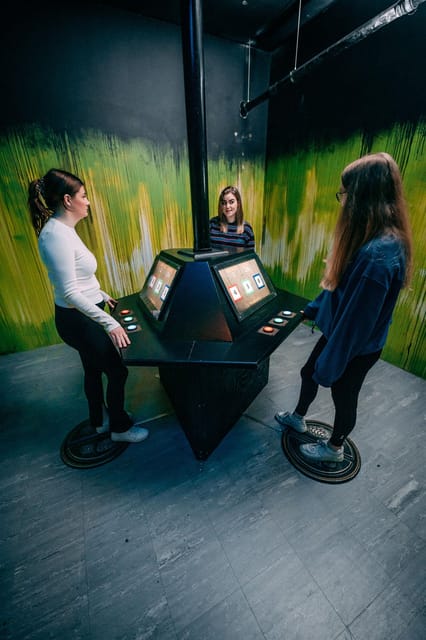
Reviewed · STAVANGER TOURS
Stavanger: Prison Island Adventure Game
Stavanger’s Fangene på Fortet turns the escape-room idea into a fast-moving team contest. Instead of staying in one room until you crack one puzzle, your group moves among many challenge rooms, collecting points for solving tasks, handling obstacles, and thinking quickly.
I like the wide choice of games and the fact that you can often retry a room to improve your score. I also like the flexible length: a one-hour booking can become a much longer visit if your group is having fun. The main thing to consider is that some tasks may be hard to understand, and not every room will suit every physical ability.
In This Review
- Key points
- A different kind of escape room in Stavanger
- At the reception: arrive 15 minutes early
- Inside the 46 challenge rooms
- Why retrying rooms changes the experience
- Teamwork matters more than strength
- Families, teenagers, and school groups
- Corporate groups and friendly competition
- Price and time: is $30 per person fair?
- What can go wrong
- How to get the most from your session
- Who should book Fangene på Fortet?
- FAQ
- Where does the Prison Island game take place?
- How much does the activity cost?
- How long does the activity last?
- How many people can be on one team?
- Is the game played in English?
- Do I need a personal guide?
- What should I wear?
- Is the venue wheelchair accessible?
Key points
- Forty-six challenge rooms: You get far more variety than in a single escape room, with different tasks and levels of difficulty.
- Small teams of 2 to 5: The format rewards clear communication rather than simply having a large group.
- Flexible playing time: Bookings range from about 1 to 2.5 hours, and some groups choose to stay longer.
- English-language game: The tasks and game play are conducted in English, with English and Norwegian available from the host or greeter.
- Suitable for mixed groups: Families, friends, company teams, and school groups can all take part.
- Come ready to move: Comfortable clothing and shoes are important because the activities include physical challenges.
A different kind of escape room in Stavanger
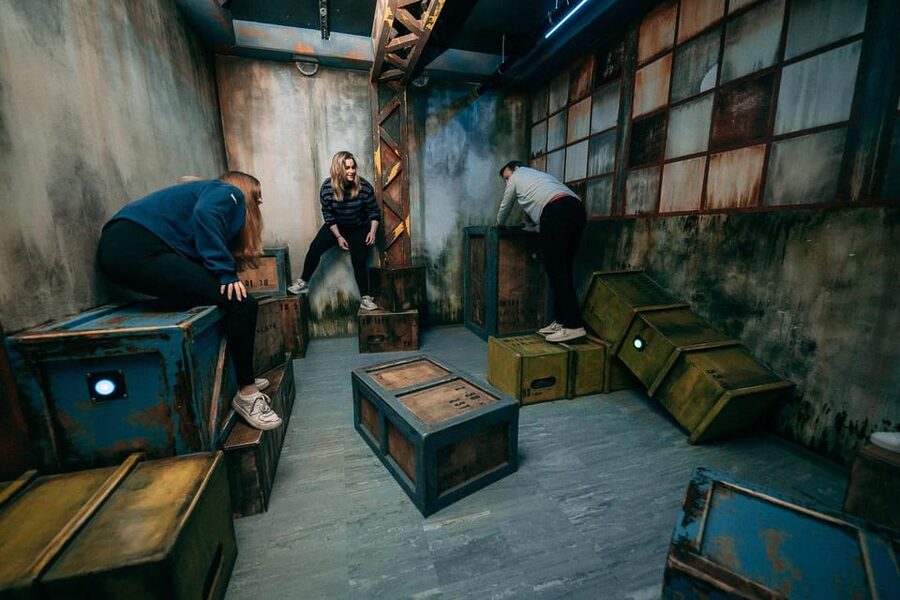
The basic idea is simple. Your team enters a prison-themed activity center, receives a scorecard, and takes on a series of challenge rooms. Each room presents a separate puzzle or task, so you are not trapped in one long chain of clues.
That makes Fangene på Fortet a useful choice if your group has mixed interests. One person may enjoy logic puzzles, another may prefer a physical test, and someone else may be good at spotting patterns or explaining instructions. Since there are many rooms, you can change tactics from one challenge to the next.
The setup draws from escape rooms and television challenge shows, but the pace is different from a traditional escape room. You are not trying to solve one story from start to finish. You are trying to collect as many points as possible before time runs out.
That difference matters. If your group gets stuck in a classic escape room, the whole session can feel stalled. Here, you can move on, try another room, and return later if you want another attempt.
Other Stavanger days people book alongside this one:
- Stavanger: Scenic Fjord Cruise to Lysefjord and Preikestolen
★ 4.6 · 5,791 reviews - Stavanger: Fjord Cruise to Lysefjord and Pulpit Rock
★ 4.8 · 1,357 reviews - From Stavanger: RIB Tour to Lysefjord
★ 4.9 · 1,288 reviews
At the reception: arrive 15 minutes early
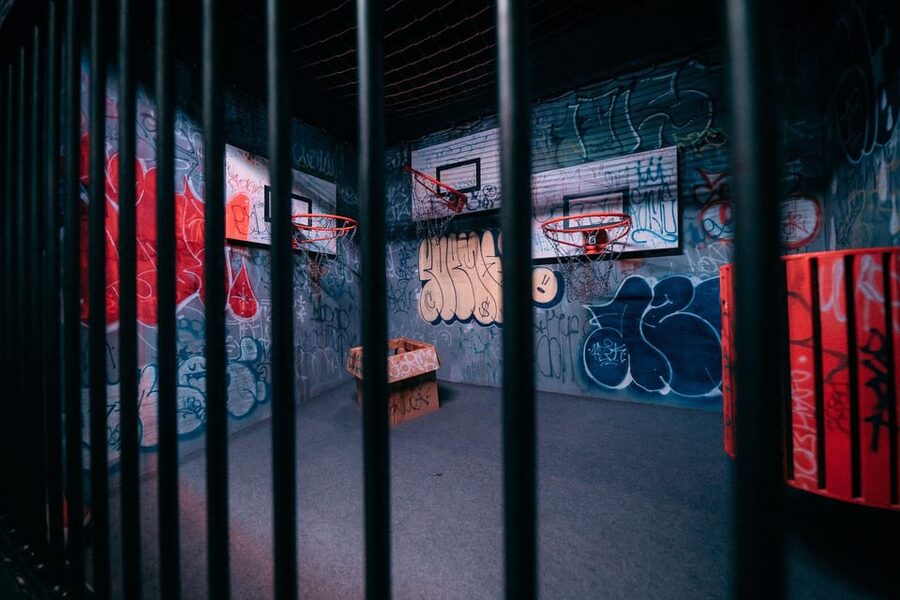
Your visit begins at the welcome reception at Fangene på Fortet in Stavanger. Plan to arrive 15 minutes before your reserved time. That gives you time for the briefing and helps your team start without losing valuable playing time.
The host or greeter can communicate in English or Norwegian, but the game itself is played in English. This is worth noting if you are booking for younger children or a group that is not comfortable reading English instructions quickly.
You will receive entry to the challenge rooms and a team scorecard. There is no personal guide accompanying you from room to room, so your team is responsible for reading the task, deciding on a plan, and managing its own time.
That lack of a dedicated guide is part of the appeal, but it also means you should listen carefully during the briefing. If your team tends to rush ahead, appoint one person to read instructions while another keeps track of points and time.
Inside the 46 challenge rooms
The biggest draw is the number of rooms. The center has 46 escape-room-style challenges, giving you a broad mix of puzzles and tasks rather than one repeated format.
The exact contents of every room are not set out in the activity details, so you should expect variety rather than a fixed route. Some rooms may call for logic and careful observation. Others may ask you to work through an obstacle, complete a task under time pressure, or coordinate several people at once.
This is where the small team format works well. With two to five people, everyone needs a job. One person may notice the key clue, another may test the solution, and a third may keep the group from overlooking a simple instruction.
You do not need to be an expert puzzle solver. The game is designed for different skill levels, and the point system gives you plenty of chances to recover after a difficult room. Still, quick thinking helps, especially when your team is deciding if it should persist with one task or move on.
The challenge rooms also help prevent one strong personality from taking over the entire session. A person who is excellent at word puzzles may be less useful in a physical task, while a quiet team member may spot the solution that everyone else missed.
Why retrying rooms changes the experience
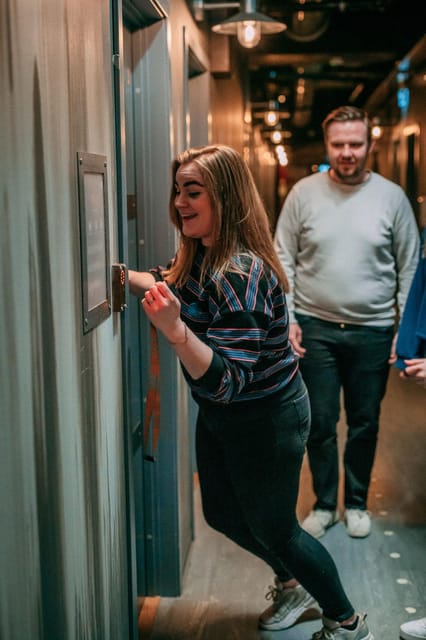
One of the best features is the chance to try rooms again. If you nearly complete a task, a second attempt gives you a reason to change your method rather than simply accept a low score.
That creates two different ways to use your time. You can sample as many rooms as possible, or you can return to favorite challenges and work on your team score. The second option suits competitive groups, especially company teams or friends who enjoy comparing results.
Some groups book for an hour and end up staying for more than two hours. That is possible because the center offers many rooms and because unfinished tasks can be tempting to revisit. Still, do not assume every booking automatically includes unlimited extra time. Check the available duration when choosing your start time.
A 90-minute visit is likely to feel more relaxed than a one-hour session. You will have more room to try different challenges rather than rushing from one room to the next. If you are booking for teenagers, the longer option may offer better value because it gives them time to sample the range of rooms.
Same fjord country, a very different day out:
- From Stavanger: Lysefjord Sightseeing RIB Boat Tour
★ 4.9 · 821 reviews - Lysefjord RIB Safari from Stavanger
★ 5.0 · 665 reviews - Haugesund Shore Excursion: Åkrafjorden & Langfoss waterfall
★ 4.5 · 554 reviews - Guided hike to Pulpit Rock Preikestolen
★ 5.0 · 390 reviews
Teamwork matters more than strength
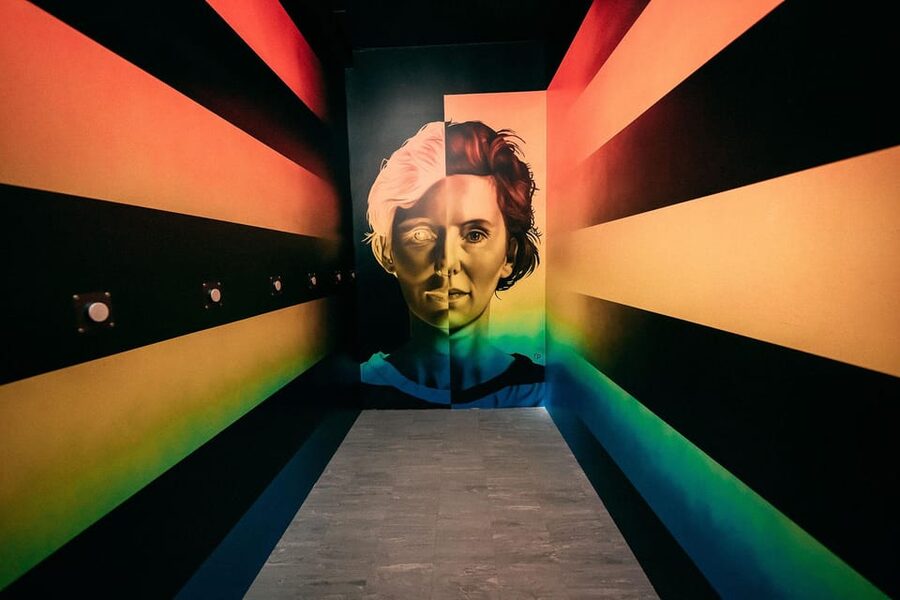
The activity is built around communication. You need to explain what you see, listen when someone suggests a different approach, and agree quickly on what to try next.
That makes it a good fit for groups that want something more active than a meal or a standard sightseeing stop. Company teams can see how colleagues divide work under pressure. Families can give different members a chance to lead. Friends can discover who stays calm when the clock is running.
The game is not only about being fast. A hurried answer can waste time, while a short discussion may point you toward the right solution. I like this balance because it lets different skills matter.
Physical ability may still affect which rooms you prefer. The activity asks you to wear clothing and shoes suitable for physical activity, and some rooms involve obstacles or movement. The venue is listed as wheelchair accessible, but the information does not specify the access arrangements for each individual room. If a team member needs particular support, contact the venue before booking and ask which challenges are suitable.
Families, teenagers, and school groups
The broad range of difficulty makes this more adaptable than many single-room puzzle activities. Families can choose simpler tasks and let younger members contribute without expecting them to solve every challenge.
The format also works well for teenagers. A group of four 15-year-olds reportedly paid about 103 euros for a 90-minute visit and considered it good value, with the teenagers naming it their favorite holiday activity. The exact price you pay may differ from that example, but it shows why the format appeals to older children: it is active, competitive, and gives them room to make decisions.
Parents should still think about language and attention span. The game is played in English, and some tasks need instructions to be understood quickly. A family with children who are comfortable in English will get more from the session.
For school groups, the team size of two to five keeps pupils involved. Teachers can split a larger class among several teams, though the supplied information does not describe the group booking arrangements. The activity’s focus on cooperation makes it a natural choice for a school outing, but staff should confirm the practical details before reserving.
Corporate groups and friendly competition
For a workplace outing, the scorecard adds a useful competitive edge. Teams can compare results, retry difficult challenges, and talk afterward about which approaches worked best.
The activity does not include a personal guide, so it is not a formal facilitated workshop. You should choose it for hands-on team play rather than for a structured lecture about communication or leadership.
That can be a benefit. People often relax more when they are solving a puzzle or tackling a task than when they are asked to discuss teamwork directly. The challenge gives you something concrete to work on together.
Keep the team limit in mind. Each team can have from 2 to 5 people, so a large company group will need several teams. The smaller format means everyone has a chance to contribute, but it also requires more planning if many people are attending.
Price and time: is $30 per person fair?
At the listed price of $30 per person, the value depends mainly on how long you play and how actively your group uses the rooms.
For a one-hour visit, the price is higher than a simple self-guided attraction, but you are paying for access to multiple challenges rather than a single timed puzzle. For a 90-minute or two-hour session, the cost becomes easier to justify, particularly if your team tries several rooms and returns to improve its score.
The strongest value comes from flexibility. A group that samples only a few rooms may feel it has not used the admission fully. A competitive group that keeps trying, changing strategies, and chasing points is likely to get more from the same ticket.
The reported family price of about 103 euros for four people over 90 minutes works out to roughly 25.75 euros per person, though that is a past booking example and not a guarantee of the current rate. Check the price for your date before booking.
I would choose the longer duration if your schedule allows it. A one-hour booking can pass quickly, especially when you spend part of the session learning how your team works together.
What can go wrong
The activity is not perfect for every group. One known concern is that some tasks may be difficult to understand. If English is not your first language, that issue may be more noticeable because the game is conducted in English and there is no personal guide assigned to your team.
There can also be a difference between a challenge that is genuinely difficult and one that feels unclear. If your group cannot work out what a room expects, ask the staff for help rather than spending the whole session repeating the same approach.
A second possible problem is equipment or task function. One booking reported that some activities seemed not to work properly. That appears to be an isolated concern rather than the main character of the venue, but it is a fair reason to tell staff promptly if something seems faulty.
The physical side may also limit your choices. Comfortable shoes and clothing are required, and some activities involve obstacles. The venue is wheelchair accessible, but accessibility can vary from room to room, so specific questions are sensible before arrival.
How to get the most from your session
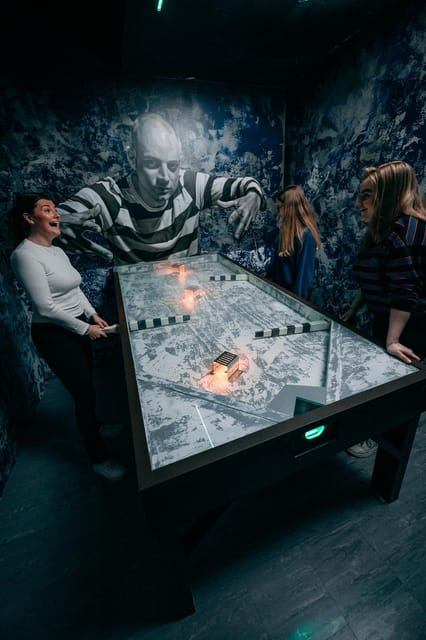
Start by agreeing on a simple team plan. Choose one person to read the instructions, one to watch the scorecard, and let the roles change as you move through the rooms.
Do not spend too long on a single task. If you are making no progress, move to another room and return later. A fresh look often helps, and the center’s retry option gives you a practical reason to revisit unfinished challenges.
Listen to quieter team members. These games often reward the person who notices one small detail, not only the person who talks the most.
If you are booking for a family, give children real jobs. Ask them to search for patterns, remember symbols, or explain what they think the task requires. The activity works best when everyone has a role rather than when adults solve everything.
Finally, allow time for more than the bare minimum. The one-hour option is useful if you are fitting the activity into a busy Stavanger day, but 90 minutes or longer gives you a better chance to sample the range of rooms.
Who should book Fangene på Fortet?
I would recommend this for friends, families with English-speaking children, corporate teams, and school groups looking for active entertainment. It is especially well suited to people who like variety and do not want to spend an entire booking on one difficult escape-room story.
It is less suitable if you want a quiet, guided activity or if your group dislikes time limits and competition. The lack of a personal guide means you must manage yourselves, and unclear instructions may test your patience.
The high overall rating of 4.9 from 11 ratings reflects a very strong response, with praise focused on the professional setup, variety, friendly staff, and the fact that the time passes quickly. A small amount of criticism concerns unclear tasks and possible equipment problems, so keep your expectations practical.
Book it if you want a social challenge rather than a sightseeing tour. The best reason to choose it is not the prison theme alone. It is the chance to see how your group thinks, communicates, and adapts across dozens of different tasks.
FAQ
Where does the Prison Island game take place?
It takes place at Fangene på Fortet in Stavanger, Rogaland, Norway. Meet at the venue’s welcome reception.
How much does the activity cost?
The listed price is $30 per person. Check the booking details for the exact price available on your chosen date.
How long does the activity last?
Available sessions range from about 1 to 2.5 hours. Check the available starting times and duration when booking.
How many people can be on one team?
Teams can include from 2 to 5 people.
Is the game played in English?
Yes. The game is played in English. The host or greeter can speak English or Norwegian.
Do I need a personal guide?
No personal guide is included. You receive entry to the challenge rooms and a team scorecard, then complete the tasks with your group.
What should I wear?
Wear comfortable clothing and shoes suitable for physical activity.
Is the venue wheelchair accessible?
Yes, the activity is listed as wheelchair accessible. The supplied information does not describe access for each individual challenge room, so check with the venue if your team needs specific arrangements.
Just added around Stavanger
- Stavanger: Waterfalls, Caves and Rock Tour By Sea★ 4.0 · 145 reviews
- The Pulpit Rock Air★ 4.5 · 8 reviews
- Discover Sensational Stavanger: Self-Guided Audio Tour★ 3.5 · 7 reviews
- Stavanger Kjerag Hike with Guide and Transportation★ 5.0 · 9 reviews
- Stavanger Private Walking Tour with a Local★ 4.5 · 20 reviews
- Kjerag Low-Season Hike + Packed Lunch★ 5.0 · 3 reviews
- Preikestolen | Pulpit Rock – Hike with a local guide★ 5.0 · 84 reviews
- Scenic tour to Steinsfjellet, locals at Kringsjå & Rising Tide★ 5.0 · 48 reviews
Stavanger Tours, compared.

Scenic Fjord Cruise to Lysefjord and Preikestolen
Read our review →

Haugesund Shore Excursion: Åkrafjorden & Langfoss waterfall
Read our review →
Lysefjorden & Pulpit Rock RIB-Safari from Stavanger
Read our review →Browse the lists this tour appears in