Reviewed · OLD TOWN WALKING TOURS
Stockholm- A Beauty On The Water: Old Town Walking Tour and Boat Trip Combined
Stockholm makes sense when you see its two sides: the grand capital of kings and government, and the calm city of islands, bridges, and waterways. This tour connects both in about three hours, beginning at the Royal Swedish Opera and ending after a boat ride through the peaceful Djurgårdsbrunn Canal.
I like the small maximum group of 10, which gives guides such as Bengt and Natalie room to answer questions and adjust the walking pace. I also like the smart order: you get two hours of landmarks and stories first, then sit down for a 50-minute boat ride. The main drawback is value. At $135.16 per person, the tour is not cheap, especially since the boat uses an audio guide rather than live commentary and some passengers find the water portion less impressive than the walk.
In This Review
- Key points at a glance
- Starting at the Royal Swedish Opera
- Parliament, bridges, and the story of Swedish power
- Lejonbacken and the royal view
- Slottsbacken and the Bernadotte dynasty
- Stortorget, Stockholm’s most famous square
- Köpmangatan and the medieval Old Town
- Boarding at Strömkajen for the canal ride
- Coffee, cinnamon rolls, and the value of the boat
- Where the tour ends and what to do next
- Who should book this Stockholm tour?
- Final verdict: a strong first look, at a premium price
- FAQ
- How long does the Stockholm walking and boat tour last?
- Where does the tour begin?
- Where does the tour end?
- Is the tour offered in English?
- What sights are included on the walking route?
- Is admission to the Royal Palace or Nobel Prize Museum included?
- How large is the tour group?
- Is the boat audio guide included?
- Can I cancel for a full refund?
Key points at a glance
- Two different views of Stockholm: Walk through the royal center and medieval Old Town, then see the city from the Djurgårdsbrunn Canal.
- A strong introduction to the capital: The route covers the Royal Palace, Parliament, Riksbron, Stortorget, and several important government and royal sites.
- Guides who add real value: Bengt and Natalie are praised for clear explanations, patience, humor, and answering questions.
- A proper Old Town walk: You pass Köpmangatan, narrow lanes, Österlånggatan, and the waterfront at Skeppsbron.
- A restful finish: The canal boat gives your feet a break and offers views of Stockholm’s skyline, with coffee, cinnamon rolls, drinks, and snacks for sale.
- One technical caution: Bring or use the provided headphones for the boat audio guide, and ask crew members about headphone sockets if the phone-based system is unclear.
Starting at the Royal Swedish Opera
The tour begins at Gustav Adolfs torg, outside the Royal Swedish Opera. This is a useful starting point because the square introduces Stockholm as a royal and political capital before the route moves into the Old Town.
Your guide gives a short introduction to Sweden, formally the Kingdom of Sweden, then points out the royal connections around the square. The Royal Palace sits nearby in grand Baroque style, while the former Heir Presumptive palace now houses the Ministry of Foreign Affairs.
The Opera House also carries a dramatic royal story. It figured in the opera The Masked Ball by Giuseppe Verdi, based on the assassination of Sweden’s King Gustav III. You do not need to be an opera fan to appreciate the setting. The point is to show how Swedish politics, monarchy, architecture, and culture often meet in the same few blocks.
This first stop takes about 15 minutes and requires no admission ticket. It is mainly an orientation, so do not expect to enter the opera house or the Royal Palace as part of this experience.
More Old Town Walking Tours in Stockholm
- Walking Tour of Stockholm Old Town
★ 5.0 · 1,175 reviews - The Original Stockholm Ghost Walk and Historical Tour – Gamla Stan
★ 4.5 · 1,165 reviews - Stockholm: Old Town Walking Tour with Local Guide
★ 4.7 · 719 reviews
Parliament, bridges, and the story of Swedish power
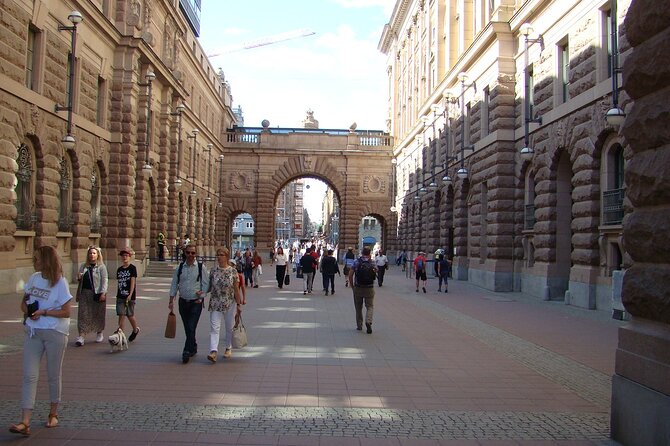
From the Opera House, the walk moves toward Parliament House, or Riksdagshuset. The building dates from 1897 to 1905 and combines Neo-Renaissance design with a Neo-Baroque facade.
The building is more than a handsome photo stop. Your guide explains how Sweden’s political system changed over time. The old Riksdag of the Estates brought together Nobility, Clergy, Burghers, and Peasants, with each group meeting separately before discussions with the king. That system ended in 1866.
Sweden later introduced a two-chamber parliament, though voting rights were not equal for all citizens. General suffrage arrived in 1921 after a long political effort by liberals and socialists. In 1975, the two chambers became one, and the king’s role was confirmed as representative rather than governing.
I find this part useful because it gives context to the buildings you are seeing. Instead of treating Parliament as another grand facade, you learn how Sweden moved from royal rule and social estates toward its modern political system. The stop lasts about 10 minutes and remains outside, with no admission included or needed.
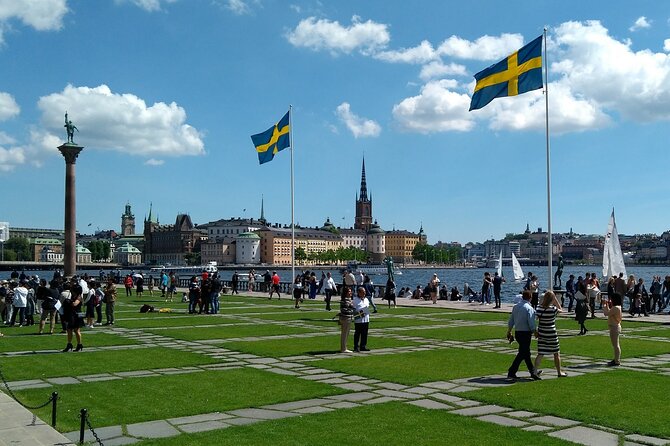
At Riksbron bridge, the views widen. You can look toward Riddarholmen, often called Knights Island, as well as the Prime Minister’s residence, government buildings, and the House of Nobility. Stockholm City Hall is also visible. It is the place associated with the annual Nobel Prize banquet, so this bridge offers several major city symbols in one sweep.
The bridge stop takes about 15 minutes. It is a good place to have your camera ready, though the guide’s explanation is more important than simply collecting another photograph.
Lejonbacken and the royal view
Lejonbacken, on the north side of the Royal Palace, is one of the tour’s best photo stops. The name refers to the lion-adorned ramps leading toward the palace, and the setting gives you an impressive look at the royal complex.
Here, the guide places Sweden’s architecture in the context of its former power. During the 17th and 18th centuries, Sweden was a major force in Northern Europe. You also see the Royal Garden and its statue of Karl XII, remembered as the last of Sweden’s warrior kings.
Look to the right for the Financial District, much of it built around the turn of the 20th century. That period brought a flowering of architectural styles, and the contrast between older royal buildings and later commercial architecture is part of what makes central Stockholm rewarding to walk.
The Grand Hotel is another nearby landmark. It is Stockholm’s most prestigious hotel and the place where Nobel laureates stay during the award ceremonies. The guide uses these details to link the city’s royal past with its modern cultural and financial identity.
This stop is scheduled for about 15 minutes. It is short enough to keep the tour moving, but you may want extra time for photographs. Since the walking route has several stops, the tour works best if you listen first and take quick pictures rather than trying to stage a long photo session at every location.
Slottsbacken and the Bernadotte dynasty
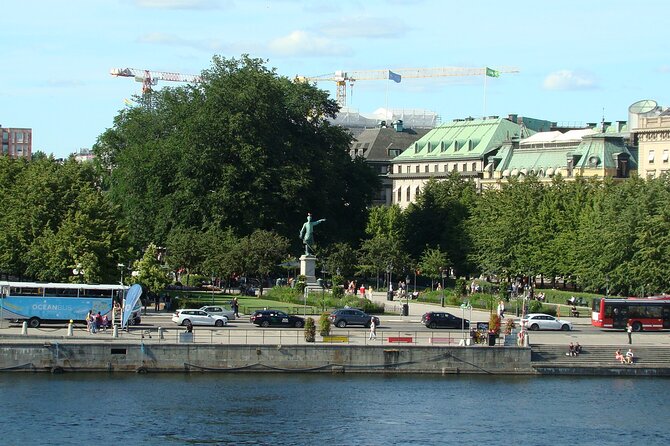
The route then passes the inner courtyard of the Royal Palace and makes a short visit to the Palace Chapel. This is where the Swedish royal family baptizes its children. The chapel adds a more personal royal detail after the grand facades and political institutions.
Outside the palace, a statue of Carl XIV Johan opens another story. He began his career in Napoleon’s army and was later adopted into the Swedish royal family. He became the first ruler of the Bernadotte dynasty, which still occupies the Swedish throne.
The story is unusual. Sweden brought him from France in hopes that he would help recover territory lost to Russia during the Napoleonic wars. Instead, he focused on diplomacy, infrastructure, and education. Sweden later marked 200 years of peace in 2014.
This is one of the better examples of the guide’s role. A statue can easily become a name and a date. With the story attached, you see how a foreign soldier became a Swedish king and how diplomacy helped shape the country that later developed into a welfare state.
The Slottsbacken stop takes about 10 minutes. The route is not a full palace tour, so book this experience for an exterior introduction and historical explanation, not for royal rooms or exhibitions.
More Private Walking Tours in Stockholm
- Best of Stockholm Walking Tour-3 Hours, Small Group max 10 people
★ 5.0 · 645 reviews - Walking Tour of Stockholm’s Old Town, Gamla Stan
★ 5.0 · 451 reviews - Stockholm: Old Town Historical Walking Tour
★ 4.9 · 344 reviews - Stockholm: Old Town Guided Walking Tour (English / Deutsch)
★ 4.7 · 284 reviews
Stortorget, Stockholm’s most famous square
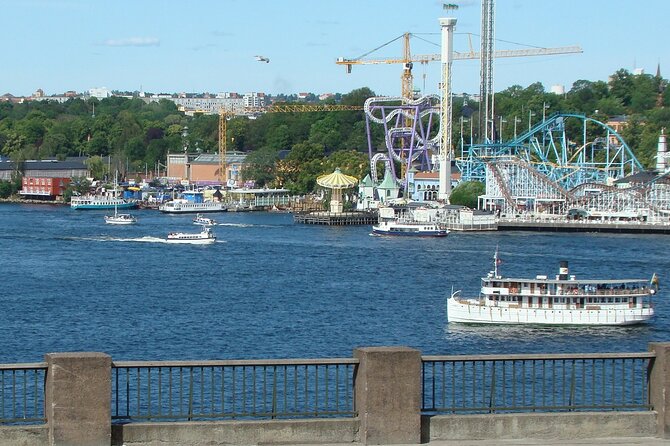
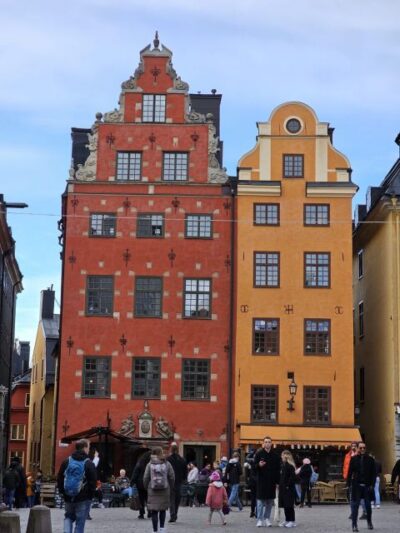
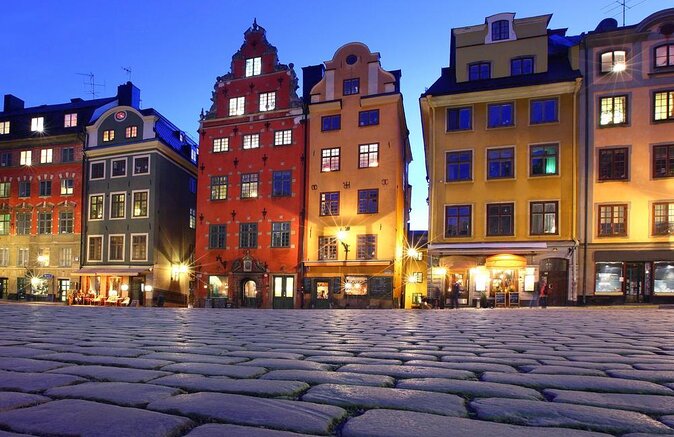
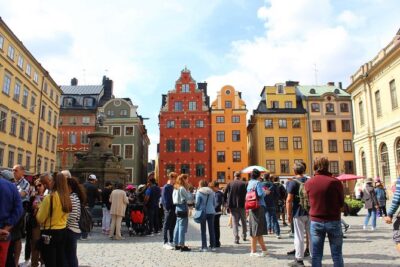
Stortorget is the center of Gamla Stan, Stockholm’s Old Town, and likely the most photographed place on the route. Tall, narrow buildings in Scandinavian Renaissance and 18th-century Classical styles surround the square, each painted a different warm shade.
The square also carries one of Sweden’s darkest political memories. In November 1520, around 100 noblemen and priests were beheaded here by the Danish king Christian II. In Sweden, he became known as Christian the Tyrant. The event is remembered as the Stockholm Bloodbath.
The guide’s explanation helps you read the square beyond its colorful buildings. It was not simply a picturesque market space. It was also a place where the struggle between Denmark and Sweden took a brutal turn.
The Nobel Prize Museum sits on Stortorget. The Swedish Royal Academies and other committees select winners of the prizes in science, literature, and other fields. The museum is not included in the walking tour, but knowing where it is makes this a useful point for planning a later visit.
You spend about 15 minutes here. The square can be crowded, and the narrow streets that follow are not suited to a fast pace. Comfortable shoes matter more than dressy footwear on this tour.
Köpmangatan and the medieval Old Town
From Stortorget, the walk follows Köpmangatan, or Merchants Street. Written records mention this street as early as 1350, giving you a direct connection to medieval Stockholm.
The guide leads you through narrow alleyways where the Old Town feels less like a collection of landmarks and more like a lived-in historic district. You continue along Österlånggatan before heading down to Skeppsbron, the waterfront where ships have loaded cargo since the 17th century.
This section is the heart of the walking experience. The larger sights are important, but the side lanes show why Stockholm’s Old Town is often described as one of Europe’s best-preserved medieval city centers. The pleasure is in the scale: close walls, uneven-looking old streets, small turns, and sudden openings toward the water.
You should expect roughly two hours of walking in total, with regular stops. The tour requires moderate physical fitness, though guides such as Bengt have been praised for keeping a comfortable pace and staying attentive to the group.
Bengt is especially well suited to visitors who enjoy history and questions. He is described as clear, entertaining, and able to keep a group of nine engaged. Natalie is also praised for patience and for adjusting the walk to the group’s pace. The guide can also suggest places to visit and eat after the tour, which is useful if this is your first morning or afternoon in Stockholm.
Boarding at Strömkajen for the canal ride
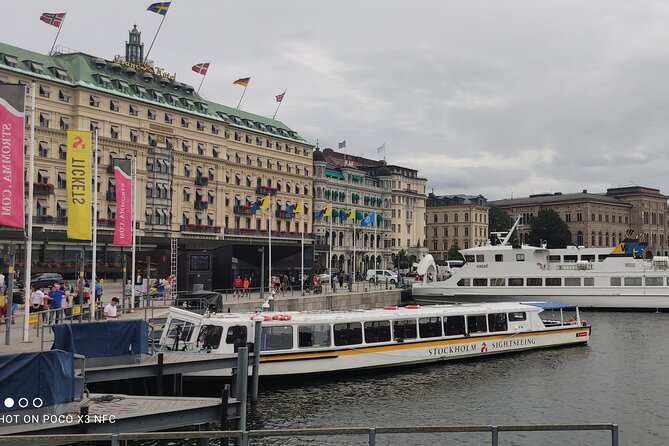
The walking portion ends near Strömkajen, where the Royal Canal Tour operated by Stromma begins. This transition is simple in concept: the guide gets you to the boat, then the walking guide portion ends and the audio-guided cruise takes over.
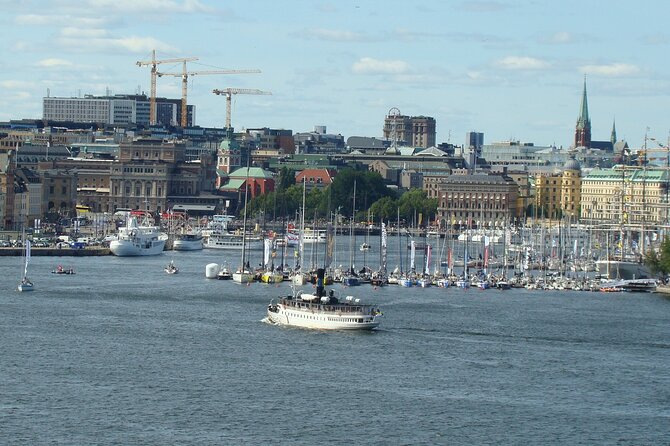
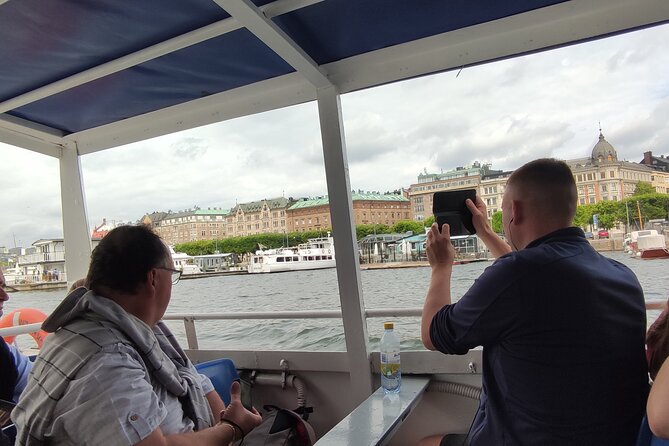
The boat ride lasts about 50 minutes and travels through the Djurgårdsbrunn Canal. This is the quieter half of the experience. After the palace courtyards, bridges, and narrow streets, you can sit back and see Stockholm from a different angle.
The canal provides views of the city skyline and a more peaceful side of Stockholm. This is not a fast sightseeing cruise built around a long list of stops. It is a chance to rest your feet, watch the shoreline, and understand why water is central to the city’s character.
English audio is available, along with Spanish, Chinese, Estonian, Finnish, French, German, Italian, and Russian. Headphones are available, and seats in the front half of the boat have headphone sockets. You can also use your own earphones.
The audio setup is the main weak point. Some passengers have had trouble hearing the commentary through a QR code link on a mobile phone. I would not rely on the phone speaker. Use the provided earphones, bring your own if you have them, and ask the crew about the seat headphone sockets before the boat leaves.
You should also keep your expectations sensible about photography. Some parts of the boat may not provide the open-air views you hope for, and access to the outside can be limited. The canal ride is still pleasant, but the walking section is the stronger part of the package for most history-minded visitors.
Coffee, cinnamon rolls, and the value of the boat
The boat bar sells Swedish fika, including coffee and a cinnamon roll, as well as tea, soft drinks, pastries, beer, wine, sandwiches, and snacks. Fika is a small but fitting detail. It gives you a chance to try a familiar Swedish custom while the city passes outside.
Food and drinks are not the reason to book the tour, and the available purchases are separate from the tour price. Still, the bar makes the final 50 minutes more comfortable, particularly after a morning of walking.
At $135.16 per person, the price deserves careful thought. You are paying for a small-group walking tour, an English-speaking guide, and the included canal cruise. The maximum group of 10 is a real advantage over a large city tour, since it makes questions and a steady pace more practical.
The price is harder to justify if you mainly want a boat ride or if you already know the Old Town. The canal cruise can be booked as a separate type of city activity, and the walking route covers public streets and exterior sights rather than paid palace interiors. For a first visit, the combination saves you from arranging two separate introductions. For a budget-conscious visitor, it may feel expensive for a three-hour experience.
Where the tour ends and what to do next
The boat docks at Södra Blasieholmshamnen 9, close to Kungsträdgården. This is a useful ending point rather than an isolated harbor, since you can continue into the central city or take the tram toward Djurgården.
Djurgården is Stockholm’s museum island. From there, you can reach the Vasa Museum, Viking Museum, ABBA Museum, Skansen open-air museum, and other popular attractions. The tour does not include admission to these places, but the ending location makes it easy to continue sightseeing.
I like the timing of the finish. You get an orientation before tackling Stockholm’s larger museums, and your guide may suggest what to do next. If you are staying several days, schedule this tour early so the route helps you understand the rest of the city.
The tour is offered in English and uses a mobile ticket. It is near public transportation, and confirmation is sent at booking. The stated duration is approximately three hours, though some schedules describe the walking portion as about two hours followed by the 50-minute cruise.
Who should book this Stockholm tour?
I would book this for a first visit, especially if you want a clear introduction without spending a full day on your feet. The route brings together royal Stockholm, government, medieval streets, Nobel connections, and the city’s waterways in one compact outing.
It also suits families and small groups who prefer a personal guide. Bengt and Natalie receive especially strong praise for explaining clearly, answering questions, and keeping the pace manageable. The small group limit makes that personal approach more likely.
I would think twice if you need extensive open-air boat photography, live commentary throughout the cruise, or the lowest possible price. The boat audio can take some effort to set up, and the water portion is less distinctive than the Old Town walk.
Final verdict: a strong first look, at a premium price
This combined tour works because Stockholm is best understood from both street level and the water. The walk is the clear star, with excellent stops at Stortorget, Lejonbacken, the Royal Palace, Parliament, and the old lanes around Köpmangatan.
The boat ride adds a welcome pause and a quieter view of the city, but it should be treated as a pleasant second act rather than the main event. Book it early in your stay if you value a small group, strong historical guidance, and an easy way to connect central Stockholm with the canal. Skip it if $135.16 feels high for mostly exterior sights and an audio-guided cruise.
FAQ
How long does the Stockholm walking and boat tour last?
The experience lasts approximately three hours. The walking portion takes about two hours, followed by a canal boat ride of about 50 minutes.
Where does the tour begin?
It begins outside the Royal Swedish Opera at Gustav Adolfs torg 2 in Stockholm.
Where does the tour end?
The boat ends at Södra Blasieholmshamnen 9, near Kungsträdgården.
Is the tour offered in English?
Yes. The walking tour is offered in English. The boat audio guide is also available in English, Spanish, Chinese, Estonian, Finnish, French, German, Italian, and Russian.
What sights are included on the walking route?
The route includes the Royal Swedish Opera, Parliament House, Riksbron bridge, Lejonbacken, Slottsbacken, the Royal Palace area, Stortorget, Stockholm’s Old Town, Köpmangatan, Österlånggatan, and Skeppsbron.
Is admission to the Royal Palace or Nobel Prize Museum included?
The tour includes exterior sightseeing and a short visit to the Palace Chapel. Admission to the Royal Palace and Nobel Prize Museum is not listed as part of the experience.
How large is the tour group?
The tour has a maximum of 10 people.
Is the boat audio guide included?
Yes. The boat tour and its audio guide are included. Headphones are available, and headphone sockets can be found by seats in the front half of the boat.
Can I cancel for a full refund?
Yes, if you cancel at least 24 hours before the experience start time. Cancellations or changes made less than 24 hours before the start are not refunded or accepted.
More Walking Tours in Stockholm
- Stockholm: Ghost Walk and Historical Tour
★ 4.7 · 2,206 reviews - The Nordic Food Walk Stockholm
★ 4.5 · 642 reviews - Stockholm: Old Town Walking Tour, stories and secrets
★ 4.8 · 275 reviews - Stockholm Old Town and the Vasa Museum, a Small Group Walking Tour.
★ 5.0 · 113 reviews
Just added around Stockholm
- Stockholm: Evening Wildlife Safari with Midsummer Meal★ 4.2 · 130 reviews
- World War II Stockholm Old Town Walking Tour and Army Museum★ 4.6 · 4 reviews
- Stockholm: Archipelago Guided Boat & Walking Tour of Vaxholm★ 3.1 · 23 reviews
- Stockholm: Archipelago Islands Kayak Tour and Outdoor Picnic★ 4.9 · 150 reviews
- Vaxholm & Stockholm Archipelago: Guided Excursion, Day Trip★ 4.8 · 41 reviews
- Stockholm: Underground Metro Art Ride with a Local Guide★ 4.6 · 39 reviews
- Scandinavian Art, Architecture and Design Tour in Stockholm★ 4.5 · 11 reviews
- Stockholm: Sunset Hike in Tyresta National Park with Meal★ 5.0 · 79 reviews
Old Town Walking Tours, compared.
The Original Stockholm Ghost Walk and Historical Tour – Gamla Stan
Read our review →
Walking Tour of Stockholm’s Old Town, Gamla Stan
Read our review →
Old Town Guided Walking Tour (English / Deutsch)
Read our review →