
Reviewed · COPENHAGEN TOURS
The Art of Baking Danish Pastry
The best part of this Copenhagen experience is the sheer amount of pastry you make. In about three and a half hours, chef Frederik Terrible leads you through dough work, fillings, shaping, and baking, and you leave with enough treats to fill two boxes. I like the useful, hands-on format, and I like that the recipes arrive by email instead of disappearing with the last cinnamon roll.
The small group, capped at 12 people, gives Frederik time to check each person’s work. The only real caution is practical: the class moves quickly, the directions can come fast, and you may produce far more pastry than you can eat during your Copenhagen stay.
In This Review
- Key points
- A pastry morning in Frederiksberg
- What Frederik teaches before the baking begins
- Making kanelsnegle, Spandauer, and seed twists
- Why the class feels busy, not padded
- Coffee, tasting, and a mountain of pastries
- The value of learning Danish pastry at home
- Getting to Grundtvigsvej 10A
- Who should book this class
- A few practical cautions before booking
- Should you book The Art of Baking Danish Pastry?
- FAQ
- Where does the Danish pastry class take place?
- What time does the class start?
- How long does the experience last?
- What pastries will I make?
- Is the class taught in English?
- How many people can join the class?
- Do I get to eat the pastries?
- Can I take pastries home?
- Will I receive the recipes?
- Can I cancel or change my booking?
Key points
- Three and a half hours of hands-on baking: You work with the dough rather than simply watching a demonstration.
- Chef Frederik Terrible teaches the class: His approach combines clear instruction, humor, and close help at the worktable.
- Make several Danish favorites: The menu includes kanelsnegle cinnamon rolls, Spandauer Danish pastry, and poppy seed and sesame seed twists.
- Expect a serious pastry haul: Many participants leave with roughly a dozen pastries each, or even more depending on the group’s production.
- Morning timing works well: The 9:00 am start leaves most of your day open for Copenhagen sightseeing.
- Useful take-home value: Recipes and instructions are emailed after class, giving you a chance to repeat the techniques at home.
A pastry morning in Frederiksberg
This is not a quick pastry tasting. At Terrible French Pastry School, you spend the morning making Danish pastries from start to finish at Grundtvigsvej 10A in Frederiksberg, west of central Copenhagen.
That setting matters. You are outside the thickest cluster of central sights, in a neighborhood that feels like part of everyday Copenhagen rather than a purpose-built tourist stop. The school is near public transportation, but allow time to find the entrance. One useful detail is that the actual door may be around the other side of the street from where Apple Maps or Google Maps directs you.
The class begins at 9:00 am and lasts about three hours and 30 minutes. That is a long morning, but it is well used. You are kept busy with dough, fillings, trays, shaping, and baking rather than sitting through a long lecture.
The group limit is 12 people. That is small enough for Frederik to move around and help, while still giving the class a social feel. You may be working beside couples, families, solo food lovers, and people who have never baked Danish pastry before.
Other Copenhagen days people book alongside this one:
- Copenhagen: Canal Cruise with Guide
★ 4.6 · 9,115 reviews - Copenhagen: Hop-On Hop-Off Bus Tour with Boat Tour Option
★ 3.9 · 4,122 reviews - Private Walking Grand Tour of Copenhagen
★ 5.0 · 3,953 reviews
What Frederik teaches before the baking begins
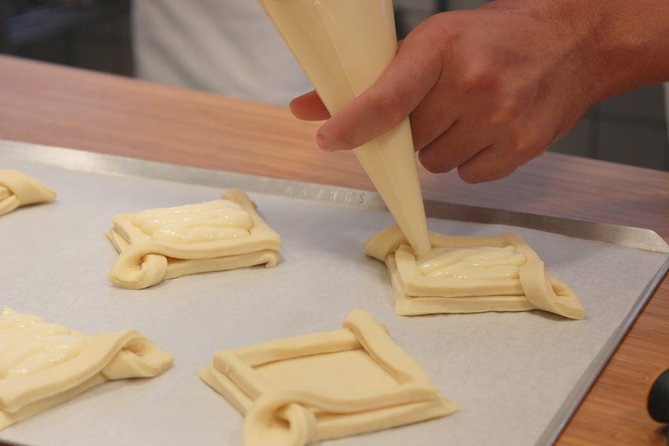
The first stage covers the basic handling of pastry dough. Frederik demonstrates how to knead, roll, and fold it, then shows you how those techniques affect the final texture.
These steps are easy to underestimate. Danish pastry depends on careful handling, and rolling or folding too roughly can change the result. The class gives you a chance to see the process clearly, then repeat it with your own hands while the instructions are fresh.
Frederik’s teaching style is direct and energetic. He is described as patient, organized, funny, and firm, which is a useful combination in a practical class. You get enough explanation to understand what you are doing, but you are not left waiting while someone talks about pastry for hours.
Pay close attention when the dough and fillings are being assembled. Frederik can speak quickly while giving directions, especially when the whole group is at a busy stage. If you are unsure, ask at once. He checks on participants as they work, and one late arrival was able to catch up without missing the main parts of the class, but arriving on time will make your morning easier.
Making kanelsnegle, Spandauer, and seed twists
The listed menu includes three classic Danish pastries, each with a different shape and character.
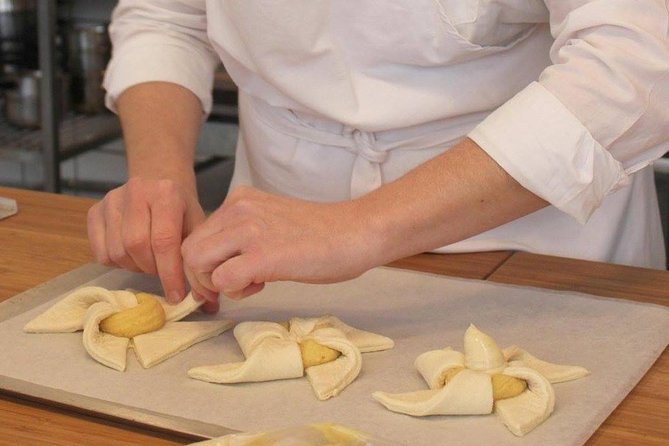
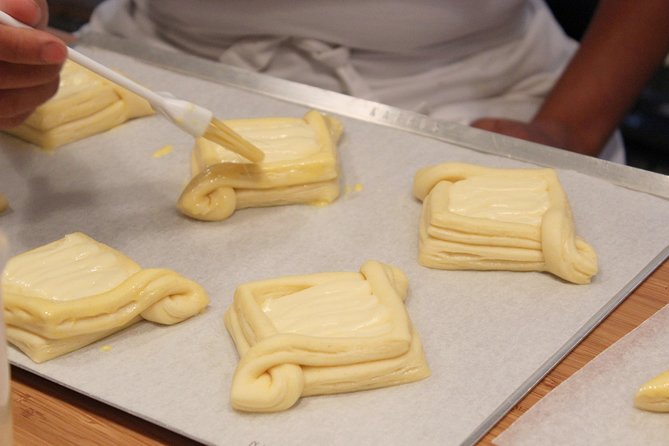
Kanelsnegle, or cinnamon rolls, are the familiar crowd-pleaser. You work with the dough, add the filling, roll it, and shape the individual pastries before baking. This is a good first pastry because the steps are easy to follow, yet the finished result still rewards careful work.
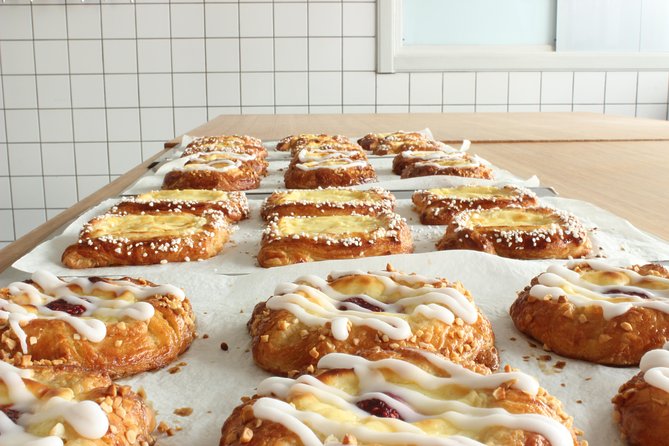
Spandauer brings a different shape and style to the table. Danish pastry is not one single recipe, and this open, filled form helps show how the same dough can become something quite different through shaping and filling.
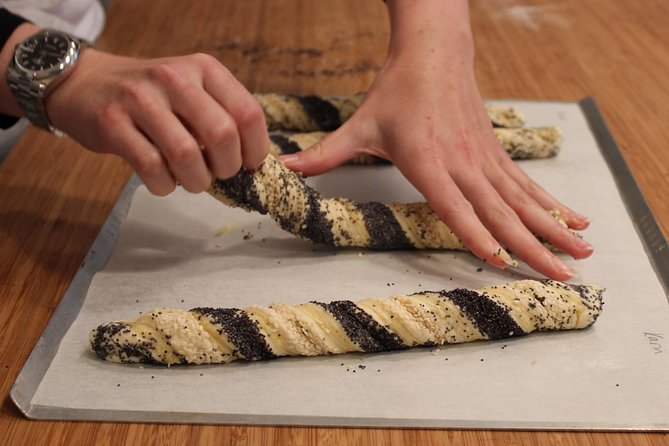
The poppy seed and sesame seed twists, called frøsnapper, are especially memorable if you enjoy a pastry with a little more texture and a less expected flavor profile. The combination of seeds and marzipan has proved popular with participants, and it gives you a useful contrast to the sweeter cinnamon roll.
Some accounts of the class describe making four types of pastry, while the supplied menu lists these three. The safest expectation is several varieties, with the exact selection potentially changing during the year. One useful point is that the pastries may not be identical at every class, so a return visit could offer something different.
You do not simply watch Frederik shape the pastries. The class is hands-on, with step-by-step work at your own station and assistance when needed. That makes the experience a better fit for you if you want to learn a repeatable method rather than collect a few photographs.
Why the class feels busy, not padded
Three and a half hours can sound long for a baking activity. Here, the time is filled with practical work. You move from instruction to preparation, then from shaping to baking and tasting.
The organized setup helps. Ingredients and preparation are arranged so beginners can follow the process without having to solve every kitchen problem from scratch. That does not remove the work, but it lets you focus on the techniques.
I like this balance. A class for complete beginners can become either too slow or too vague. This one appears designed to keep the group moving while still giving the chef time to step in. You will need to listen, copy the demonstrated method, and keep pace with the rest of the room.
The tradeoff is that this is not a relaxed coffee morning with a little baking added. Your hands and attention are occupied for much of the session. If you want a quiet activity, choose a café instead. If you enjoy learning by doing, the pace is part of the appeal.
Same fjord country, a very different day out:
- From Copenhagen: Lund and Malmö 2-Country Tour
★ 4.7 · 2,772 reviews - Copenhagen Highlights Walking Tour
★ 5.0 · 2,324 reviews - Copenhagen: Highlights 3 Hour Bike Tour with a Local Guide
★ 4.8 · 2,312 reviews - Hamlet and Sweden Tour – Two Countries in one day !
★ 5.0 · 2,223 reviews
Coffee, tasting, and a mountain of pastries
Once the pastries have baked, tea and coffee are served and you can taste the results. This is the satisfying payoff, but it is not the only food you receive.
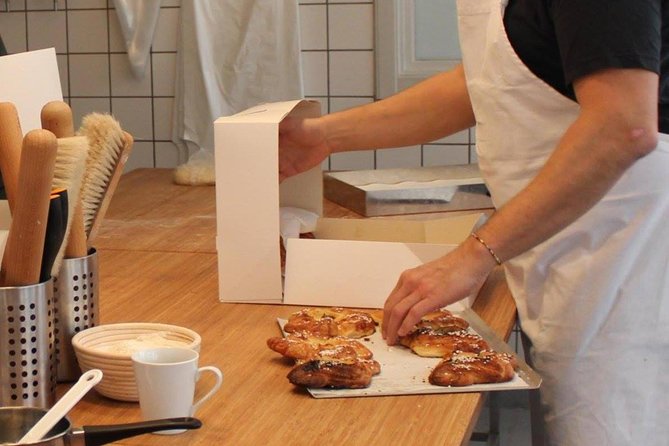
Plan on taking home a large quantity. Several participants describe leaving with two full boxes, and one group calculated about 36 pastries for three people. Another practical estimate is roughly 12 pastries per person, though the final amount can vary.
That is excellent value for anyone who enjoys baking and sharing. You can bring treats back to your family or friends, offer them to fellow holiday companions, or save some for later in your stay. It also creates one small planning problem: do not schedule the class immediately before a flight unless you have a plan for carrying or giving away the pastries.
The same issue applies if you are staying in Copenhagen for only a short time. Doing the class near the end of your trip can be a lovely finish, but you may have little time to eat what you make. If you want to enjoy the pastries over several days, book the class earlier in your stay.
The boxes are not just a bonus. They change the value calculation. At $117.23 per person, the class costs more than a standard bakery breakfast, but you receive instruction, drinks, several baked goods, and a large take-home supply. For a food-focused visitor, that makes the price easier to justify.
The value of learning Danish pastry at home

The most useful souvenir is not the box. It is the recipe email sent after class.
You receive the recipes used in the session, along with instructions that let you try the pastries again. Some participants also received alternative recipes to test at home. This gives the class a longer life than the morning itself.
That matters because pastry technique improves through repetition. You may not produce perfect folds on your first attempt, but you will have seen the process, shaped the dough, and tasted the result. Back home, you can work more slowly and compare your own results with what you learned in Copenhagen.
The class is also a good introduction to Danish food culture through a very specific local tradition. You are not just buying a pastry from a display case. You are learning how the dough is handled and how different shapes create different finished pastries.
For serious home bakers, the recipes may be the main reason to book. A professional chef who teaches clearly can save you a great deal of trial and error. For beginners, the class provides a friendly way to discover if Danish pastry is worth the effort before investing in special ingredients or equipment.
Getting to Grundtvigsvej 10A
You need to make your own way to Grundtvigsvej 10A, 1864 Frederiksberg, Denmark. The class ends at the same meeting point.
Frederiksberg is west of Copenhagen’s city center and is served by public transportation. The activity information does not specify one required bus or train route, but you should check the route from your accommodation before leaving. One useful local tip is to allow extra minutes for the final approach, since the entrance can appear on the opposite side of the street from the map pin.
The 9:00 am start means you should not treat this as a sleep-in morning. Set out early enough to find the building without rushing. Being late may be manageable, but the class is active from the beginning and catching up is less pleasant than starting with everyone else.
Since you finish back at the meeting point, you can continue exploring Frederiksberg or head into central Copenhagen afterward. The early schedule is one of the experience’s practical strengths. You get a substantial food activity without giving up the afternoon.
Who should book this class
This class suits you best if you enjoy food, want a social activity, or prefer learning a skill to watching a staged demonstration.
It is especially good for:
- Couples looking for a shared morning activity
- Families with older children who can follow kitchen instructions
- Beginner bakers who want clear guidance
- Experienced home cooks looking for Danish recipes
- Visitors who enjoy taking edible souvenirs home
- Food lovers who want something beyond the usual sightseeing route
The small group helps solo participants fit in, since the work naturally creates conversation. The class also works well for a group of friends, though you should agree in advance what to do with the pastries afterward.
You do not need to arrive as an expert. The structure is designed for novices, and the chef assists when people need help. You do need to be ready for a fast pace and hands-on work.
A few practical cautions before booking
The experience is non-refundable and cannot be changed for any reason after booking. If you are uncertain about your schedule, think carefully before paying.
Confirmation is sent within 48 hours, subject to availability. The class requires a minimum number of participants. If the provider cancels because that minimum is not reached, you are offered another date or experience, or a full refund.
The activity is offered in English. The group maximum is 12 people, and the experience has received a 5.0 rating with 99 percent of participants recommending it, based on 276 ratings.
The main physical and logistical issue is not the baking itself. It is carrying the finished pastries. Bring a practical way to transport the boxes, and avoid booking it when you will have no chance to share or eat them.
Should you book The Art of Baking Danish Pastry?
I would book this if you want a useful, tasty morning and are happy to make your own entertainment with flour, dough, and a fair amount of listening.
The strongest reasons are Frederik Terrible’s clear, good-humored instruction, the small group, the hands-on format, and the generous amount of pastry you take away. The emailed recipes add real value, especially if you want to recreate the experience at home.
Skip it if you dislike structured classes, have difficulty with a fast set of instructions, or cannot carry several boxes of baked goods. Also think twice if your Copenhagen schedule is uncertain, since the booking cannot be refunded or amended.
For most food lovers, the $117.23 price is reasonable because you are paying for a full class, professional guidance, refreshments, several pastries, and take-home treats. Book early if your dates are fixed, since the activity is often reserved about 70 days ahead.
FAQ
Where does the Danish pastry class take place?
It takes place at Terrible French Pastry School, Grundtvigsvej 10A, 1864 Frederiksberg, Denmark.
What time does the class start?
The class starts at 9:00 am.
How long does the experience last?
It lasts approximately three hours and 30 minutes.
What pastries will I make?
The listed pastries are cinnamon rolls called kanelsnegle, Spandauer Danish pastry, and poppy seed and sesame seed twists called frøsnapper.
Is the class taught in English?
Yes. The experience is offered in English.
How many people can join the class?
The maximum group size is 12 people.
Do I get to eat the pastries?
Yes. After the pastries finish baking, tea and coffee are served and you can taste what you made.
Can I take pastries home?
Yes. You can take your baked goods with you, and the quantity may be substantial, often around a dozen pastries per person.
Will I receive the recipes?
Yes. The recipes used in class are emailed to you after the experience.
Can I cancel or change my booking?
No. The experience is non-refundable and cannot be changed for any reason. If the provider cancels because the minimum number of participants is not met, you are offered another date or experience, or a full refund.
Just added around Copenhagen
- a day at North Zealand Castle Tour★ 4.5 · 19 reviews
- Copenhagen Walking Tour with Food Testing (smorrebrod dish & snap)★ 4.5 · 10 reviews
- walking tour – Copenhagen and Christiansborg 3 hours★ 4.0 · 7 reviews
- The Hunt For The Six Forgotten Giants★ 5.0 · 45 reviews
- The Philosopher’s Last Walk: An audio tour on the life of Søren Kierkegaard★ 4.5 · 5 reviews
- The Six Forgotten Giants Trolls Hunt with Minibus★ 4.5 · 27 reviews
- Malmö Full Day Private Trip, Sightseeing Tour & Lunch Option★ 5.0 · 93 reviews
- The Forgotten Giants Private Tour★ 5.0 · 3 reviews
Copenhagen Tours, compared.
Hop-On Hop-Off Bus Tour with Boat Tour Option
Read our review →
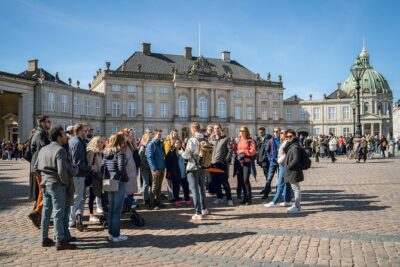

Highlights 3 Hour Bike Tour with a Local Guide
Read our review →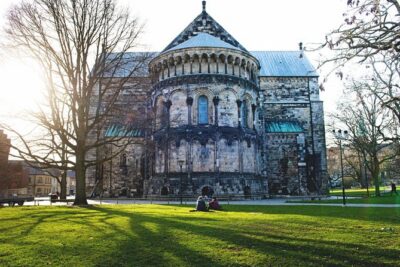
Hamlet and Sweden Tour – Two Countries in one day !
Read our review →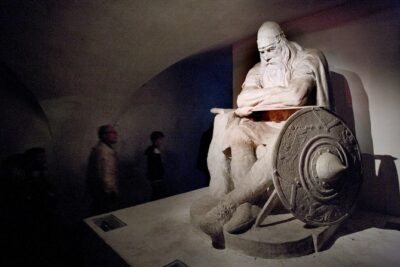
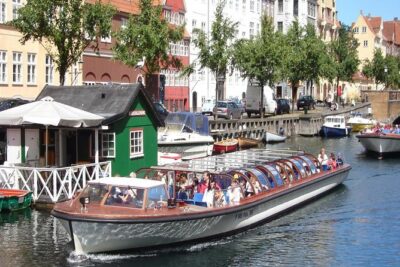
Copenhagen Sightseeing Classic Canal Tour With Live Guide
Read our review →Browse the lists this tour appears in