
Reviewed · WALKING TOURS
Uppsala’s biggest attractions – 1h city walk in Uppsala city.
Uppsala’s past gets wonderfully strange on this compact city walk. You’ll hear how a builder went bankrupt decorating the University House, why Olof Rudbeck’s anatomical theater had no ventilation, and how the city was cleared before Queen Kristina’s coronation, only for the ceremony to move to Stockholm.
I like the tour’s strong mix of major sights and odd details, from the cathedral’s medieval construction troubles to the student prison in the Consistory House. I also like that an authorized local guide, such as Anette or Jonathan, can connect famous names like Linné, Celsius, and Rudbeck to actual buildings and streets. The main drawback is pace: at $91.75 for about an hour, this is a costly short walk, and one past participant felt there was more standing and pointing than walking.
In This Review
- Key points to know before you book
- Uppsala in one short, story-filled walk
- University House and rune stones: where the tour begins
- Gustavianum and Rudbeck’s unusual theater
- Uppsala Cathedral and its construction scandals
- St. Erik’s Square and the university city within the city
- Uppsala Castle and the view over the Botanical Garden
- What the price means for a one-hour experience
- Guides, pace, and the best way to enjoy it
- Who should book this Uppsala walk?
- Should you book it?
- FAQ
- Where does the Uppsala city walk begin?
- Where does the tour end?
- How long does the walk last?
- How much does the tour cost?
- Is a mobile ticket available?
- What sights are included in the route?
- Are admission tickets included?
- How large is the group?
- Is the walk suitable for everyone physically?
- Can I cancel for a full refund?
- Are service animals allowed?
- Is the tour near public transportation?
- What happens if the tour does not meet its minimum number of people?
Key points to know before you book
- University stories come first: Begin with the University House, campus rune stones, and the university’s rivalry with Denmark.
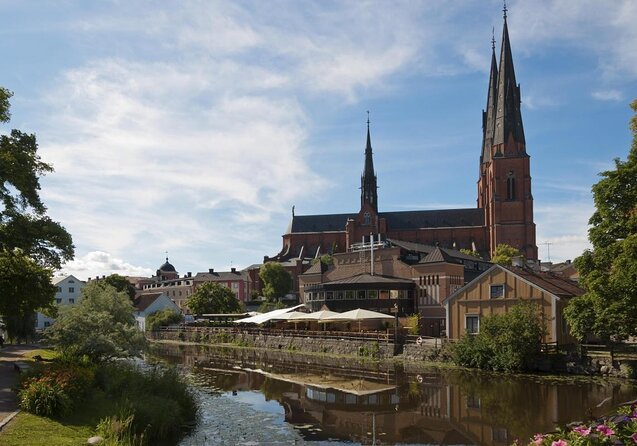
- The cathedral is the center of the walk: Spend about 20 minutes on the Nordic countries’ largest cathedral and its construction scandals.
- Uppsala’s oddest room gets attention: Learn about Rudbeck’s anatomical theater and its clever design, including its missing ventilation.
- The castle gives you a wide view: Hear the story of a murder at Uppsala Castle while looking toward the Botanical Garden.
- The tour is short but information-heavy: The listed stops total about 75 minutes, although the experience is described as approximately one hour.
- Costs need a close look: The price is $91.75 per person, with taxes and fees included, but some admission tickets and gratuities are extra.
Uppsala in one short, story-filled walk
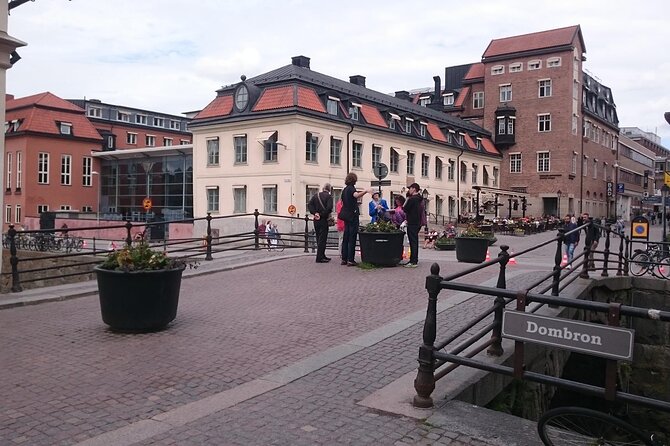
This walk is built around the compact historic core of Uppsala. You start at Riddartorget, then move through the university area, the cathedral quarter, St. Erik’s Square, and Uppsala Castle before returning to the starting point.
That route gives you a useful first look at the city’s main institutions. Uppsala is not presented only as a university town or only as a church city. Instead, you get the collision of royal power, religious authority, student life, science, medicine, and local gossip.
The guide is an authorized Uppsala guide, and that matters here. Much of the pleasure comes from small links between places: a building tells you about a person, a person explains a change in the university, and the university helps explain why the city developed as it did.
The walk is best for people who enjoy stories more than photo stops. You will hear plenty of information in a short time, so I would not treat this as a relaxed stroll with long breaks. The supplied timing suggests 15 minutes at the University Main Building, 10 minutes at Gustavianum, 20 minutes at the cathedral, 10 minutes around St. Erik’s Square and the county area, and 20 minutes at the castle. Since those figures add up to about 75 minutes, the actual pace may vary.
A few more Scandinavia trips to weigh up
- Private Walking Grand Tour of Copenhagen
★ 5.0 · 3,953 reviews - Copenhagen Highlights Walking Tour
★ 5.0 · 2,324 reviews - Stockholm: Ghost Walk and Historical Tour
★ 4.7 · 2,206 reviews
University House and rune stones: where the tour begins
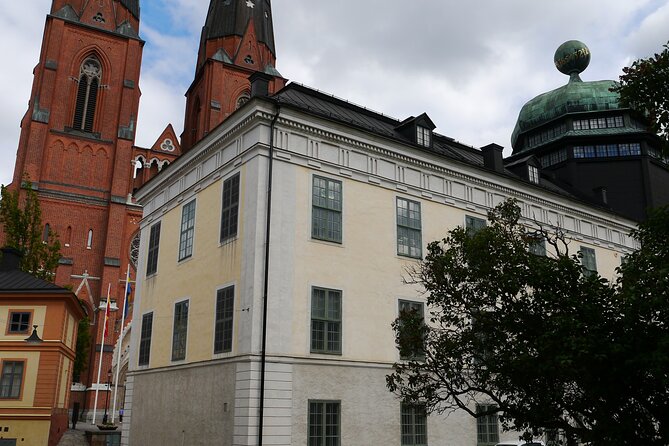
The first stop takes you to Uppsala University’s Main Building, commonly known as the University House. This is a good opening because it introduces two themes that run through the entire walk: education as a source of power and buildings as evidence of ambition.
You’ll hear about the builder who went bankrupt because of the building’s decorations. It is a fine example of the kind of practical story that makes architecture easier to remember. Instead of simply looking at an impressive facade, you learn what the project cost one person.
The university park adds another layer with its rune stones. These stones connect the modern university setting with a much older Scandinavian past. They also remind you that Uppsala was important long before its university was founded.
The guide also explains the university’s founding in connection with the desire to be better than the Danes. That rivalry gives the institution a political purpose, not just an academic one. You begin to see the university as part of Sweden’s national ambitions.
This stop is free of admission charges. You should expect explanation and outdoor viewing rather than a long interior visit. If you want a detailed look at the University House itself, the one-hour format may feel too brief, but it works well as an introduction.
Gustavianum and Rudbeck’s unusual theater
The walk then turns to Gustavianum, Uppsala University’s museum building. The admission ticket is not included, so the experience should be understood as a guided look at the building and its history, not necessarily a museum visit with entry.
The main story here concerns Olof Rudbeck and the anatomical theater he built. The theater was designed with impressive ideas about teaching and observation. Its weakness was basic but important: there was no ventilation.
That detail brings the past down to earth. Historical science was not a smooth march toward modern medicine. Clever design could exist beside very uncomfortable practical limits.
You’ll also hear about the party hall and the university’s collections. The collections grew so large that the hall had to move through two additional buildings before space could be found for everything. This is a useful reminder that a university is not only classrooms and professors. It is also books, objects, specimens, and institutional clutter.
The stop includes references to Academia Carolina, an older university building, along with major Uppsala figures such as Anders Celsius, Carl Linnaeus, and Rudbeck. The guide’s job is to make these names feel connected to the streets around you rather than leaving them as isolated textbook figures.
The drawback is clear: anyone hoping to enter Gustavianum and see its displays should confirm the admission arrangements before booking. The listed tour information specifically says the ticket is not included.
Uppsala Cathedral and its construction scandals
Uppsala Cathedral receives the longest listed stop, about 20 minutes. Built from the 1270s to the 1430s, it is described as the largest cathedral in the Nordic countries. Its scale gives the walk a strong visual center.
A short visit cannot cover every chapel, tomb, and work of art. What it can do is give you a framework for understanding the building. The cathedral belonged to a medieval religious world, but its construction also involved money, labor, and bad tempers.
You’ll hear about medieval buildings around the cathedral, including the houses used by canons. The guide also brings in the university and its early desire to compete with Denmark. That connection is helpful because it shows how the cathedral quarter was not isolated from academic and political life.
Then come the construction scandals. Limestone pipes were paid more than soldiers, leading to strikes. This is exactly the kind of detail that can wake up a stone building. You are not just looking at Gothic architecture. You are hearing about workers, wages, resentment, and the human problems behind a long building project.
The cathedral stop is free according to the tour details. Still, the amount of time spent inside or outside may depend on local conditions and the guide’s pacing. If cathedral interiors are your main interest, you may want to return later for a slower visit.
Same fjord country, a very different day out:
- Stockholm: City Archipelago Sightseeing Cruise with Guide
★ 4.3 · 10,798 reviews - Copenhagen: Canal Cruise with Guide
★ 4.6 · 9,115 reviews - From Bergen: The Original Fjord Cruise to Mostraumen
★ 4.7 · 8,440 reviews - Tromsø: Reindeer Sledding & Feeding with a Sami Guide
★ 4.8 · 6,417 reviews
St. Erik’s Square and the university city within the city
Around St. Erik’s Square and the Consistory House, the tour shifts from grand monuments to everyday control. You’ll hear about the plague’s arrival in Uppsala, the sale of meat at Oxblodstorget, and the sheds built into the wall surrounding the cathedral.
These details help you picture a crowded old city with practical needs pressed against religious buildings. Food had to be sold, storage had to be found, and public health was a constant worry.
The Consistory House offers one of the more revealing stories. During the 1750s, it contained a prison, police function, and administration for students. The university was, in effect, a city within the city. Students did not simply attend lectures and disappear. They belonged to a regulated community with its own rules and punishments.
The tour also touches on the years 1709 to 1711. The supplied information links this area with the university’s role during that period, though the exact amount of detail depends on the guide and available time. This is one reason to listen actively and ask questions if a subject catches your attention.
I like this part because it gives the walk social texture. The cathedral and university can seem lofty from a distance. Stories about meat sales, plague, police, and student discipline show how those institutions affected ordinary routines.
Uppsala Castle and the view over the Botanical Garden
The final major stop is Uppsala Castle. Here the tone turns political and dramatic. The guide tells you about a murder connected with the castle, then takes you into the courtyard.
From the courtyard, you look toward the Botanical Garden, described as one of the oldest botanical gardens in Europe. The view links royal power with scientific study, a fitting end after the earlier stories about Rudbeck, Celsius, and Linné.
The castle stop is listed as about 20 minutes, and admission is not included. You should check what access is available on the day if entering the castle is important to you. The walk still has value from the courtyard and viewpoint, but a paid interior visit would be a separate cost.
The castle also gives the guide a chance to explain Uppsala’s grandest urban failure. Before Queen Kristina’s coronation, the entire city was voluntarily demolished. The plan was to rebuild it in a more suitable form, but the work was not finished in time. The coronation was moved to Stockholm.
That story neatly captures Uppsala’s character in this tour: ambitious, historic, and occasionally undone by its own plans.
What the price means for a one-hour experience
At $91.75 per person, this is expensive for a walk lasting approximately one hour. Taxes and fees are included, which makes the final cost easier to understand, but gratuities are not included. Admission costs for Gustavianum and Uppsala Castle are also excluded.
The value depends on what you want from a guide. If you need a quick orientation and enjoy local anecdotes, the tour packs several centuries into a small area. You can learn the basic shape of Uppsala’s university quarter, cathedral district, and castle without arranging several separate visits.
If you mainly want a long walk, extensive interior access, or time for photographs, the price is harder to justify. One piece of feedback described the experience as having too much standing and pointing for a city walk, while other feedback praised the guide’s explanations and ability to answer questions. That difference matters. This is an interpretation-led walk, not a strenuous sightseeing circuit.
The small group limit helps. A maximum of 20 people is stated, so the guide should not be addressing a huge crowd. Even so, a group of 20 can feel sizeable in narrow historic spaces, and your experience may depend on where you stand during outdoor explanations.
Guides, pace, and the best way to enjoy it
Two guides named in the feedback are Anette and Jonathan. Anette was praised for handling questions, while Jonathan was able to add information that even some Uppsala residents had not heard before. You cannot assume which guide will lead your departure, but these examples show the kind of personal, question-friendly approach the tour aims for.
I would arrive ready to listen rather than rush from one landmark to the next. The best parts are the connections: the university’s anti-Danish purpose, Rudbeck’s theater, the cathedral’s labor disputes, and the castle’s failed coronation plans.
The walk requires a moderate level of physical fitness. It is near public transportation, and service animals are allowed. Since the meeting point and return point are both Riddartorget, the route is simple to fit into a day of sightseeing.
A mobile ticket makes arrival straightforward. The tour requires a minimum number of people, so it can be canceled if that minimum is not met. In that case, you are offered another date or experience, or a full refund.
Free cancellation is available up to 24 hours before the start time. Cancel later than that and the payment is not refunded, and changes made within 24 hours are not accepted. The cut-off follows local time in Uppsala.
Who should book this Uppsala walk?
I would recommend it to you if you are visiting Uppsala for the first time and want the main historical landmarks tied together by a local guide. It also suits residents who want a fresh look at familiar streets. Jonathan’s experience with Uppsala locals shows that the stories can go beyond the basic facts.
It is a good pick for history fans, university enthusiasts, and people who like unusual anecdotes. The murder at the castle, the missing ventilation in the anatomical theater, the student prison, and the failed coronation plan give you plenty to remember.
I would hesitate if you expect a full museum tour or a long, active walk. Gustavianum and Uppsala Castle have separate admission costs, and the walking time may feel limited because so much of the hour is spent listening.
Should you book it?
Book this tour if you value a sharp introduction to Uppsala’s institutions and personalities more than a slow-paced stroll. At $91.75, it is not a budget walk, but it can be worthwhile when you want a guide to make the cathedral, university, castle, and old streets fit together quickly.
Skip it if you mainly want independent sightseeing or full access to the museum and castle. For everyone else, especially first-time visitors with only a short stay, the unusual stories and compact route make this a useful first look at Uppsala.
FAQ
Where does the Uppsala city walk begin?
The tour begins at Riddartorget in Uppsala, Sweden.
Where does the tour end?
The activity ends back at the meeting point at Riddartorget.
How long does the walk last?
The tour is described as approximately one hour. The listed stop times add up to about 75 minutes, so the pace and exact duration may vary.
How much does the tour cost?
The listed price is $91.75 per person.
Is a mobile ticket available?
Yes. The experience includes a mobile ticket.
What sights are included in the route?
The route includes Uppsala University Main Building, the university park’s rune stones, Gustavianum, Uppsala Cathedral, St. Erik’s Square, the Consistory House, and Uppsala Castle.
Are admission tickets included?
Admission tickets are not included for Gustavianum or Uppsala Castle. The cathedral and the University Main Building stop are listed with no admission charge.
How large is the group?
The activity has a maximum of 20 people.
Is the walk suitable for everyone physically?
A moderate level of physical fitness is required.
Can I cancel for a full refund?
Yes. You can cancel at least 24 hours before the start time for a full refund. Later cancellations and changes are not accepted, and the amount paid is not refunded.
Are service animals allowed?
Yes, service animals are allowed.
Is the tour near public transportation?
Yes. The activity is near public transportation.
What happens if the tour does not meet its minimum number of people?
If the activity is canceled because the minimum is not met, you are offered a different date or experience, or a full refund.
Just added around Scandinavia
- Stockholm: Evening Wildlife Safari with Midsummer Meal★ 4.2 · 130 reviews
- Wilderness Tour with Snowmobile & Ice Fishing★ 4.9 · 28 reviews
- World War II Stockholm Old Town Walking Tour and Army Museum★ 4.6 · 4 reviews
- Vossevangen: Nærøyfjord Full-Day Guided Kayaking Trip★ 4.8 · 4 reviews
- West Sweden: Sea Kayak Delight in Nature Reserves★ 5.0 · 6 reviews
- From Svolvær: Whale Watching Day Trip to Andenes★ 3.8 · 27 reviews
- Voss: Thrilling Whitewater Rafting Guided Trip★ 4.6 · 56 reviews
- Voss: Family Rafting on the Vosso River★ 4.7 · 23 reviews
Walking Tours, compared.
Past & Present Small Group Guided Walking Tour
Read our review →
Walking Tour in Bergen of the Past and Present
Read our review →
The Original Stockholm Ghost Walk and Historical Tour – Gamla Stan
Read our review →
Group Walking Tour – City Highlights – 2 Hours
Read our review →Browse the lists this tour appears in