

Reviewed · PRIVATE WALKING TOURS
Walking Tour of Stockholm’s City Center
Stockholm reveals its character through grand public buildings, open squares, royal symbols, and everyday streets. This two-hour city-center walk links them in one easy introduction, beginning at Central Station and ending near the Royal Dramatic Theatre.
I like the low price, just $3.55, and the chance to ask an English-speaking guide about Swedish culture, city life, and local customs. I also like the route’s mix of politics, music, parks, shopping, and transport history. The main drawback is pace and sound: some people found the walk tiring, while street noise and occasional microphone trouble made parts hard to hear.
In This Review
- Key points to know before booking
- Starting at Central Station with Sweden’s railway story
- City Hall and the walk beside Stockholm’s water
- Drottninggatan, shops, and the everyday city
- Parliament Island and Sweden’s public institutions
- Kings, opera, and the ceremonial center
- Berzelii Park and the calm between landmarks
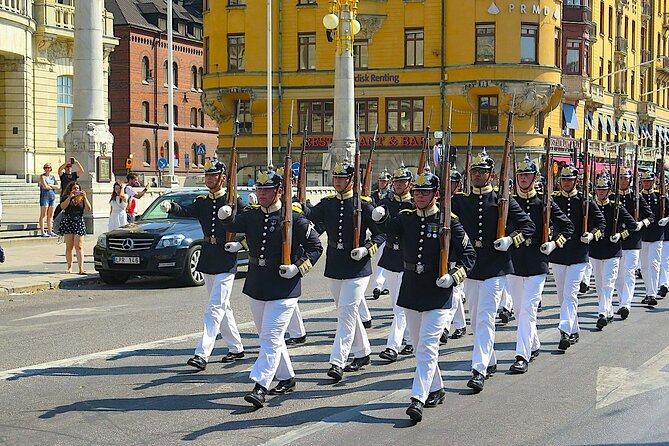
- Royal stables and the city’s ceremonial side
- Kungsträdgården, Charles XII, and public space
- Ending at the Royal Dramatic Theatre
- What the guides add, and where the tour can falter
- Is $3.55 really good value?
- Who should book this Stockholm walk?
- Should you book it?
- FAQ
- How long is the Stockholm city-center walking tour?
- Where does the tour begin?
- What time does the tour start?
- Where does the tour end?
- Is this a private tour?
- Is an English-speaking guide included?
- Are indoor admissions included?
- Is the tour accessible by public transportation?
- Can I cancel for a full refund?
Key points to know before booking
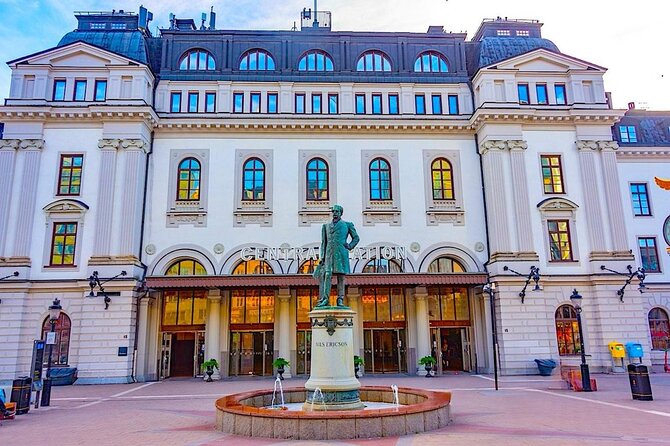
- A useful first-day orientation: The route connects Central Station with City Hall, Parliament, royal sites, shopping streets, and cultural venues.
- Outdoor sightseeing only: You view the buildings from outside, so indoor access to City Hall, the Opera, Parliament, or the theatre is not included.
- Public group of up to 27 people: You will not have a private guide, though some departures are smaller and allow plenty of questions.
- Guide quality can shape the experience: Stefan, Amon, Karl, Sophia, and Cim have led praised tours, but delivery and microphone quality may vary.
- A very low starting price: The fare is excellent value, but tipping is not included and may be an important part of the guide’s income.
- A practical finish: The walk usually ends at the Royal Dramatic Theatre, close to Nybroplan and useful public transport.
Starting at Central Station with Sweden’s railway story
Meet at Centralplan 15 outside Stockholm Central Station at 11:00 am. This is a practical meeting point if you have just arrived by train or are staying near Norrmalm, but a busy station forecourt can make it less relaxed than a quiet square.
The first stop is the statue of Nils Ericson, the Swedish engineer who helped modernize the country’s railways and canals. Sculptor John Börjeson created the bronze statue in 1893, and its location outside the station gives the tour a fitting opening: Stockholm’s growth is tied closely to transport, engineering, and movement.
You spend about five minutes here. That is enough for a quick explanation and a look at the monument, not a long art discussion. If you want detailed information about the station itself, ask your guide early, while the group is still close together and street noise is less of a problem.
More Private Walking Tours in Stockholm
- Walking Tour of Stockholm Old Town
★ 5.0 · 1,175 reviews - Stockholm: Old Town Walking Tour with Local Guide
★ 4.7 · 719 reviews - Best of Stockholm Walking Tour-3 Hours, Small Group max 10 people
★ 5.0 · 645 reviews
City Hall and the walk beside Stockholm’s water
Stockholm City Hall is one of the city’s most recognizable buildings. Its red brick, completed in 1923, is easy to spot, and the golden Three Crowns on the tower connect the building to Sweden’s national symbols.
Your guide explains its role in official life, including the Nobel Prize banquet. The Blue Hall and Golden Hall are inside, with the latter known for its mosaics, but this tour does not take you indoors. The tower is also not part of the experience, so you should plan a separate visit if you want interior rooms or high views over the city.
The scheduled stop lasts about ten minutes. That can work well for a first look, especially if your guide adds stories about Swedish public life rather than simply naming the building. One possible weakness is the route between Central Station and this part of the walk. A departure may spend a sizeable part of the first section reaching the second main stop, and one account found that stretch too long and dull.
Still, the City Hall stop is valuable because it gives you a clear reference point. You can return later for an indoor visit, a tower experience, or photographs from the waterfront.
Drottninggatan, shops, and the everyday city
Drottninggatan gives the walk a change of tone. This pedestrian shopping street runs from Gamla Stan toward Observatorielunden and combines shops, cafés, restaurants, older buildings, and modern city activity.
The ten-minute stop is not a shopping excursion. Instead, it lets you see how central Stockholm functions beyond royal palaces and official buildings. Ask about Swedish habits, prices, café culture, or the way locals use the center. Several guides have been praised for explaining city structure and daily life, which is where this kind of walk can become more useful than a simple parade of monuments.
Keep your expectations realistic. You will not have time to browse shops or settle into a café during the scheduled stop. The value is orientation. Once the tour ends, you will know where Drottninggatan begins and how it connects with other central districts.
Parliament Island and Sweden’s public institutions
The Parliament Building, or Riksdagshuset, occupies Helgeandsholmen in central Stockholm. Its neo-Gothic exterior dates from the period between 1897 and 1905, and architect Aron Johansson combined historic-looking details with the needs of a modern parliamentary building.
The group pauses here for about fifteen minutes, one of the longer stops. That makes sense. Parliament offers a chance to discuss how Sweden is governed, not just how the building looks. The guide can also point out the relationship between the island, surrounding waterways, and the government quarter.
Admission is not included, and the tour remains outside. Do not book this walk expecting a parliamentary tour. You are paying for the guide’s explanation and the street-level view, not entry.
This is also a place where group size matters. With as many as 27 people, you may need to move close to hear clearly. Guides have generally been praised for answering questions, but noise from central streets and occasional microphone problems have made listening difficult on some departures.
Same fjord country, a very different day out:
- Stockholm: City Archipelago Sightseeing Cruise with Guide
★ 4.3 · 10,798 reviews - Stockholm: Skansen Open-Air Museum Admission Ticket
★ 4.5 · 3,427 reviews - Stockholm: Archipelago Boat Tour
★ 4.4 · 3,110 reviews - Stockholm: Highlights Boat Tour
★ 4.3 · 2,542 reviews
Kings, opera, and the ceremonial center
At Gustav Adolfs Torg, the statue of Gustav II Adolf recalls the king known as the Lion of the North. Unveiled in 1796, it presents him in a commanding pose and opens the door to Sweden’s military role in the Thirty Years’ War and wider European affairs.
The stop lasts only five minutes, so expect a concise explanation. The statue is less about artistic detail than about showing how Swedish public spaces remember national leaders.
The Royal Swedish Opera comes next. Founded in 1773, the institution moved into its current neo-classical building in 1898. French Baroque influences appear in the design, and the opera remains one of Sweden’s major cultural institutions.
Again, the visit is external. You do not receive a performance, backstage tour, or interior admission. That is a limitation, but the building works well as part of a route because it shows Stockholm’s cultural life alongside government and royal monuments.
Sankt Jacobs Church provides another architectural contrast. The red façade and mixture of Gothic and Renaissance elements reflect its long development. The church dates to the 1600s and is known for its organ and interior, but the tour gives you only an outside view, with admission listed as free rather than included as an indoor visit.
Berzelii Park and the calm between landmarks
Berzelii Park offers a short pause from streets and large buildings. Created in 1853 and named for chemist Jöns Jacob Berzelius, it contains greenery, statues, and a monument to the scientist unveiled in 1858.
The scheduled fifteen minutes here is welcome. Parks help you understand how Stockholm’s center is used between work, shopping, theatre, and official business. The park sits near Norrmalm and the Royal Dramatic Theatre, so your guide can place the final section of the route in context.
This is not a botanical tour or a long rest stop. You remain on a guided schedule, and the exact amount of quiet you get will depend on the group and the day. Still, it is one of the better places to ask questions because you are not standing directly beside a busy road.
Royal stables and the city’s ceremonial side
The King’s Royal Stable, known as H.M. Konungens Hovstall, introduces Sweden’s royal equestrian traditions. The facility houses royal carriages, ceremonial harnesses, and horses used for state occasions. Guided stable visits and a carriage museum exist separately, but they are not included here.
The tour allows about ten minutes at the site. You will learn how horse-drawn transport still fits into royal ceremonies and official occasions. It is a useful reminder that Stockholm’s monarchy is not limited to palace façades and portraits.
Do not confuse seeing the Royal Stables from outside with visiting the carriage collection. If that is a priority, you will need to arrange a separate indoor experience.
Kungsträdgården, Charles XII, and public space
Kungsträdgården is one of central Stockholm’s best-known gathering places. The itinerary also refers to the opera area here, so the guide may connect the park with nearby performance venues and the city’s long musical tradition.
The stop dedicated to Charles XII focuses on the statue in the square. The king’s monument, erected in 1868, recalls Sweden’s military past and the role of Charles XII in national memory. The square itself dates from 1854 and functions as both a historic setting and a place for public events.
You get about ten minutes at each part of this section. That is enough to understand the setting, but not enough for a detailed account of Swedish royal history. If a particular king or period interests you, ask a direct question. Guides such as Amon have been praised for adding amusing facts and stories, while Karl has been noted for handling questions confidently.
Ending at the Royal Dramatic Theatre
The final main stop is the Royal Dramatic Theatre, or Dramaten, at Nybroplan. Sweden’s leading spoken-drama institution was founded in 1788, while its Art Nouveau building dates from 1908.
The exterior gives you a strong finish because it brings together architecture, national culture, and modern Stockholm’s theatre district. The tour does not include a performance or interior admission. It usually ends here, which is convenient if you want to continue toward Östermalm, return by public transport, or look for a café nearby.
The endpoint also makes sense as a planning tool. You begin near the central railway station and finish near a major cultural venue, so the walk helps you connect two useful parts of the city rather than leaving you at an isolated monument.
What the guides add, and where the tour can falter
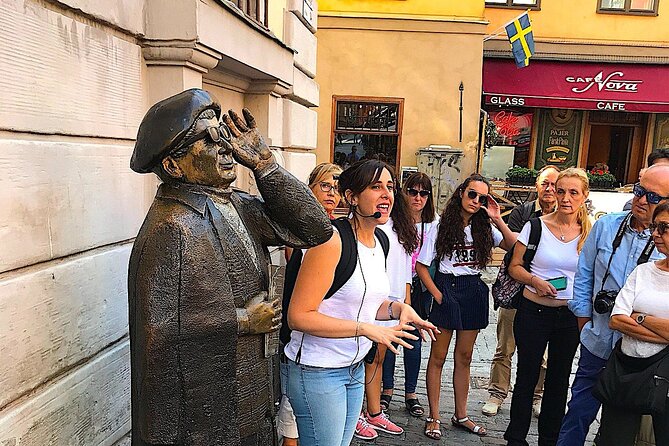
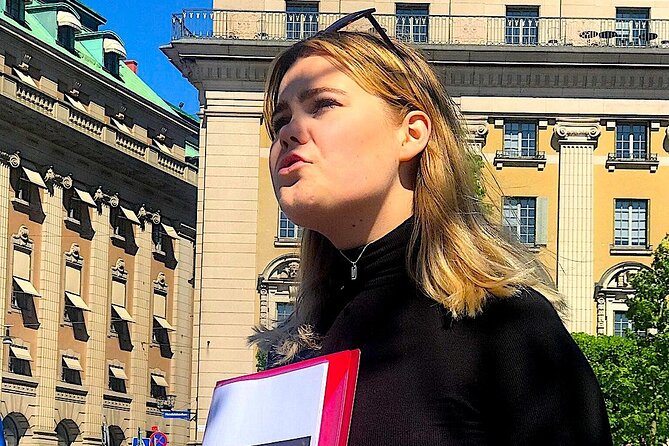
This experience depends heavily on the person holding the group together. Stefan has been described as warm, punctual, and good at using the walk as an introduction to Stockholm. Amon has led relaxed, entertaining outings filled with facts and small stories. Karl has been praised for clear explanations and for answering questions. Sophia and Cim have also led friendly, informative departures.
You should not assume every guide will use the same style. Some explanations have felt lively and personal, including stories about Swedish culture and the Second World War. Other commentary has seemed dry or too brief. One guide was also described as strict about side conversations, so give the speaker your attention if you want to catch the details.
Sound is the clearest practical concern. Street traffic, crowds, and microphone trouble can make parts hard to follow. I would stay near the guide, avoid drifting to the back, and ask for repetition when needed. Bright sunlight can also make images shown on a tablet difficult to see.
Is $3.55 really good value?
At $3.55 per person, this is unusually inexpensive for Stockholm. The fare covers an English-speaking guide and a public walking tour, but not tips or indoor admission.
That price makes the walk a sensible orientation rather than a complete sightseeing package. You receive a framework: where the main buildings are, how the central districts connect, and which places deserve a later visit. You do not receive museum entry, a private pace, or guaranteed access to every stop.
Tips are not included. Given the low advertised fare and the fact that some guides may rely on voluntary tips, carry a payment method or cash if you feel the tour earned it. The final cost can therefore be higher than $3.55, though you remain in control of the amount.
The group is public and limited to a maximum of 27 people. That is not intimate, but it is smaller than many large city excursions. A small departure can feel comfortable and leave room for questions. A full group will require more attention to positioning and hearing.
Who should book this Stockholm walk?
I would choose this tour for a first morning or first full day in Stockholm. You can use the guide’s suggestions for the rest of your stay, then return to City Hall, the Opera, Parliament, a church, or the Royal Stables for an indoor visit if available.
It suits you if you want:
- A low-cost introduction to central Stockholm
- English commentary on culture, history, and daily life
- Outdoor views rather than scheduled indoor admissions
- A route linking transport, politics, royalty, parks, and theatre
- A public group with a maximum of 27 participants
Think twice if you need a slow pace, a quiet setting, or guaranteed access inside the major buildings. The route can feel tiring, and one section has been criticized for taking too long between points. Anyone with physical concerns should note that the walk is not necessarily strenuous in distance, but it may still feel tiring over two hours.
Free cancellation is available if you cancel at least 24 hours before the 11:00 am start. Cancellations inside that window are not refunded, and a minimum number of participants is required for the tour to operate.
Should you book it?
Book it if you want an affordable, guide-led introduction and understand that the real product is orientation and conversation, not admission to Stockholm’s headline interiors. The best value comes when you take notes, ask questions, and use the final stop as a springboard for exploring on your own.
I would be especially happy to pay the small fare for a first visit, provided I stayed close enough to hear the guide. If you already know central Stockholm or want a focused tour of Gamla Stan, City Hall interiors, royal collections, or opera architecture, choose a more specialized experience instead.
FAQ
How long is the Stockholm city-center walking tour?
The tour lasts approximately two hours.
Where does the tour begin?
It begins at Centralplan 15, 111 20 Stockholm, Sweden, outside Stockholm Central Station.
What time does the tour start?
The scheduled start time is 11:00 am.
Where does the tour end?
It usually ends at the Royal Dramatic Theatre, Dramaten, at Nybroplan, 111 47 Stockholm.
Is this a private tour?
No. It is a public tour with other participants, and the group can include a maximum of 27 people.
Is an English-speaking guide included?
Yes. An English-speaking guide is included and is assigned specifically to the group.
Are indoor admissions included?
No. The experience is designed as an outdoor walking tour, and admission to places such as Parliament, the Royal Swedish Opera, and the Royal Dramatic Theatre is not included.
Is the tour accessible by public transportation?
The meeting point is near public transportation, and most people can participate. Service animals are allowed.
Can I cancel for a full refund?
Yes, if you cancel at least 24 hours before the experience start time. Cancellations or changes made less than 24 hours before the start are not refunded or accepted.
More Walking Tours in Stockholm
- Stockholm: Ghost Walk and Historical Tour
★ 4.7 · 2,206 reviews - The Original Stockholm Ghost Walk and Historical Tour – Gamla Stan
★ 4.5 · 1,165 reviews - The Nordic Food Walk Stockholm
★ 4.5 · 642 reviews - Walking Tour of Stockholm’s Old Town, Gamla Stan
★ 5.0 · 451 reviews
Just added around Stockholm
- Stockholm: Evening Wildlife Safari with Midsummer Meal★ 4.2 · 130 reviews
- World War II Stockholm Old Town Walking Tour and Army Museum★ 4.6 · 4 reviews
- Stockholm: Archipelago Guided Boat & Walking Tour of Vaxholm★ 3.1 · 23 reviews
- Stockholm: Archipelago Islands Kayak Tour and Outdoor Picnic★ 4.9 · 150 reviews
- Vaxholm & Stockholm Archipelago: Guided Excursion, Day Trip★ 4.8 · 41 reviews
- Stockholm: Underground Metro Art Ride with a Local Guide★ 4.6 · 39 reviews
- Scandinavian Art, Architecture and Design Tour in Stockholm★ 4.5 · 11 reviews
- Stockholm: Sunset Hike in Tyresta National Park with Meal★ 5.0 · 79 reviews
Private Walking Tours, compared.
Past & Present Small Group Guided Walking Tour
Read our review →
Walking Tour in Bergen of the Past and Present
Read our review →
Group Walking Tour – City Highlights – 2 Hours
Read our review →
3h walking tour, small group max 10 people Copenhagen
Read our review →Browse the lists this tour appears in