
Reviewed · HOP-ON HOP-OFF BUS TOURS
City Sightseeing Oslo Hop-On Hop-Off Bus Tour
Oslo’s best use of a sightseeing bus is its long sweep from the city center out to Bygdøy, where several major museums sit beyond easy walking range. I like the way one loop connects Vigeland Sculpture Park with the Kon-Tiki, FRAM, Maritime, and Cultural History museums. I also like the freedom to ride the entire 90-minute circuit first, then return to the places that deserve more time.
The main concern is reliability. Audio equipment has been inconsistent, and busy cruise-ship periods can mean full buses, delays, or a missed stop. The short operating window, with the first bus at 10 a.m. and the last departure from the main stop at 4 p.m., also makes this less useful for late-day sightseeing.
In This Review
- Key points to know before you ride
- How the Oslo bus route fits the city together
- Stop 1: National Theatre, Royal Palace, and Karl Johans Gate
- Stop 2: Vigelandsparken and Oslo Museum
- Stops 3 and 5: Norwegian Museum of Cultural History
- Stop 4: Bygdøynes and Oslo’s museum peninsula
- Stops 6 and 7: Hjortnes and the cruise terminals
- Stop 8: Tjuvholmen and Oslo’s modern waterfront
- Stops 9 and 10: Akershus Fortress and Oslo’s ferry port
- Stops 11 to 13: Langkaia, MUNCH, the Opera House, and back
- Audio commentary, Wi-Fi, and the practical onboard experience
- Timing, crowding, and how to protect your day
- Is $46.60 a fair price?
- Booking, boarding, and cancellation details
- Who should book this Oslo tour?
- FAQ
- How long does the full Oslo bus loop take?
- How often do the buses run?
- What time does the first bus leave?
- What time is the last departure?
- Can I board at any stop?
- Is the ticket valid for 24 or 48 hours?
- Is entrance to the museums included?
- Is audio commentary available?
- Can I bring my own headphones?
- Does the tour operate all year?
- Can I use a mobile voucher?
- What happens if it rains?
Key points to know before you ride
- The Bygdøy connection is the real prize: The bus links several museums that are spread across the peninsula.
- A full loop takes about 90 minutes: Ride it once before choosing where to get off.
- Cruise-port access is convenient: Stops serve Oslo Cruise Ship Terminal and several cruise docks.
- The pass lasts 24 or 48 hours: You can hop on and off as often as you like during that period.
- Audio quality can make or break the tour: Bring your own headphones if you plan to use the BYOD option.
- This is a seasonal service: It typically runs from June through October, with dates changing each year.
How the Oslo bus route fits the city together
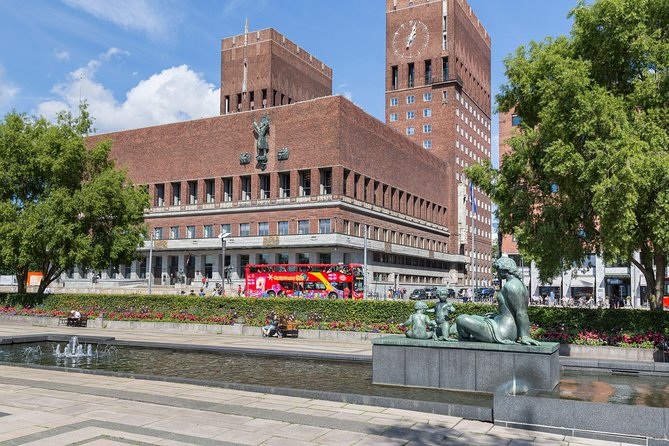
Oslo is compact in its center, but the city’s most appealing museums are scattered along the waterfront and across Bygdøy. You can walk between several central sights, yet reaching Vigeland Park and the museum peninsula takes extra time and planning.
That is where this tour earns its keep. For the listed price of $46.60 per person, you are paying less for a guided city lesson than for a moving connection between major sights. If you use the pass to reach two or three museums, it can save taxi fares and simplify a day built around limited cruise-port time.
The route runs every 30 minutes, though actual service may be affected by traffic and demand. It operates in all weather, so you should dress for Oslo’s rain, wind, and cool temperatures even in summer. The upper deck gives the best views, but the covered sections are more sensible when rain starts blowing sideways.
Start at the National Theatre stop on Karl Johans Gate if you want the clearest central departure point. You may also board at any listed stop, but look carefully for the official City Sightseeing bus. Similar hop-on hop-off buses operate in Oslo, and their tickets are not interchangeable.
More hop-on hop-off bus tours in Oslo:
- Oslo: 24 or 48-Hour Hop-On Hop-Off Sightseeing Bus Ticket
★ 4.1 · 1,470 reviews - Oslo: City Sightseeing Hop-On Hop-Off Bus Tour
★ 3.6 · 724 reviews - Oslo Shore Excursion: City Sightseeing Oslo Hop-On Hop-Off Bus Tour
★ 3.0 · 121 reviews
Stop 1: National Theatre, Royal Palace, and Karl Johans Gate
The main city-center stop is a practical place to begin. It sits near the National Theatre, the Royal Palace, and Karl Johans Gate, Oslo’s principal avenue.
The Royal Palace is especially useful as a first stop because it gives you an immediate sense of central Oslo. The palace grounds and surrounding streets are easy to combine with a walk through the center. Karl Johans Gate leads toward the city’s main public buildings and shopping areas.
I suggest riding the complete loop before getting off here unless you already know exactly what you want to visit. The first circuit helps you understand the distances and decide how to use the rest of a 24 or 48-hour pass.
The bus begins service here at 10 a.m. and makes its final departure from this stop at 4 p.m. That schedule matters. If you arrive in Oslo late in the afternoon, there may not be enough time for a useful ride.
Stop 2: Vigelandsparken and Oslo Museum
Vigeland Sculpture Park is one of Oslo’s essential outdoor sights. The park is home to a large collection of works by Gustav Vigeland, arranged along a broad path through landscaped grounds.
You do not need to be an art specialist to appreciate the park. The sculptures focus on the human body, family life, age, struggle, and affection. The layout makes it easy to walk at your own pace, take photographs, and return to the bus when ready.
The nearby Oslo Museum adds local context, but the park itself is the main reason to get off here. Allow more time than the bus schedule might suggest. A quick look is possible, but the experience improves when you walk beyond the first cluster of sculptures.
The stop can be popular, and a full bus may limit your choice of seats when you return. If you are using the tour mainly as transport, check the next bus timing before leaving the stop area.
Stops 3 and 5: Norwegian Museum of Cultural History
Folkemuseet is the stop for the Norwegian Museum of Cultural History, an open-air collection of historic buildings and cultural exhibits. It offers a very different experience from Oslo’s central streets.
The museum is a good choice if you want to see traditional Norwegian architecture rather than only modern city sights. You can walk among buildings moved from different parts of Norway and get a clearer idea of how rural communities were organized.
Stops 3 and 5 serve the same museum area in the listed route. That may be useful when planning your return, but it can also be confusing if you are following a printed map. Confirm the stop name with the driver or staff before getting off.
The museum requires its own admission fee. Attraction entry is not included in the bus price, so add ticket costs to your day’s budget. The same applies to the other museums along the route.
A few more Oslo trips to weigh up
- Oslo: Grand City Sightseeing Tour by Bus with Fjord Cruise
★ 4.6 · 647 reviews - Oslo Combo Tour: Grand City Tour and Oslo Fjord Cruise
★ 4.5 · 555 reviews - Oslo: City Highlights Walking Tour
★ 4.8 · 197 reviews - Oslo City Highlights with Fjord Cruise
★ 4.5 · 128 reviews
Stop 4: Bygdøynes and Oslo’s museum peninsula
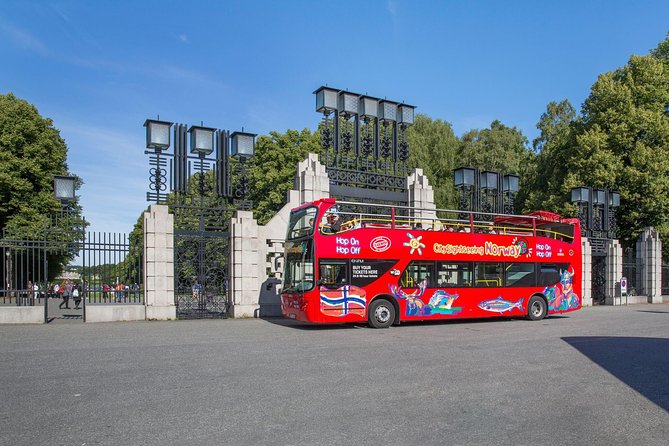
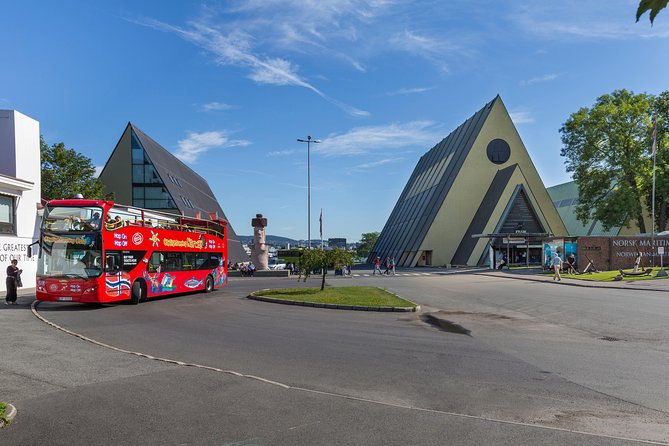
Bygdøynes is the strongest part of the route for museum fans. The stop serves the Kon-Tiki Museum, the FRAM Polar Ship Museum, and the Norwegian Maritime Museum. The Viking Ship Museum is also presented as one of the route’s major attractions.
This is where the bus is more than a sightseeing platform. Bygdøy’s museums are not clustered around Oslo’s central pedestrian streets, and visiting several of them by ordinary public transport can take more planning. The tour lets you spend your time inside a museum instead of figuring out the next connection.
The FRAM Museum centers on the polar exploration ship FRAM, while the Kon-Tiki Museum follows Thor Heyerdahl’s famous expeditions. The Maritime Museum covers Norway’s strong connection with the sea. Each museum has a distinct focus, so you can choose based on your interests rather than forcing yourself through all of them.
Give yourself enough time between buses. A 30-minute frequency sounds generous, but a museum visit rarely fits neatly into that interval. If you miss a bus, the next one may arrive later, and afternoon delays can cut into your return to the cruise port.
Stops 6 and 7: Hjortnes and the cruise terminals
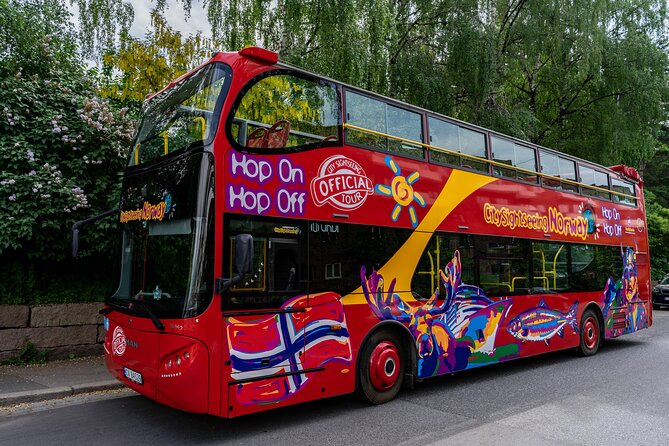
Hjortnes serves the Color Line Terminal, while the Royal Caribbean and MSC Cruise Gate stop serves the Filipstad Cruise Terminal area. These stops make the tour particularly useful for cruise passengers who want a quick city overview without arranging separate transport.
The advantage is simple: you can board close to the ship, ride toward central Oslo, and return by the same network. The risk is timing. When ships arrive, demand can rise sharply, and a bus may already be full when it reaches the terminal.
If your ship has a strict departure time, do not make the final bus your only plan. Leave a generous margin for traffic, long waits, a skipped stop, or a full bus. The route is helpful for port access, but it is not a private transfer.
Some passengers have also found the cruise-terminal stops harder to identify than expected. Keep your voucher handy and ask City Sightseeing staff or the bus driver to confirm the stop before boarding.
Stop 8: Tjuvholmen and Oslo’s modern waterfront
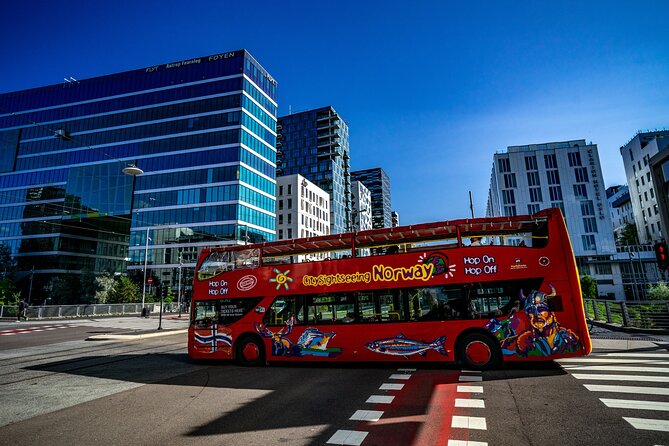
Tjuvholmen is an alternative stop for Oslo’s newer waterfront district. It is a useful place to get off if you want contemporary architecture, public spaces, and a slower walk beside the harbor.
This stop works well as part of a city-center day. You can combine it with the central waterfront, then continue toward the Opera House or MUNCH Museum. It also gives you a break from the bus if you have already completed much of the loop.
Tjuvholmen is not a substitute for the historic sights. Choose it for modern Oslo and harbor views, not for old streets or major royal buildings. The bus provides the connection, but the district itself is best explored on foot.
Stops 9 and 10: Akershus Fortress and Oslo’s ferry port
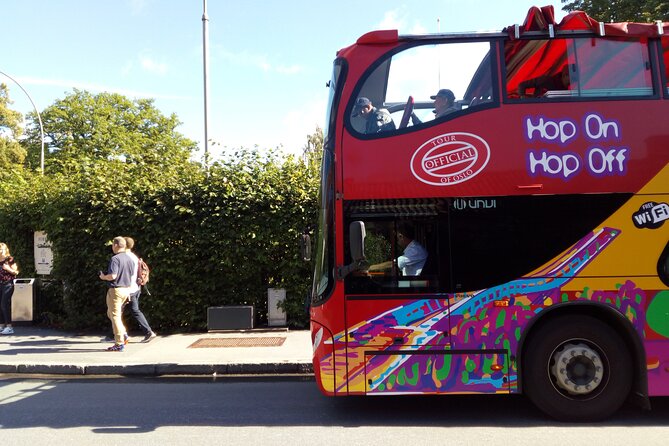
The Oslo Cruise Ship Terminal stop puts you near Akershus Fortress, one of the city’s most important historic sites. The fortress occupies a strong waterfront position and is a natural choice if you want history, stone walls, and harbor views in one stop.
Akershus is more rewarding than simply seeing it from the bus window. Get off, walk through the complex, and allow time to understand its position overlooking Oslo’s port. Admission to any paid attraction is your responsibility.
Vippetangen is the stop for Oslo Ferry Port and the Go Nordic Cruiseline, formerly associated with DFDS service. It is useful for ferry passengers and for anyone exploring the eastern harbor edge. It may feel less central than Karl Johans Gate, so check the route map before choosing it as your main starting point.
Stops 11 to 13: Langkaia, MUNCH, the Opera House, and back
Narvesen Havnelageret at Langkaia leads into the eastern waterfront. From here, the Opera House and MUNCH Museum are the key attractions.
The Oslo Opera House is easy to recognize, with a sloping roof designed for walking. Even if you do not attend a performance, the building makes a worthwhile stop because you can use the roof as a public viewing area. The MUNCH Museum provides a major indoor art option nearby, especially useful on a wet day.
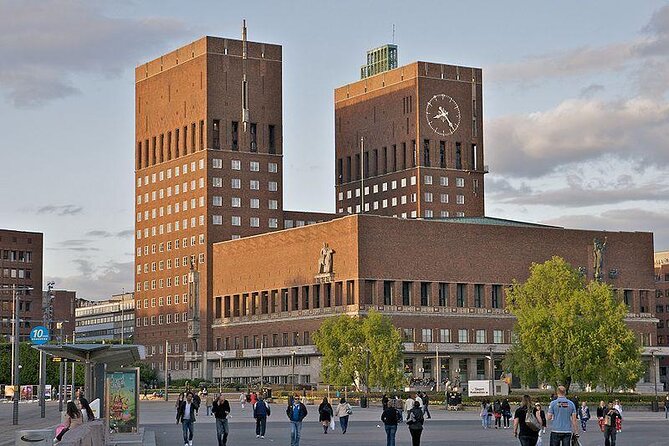
Stop 13 returns you to the National Theatre, Royal Palace, and Karl Johans Gate area. In practice, the route closes a useful sightseeing circle: central Oslo, Frogner and Vigeland, Bygdøy museums, cruise terminals, fortress, harbor, Opera House, and back downtown.
If you have only 90 minutes, stay aboard and treat the bus as an orientation ride. If you have 24 or 48 hours, use it selectively. The strongest plan is not to hop off at every stop, but to choose two or three places that match your interests.
Audio commentary, Wi-Fi, and the practical onboard experience
The tour includes recorded commentary in eight languages and free headphones. You can use the built-in in-seat modules or bring your own device through the BYOD option. Borrowable headsets with adapters are available, but bringing your own headphones is wise if you prefer a better fit.
Audio has been the most uneven part of the experience. Problems have included static, low volume, dead plugs, long silent stretches, commentary that did not match the bus location, and unclear channel instructions. On some buses, the English channel has reportedly appeared on different channel numbers, so ask before settling into your seat.
Free Wi-Fi is included, but it has not always worked reliably. I would treat it as a useful extra, not as something to depend on for navigation or communication.
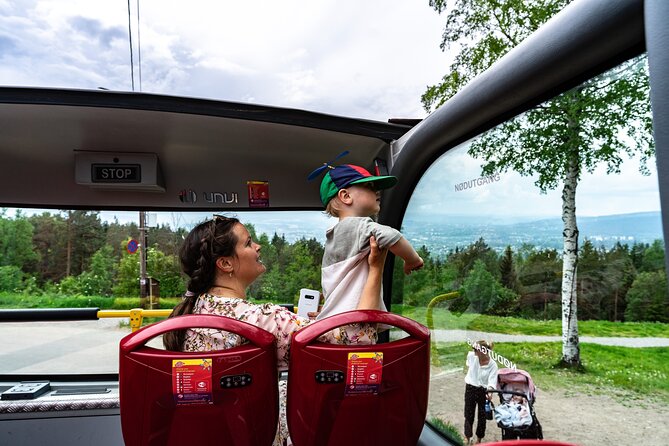
The bus itself provides a comfortable way to rest your feet, and the upper deck can offer broad views when weather cooperates. In rain, the plastic coverings may not keep every seat dry. Loose or damaged coverings have also caused safety concerns, so avoid trying to repair one yourself.
Timing, crowding, and how to protect your day
The advertised loop lasts about 90 minutes, with buses scheduled every 30 minutes. That sounds simple, but the schedule is most useful as a guide rather than a guarantee.
Busy periods often coincide with cruise-ship arrivals. Buses may fill at the port, run late, or pass a stop. One missed bus can cost you another half hour, and longer disruptions are possible if a vehicle breaks down or traffic becomes heavy.
I would ride the full loop early in the day if you are visiting Oslo during a short port call. Note where you want to stop, then make your museum choices before getting off. Keep track of the final departure time, which is especially important because Oslo’s summer daylight can make 4 p.m. feel surprisingly early.
The service normally operates from June through October, with dates varying each year. It does not run on May 17, Norway’s Constitution Day. The buses operate in all weather, so bring a waterproof layer even when the forecast looks promising.
Is $46.60 a fair price?
At $46.60 per person, the tour is not cheap if you only ride once around the city. A 90-minute circuit with unreliable audio can feel expensive compared with ordinary public transport.
The value improves if you use the pass for transport as well as sightseeing. Vigeland Park and the Bygdøy museums are the key examples. If the bus saves you several separate rides and lets you combine distant sights in one day, the price becomes easier to justify.
The 48-hour option offers better value for a slower visit, but only if the route operates during both days of your stay and you can make use of the limited timetable. Attraction tickets, food, drinks, and gratuities are extra.
This tour makes the most sense for first-time visitors, cruise passengers, families who want a break from walking, and anyone visiting in rain. If you are comfortable using Oslo’s regular public transport and already know exactly where you are going, you may find the bus less useful.
Booking, boarding, and cancellation details
You receive confirmation at booking, and both mobile and printed vouchers are accepted. Before boarding, exchange the voucher for the official hop-on hop-off ticket with City Sightseeing staff or the driver. Keep that ticket with you throughout the ride.
You can use the voucher flexibly for up to 12 months from the selected travel date at checkout, according to the supplied conditions. Free cancellation is available up to 24 hours before the scheduled start time. Changes or cancellations inside that 24-hour window are not accepted for a refund.
The experience is offered in English as a booking language, while the onboard audio is available in eight languages. Most people can participate, and the stops are near public transport.
Who should book this Oslo tour?
I would book it if you have one day in Oslo, want to see the main districts quickly, and plan to visit Bygdøy museums. It is also a practical choice from a cruise ship, provided you leave plenty of time for the return.
I would be more cautious if your priority is polished guiding or dependable audio. The route covers important sights, but the recorded commentary may be quiet, broken, or poorly synchronized. You should be prepared to use a map and read about the sights in advance.
The best strategy is to treat the bus as a flexible sightseeing shuttle. Ride one complete circuit, choose a few worthwhile stops, and keep your schedule loose. Book it for access and orientation, not as your only source of information about Oslo.
FAQ
How long does the full Oslo bus loop take?
The complete loop takes approximately 90 minutes.
How often do the buses run?
Buses are scheduled to run every 30 minutes.
What time does the first bus leave?
The first departure from Stop 1 at the National Theatre is at 10 a.m.
What time is the last departure?
The last departure from Stop 1 is at 4 p.m.
Can I board at any stop?
Yes. You can hop on and off at any of the listed stops during the validity of your pass.
Is the ticket valid for 24 or 48 hours?
You can choose a 24-hour or 48-hour hop-on hop-off pass.
Is entrance to the museums included?
No. Entry fees for attractions are not included in the bus ticket.
Is audio commentary available?
Yes. Audio commentary is available in eight languages, and free headphones are included.
Can I bring my own headphones?
Yes. The tour offers a Bring Your Own Device option. Bring your own headset if you plan to use that option. Headsets with adapters can also be borrowed onboard.
Does the tour operate all year?
No. It is seasonal and typically operates between June and October, with dates varying each year. It does not operate on May 17.
Can I use a mobile voucher?
Yes. Mobile and printed paper vouchers are both accepted, but you must exchange the voucher for the official hop-on hop-off ticket before or upon boarding.
What happens if it rains?
The buses operate in all weather. Dress accordingly, and remember that upper-deck coverings may not keep all rain out.
Just added around Oslo
- 4 hours Best View of the Oslofjord Winter Edition★ 4.0 · 15 reviews
- Unknown war. Oslo and Norway during 1940-45★ 5.0 · 74 reviews
- Oslo Winter Highlights Bike Tour★ 5.0 · 36 reviews
- The Viking Planet Museum Ticket★ 4.0 · 197 reviews
- The Viking Planet Museum – Mini Group (4 adults)★ 4.0 · 16 reviews
- The Ultimate Norwegian Skiing Experience★ 5.0 · 16 reviews
- The Scenic Roadtrip, Oslo to Bergen via Flam & the Fjords★ 5.0 · 25 reviews
- Visit the Instaworthy Spots of Oslo’s Vigeland Park with a Local★ 5.0 · 4 reviews
Hop-On Hop-Off Bus Tours, compared.
Hop-On Hop-Off Bus Tour with Boat Tour Option
Read our review →
24 or 48-Hour Hop-On Hop-Off Sightseeing Bus Ticket
Read our review →
City Sightseeing Copenhagen Hop-On Hop-Off Bus Tour
Read our review →
Browse the lists this tour appears in