
Reviewed · CITY TOURS
Oslo City Walks: The City of Contrasts
Oslo’s most interesting story is written in the gap between old industrial ground and sharp new buildings. This two-hour walk follows that change from Oslo Central Station into Bjørvika, across the Acrobat bridge, past the Munch Museum, and on to Deichman Library beside the Opera House.
I like the modern architecture focus, which gives you a clearer theme than a standard city stroll. I also like the easy start at Østbanehallen and the finish near several major sights, so you can continue exploring on your own. The main caution is that this is more about urban change than a greatest-hits tour, and one past booking found the group too large and the guide lacking energy.
In This Review
- Key points to know before booking
- A city walk built around change
- Starting at Østbanehallen and Oslo Central Station
- Crossing the Acrobat bridge into Bjørvika
- Reading Bjørvika’s modern architecture
- Bispevika and the new Munch Museum
- Ending at Deichman Library beside the Opera House
- What the two-hour length really gives you
- Guide quality and the value of live commentary
- Is $52 a fair price?
- Practical advice for a comfortable walk
- Who should book this Oslo walk?
- Should you book Oslo City Walks: The City of Contrasts?
- FAQ
- Where does the Oslo City Walks tour begin?
- Where does the walking tour finish?
- How long does the tour take?
- Which languages are available?
- Does the tour include entry to the Munch Museum or other buildings?
- Can I cancel the booking?
Key points to know before booking
- Follow Oslo’s building boom: See how former industrial areas are being reshaped around Bjørvika and Bispevika.
- Cross the Acrobat bridge: Walk over the distinctive pedestrian bridge at Oslo Central Station for a close look at the city’s new design language.
- Finish by major cultural sights: The route ends near the Opera House, Deichman Library, and the new Munch Museum.
- Expect a city-planning walk: This is not a full tour of Oslo’s historic center, fortress, or main museums.
- Plan for a steady two hours on foot: Wear comfortable shoes and arrive 10 minutes early.
- Choose your guide language: Tours are offered in English or Norwegian.
A city walk built around change
This is a walking tour for people who want to understand what Oslo is becoming. Rather than ticking off a long list of monuments, the route uses streets, bridges, construction zones, public buildings, and waterfront development to explain the capital’s growth.
The focus is Oslo’s move from an industrial city toward a modern European capital with new transport links, cultural buildings, and carefully planned public spaces. That makes the walk useful if you have already seen the Opera House and want to understand the district around it, or if you are arriving in Oslo with little sense of how the city fits together.
You meet your authorized guide in front of the Oslo Visitor Centre inside Østbanehallen. The address is Jernbanetorget 1, 0154 Oslo. This is a practical meeting point because it sits at Oslo Central Station, with the station, tram connections, and other city transport nearby.
The tour usually takes place on a Monday evening, so check the available start time when booking. Arrive 10 minutes early. That matters at a central station, where a few minutes spent searching for the meeting point can quickly turn into a missed departure.
A few more Oslo trips to weigh up
- Oslo: City Sightseeing Hop-On Hop-Off Bus Tour
★ 3.6 · 724 reviews - Oslo: Grand City Sightseeing Tour by Bus with Fjord Cruise
★ 4.6 · 647 reviews - Oslo Combo Tour: Grand City Tour and Oslo Fjord Cruise
★ 4.5 · 555 reviews
Starting at Østbanehallen and Oslo Central Station
Østbanehallen is not just a place to meet. It puts you right in the middle of Oslo’s transport network and gives the tour an appropriate starting point. The city’s growth depends heavily on transport, and the walk begins where commuters, trains, and urban redevelopment meet.
Your guide introduces Oslo as one of Europe’s fastest-growing capitals and sets up the main theme: how a city expands while trying to connect its past with its future. You should expect commentary about industrialization, city expansion, infrastructure, and modern construction rather than a long account of royal or medieval Oslo.
That distinction is important. If you want the Viking Ship Museum, the Royal Palace, or a detailed look at Akershus Fortress, this is not the right route. One past customer felt the walk covered too few classic sights and mainly recalled the Opera House and an old fort. That criticism points to a real limitation: the tour’s value depends on your interest in urban development.
If you enjoy noticing how public buildings, roads, pedestrian routes, and older structures fit together, the opening should give you a useful framework. If you prefer famous monuments and long historical stories, the first part may feel plain.
Crossing the Acrobat bridge into Bjørvika
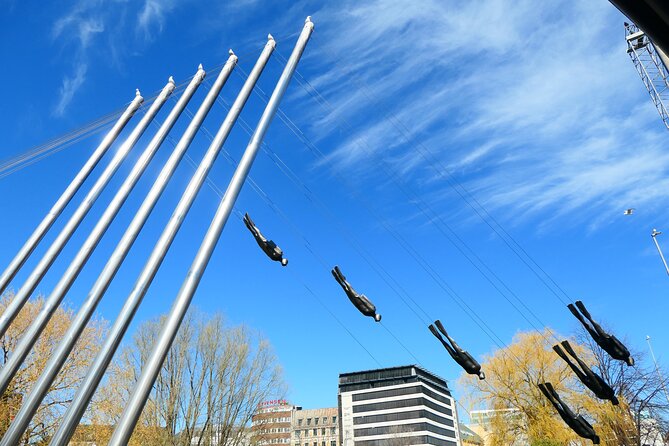
The route continues over the Acrobat pedestrian bridge at Oslo Central Station. The bridge is a small but telling piece of the tour. It is not only a way to get from one side to another, but also a good place to see how pedestrian movement has been added to a busy railway area.
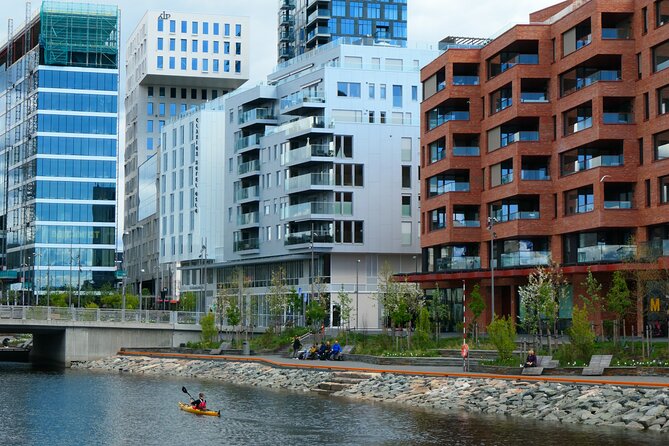
From here, the walk moves toward Bjørvika. This district has become one of the clearest examples of Oslo’s new face, with large cultural buildings and fresh waterfront development replacing older industrial uses.
I like this part because you are not simply looking at new buildings in isolation. The guide helps place them within the city’s wider shift. You can consider why this area was rebuilt, how people move through it, and what the new architecture says about Oslo’s ambitions.
The route also gives you several photo opportunities. The bridge, station area, new buildings, and changing sightlines toward the waterfront make this one of the more visual sections. Bring a phone or camera, but keep in mind that a two-hour walk leaves limited time for careful photography at every stop.
Reading Bjørvika’s modern architecture
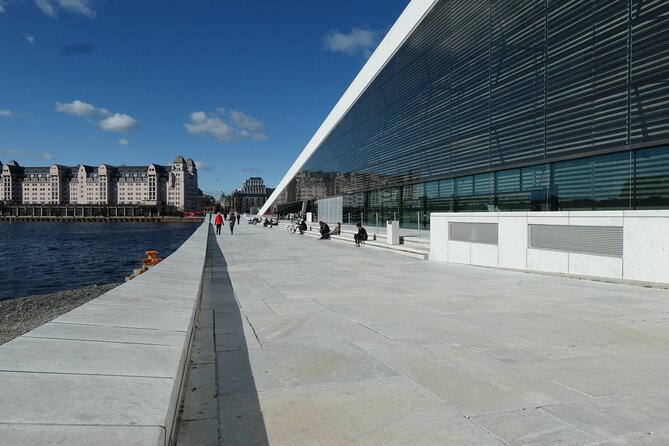
Bjørvika is the heart of the experience. Here the old and new parts of Oslo sit close together, making the city’s changes easy to see. You pass through areas shaped by industry and urban expansion, then encounter major new public buildings that give the district a different purpose.
The guide’s job is to explain the design choices and the city’s modernization story. You might hear how Oslo’s infrastructure and transport systems support growth, and how new cultural buildings help reshape former industrial districts.
The word modern can mean many things, so do not expect a technical architecture lecture unless your guide chooses to go in that direction. The supplied information promises insights into modern architecture, but not a specialist tour led by an architect. The experience is better understood as a city walk with an architecture and planning theme.
That broad approach can work well for a first visit. You get a way to read the city instead of only photographing it. A strong guide can connect the buildings to daily life, city planning, and Oslo’s economic growth. The experience has received both warm and cool personal assessments, so the guide’s energy may shape your impression more than the route itself.
Same fjord country, a very different day out:
- Oslo: Scenic Fjord Cruise with Audio Guide Commentary
★ 4.5 · 5,375 reviews - Oslo Nature Walks: Island Hopping Tour
★ 4.8 · 2,713 reviews - Oslo: 100% Electric Oslofjord Sightseeing Cruise
★ 4.4 · 2,041 reviews - Oslo: Fjord Evening Cruise with Shrimp Buffet
★ 4.5 · 1,956 reviews
Bispevika and the new Munch Museum
The walk continues through Bispevika and passes the new Munch Museum. This section adds a major cultural landmark to the architectural story. The museum is not presented as an interior visit, so do not book this expecting museum admission or a guided art tour.
Instead, you see the building as part of the wider redevelopment. Its scale and contemporary design help show how Oslo is using culture to give new purpose to former industrial and waterfront areas.
This is a good place to pause and think about the difference between visiting a building and understanding its role in a city. You will not receive a complete study of Edvard Munch or his paintings here. You will get a view of how a major museum fits into Oslo’s changing public realm.
The stop should appeal to architecture fans and anyone planning to visit the Munch Museum separately. If you want to go inside, ask your guide about timing at the end of the walk, since the route does not include entry.
Ending at Deichman Library beside the Opera House
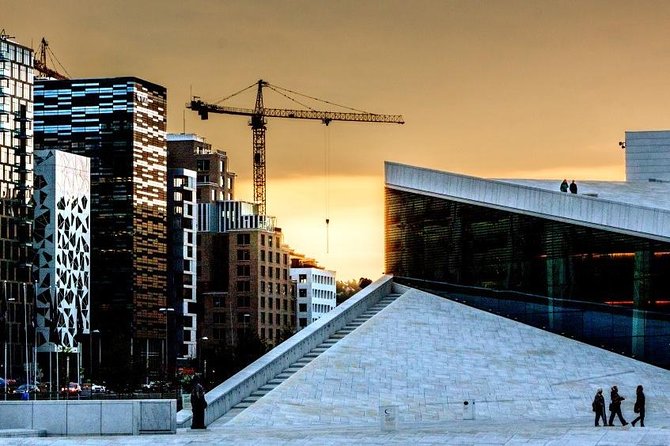
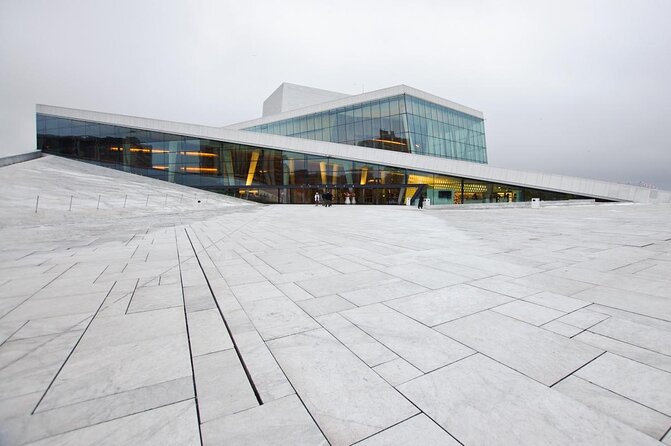
The tour finishes at Deichman Library, next to the Opera House. This is a smart ending point because it leaves you close to several of Oslo’s best-known modern cultural buildings.
The Opera House is one of the places included in the city’s modern architectural story, and its location makes the final section easy to continue on your own. You can look around the exterior, walk toward the waterfront, or use the nearby area as a base for dinner and further sightseeing.
Deichman Library adds another public building to the route. Together with the Opera House and Munch Museum, it shows how Oslo’s newer cultural buildings are grouped around the waterfront and central city.
Still, keep your expectations in check. The walk concludes near these sights rather than providing extensive interior visits. If you want a tour that enters several attractions, this price and format will not provide that. The strength is the route between the buildings and the explanation of how they relate to Oslo’s growth.
What the two-hour length really gives you
Two hours is enough for a focused introduction, but not enough to cover all of Oslo. The route concentrates on a relatively compact area, allowing the guide to discuss architecture and city change without turning the walk into a tiring half-day outing.
I see the short length as a benefit for a first evening in town. You can learn the basic shape of Bjørvika, identify places you may want to revisit, and still have time afterward for your own plans.
The tradeoff is breadth. One past booking described the route as covering little of Oslo, with the Opera House and an old fort standing out as the main sights remembered. Even though individual experiences can differ, you should assume that this is a focused walk, not a complete city tour.
Group size also matters. A previous customer found the group much too large. A bigger group can make it harder to hear the guide, ask questions, or keep a comfortable pace through busy areas. The available details do not give a fixed maximum group size, so ask the provider if that point is important to you.
Guide quality and the value of live commentary
The tour includes an authorized Oslo guide, with English and Norwegian available. That live explanation is the main thing you are paying for. The buildings and bridge can be seen without a tour, but the guide gives you a framework for understanding why they are there.
The strongest personal feedback praised a fantastic guide, a comfortable walking pace, and the freedom to ask questions. That is exactly where this experience can earn its price. A good conversation can turn a plain walk through a redeveloped district into a useful lesson in how Oslo works.
The less favorable feedback described a guide with little personality. Another short comment praised a guide named Flink, although the available information does not make clear whether that is the guide’s name or a description. I would not rely on a particular guide being present.
Because the route is educational, guide style matters. You should feel free to ask about the old and new buildings, public transport, industrial areas, and why the city has expanded in this direction. The tour is a better fit for curious participants than for anyone who wants to remain a silent observer.
Is $52 a fair price?
At $52 per person, this is not the cheapest way to see Oslo’s waterfront. You are paying for two hours of live guidance, not admission to the Munch Museum, Opera House, or library.
The price makes sense if you value context and want to ask questions. It is also easier to justify if you are interested in modern architecture, city planning, or the changes brought by industrial growth. A knowledgeable guide can help you notice details you would otherwise pass without a second thought, even if the route itself is free to walk.
The value is weaker if your priority is a long list of famous sights. You can see several of the exterior buildings independently, and the tour does not promise entrance to museums or historic attractions. The mixed rating of 3.4 from seven ratings suggests that this is a specific-interest tour rather than a safe choice for everyone.
I would compare it with your own plans. If you are already visiting Bjørvika and the Opera House on your own, you may prefer to spend the $52 on another paid attraction. If you want a clear introduction to the district before exploring alone, the guided route may be worthwhile.
Practical advice for a comfortable walk
Wear good walking shoes. High-heeled shoes are not allowed, and the route crosses a pedestrian bridge and passes through central streets and redeveloped districts.
Dress for the weather. Oslo conditions can change quickly, and the experience takes place outdoors for about two hours. The tour is not designed around indoor shelter, so a waterproof layer is sensible when the forecast looks uncertain.
Arrive 10 minutes early at the Oslo Visitor Centre. Look for the centre inside Østbanehallen rather than waiting somewhere outside the station. The listed meeting point is in front of the visitor centre.
The tour is offered in English or Norwegian. Confirm your preferred language when selecting the activity. The description does not provide a fixed group limit, so ask ahead if you prefer a smaller party.
Drones are not allowed. That is worth noting if you are carrying camera equipment, but a normal phone or handheld camera is fine for the photo stops described along the route.
The booking terms are friendly for uncertain plans. You can cancel up to 24 hours ahead for a full refund, and you can reserve now and pay later. Those policies help if your Oslo schedule depends on weather or transport, but they do not change the tour’s central tradeoff: focused urban commentary instead of broad sightseeing.
Who should book this Oslo walk?
I would choose this for a first or second day in Oslo if you want to understand the city’s newer districts before exploring them alone. It also suits architecture fans, urban-planning students, photographers, and visitors curious about how industrial land becomes a cultural quarter.
It is a good match for people who enjoy asking questions. The route works best when you use the guide as a local source of context rather than treating the walk as a moving photo stop.
I would be cautious if you want Oslo’s main historic sights in one compact tour. This experience does not provide a full tour of the city center, and it does not include museum interiors. A large group or a quiet guide could also reduce the value, especially at $52.
Should you book Oslo City Walks: The City of Contrasts?
Book it if the idea of Oslo’s old industrial areas meeting new cultural buildings sounds more interesting than a standard monument checklist. The Acrobat bridge, Bjørvika, Bispevika, the Munch Museum, Opera House, and Deichman Library give the walk a clear route and a useful theme.
Skip it if you want a broad introduction to Oslo’s royal, medieval, and fortress sights, or if you prefer to explore modern buildings without paying for commentary. The best reason to book is the guide’s explanation and the chance to ask questions, not the number of attractions visited.
At $52, I would treat this as a specialized orientation walk. With an engaging guide and a manageable group, it can give you a sharp understanding of Oslo’s current direction. With a large group or flat delivery, the limited route may feel expensive.
FAQ
Where does the Oslo City Walks tour begin?
Meet the guide in front of the Oslo Visitor Centre inside Østbanehallen at Oslo Central Station, Jernbanetorget 1, 0154 Oslo.
Where does the walking tour finish?
The route finishes at Deichman Library, next to the Opera House.
How long does the tour take?
The walk lasts approximately two hours. You should arrive at the departure point 10 minutes before the start time.
Which languages are available?
Live tours are available in English and Norwegian.
Does the tour include entry to the Munch Museum or other buildings?
The tour includes an authorized guide and visits exterior areas, including the Munch Museum, Opera House, and Deichman Library. Admission to these buildings is not listed as included.
Can I cancel the booking?
Yes. You can cancel up to 24 hours in advance for a full refund. The activity also offers a reserve-now-and-pay-later option.
Just added around Oslo
- 4 hours Best View of the Oslofjord Winter Edition★ 4.0 · 15 reviews
- Unknown war. Oslo and Norway during 1940-45★ 5.0 · 74 reviews
- Oslo Winter Highlights Bike Tour★ 5.0 · 36 reviews
- The Viking Planet Museum Ticket★ 4.0 · 197 reviews
- The Viking Planet Museum – Mini Group (4 adults)★ 4.0 · 16 reviews
- The Ultimate Norwegian Skiing Experience★ 5.0 · 16 reviews
- The Scenic Roadtrip, Oslo to Bergen via Flam & the Fjords★ 5.0 · 25 reviews
- Visit the Instaworthy Spots of Oslo’s Vigeland Park with a Local★ 5.0 · 4 reviews
City Tours, compared.
City Archipelago Sightseeing Cruise with Guide
Read our review →
Group Walking Tour – City Highlights – 2 Hours
Read our review →
City Sightseeing Copenhagen Hop-On Hop-Off Bus Tour
Read our review →
Browse the lists this tour appears in