
Reviewed · OSLO TOURS
Oslo Nature Walks: Island Hopping Tour
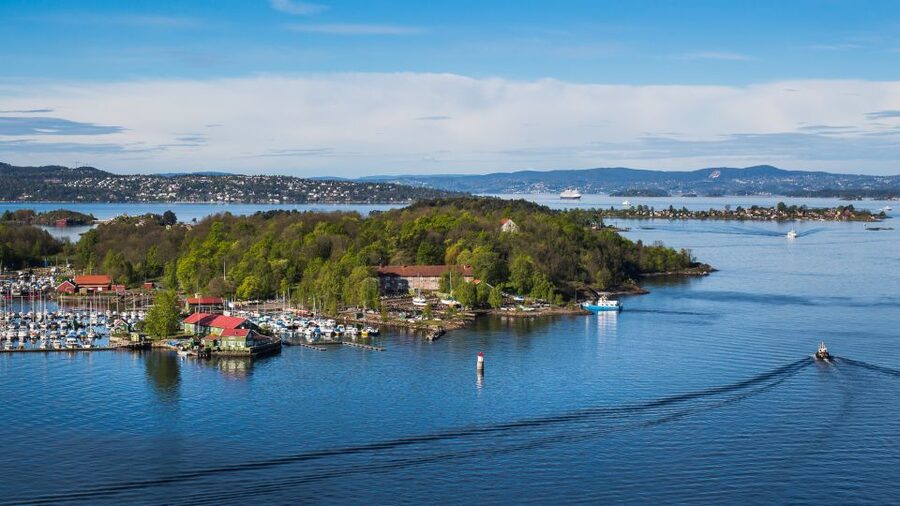
Oslo’s best surprise may be how quickly the city gives way to quiet islands. This island-hopping walk combines short public-ferry rides with trails through birch woods, sheep pastures, beaches, old military sites, and summer cabins. In one morning, you get both fjord scenery and a useful lesson in how Oslo grew from a Viking-era settlement into modern Norway.
I like the way the tour uses ordinary public ferries rather than a sealed sightseeing boat. I also like the mix of stories: an almost 1,000-year-old abbey on Hovedøya, abandoned airport buildings on Gressholmen, and flower-filled cabin paths on Lindøya. The main catch is the walking. You cover about 7 kilometers over gravel, dirt, and stones, and poor weather can make the trails slippery.
In This Review
- Key points at a glance
- Why this tour gets you out of central Oslo
- Hovedøya: abbey ruins, sheep pastures, and cannons
- Gressholmen: nature reserve and industrial traces
- Lindøya: cabin life beside the fjord
- Winter changes the route, not the character
- What the ferry rides add
- The guides are a major part of the value
- Is $69 a fair price?
- Who should book this island walk?
- Practical tips for a better four hours
- Should you book Oslo Nature Walks: Island Hopping Tour?
- FAQ
- How long is the Oslo island-hopping tour?
- How many islands does the tour visit?
- Which islands are included in the tour?
- Is food included?
- Are drinks provided?
- How much walking is involved?
Key points at a glance
- Hovedøya’s medieval abbey ruins: Walk among the remains of a powerful Cistercian monastery founded nearly 1,000 years ago.
- Three islands from April through August: The warmer-season route includes Hovedøya, Gressholmen, and Lindøya.
- Two islands from September through March: The winter version is shorter, but cold, ice, rain, and snow still call for proper footwear.
- Public ferries are part of the fun: Four boat rides connect the walking sections and provide changing views of Oslo’s waterfront.
- A real walk, not just a photo stop: Expect about 10,000 steps, with hills, rough paths, beaches, and lookout points.
- Warm drinks in colder months: From October through March, the guide provides hot drinks, with some outings also offering ginger biscuits.
Why this tour gets you out of central Oslo
The meeting point is Rådhusbrygge 4, near Platform E and the Fisketorget restaurant. Arrive about 10 minutes early, since the group joins a public ferry and cannot simply wait for late arrivals.
The first ride takes roughly 10 minutes. That short crossing changes the mood at once. You leave the city center behind and head toward low, wooded islands scattered across the Oslofjord. The ferry is not a private cruise, so the experience feels more like local transport than a staged excursion.
That matters because Oslo’s islands are easy to overlook. You can reach them on your own by ferry, but a guide gives the crossing and the trails a clear purpose. Guides such as Shaf, Patrick, Giovanni, Jon, Carolina, and Neil have been praised for combining local stories with practical advice about Oslo, food, and places to walk after the tour.
The atmosphere depends partly on the day’s group and weather. Some departures have been small, including one with just a single participant, while others bring together a larger mix of visitors. The guides generally keep the pace social and pause for photos, questions, and rest.
Other Oslo days people book alongside this one:
- Oslo: Scenic Fjord Cruise with Audio Guide Commentary
★ 4.5 · 5,375 reviews - Oslo: 100% Electric Oslofjord Sightseeing Cruise
★ 4.4 · 2,041 reviews - Oslo: Fjord Evening Cruise with Shrimp Buffet
★ 4.5 · 1,956 reviews
Hovedøya: abbey ruins, sheep pastures, and cannons
Hovedøya is the historical anchor of the outing. Its name means Main Island, and the island offers the clearest link between Oslo’s medieval past and its coastal setting.
The guide explains how English monks arrived nearly 1,000 years ago to help Christianize a society still shaped by the Viking age. They founded a powerful abbey here, and the surviving ruins let you walk through former chambers and rooms rather than simply view stones from a distance.
The abbey is not a full, roofed monument. Its appeal comes from the setting and the fragments that remain. You can picture the scale of the monastery while hearing about Norway’s shift toward Christian Europe. The story gives the island more weight than a simple woodland walk.
From the ruins, the route continues through birch forest and open sheep pastures. This change of scenery is one of the tour’s strengths. Within a short walk, you move from medieval stonework to grass, trees, and open water.
The trail then reaches old ramparts and cannons connected with the Napoleonic Wars in the 19th century. These defenses add another layer to the island’s story. Hovedøya was not only a religious center, but also a strategic piece of Oslo’s waterfront.
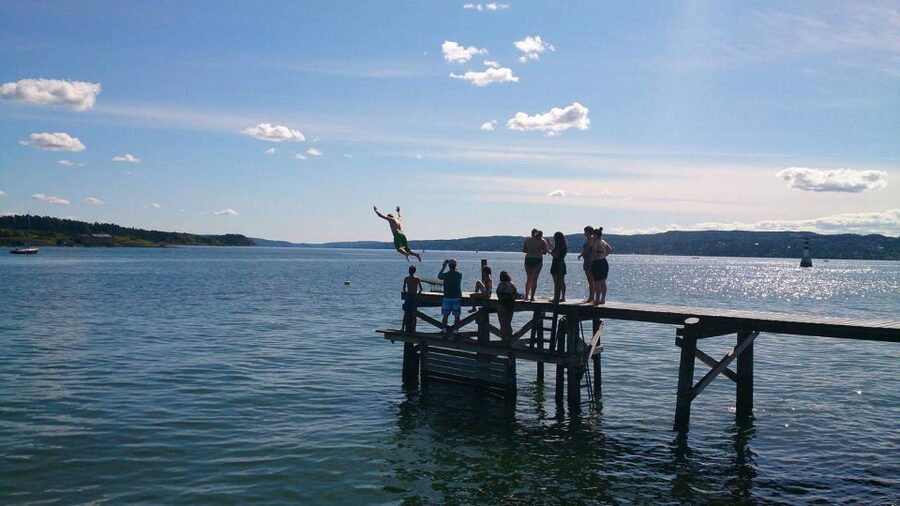
The coastal section is rugged, with beaches and lookout points along the way. You will have time for photographs, but this is not a long beach stop or a swimming excursion. Bring swimwear and a towel if you hope to take a dip, but treat swimming as an optional bonus rather than the purpose of the outing.
The walk on Hovedøya takes about an hour. The route includes gravel, dirt paths, and stones, so comfortable shoes are not just a polite suggestion. Good trail shoes make the day much easier, especially after rain or during icy winter conditions.
Gressholmen: nature reserve and industrial traces
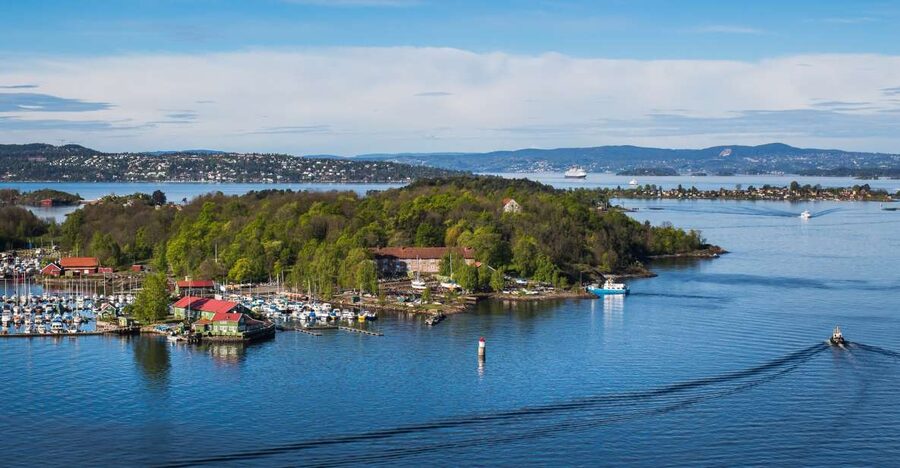
After another ferry ride of about 10 minutes, the group reaches Gressholmen. This island adds a different kind of interest. Its appeal comes from the meeting of open nature, military remains, and the traces of early aviation.
Gressholmen contains a nature reserve, so the walking feels more open and quiet than the city center. The guide points out features along the paths and explains how the island has been used over time.
One unusual stop is the remains of what was Oslo’s first airport. You also pass buildings and sites connected with the island’s military past. These remnants are not presented as a polished museum visit. Instead, you encounter them as part of a walk, with the guide providing the background that makes them easier to understand.
This is where the guide makes a real difference. On your own, you could take the ferry to Gressholmen and enjoy the trees and water. You might not recognize why a building matters, how the island fits into Oslo’s development, or what changed when its earlier uses faded away.
The Gressholmen section lasts about an hour. It is a good middle portion of the tour because the pace alternates between walking, looking, and listening. You are not asked to absorb a long lecture in one place.
Lindøya: cabin life beside the fjord
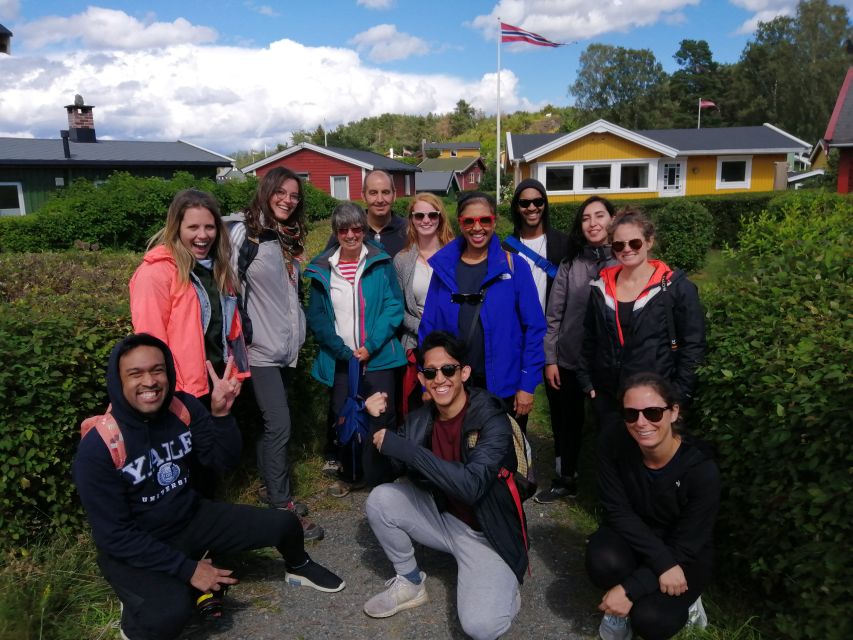
From Gressholmen, the ferry ride to the cabin islands takes around 15 minutes. In the warmer-season schedule, the route continues to Lindøya, where the mood shifts again.
Lindøya is known for its traditional wooden holiday homes, gardens, and narrow village paths. The cabins are not grand vacation estates. Their charm comes from their modest scale and the way they sit beside the water, surrounded by flowers and greenery during the summer months.
You walk through paths lined with gardens and small homes, then reach lookout points with broad views across the fjord. This section gives you a glimpse of a Norwegian leisure tradition: heading to a simple cabin, spending time outdoors, and treating access to nature as part of everyday life.
I find this the most immediately charming part of the summer route. Hovedøya gives you history, Gressholmen gives you unusual remnants, and Lindøya shows you how the islands function as living holiday communities.
The Lindøya walk lasts about an hour and a half, making it the longest stop. That extra time allows for a slower pace and a picnic break. You can choose from several spots with views of the water and hills.
From April through September, bring your own lunch, water, and perhaps a small snack. A backpack is more practical than a shoulder bag, especially if you also carry swimwear and a towel. Depending on opening hours and weather, you may be able to buy something at a local kiosk, including ice cream, but do not plan your meal around that option.
Same fjord country, a very different day out:
- Oslo: 3-Hour Highlights Bike Tour
★ 4.8 · 1,609 reviews - Oslo: 24 or 48-Hour Hop-On Hop-Off Sightseeing Bus Ticket
★ 4.1 · 1,470 reviews - Oslo: Guided Sightseeing Fjord Cruise on Premium Silent Boat
★ 4.7 · 1,390 reviews - Kon-Tiki Museum Entrance Ticket
★ 4.5 · 1,096 reviews
Winter changes the route, not the character
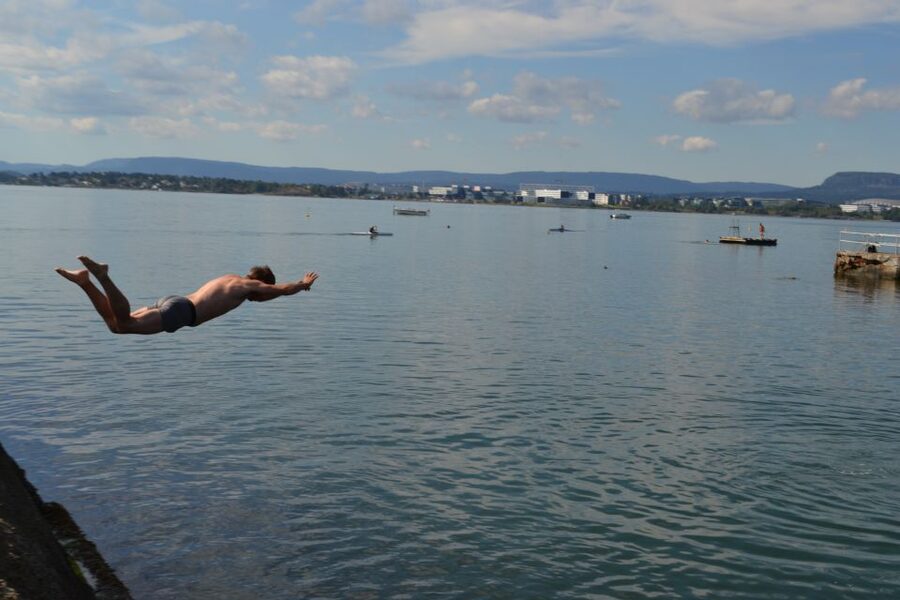
The season makes a real difference here. From April through August, the tour lasts about four to four and a half hours and visits three islands. From September through March, it lasts about three and a half hours and visits two islands.
The exact island combination in the cooler months can differ from the full summer plan, but Hovedøya is central to the experience. The shorter route means less time on foot and no third island stop, yet you still get ferry travel, coastal views, historical commentary, and island walking.
Winter can be striking. Snow, frost, and low light may make the islands feel especially quiet. Several cold-weather departures included a beachside pause with coffee, tea, or hot chocolate, along with ginger biscuits. Warm drinks are included from October through March.
Do not confuse a shorter winter itinerary with an easy indoor outing. You can still walk over icy or wet paths, and one departure required the guide to provide crampons because conditions were slippery. Bring a warm coat, gloves, hat, and rain protection. Rain gear is not included.
The winter schedule can be a good choice if you want to see Oslo beyond museums and shopping streets but do not want a full-day hike. At the same time, you need to be comfortable spending several hours outdoors. One participant described a winter outing as very cold but still enjoyable, which is a fair warning rather than a contradiction.
What the ferry rides add
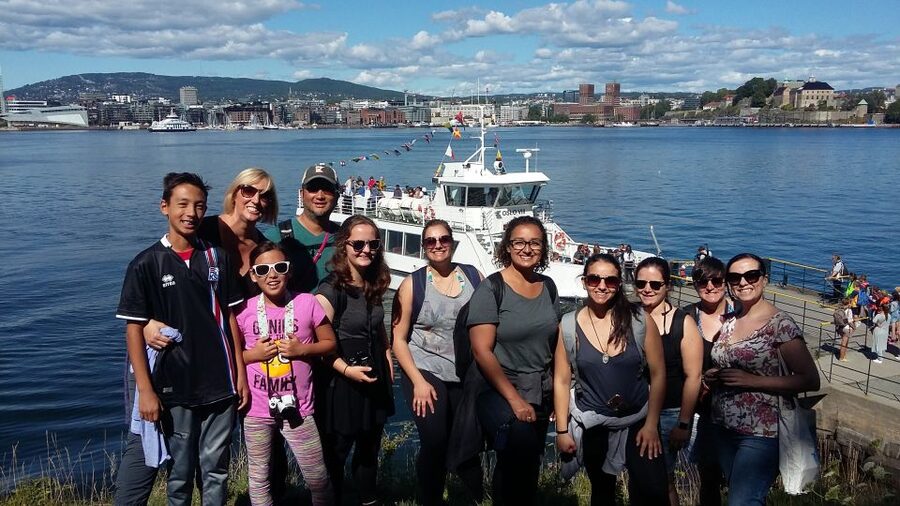
The boat sections are short, ranging from about 10 to 15 minutes, but they help break up the walking. They also give you a different view of Oslo’s relationship with the fjord.
Because you use public ferries, departure times and the shared setting are part of the experience. You are not sitting in one place while a guide points at distant sights. You move between islands, step ashore, walk a trail, and then return to the water.
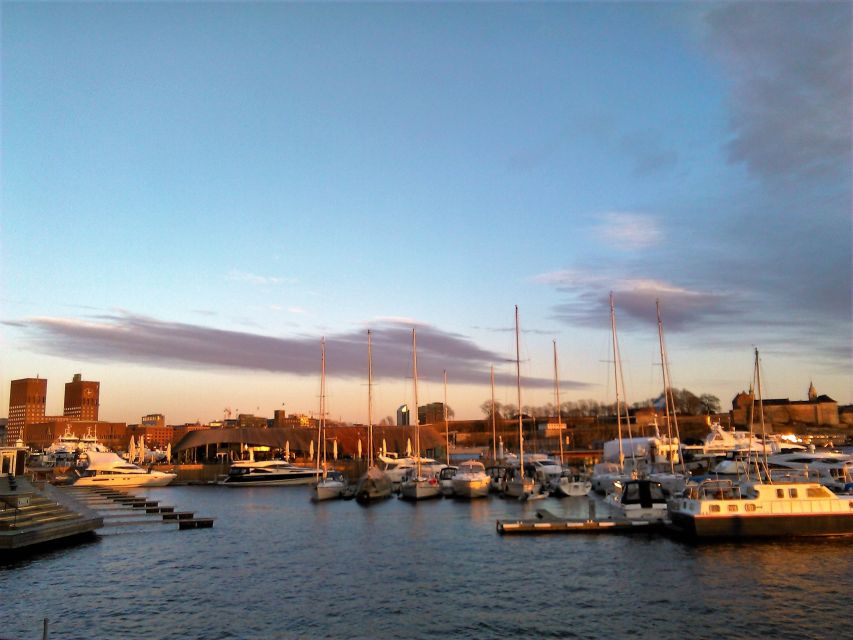
The final ride back to Rådhusbrygge 4 provides a fine city entrance. Look for Akershus Fortress, City Hall, and the renewed Aker Brygge waterfront as Oslo comes back into view.
This closing moment helps tie the tour together. You have seen the quieter islands, then return by boat to the major landmarks of the center. It is a more revealing introduction to Oslo than staying entirely within the urban core.
The guides are a major part of the value
The route is attractive on its own, but the guide shapes the day. The strongest departures appear to combine clear historical explanation with an easygoing pace.
Shaf has been singled out for energy, local recommendations, and care for the whole group. Giovanni has been praised for detailed stories about Oslo, Norway, and the islands, while also checking that everyone stayed comfortable. Patrick is described as friendly and well informed, with a knack for making the walk feel like time spent with a local friend.
Other guides, including Jon, Carolina, Neil, Laura, Curtis, Lola, Andreas, Kat, and Josh, have also been noted for humor, practical help, and engaging commentary. One guide even sang Norwegian folk songs during a winter outing. That sort of personal touch cannot be guaranteed, but it shows how much the human side can add.
The guides also monitor the group’s pace. This helped one participant whose wife had a knee injury, although the tour is not designed for wheelchair users and is not suitable for children under nine.
Is $69 a fair price?
At $69 per person, the tour is not simply charging for a ferry ticket. Public transport to the islands is relatively straightforward, so the value rests in the guiding, route planning, and the amount you cover in one organized outing.
You receive the ferry tickets, an English-speaking guide, and warm drinks during the colder months. In summer, food is not included, so you need to bring lunch. The guide also helps you use your time well by linking three different islands rather than leaving you to work out connections and walking routes yourself.
I consider the price reasonable if you want history, nature, and local context in one half-day. It is less compelling if you prefer wandering alone, dislike group schedules, or only want a scenic boat ride.
The tour also offers free cancellation up to 24 hours before departure and a reserve-now, pay-later option. Those terms help if your Oslo plans are still shifting, but the more important decision is practical: can you manage the distance and outdoor conditions?
Who should book this island walk?
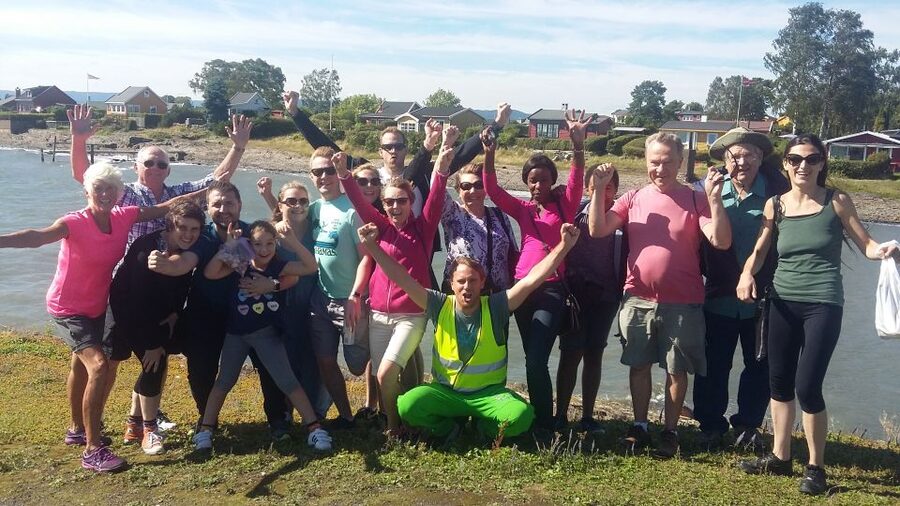
You should consider it if you want to:
- Add nature to a short Oslo visit
- See the fjord without booking a longer cruise
- Learn about medieval Norway, military history, and island life in one outing
- Walk at a steady group pace with regular stops
- Get local suggestions for the rest of your stay
- Experience Oslo in winter while accepting cold and slippery conditions
You may want another activity if you need step-free access, dislike uneven trails, or want a relaxed excursion with almost no walking. The route covers roughly 7 kilometers and about 10,000 steps in warmer months. Comfortable shoes are the minimum; trail shoes are better.
Families with children under nine cannot join. Older children and active adults may enjoy it, but the weather, terrain, and length deserve honest consideration before booking.
Practical tips for a better four hours
Meet at Rådhusbrygge 4 near Platform E, next to Fisketorget. Arrive 10 minutes early and look for the public ferry departure area.
Wear shoes that can handle gravel, dirt, and stones. In winter, add traction aids if you have them, though the guide may provide crampons when conditions require them.
Carry a small backpack with water, food, swimwear, and a towel. From April through September, plan to bring your own lunch. From October through March, warm drinks are provided, but you should still bring anything else you will want to eat.
Pack rain gear in all seasons. The tour does not include it, and the scenery remains worthwhile in wet weather only if you are dressed for it.
Leave room on your camera or phone. You will have abbey ruins, cannons, wooded trails, cabin gardens, rocky shorelines, ferry views, and the return approach to Oslo’s central waterfront.
Should you book Oslo Nature Walks: Island Hopping Tour?
I would book this tour if you want to understand Oslo as a fjord city, not just as a collection of museums and streets. The combination of Hovedøya’s abbey, Gressholmen’s old airport and military traces, and Lindøya’s cabin culture gives you a broad sense of place in a single half-day.
Book in spring or summer for three islands, longer daylight, flowers, and a picnic by the water. Choose the cooler months if you like crisp air and quiet trails, but bring serious warm clothing and expect only two islands.
The one firm question is whether you are ready to walk about 7 kilometers on uneven ground. If yes, the $69 cost buys more than transportation. It gives you a well-planned route, useful local stories, and a memorable way to see the fjord that is easy to miss from the city center.
FAQ
How long is the Oslo island-hopping tour?
From April through August, the tour lasts about four to four and a half hours. From September through March, it lasts about three and a half hours.
How many islands does the tour visit?
The warmer-season route visits three islands. The cooler-season route visits two islands.
Which islands are included in the tour?
The full route includes Hovedøya, Gressholmen, and Lindøya. The specific winter route visits two islands.
Is food included?
Food is not included. You are encouraged to bring your own lunch from April through September. Depending on weather and opening hours, you may be able to buy snacks or ice cream at a local kiosk.
Are drinks provided?
Warm drinks are included from October through March. These may include coffee, tea, or hot chocolate. Food and drinks are not otherwise included.
How much walking is involved?
You should expect approximately 7 kilometers of walking, or about 10,000 steps, on gravel, dirt paths, and stones. Good trail shoes are recommended.
Just added around Oslo
- 4 hours Best View of the Oslofjord Winter Edition★ 4.0 · 15 reviews
- Oslo Winter Highlights Bike Tour★ 5.0 · 36 reviews
- Unknown war. Oslo and Norway during 1940-45★ 5.0 · 74 reviews
- The Ultimate Norwegian Skiing Experience★ 5.0 · 16 reviews
- The Viking Planet Museum Ticket★ 4.0 · 197 reviews
- The Viking Planet Museum – Mini Group (4 adults)★ 4.0 · 16 reviews
- The Scenic Roadtrip, Oslo to Bergen via Flam & the Fjords★ 5.0 · 25 reviews
- Visit the Instaworthy Spots of Oslo’s Vigeland Park with a Local★ 5.0 · 4 reviews
Oslo Tours, compared.
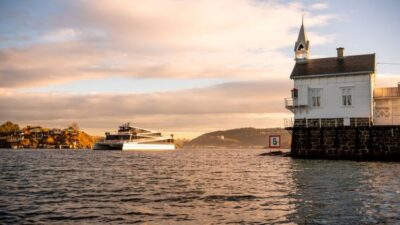
Scenic Fjord Cruise with Audio Guide Commentary
Read our review →

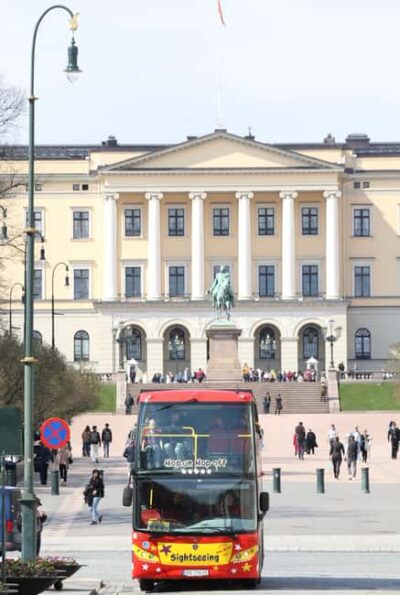
24 or 48-Hour Hop-On Hop-Off Sightseeing Bus Ticket
Read our review →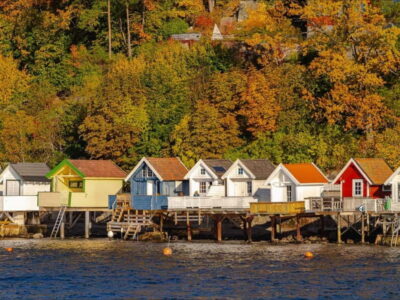
Guided Sightseeing Fjord Cruise on Premium Silent Boat
Read our review →

Browse the lists this tour appears in