
Reviewed · CRUISES & BOAT TOURS
Skjervøy: Orca and Whale-Watching comfort heated Boat Trip
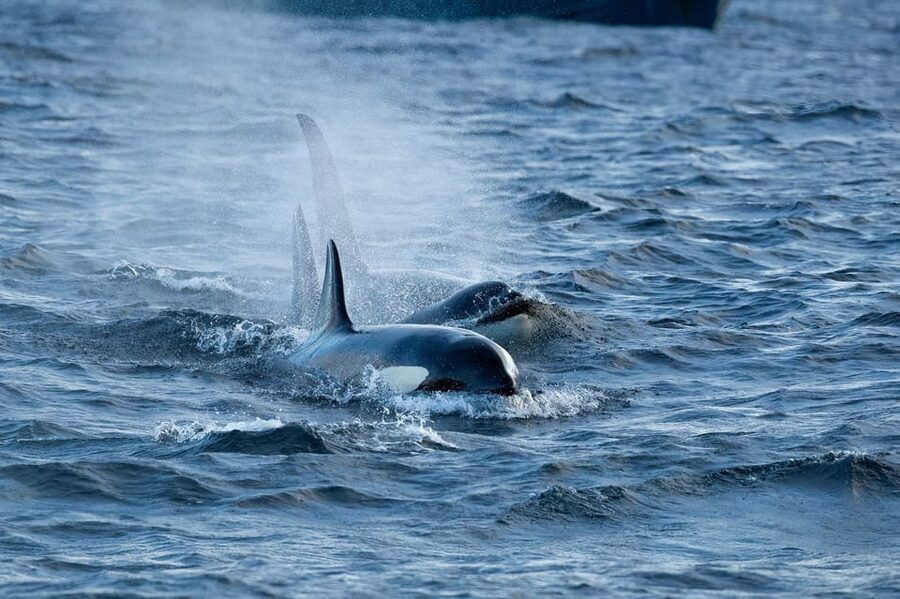
Off Skjervøy, the main attraction is the chance to watch orcas and humpback whales moving through Arctic waters, often close enough for clear photographs. The boat gives you two useful choices: stay warm in the heated cabin or step onto the open terrace when wildlife appears.
I like the steady, more comfortable ride compared with a standard RIB, and I like the respectful approach used by captain Jacob and guide Filippo, who turn off the engine near whales rather than chase them. The main drawback is simple: wildlife sightings are never guaranteed, and rough seas can still affect your comfort.
In This Review
- Key points to know before you book
- Setting out from Skjervøy in a purpose-built whale boat
- Searching the Barents Sea for orcas and humpbacks
- A heated cabin, open deck, and better viewing choices
- Photography advice for real Arctic conditions
- The crew and the value of a respectful approach
- What the three-and-a-half-hour itinerary feels like
- Is $301 a fair price?
- Who should choose this whale safari?
- How to make the most of your time on board
- Should you book the Skjervøy orca trip?
- FAQ
- How long does the whale-watching trip last?
- Where does the activity start?
- Where does the boat return?
- What animals might I see?
- Is the boat heated?
- Do I need to wear a special suit?
- What languages does the guide speak?
- Is the trip suitable for young children or pregnant women?
- What happens if I need to cancel?
Key points to know before you book
- A heated cabin matters: You can warm up between sightings without wearing a bulky special suit.
- The terrace is made for photographs: Step outside for open views and better shooting angles.
- You may hear whales underwater: The boat has a hydrophone for listening to orca calls and other marine sounds.
- The crew combines local seamanship with wildlife knowledge: Captain Jacob and nature guide Filippo lead the trip.
- Strong sightings can be spectacular: Orca pods, humpbacks, minke whales, and fin whales are all possible.
- Prepare for the sea: If you get seasick, take suitable medication in advance, usually about two hours before departure.
Setting out from Skjervøy in a purpose-built whale boat
This trip begins at the Skua Nature banner or flag at the stated meeting point, listed as 2XPM+98X. You return to the same place after the safari, so there is no need to arrange a separate return transfer.
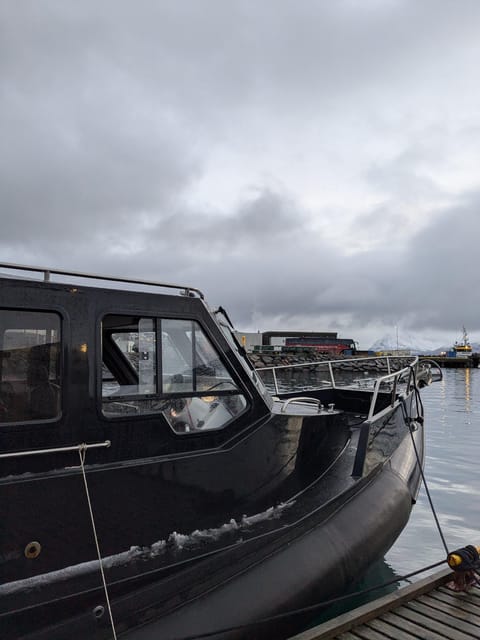
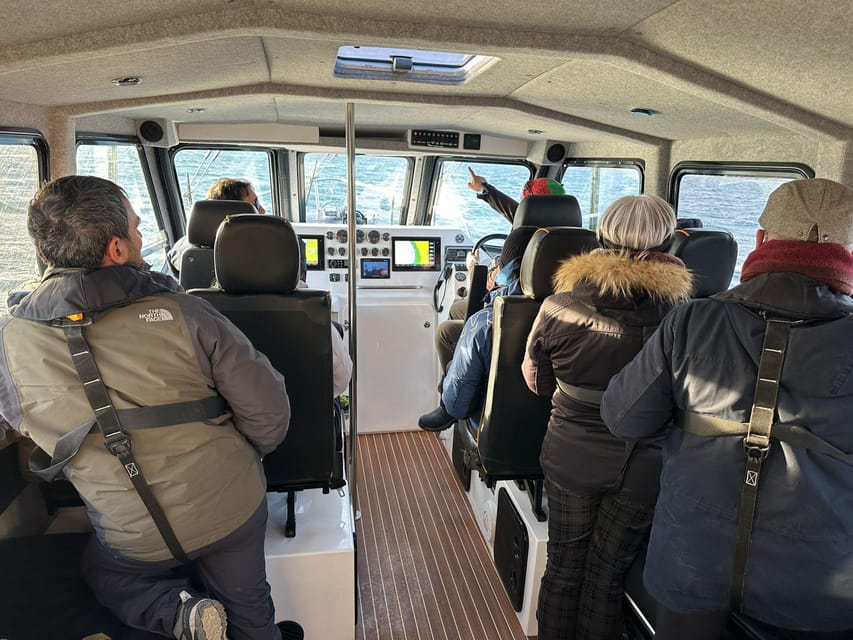
The boat is a major part of the experience. It is covered and heated, with a toilet onboard, hot drinks, and a spacious outdoor terrace. That combination changes the feel of an Arctic whale trip. You can watch from outside when conditions are good, then retreat indoors when the wind bites or the boat is moving between sightings.
The vessel is designed for both speed and comfort. It is described as more stable than traditional RIBs, which should make the ride easier for many people, though no small boat can remove all motion on the Barents Sea. I would still treat seasickness seriously. If you know you are prone to it, take suitable medication in advance, usually two hours before the trip.
You receive a short safety briefing before departure. Listen closely, particularly when the crew explains where you can stand, how to move around the boat, and when to return inside. Wildlife photography is exciting, but it is easy to focus on the camera and forget that you are on a moving vessel.
A few more Scandinavia trips to weigh up
- Tromsø: Whale Watching Tour by Hybrid-Electric Boat
★ 4.5 · 4,217 reviews - Tromsø Whale Safari with MS Gabriele
★ 4.3 · 1,937 reviews - From Tromsø: All-Inclusive Whale & Orca Safari
★ 4.5 · 1,221 reviews
Searching the Barents Sea for orcas and humpbacks
The main whale-watching period lasts about three and a half hours, although the itinerary also describes roughly four hours of whale watching. Check the exact timing when you book, since the starting time depends on availability.
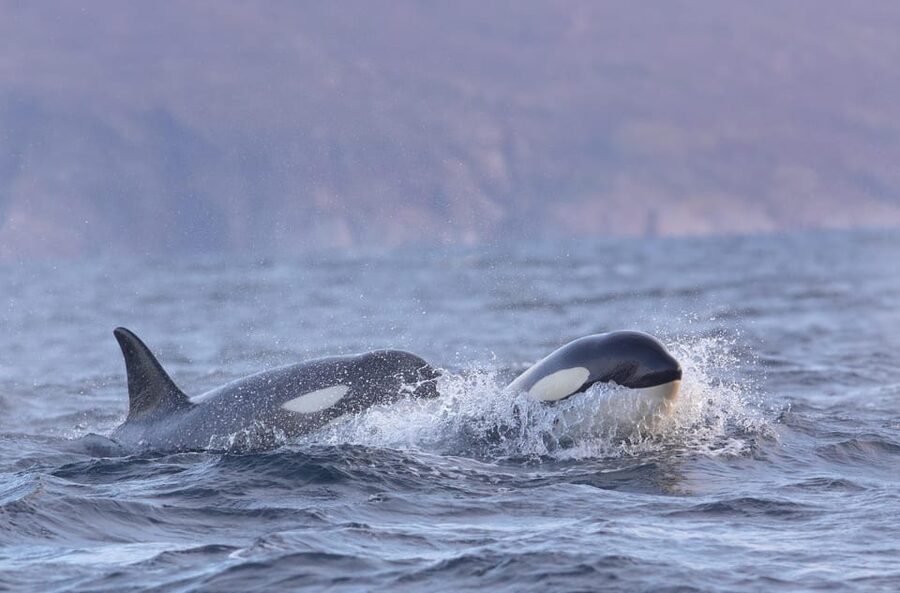
There is no fixed parade route. The captain and guide search the water for signs of marine life, then adjust the boat’s position. You might first notice a dorsal fin, a splash, a blow, or a group of birds marking activity on the surface. The guide helps you understand what you are looking at instead of leaving you to scan a huge stretch of sea alone.
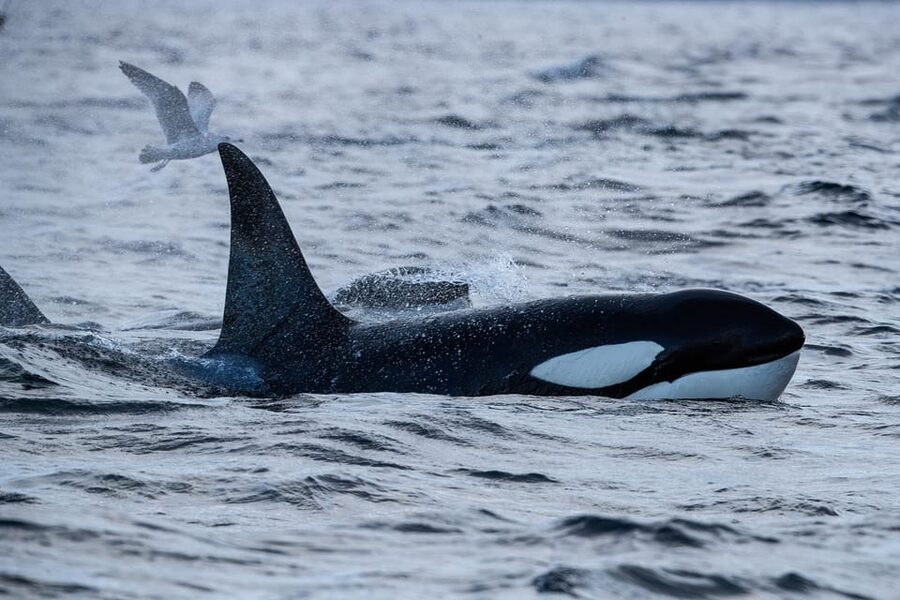
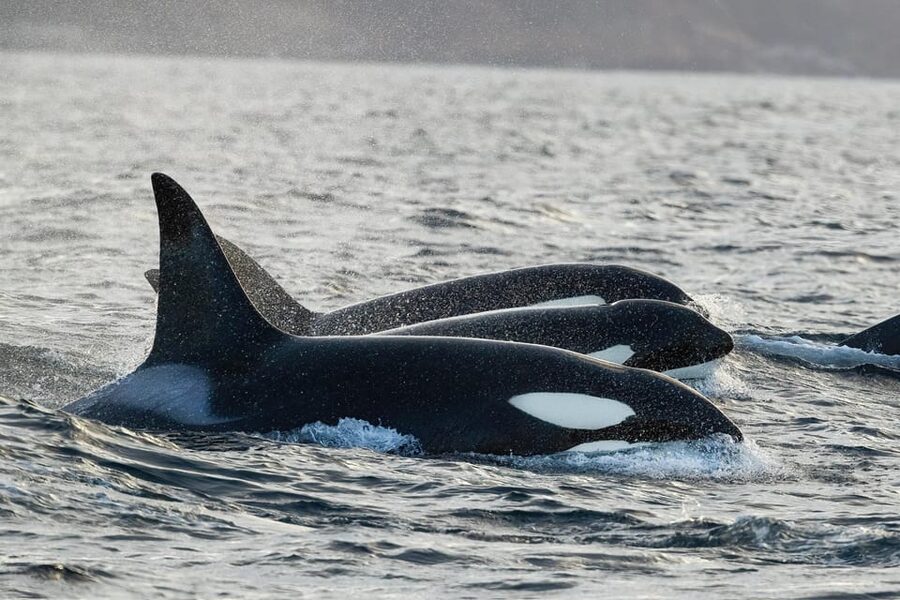
The possible sightings include orcas, humpback whales, minke whales, and fin whales. Orcas are the headline attraction, but humpbacks can provide some of the most dramatic surface action. Their blows and large backs are easier to spot from a distance, while minke whales may appear more briefly.
A strong outing can bring several pods into view. One reported trip included about four pods, with roughly 10 to 15 orcas in each group, along with numerous humpback whales. That is an exceptional wildlife day rather than a promise, but it gives you a useful sense of what the area can produce when conditions and animal movements line up.
The crew’s conduct around the animals is just as important as the sightings. When the boat reaches a good position, the engine may be switched off so the animals can approach without being pursued. This creates a quieter encounter and gives you a better chance of watching natural behavior. It also means you need patience. The best moment may come after the boat has stopped, not while it is racing toward the next sighting.
A heated cabin, open deck, and better viewing choices
Many whale boats force you to choose between comfort and visibility. This one gives you both, at least within the limits of weather and sea conditions.
The cabin is covered and heated, so you can warm up between sightings. That is especially useful in northern Norway, where even a calm day on the water can feel cold after several minutes outside. You do not need to wear a special survival suit on this covered boat, which keeps the trip simpler and leaves you less restricted when handling a camera.
When something appears, head to the spacious terrace for an open view. The outdoor deck gives you fewer obstructions than looking through a window, and it provides a better platform for photography. Keep your camera ready, but do not spend the entire trip staring at the screen. Whales rarely follow a script, and you can miss the best sight by reviewing the previous shot.
The boat also has a night vision camera and a hydrophone. The night vision system adds another way to observe marine life, while the hydrophone lets you listen to sounds beneath the surface, including the haunting calls associated with orcas and other marine creatures. These tools make the trip more than a simple surface search. They help connect what you see above the water with what is happening below it.
Onboard hot drinks are included. This is a small feature, but it has real value on a cold-water safari. A warm drink and a sheltered seat can make the difference between staying focused and spending the second half of the trip counting the minutes until return.
Photography advice for real Arctic conditions
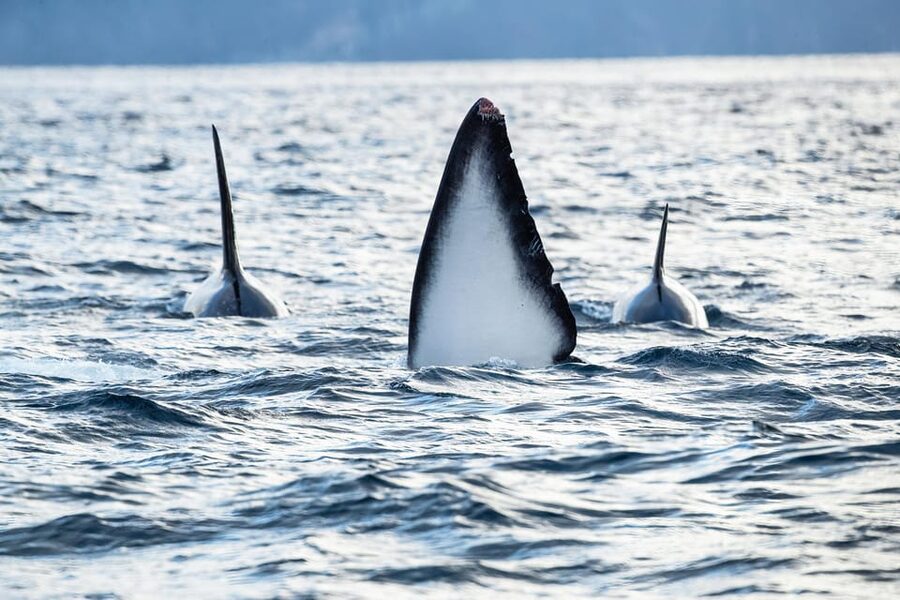
This experience is built with wildlife photography in mind, but you do not need to be a serious photographer to enjoy it. Bring a camera if you have one, and bring a telephoto lens if available. A long lens helps you frame animals that remain at a respectful distance, while a wider lens can be useful for the boat, open water, and surrounding Arctic scenery.
The guide provides tips on capturing better shots. In practical terms, that means you can get help with timing, positioning, and paying attention to animal behavior. Orcas may surface in a group, but not every fin appears at the same moment. Humpbacks may give you a blow before showing more of the body. A guide who knows these patterns can help you anticipate action rather than react after it has passed.
Keep expectations realistic. Wildlife photography on a moving boat is not like photographing a stationary subject. Light changes, the boat shifts, and the animals decide when to surface. A fast shutter speed is useful if your camera allows it, but the most important tool is patience.
You should also protect your equipment from spray and cold. The supplied information does not specify camera storage or protective gear, so bring only what you can manage safely. A camera strap is sensible, and you should avoid placing expensive equipment where it can slide or be splashed.
Same fjord country, a very different day out:
- Stockholm: City Archipelago Sightseeing Cruise with Guide
★ 4.3 · 10,798 reviews - Copenhagen: Canal Cruise with Guide
★ 4.6 · 9,115 reviews - From Bergen: The Original Fjord Cruise to Mostraumen
★ 4.7 · 8,440 reviews - Tromsø: Reindeer Sledding & Feeding with a Sami Guide
★ 4.8 · 6,417 reviews
The crew and the value of a respectful approach
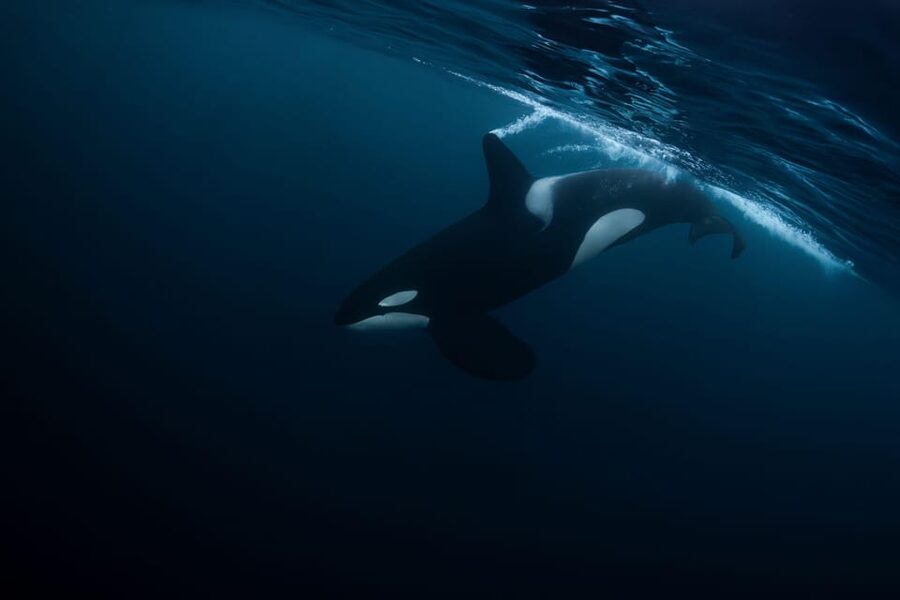
Captain Jacob and nature guide Filippo are named as the key crew members. Jacob brings extensive Arctic boating experience, while Filippo focuses on the wildlife side of the outing and photography guidance. Their roles complement each other: one handles the boat and route, while the other helps you spot animals and understand their behavior.
The best part of this arrangement is that you are not simply taken to a location and left to look around. The guide explains the habitat and behavior of the animals, then helps you make sense of what you see. That is particularly valuable when whales surface for only a few seconds.
The approach to the animals also deserves attention. The crew is reported to avoid staying too long with one pod and to turn off the engine when close. On one outing, the orcas came nearer after the engine was stopped. That kind of encounter is a reminder that restraint can produce better viewing than constant movement.
Of course, the crew cannot control the whales, the weather, or the light. A good guide improves your chances and your understanding, but cannot guarantee a dramatic breach or a close approach. Book this for the quality of the search and the setting, not for a promised photograph.
What the three-and-a-half-hour itinerary feels like
At the meeting point, look for the Skua Nature banner or flag. The crew gives you the safety instructions and a short orientation before the boat leaves.
The first part of the trip is likely to be a search. You may spend time scanning the water while the captain moves toward signs of activity. This can feel slow if you expect nonstop action, but the search is part of responsible whale watching. The animals are wild, and their location changes.
Once the crew spots whales, the pace changes. You move to the terrace for views and photographs, listen to the guide, and watch for the next surface appearance. If the weather is cold, return to the cabin between sightings. The boat’s toilet and hot drinks make the long stretches more manageable.
The final stage is the return to the same meeting point. The advertised experience lasts around three hours and 30 minutes. Since one part of the itinerary refers to four hours of whale watching, confirm the exact schedule for your chosen departure.
Is $301 a fair price?
At $301 per person, this is not a budget boat ride. The value depends on what matters to you.
You are paying for a heated, covered boat rather than a basic open RIB, a toilet onboard, hot drinks, a terrace, a captain, an environmental guide, photography advice, and equipment such as a hydrophone and night vision camera. For someone who wants a more comfortable Arctic wildlife outing, those features help justify the cost.
The price also reflects the uncertainty of wildlife trips. You could see several pods and humpbacks, or you could spend much of the trip searching without a major encounter. No ethical operator can guarantee animals on a particular day. If your main goal is simply to get onto the water at the lowest possible price, compare other boat options. If you value warmth, stability, wildlife interpretation, and a photography-friendly setup, the higher fare makes more sense.
The small group feel described on recent outings is another potential advantage, though no exact group size is provided. Do not assume the boat will be private or uncrowded on every departure. Ask if group size is important to you.
Who should choose this whale safari?
I would point this trip toward adults and older children who are comfortable on a boat and genuinely interested in marine life. Children under six are not allowed, and the experience is not suitable for pregnant women.
It is a particularly good match for:
- Amateur and serious wildlife photographers
- Anyone who dislikes sitting outside in Arctic cold for hours
- People who prefer a steadier boat to a traditional RIB
- Visitors who want guidance in English or Italian
- Anyone interested in animal behavior and underwater sound, not just surface photographs
It may be less suitable if you need guaranteed wildlife sightings, dislike open water, or are highly sensitive to motion. The heated cabin helps, but it does not turn the Barents Sea into a calm lake.
The tour can also suit a last-minute free day, provided you can reach the meeting point and find an available departure. The flexible booking terms help: you can reserve now and pay later, and cancellation is free up to 24 hours in advance for a full refund.
How to make the most of your time on board
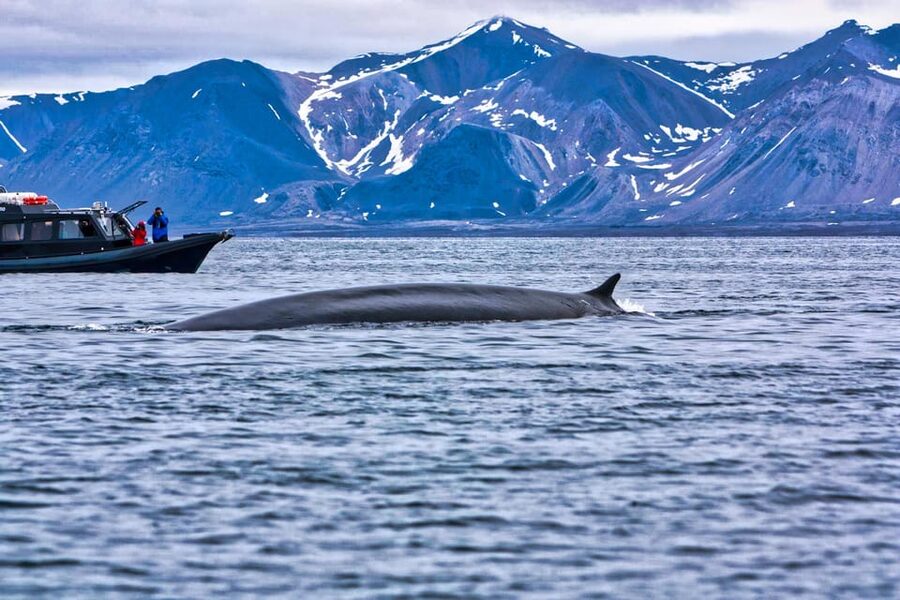
Bring a camera and telephoto lens if you have them, but do not let equipment take over the outing. Watch the water first. The guide’s warning or the sudden movement of other people may be your best clue that an animal is about to surface.
Wear practical layers even though the boat is heated. The cabin should keep you warm, but you may spend time on the terrace when whales appear. Take seasickness medication in advance if you need it, rather than waiting until the boat is already moving.
Listen during the safety briefing and follow instructions near the railings and terrace. Keep hot drinks steady, secure loose items, and move carefully when the boat changes speed.
Most of all, give the animals room. A close encounter is exciting, but the quiet moments after the engine stops may be the most rewarding part of the trip. You get a better chance to see natural behavior, and the whales are spared needless disturbance.
Should you book the Skjervøy orca trip?
Book it if you want a comfortable, photography-focused whale safari and understand that nature sets the timetable. The heated cabin, open terrace, hydrophone, toilet, hot drinks, and expert crew give this trip more comfort and substance than a bare-bones boat ride.
I would be cautious if $301 feels high for an experience with no guaranteed sightings, or if seasickness is a serious concern. For everyone else, especially photographers and people who want to watch orcas without spending hours exposed to Arctic cold, this is a strong option. Its best moments come from patient searching, quiet engine-off encounters, and the chance to see several kinds of whales in their natural setting.
FAQ
How long does the whale-watching trip last?
The advertised duration is about 3 hours and 30 minutes. The itinerary also describes around four hours of whale watching, so check the exact timing when selecting your departure.
Where does the activity start?
Meet at the Skua Nature banner or flag at the stated meeting point, listed as 2XPM+98X.
Where does the boat return?
The activity ends back at the same meeting point where it begins.
What animals might I see?
Possible sightings include orcas, humpback whales, minke whales, and fin whales. Sightings are not guaranteed.
Is the boat heated?
Yes. The boat is covered and heated, with an outdoor terrace for open-air viewing.
Do I need to wear a special suit?
No special suit is required for this covered boat, according to the activity information. You should still bring suitable layers for time spent on the terrace.
What languages does the guide speak?
Live guiding is available in English and Italian.
Is the trip suitable for young children or pregnant women?
The activity is not suitable for children under six or for pregnant women.
What happens if I need to cancel?
You can cancel up to 24 hours before the activity for a full refund. You can also reserve now and pay later.
Just added around Scandinavia
- Stockholm: Evening Wildlife Safari with Midsummer Meal★ 4.2 · 130 reviews
- Wilderness Tour with Snowmobile & Ice Fishing★ 4.9 · 28 reviews
- World War II Stockholm Old Town Walking Tour and Army Museum★ 4.6 · 4 reviews
- Vossevangen: Nærøyfjord Full-Day Guided Kayaking Trip★ 4.8 · 4 reviews
- West Sweden: Sea Kayak Delight in Nature Reserves★ 5.0 · 6 reviews
- From Svolvær: Whale Watching Day Trip to Andenes★ 3.8 · 27 reviews
- Voss: Family Rafting on the Vosso River★ 4.7 · 23 reviews
- Voss: Thrilling Whitewater Rafting Guided Trip★ 4.6 · 56 reviews
Cruises & Boat Tours, compared.

City Archipelago Sightseeing Cruise with Guide
Read our review →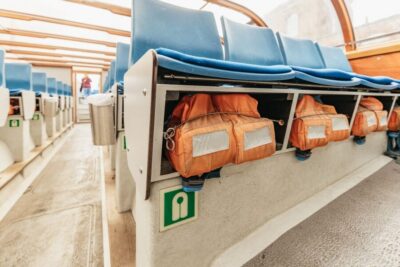

Scenic Fjord Cruise to Lysefjord and Preikestolen
Read our review →
Scenic Fjord Cruise with Audio Guide Commentary
Read our review →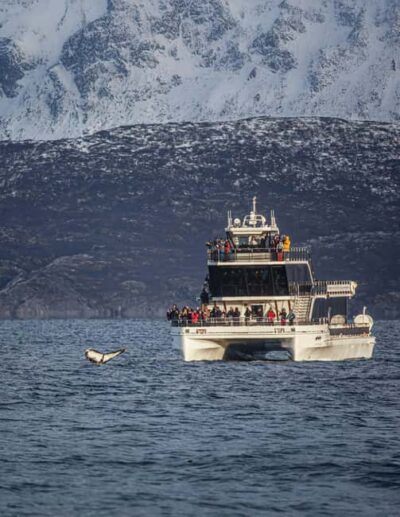
Hop-On Hop-Off Bus Tour with Boat Tour Option
Read our review →
Tromsø’s Top-Rated Fjord & Fishing Cruise – All-Inclusive
Read our review →Browse the lists this tour appears in