
Reviewed · HISTORICAL TOURS
Stockholm Viking History Full Day Tour to Sigtuna + Uppsala
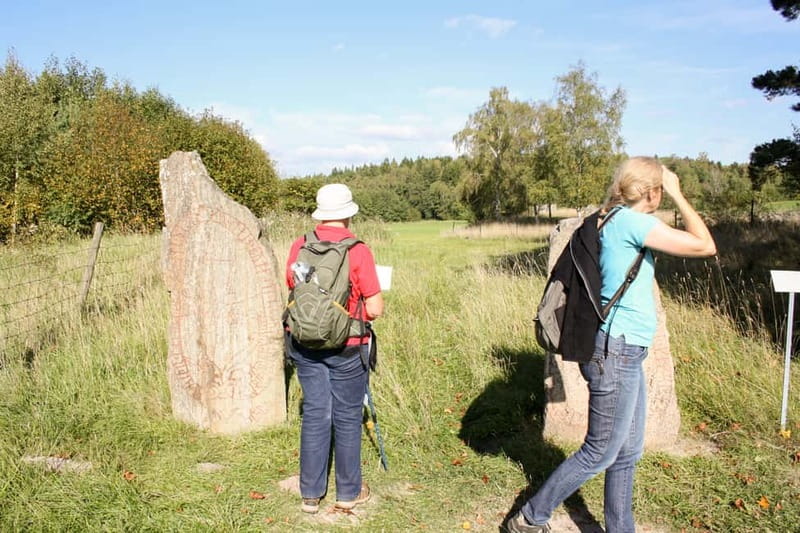
The most memorable part of this day is not a museum display. It is standing beside real Viking Age rune stones, burial mounds, and the remains of places where people gathered, argued, worshipped, and buried their dead more than 1,000 years ago. You move through the countryside north of Stockholm with a guide who explains how these scattered sites fit together.
I like the mix of small Sigtuna and grand Uppsala, which gives you both a quiet historic town and one of Sweden’s major religious centers. I also like the carefully chosen stops: Broby Bridge, Jarlabanki’s bridge, and Arkil Assembly site add context that you would likely miss on a standard Stockholm day trip. The drawback is the pace. Eight to nine hours is a long day, and Sigtuna, Uppsala, and the archaeological sites leave little room for an unplanned wander.
In This Review
- Key points to know before you book
- Why this tour works for Viking history
- Broby Bridge and the story of Estrid
- Jarlabanki’s bridge and a message in stone
- Arkil Assembly site and Viking law
- Sigtuna, Sweden’s oldest town
- Uppsala and the great cathedral
- Old Uppsala and the royal mounds
- The drive, breaks, and full-day rhythm
- What the $266 price gets you
- Who should book this day out
- Should you book the Sigtuna and Uppsala Viking tour?
- FAQ
- How long does the tour last?
- Where does pickup take place?
- How will I recognize the guide?
- Is cruise pickup available?
- What language is the tour conducted in?
- Is lunch included?
- How much walking is involved?
- Does the tour operate in bad weather?
- Are entry fees included?
- Can I book a private group?
Key points to know before you book
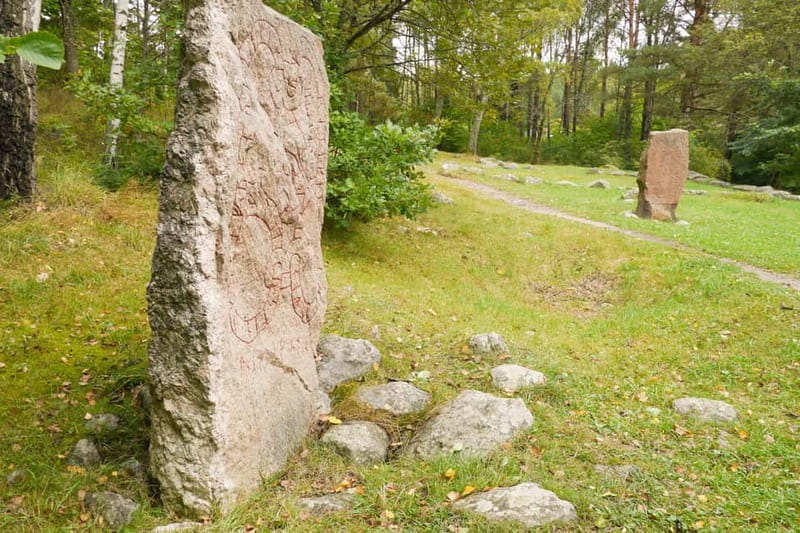
- Broby Bridge reveals two sides of the Viking world: You see both pagan and early Christian burial traditions linked with the powerful Viking woman Estrid.
- Jarlabanki’s bridge is partly rebuilt: You can walk across a reconstruction and examine its unusual runic message.
- Arkil Assembly site explains Viking law: This was a gathering place connected with local politics, disputes, and kin groups.
- Sigtuna gives you Sweden’s oldest-town experience: Expect medieval church ruins, wooden buildings, small lanes, and a guided walk.
- Old Uppsala adds royal burial mounds: The huge mounds, former cathedral site, and nearby Uppsala Cathedral create a strong finish.
- The day is easy to arrange from Stockholm: Hotel pickup and return are included within 3 kilometers of Stockholm Central Station.
Why this tour works for Viking history
Sweden’s Viking past is easy to flatten into images of ships, swords, and raiders. This tour gives you something more useful: the physical places where ordinary political and religious life took shape.
The six main historical stops are spread around Stockholm County and Uppsala. You see stones carved with runes, grave fields, a meeting site, an early town, and royal mounds. Your guide connects them to changes in belief, law, social rank, and trade.
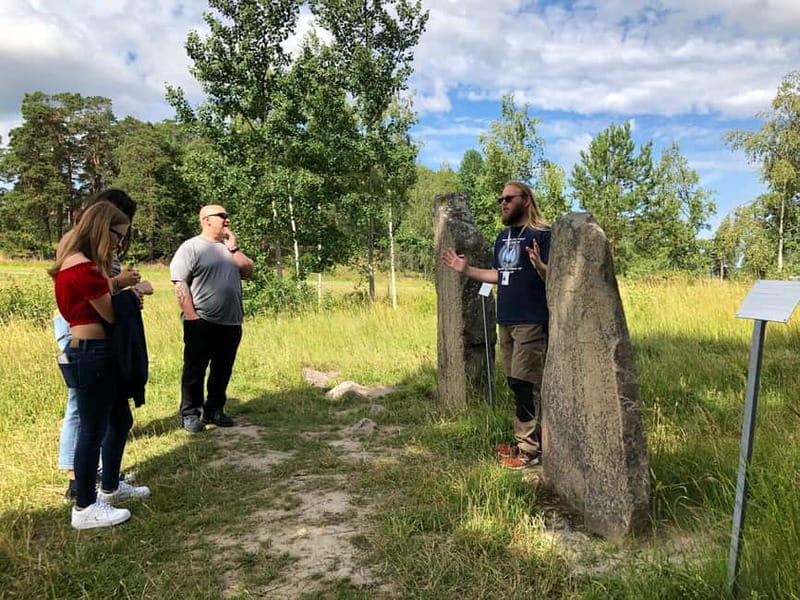
That guide matters. A good explanation turns a weathered stone into a personal message from a landowner, parent, or ruler. Guides including Calle, Olof, Gabriel, Urban, Carl, and Åsa have led this experience. Åsa is described as an archaeologist and university teacher, while other guides are praised for clear English, humor, and their ability to handle detailed questions.
You should not expect a lecture delivered from one spot. Much of the teaching happens in the vehicle between stops, where the guide can explain Swedish history in a wider frame. The day has a relaxed feel despite the number of places, with breaks for toilets, snacks, and drinks.
A few more Scandinavia trips to weigh up
- Tromsø: Reindeer Camp and Sami Cultural Tour with Lunch
★ 4.7 · 3,326 reviews - Stockholm: Ghost Walk and Historical Tour
★ 4.7 · 2,206 reviews - The Original Stockholm Ghost Walk and Historical Tour – Gamla Stan
★ 4.5 · 1,165 reviews
Broby Bridge and the story of Estrid
Your first historical stop is Broby Bridge, one of Sweden’s best-known burial grounds. Allow about 40 minutes for a guided visit, photographs, and the surrounding views.
The site is especially useful because it shows a period of transition. You learn about a pagan burial place and an early Christian burial place, reflecting the gradual shift from Old Norse religion to Christianity. That change was not a simple overnight replacement. It affected burial customs, family identity, political power, and the way people understood their place in the world.
The guide also introduces Estrid, remembered as a powerful Viking woman. Her story gives the site a human center. Instead of hearing only about kings and warriors, you get a sense of how women could hold status and influence within prominent families.
The stop involves outdoor walking on historical ground, so sturdy shoes are sensible. The tour describes walking as limited overall, but the ground at archaeological sites can still be uneven. Your visit is fairly short, so listen closely to the explanation before moving on.
Jarlabanki’s bridge and a message in stone
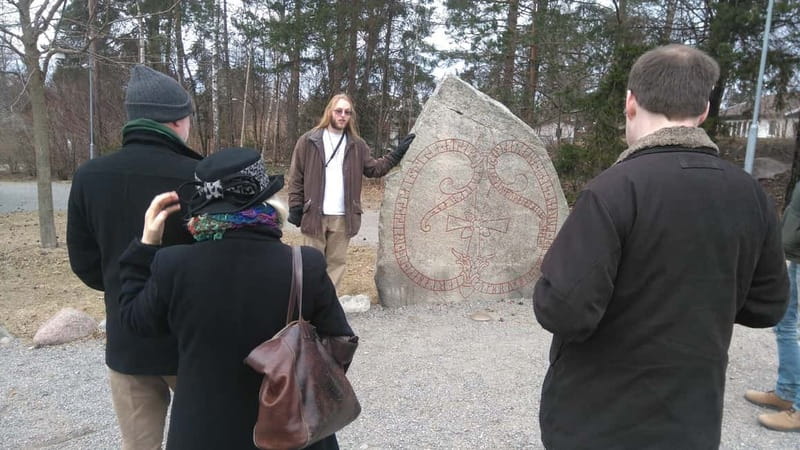
At Jarlabanki’s bridge, you see and walk over a partly reconstructed Viking bridge. The stop lasts about 40 minutes and includes a guided explanation of the unusual runic inscription connected with the site.
A bridge was more than a crossing. It could improve movement through a local area, support trade, and advertise the influence of the person who paid for it. Runestones often served a similar purpose. They recorded names, family ties, religious beliefs, and public achievements in a form that could be seen by anyone passing by.
This is one of the tour’s strongest hands-on moments. You are not simply looking at a stone behind glass. You are standing where a Viking-era route once ran and walking on a reconstruction that helps you picture how the area functioned.
Do keep your expectations grounded. A reconstructed bridge and old stones cannot recreate an entire Viking settlement. Their value comes from the guide’s interpretation, so this stop is much stronger with someone who can explain the inscription and its setting.
Arkil Assembly site and Viking law
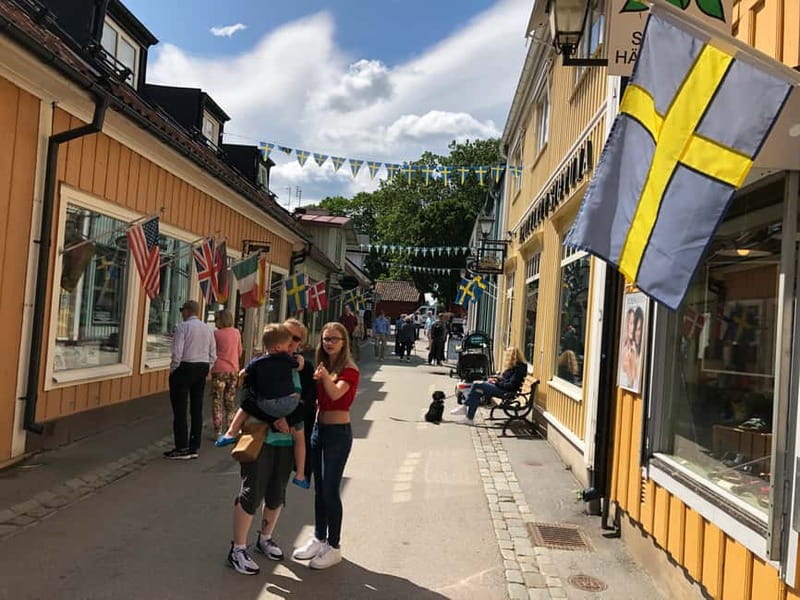
The next stop, Arkil Assembly site, introduces the political side of Viking society. You spend about 40 minutes here with a guide, taking in the site and the surrounding views.
This was a Viking assembly place, sometimes described as a parliament. It offers a useful correction to the idea that Viking society was ruled only by force. Local law, family groups, alliances, and public negotiation all mattered.
You hear how kin groups formed the base of society and how disputes could be settled. The site helps explain why a person’s family connections were so important, and why public reputation carried real weight.
Arkil is likely to appeal most if you enjoy the social details behind history. There may not be a dramatic structure to enter. Much of what you gain comes through the story told on the spot, not through a large visible ruin.
Same fjord country, a very different day out:
- Stockholm: City Archipelago Sightseeing Cruise with Guide
★ 4.3 · 10,798 reviews - Copenhagen: Canal Cruise with Guide
★ 4.6 · 9,115 reviews - From Bergen: The Original Fjord Cruise to Mostraumen
★ 4.7 · 8,440 reviews - Tromsø: Reindeer Sledding & Feeding with a Sami Guide
★ 4.8 · 6,417 reviews
Sigtuna, Sweden’s oldest town
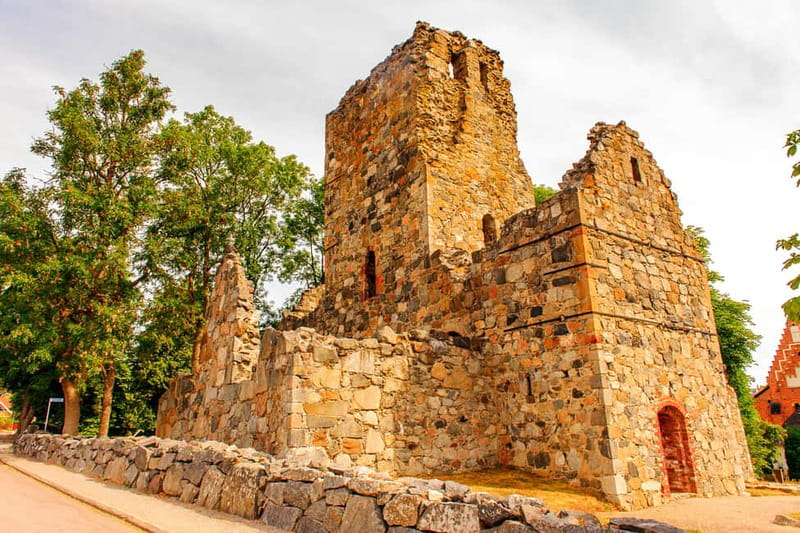
Sigtuna gets the longest stop, about 100 minutes, and this is where the day shifts from open archaeological sites to a small historic town.
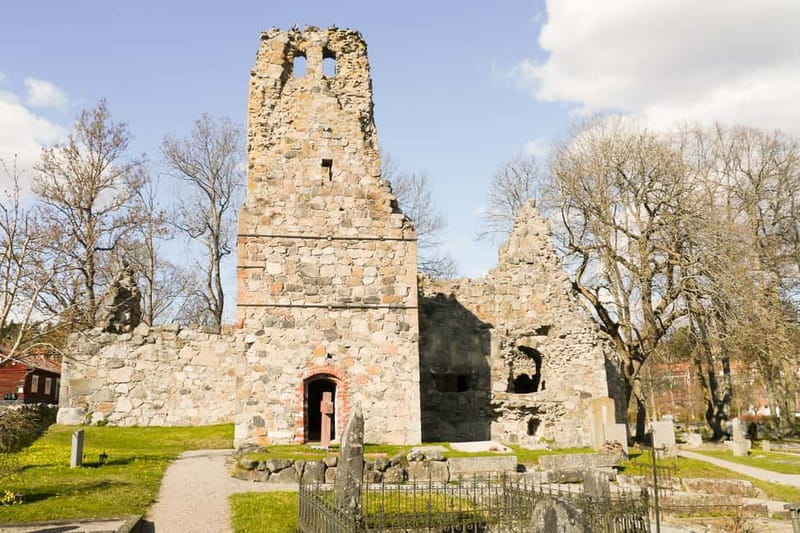
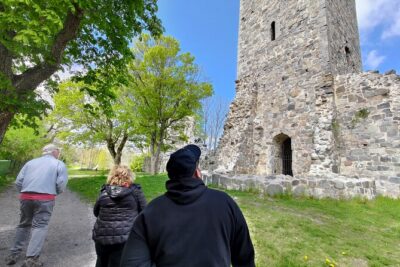
On a guided walking tour, you explore the wooden streets, narrow lanes, and medieval church ruins. Sigtuna is known as Sweden’s oldest town and remains a popular weekend destination for Swedes. Its scale makes it easy to imagine a town rather than an isolated monument.
I like this part because it gives you a break from grave fields and runestones. You can look at how the town is arranged, notice the older buildings, and get a feel for the setting that supported early Swedish urban life. The church ruins also show how Christian institutions became part of the town’s identity.
There is a lunch break here, but food and drinks are not included. Plan to pay for your own meal, and remember that 100 minutes must cover the guided walk, sightseeing, and lunch. If you want a long restaurant meal or extensive shopping, the schedule may feel tight.
Sigtuna is also a pleasant stop for anyone in your group who is interested in Swedish architecture and small-town atmosphere but less excited by military or religious history. It provides variety without breaking the historical theme.
Uppsala and the great cathedral
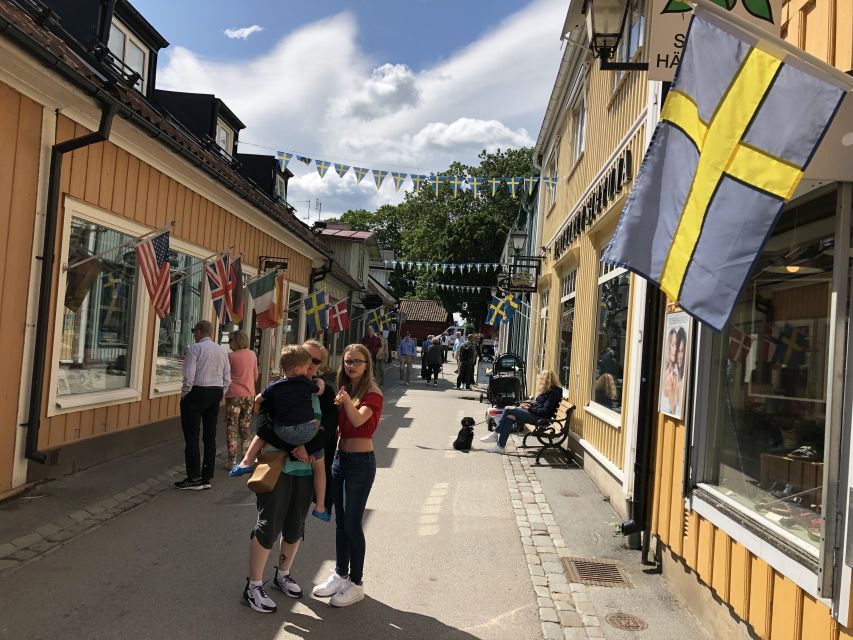
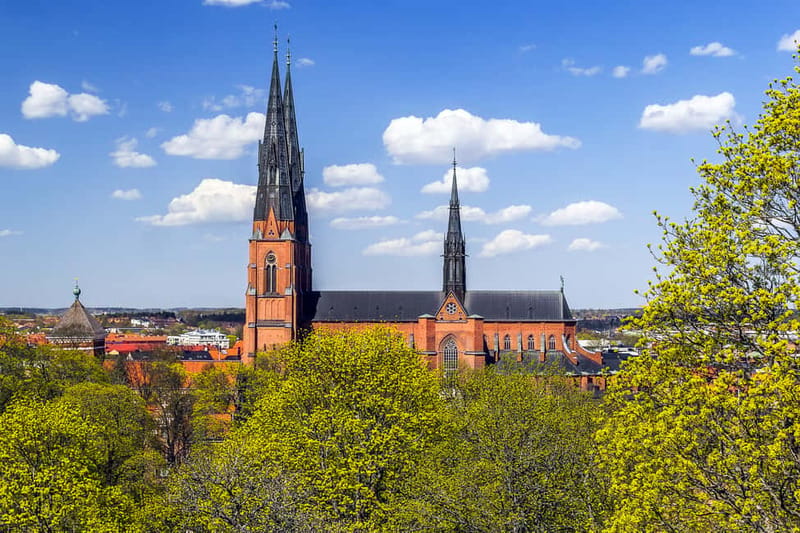
After Sigtuna, the route continues through Uppsala County before reaching Uppsala. The city visit includes a guided walk of about 30 minutes, followed by roughly 35 minutes at Uppsala Cathedral.
Uppsala Cathedral is the largest church in the Nordic countries. Its scale gives you a sharp contrast with Sigtuna’s intimate streets and the rural archaeological sites earlier in the day.
The cathedral also helps show how Sweden’s religious center developed over time. Earlier stops introduced the shift from Old Norse belief to Christianity. Here, you see the later institutional expression of that Christian power in a major urban church.
The city walk is brief, so think of this as an introduction rather than a full Uppsala city tour. You will get historical orientation and time to see key sights, but not hours to explore museums, shops, or side streets on your own.
Old Uppsala and the royal mounds
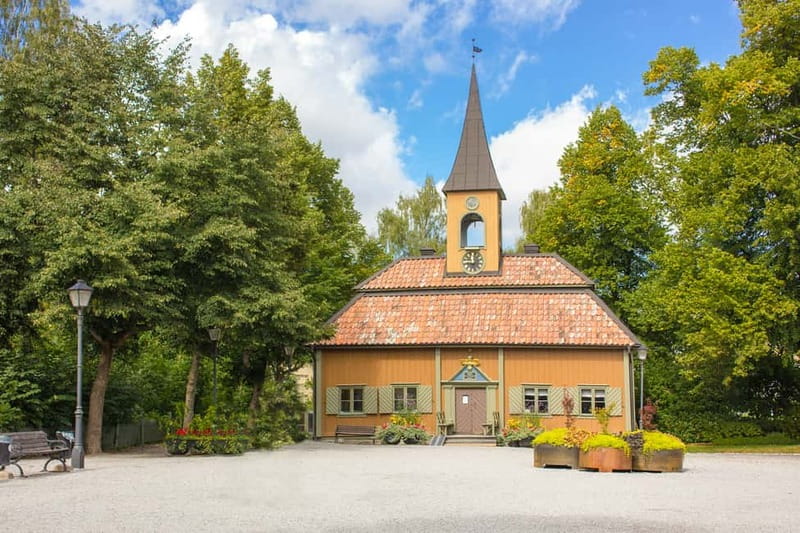
Gamla Uppsala, or Old Uppsala, is one of the day’s major stops. You see three large royal grave mounds dating back about 1,500 years. The mounds rise as high as 11 meters, making them impressive even before the guide explains their meaning.
This is one of Sweden’s most important archaeological sites. It predates the Viking Age in part, while also helping explain the power center that shaped later Swedish history. The site includes the remains of a former medieval cathedral, adding another layer to the story of changing religious life.
I find this stop valuable because it puts Viking-era Sweden into a longer timeline. You are not looking at one isolated period. The mounds, cathedral remains, and nearby city all show how authority and worship shifted across centuries.
You have about 40 minutes here for the visit, photos, and explanation. The mounds are outdoors, so dress for the weather. Sweden’s conditions can change quickly, and this tour runs in all weather.
The drive, breaks, and full-day rhythm
The tour lasts eight to nine hours, starting and ending in Stockholm. Hotel pickup is available anywhere within 3 kilometers of Stockholm Central Station, and cruise pickup is included except for arrivals at Nynäshamn.
You wait in your hotel lobby at the appointed time and look for a guide wearing a blue jacket with the Sweden History Tours logo. This arrangement is useful if you are staying centrally, since you avoid finding an early meeting point in an unfamiliar city.
Transportation is included, and the vehicle gives you a comfortable base between outdoor stops. Several people praised the heated transport during cold weather, along with regular opportunities for toilets, snacks, and drinks. A local café stop of about 40 minutes provides time for regional food and snacks before the return to Stockholm.
The schedule is full but not frantic. Stops generally run from 30 to 40 minutes, with Sigtuna receiving the longest visit. The tradeoff is clear: you cover a lot of ground and see several distinct sites, but you cannot linger everywhere.
The tour involves limited walking, making it a reasonable choice if you want historical sightseeing without a demanding hike. Still, you should wear comfortable shoes and bring layers, since several stops are outside.
What the $266 price gets you
At $266 per person, this is not a budget excursion. The price makes more sense if you value door-to-door transport, a full day of guiding, and access to scattered sites that are difficult to combine independently.
You are paying for the driver and guide, hotel pickup and drop-off, transportation from central Stockholm, and a planned route through Sigtuna, Uppsala, and several archaeological sites. Entry fees, food, and drinks are extra, so budget for lunch and any admission charges along the way.
The value depends on your priorities. If you only want to see Sigtuna or Uppsala, public transport and a self-guided visit may cost less. If you want the runestones, burial grounds, assembly site, and historical explanations in one day, the organized route saves planning time and adds meaning to places that can otherwise be hard to read.
A private group option is available. That may be worth considering for families or groups that want a more flexible conversation, but the standard booking details do not promise a private vehicle unless you select that option.
Who should book this day out
You should book this tour if you want Viking history presented through real places rather than only through museum objects. It suits first-time visitors who want to go beyond Stockholm, history fans who enjoy archaeology, and families with older children who can handle a long day.
The tour also works well for repeat visitors. One guide reportedly adjusted the schedule enough to help a participant see the Vasa Museum, but you should not count on extra sightseeing. The published route already fills the day.
You may want to skip it if you dislike guided commentary, want substantial free time, or prefer to explore Uppsala at your own pace. It is also not ideal if you expect a single dramatic Viking ruin. The experience is made from many modest sites, and the guide’s storytelling is a central part of its value.
English is the stated tour language. Guides are praised for friendly, funny delivery and strong command of the subject. The overall rating is 4.6 from 218 ratings, with repeated praise for guides including Gustav, Calle, Olof, Åsa, Gabriel, Carl, and Urban. The most consistent strength is not one particular stop. It is the way the guides explain the sites, answer questions, and keep the long day enjoyable.
Should you book the Sigtuna and Uppsala Viking tour?
Book it if you want a tightly planned history day with comfortable transport and a guide who can connect rune stones, family power, burial customs, Christianity, and Swedish identity. Broby Bridge, Arkil Assembly site, and Jarlabanki’s bridge give the tour more substance than a simple city excursion.
At $266, you should arrive ready for a full day and extra spending on lunch, drinks, and entry fees. If that price fits your budget, this is a strong choice for seeing the Viking and medieval sites around Stockholm without wrestling with several regional connections on your own.
FAQ
How long does the tour last?
The tour lasts approximately eight to nine hours, including transportation, visits, breaks, and the return to Stockholm.
Where does pickup take place?
Pickup is available from hotels anywhere within 3 kilometers of Stockholm Central Station. You should wait in your hotel lobby at the appointed time.
How will I recognize the guide?
Look for a guide wearing a blue jacket with the Sweden History Tours logo.
Is cruise pickup available?
Cruise pickup is included, except for arrivals at Nynäshamn.
What language is the tour conducted in?
The live tour guide speaks English.
Is lunch included?
No. The tour includes a lunch break, but food and drinks are not provided.
How much walking is involved?
The tour involves limited walking, with guided walks and outdoor visits at the historical sites.
Does the tour operate in bad weather?
Yes. The tour operates in all weather, so you should dress appropriately.
Are entry fees included?
No. Entry fees are not included in the tour price.
Can I book a private group?
Yes. A private group option is available when booking.
Just added around Scandinavia
- Stockholm: Evening Wildlife Safari with Midsummer Meal★ 4.2 · 130 reviews
- Wilderness Tour with Snowmobile & Ice Fishing★ 4.9 · 28 reviews
- World War II Stockholm Old Town Walking Tour and Army Museum★ 4.6 · 4 reviews
- Vossevangen: Nærøyfjord Full-Day Guided Kayaking Trip★ 4.8 · 4 reviews
- West Sweden: Sea Kayak Delight in Nature Reserves★ 5.0 · 6 reviews
- From Svolvær: Whale Watching Day Trip to Andenes★ 3.8 · 27 reviews
- Voss: Family Rafting on the Vosso River★ 4.7 · 23 reviews
- Voss: Thrilling Whitewater Rafting Guided Trip★ 4.6 · 56 reviews
Historical Tours, compared.

Reindeer Camp and Sami Cultural Tour with Lunch
Read our review →
The Original Stockholm Ghost Walk and Historical Tour – Gamla Stan
Read our review →

Viking History, Runes & Countryside 9h Tour to Sigtuna & Uppsala
Read our review →
Sightseeing Cruise of Bergen’s Historic Landmarks
Read our review →Browse the lists this tour appears in