
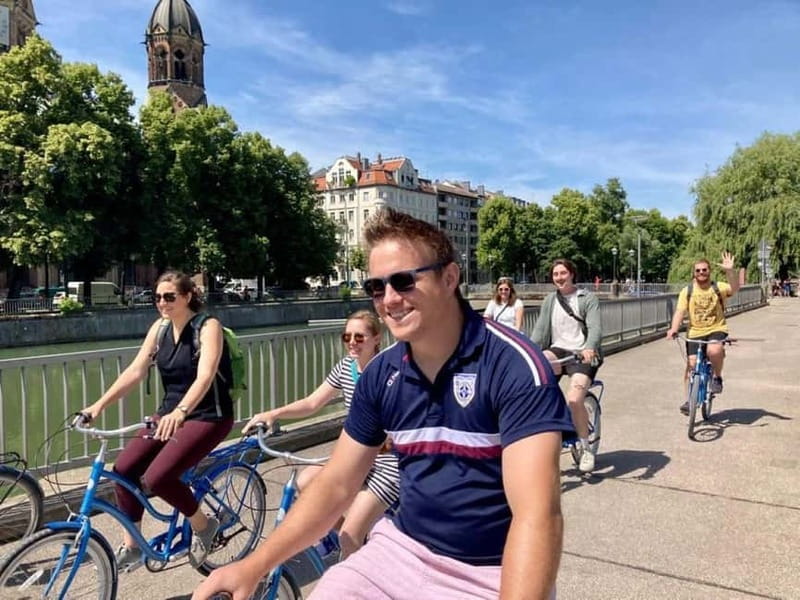
Reviewed · CYCLING TOURS
Urban Design and Livability E-bike Tour
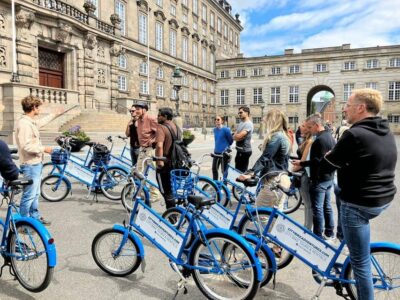
Copenhagen’s best story is not confined to its postcard centre. This three-hour e-bike tour takes you beyond the usual sights and shows how bike lanes, public spaces, architecture, and daily habits fit together. You get a practical look at the city as a place where people move, meet, and live, not just take photos.
I like the small maximum group of 10, which should make it easier to ask questions and stay connected to the guide. I also like the easy-to-ride e-bikes, especially for covering more ground without turning the outing into a fitness test. The main caution is simple: you still need to handle a bicycle confidently, since one group had trouble keeping together when a technical problem caused several people to fall behind.
In This Review
- Key points
- Seeing Copenhagen as a city that works
- Leaving Nyhavn on an e-bike
- Beyond the postcard centre
- Historic landmarks with a modern question
- Modern development and the public realm
- Meeting Copenhagen on two wheels
- Why the small group matters
- Is $84 a fair price?
- Who will get the most from this ride?
- What to bring and how to ride well
- Should you book the Urban Design and Livability E-bike Tour?
- FAQ
- How long does the Urban Design and Livability E-bike Tour last?
- Where does the tour begin?
- Where does the tour end?
- What language is the tour conducted in?
- How many people can join the tour?
- Is an e-bike included?
- Are helmets provided?
- What happens if it rains?
- Who cannot join this activity?
Key points
- A three-hour look at Copenhagen beyond the centre: See older landmarks, newer developments, and less familiar parts of the city.
- Urban planning is the main subject: Learn how cycling, walking, architecture, and public space shape daily life.
- A maximum of 10 people: The small group size suits anyone who wants to ask questions rather than simply follow a flag.
- Electric assistance helps with distance: The bikes are designed to be easy to ride, though you still need normal cycling control.
- A central start near Nyhavn: Check in inside the shop at the corner of Holbergsgade and Peder Skrams Gade.
- The focus is on Copenhagen today: Historic sights provide context, while modern city design gets equal attention.
Seeing Copenhagen as a city that works

The most useful idea here is that livability is not an abstract planning term. You see it in the ordinary details of Copenhagen: how people get around, where they pause, how buildings meet the street, and how public spaces encourage people to spend time outside.
Your guide connects these details to the Copenhagen-way-of-life. The discussion includes healthy movement, sustainable transport, architecture, urban planning, design, and hygge, the Danish habit of making everyday settings comfortable and sociable.
This is not mainly a landmark checklist. You will see historic places, newer construction, and local areas outside the central core, but the point is to understand why the city feels the way it does. That makes the tour a good choice early in your stay, when you still have time to notice similar ideas elsewhere in Copenhagen.
A few more Copenhagen trips to weigh up
- Copenhagen: Highlights 3 Hour Bike Tour with a Local Guide
★ 4.8 · 2,312 reviews - Copenhagen: 3-Hour City Highlights Bike Tour with Guide
★ 4.7 · 1,239 reviews - Copenhagen Highlights 3 Hour Bike Tour with local Guide
★ 5.0 · 1,125 reviews
Leaving Nyhavn on an e-bike
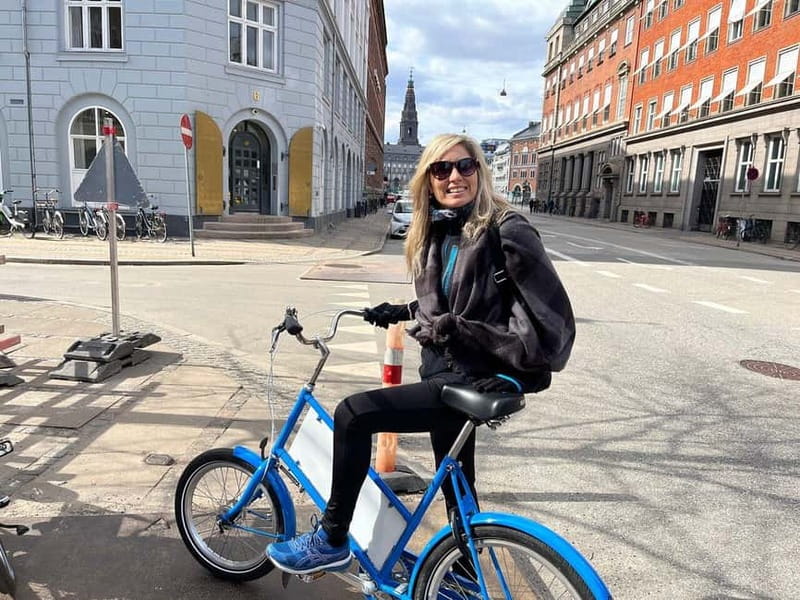
The meeting point is inside the shop on the corner of Holbergsgade and Peder Skrams Gade, close to Nyhavn. You need to go inside for check-in and arrive at least 10 minutes before departure.
That extra time matters. You will need to get comfortable with the e-bike, listen to the guide’s instructions, and make sure you are ready before the group moves into city traffic. Helmets are optional, and rain ponchos are available if the weather turns wet.
The e-bikes are a practical part of the experience rather than a gimmick. Copenhagen is well suited to cycling, but three hours in the saddle can still feel long if you are not accustomed to it. Electric assistance helps you cover areas beyond the centre with less effort.
You should not read easy-to-ride as no cycling skill required. One account describes the bikes as mostly easy to handle, but also notes that the guide moved quickly and that a technical problem left much of the group behind for too long. If you are an uncertain cyclist, ask questions before setting off and pay close attention to the group.
Beyond the postcard centre
Once you leave the area around Nyhavn, the tour shifts from famous Copenhagen to the city people use every day. The route includes areas outside the centre, where the contrast between older streets and newer development can help explain how the city has changed.
The exact stops can vary, so you should not expect a fixed list of entry tickets or formal visits inside buildings. The experience is conducted from the bike, with the guide explaining what you are seeing as you ride.
That format has a clear advantage. You can cover more ground than on a walking tour and compare different types of streets, buildings, and public spaces in one outing. You also get a better sense of how the parts of Copenhagen connect.
The tradeoff is that a moving tour gives you less time at each place. If you want long photo stops or detailed interior visits, this will not replace a museum visit or an architecture tour with extended stops. It is better for seeing relationships between places.
Historic landmarks with a modern question
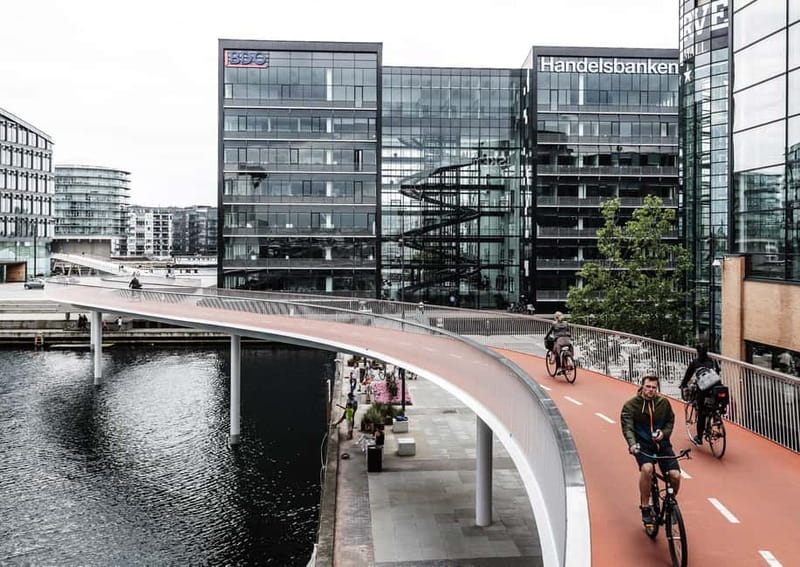
Historic landmarks appear along the way, but they are used as part of a larger story. Your guide helps place older parts of Copenhagen beside current ideas about transport, design, and public life.
That comparison is valuable because Copenhagen’s present-day reputation did not appear overnight. Older streets and buildings provide the setting, while newer choices about cycling, walking, and public space show how the city keeps adapting.
You may find yourself looking at familiar architecture in a different way. Instead of asking only how old a building is or whether it is attractive, you can consider how it meets the street, how people reach it, and what happens in the space around it.
A good guide is important here. Aitik is praised for comfortable bikes and clear storytelling, with an approach that helps you see places you might not find on your own. Alex is also named in the available feedback, though the account connected with him raises a practical concern about speed and the limited number of pauses. Guide style may differ, so it is worth telling the guide if you need a slower pace or more time for photographs.
Same fjord country, a very different day out:
- Copenhagen: Canal Cruise with Guide
★ 4.6 · 9,115 reviews - Copenhagen: Hop-On Hop-Off Bus Tour with Boat Tour Option
★ 3.9 · 4,122 reviews - Private Walking Grand Tour of Copenhagen
★ 5.0 · 3,953 reviews - From Copenhagen: Lund and Malmö 2-Country Tour
★ 4.7 · 2,772 reviews
Modern development and the public realm
The tour also looks at modern developments, where Copenhagen’s ideas about urban living become easier to spot. The subject is not just new buildings. It is how planning decisions affect movement, comfort, contact between people, and the use of shared space.
The guiding idea is that physical surroundings can affect contentment and well-being. A street can encourage people to walk. A cycling route can make a car-free journey feel normal. A public area can give people a reason to stop rather than hurry through.
You will not receive a technical planning lecture for three hours. The format is conversational, and you are encouraged to ask questions throughout. That makes the tour useful if you are curious about why Copenhagen works as it does but do not want a classroom-style presentation.
The format also means your experience depends partly on the guide’s balance of riding and explanation. One person found the pace too fast and wanted more breaks for photos and simply enjoying the area. If taking pictures is a top priority, say so at the start and keep the group in sight.
Meeting Copenhagen on two wheels
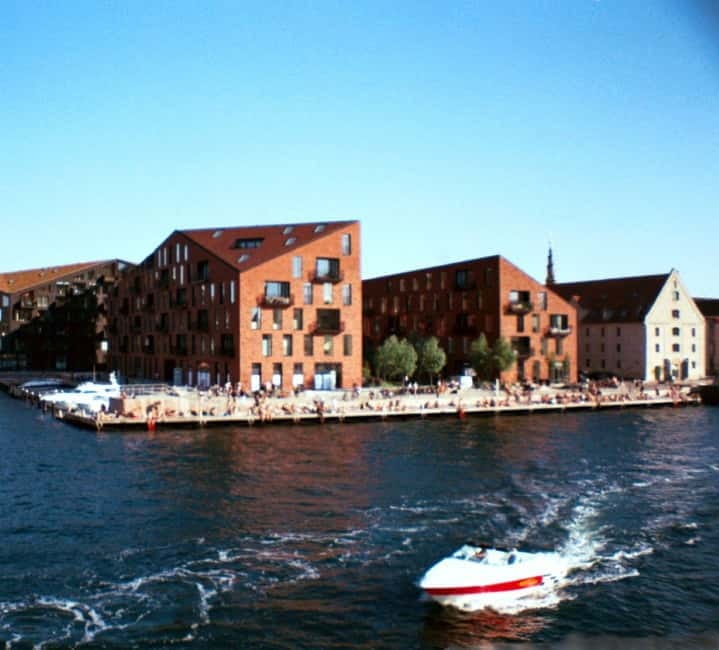
A central theme is the way Copenhagen residents use bicycles and walk as normal forms of transport. You are not only looking at cycle infrastructure. You are moving through the city in the same broad manner that shapes its daily rhythm.
That can make the subject easier to understand. A discussion about sustainable transport means more when you are actually travelling by bike through the city. You notice the distance between areas and get a feel for how cycling can link home, work, shops, and public spaces.
The tour also presents cycling as a social choice. When more people move through shared spaces on foot or by bicycle, they have more chances to see and encounter one another. The guide connects this idea to Copenhagen’s sense of community and to hygge.
Do not expect a staged meeting with local residents or a special food stop. The phrase about seeing people in their natural habitat means observing ordinary city life as you ride. Food and drinks are not included, and there are no included admission tickets for venues seen along the route.
Why the small group matters
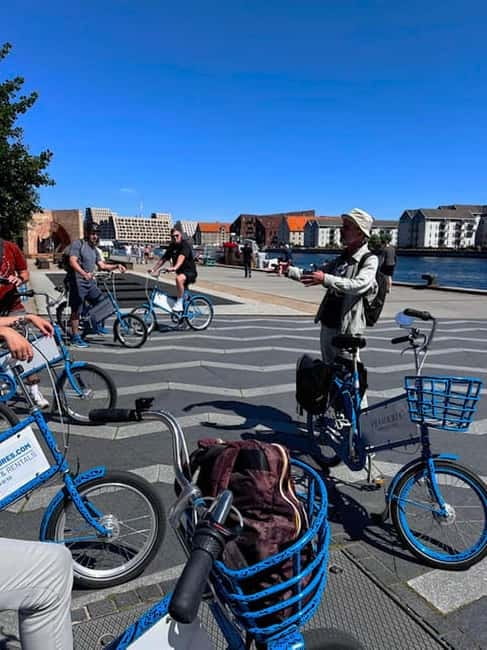
A maximum of 10 participants is one of the strongest features. Small groups are easier to manage on bicycles, and you have a better chance of hearing the guide when the group stops.
It also makes questions more useful. You can ask about a building, a cycle route, a design choice, or a Danish custom while the subject is in front of you. The tour specifically encourages questions, and the guides are described as willing to answer them.
Still, small does not mean risk-free. City cycling requires attention, and even a group of 10 can stretch out if someone has a mechanical issue or struggles with the pace. Stay alert at turns, keep track of the riders ahead and behind you, and speak up quickly if you have a problem.
The available feedback gives this point real weight. A technical issue caused more than half of one group to become separated before anyone noticed. The issue was sorted out, but it shows why you should not treat the ride like a private wander. Follow the guide’s instructions and keep the group visible.
Is $84 a fair price?
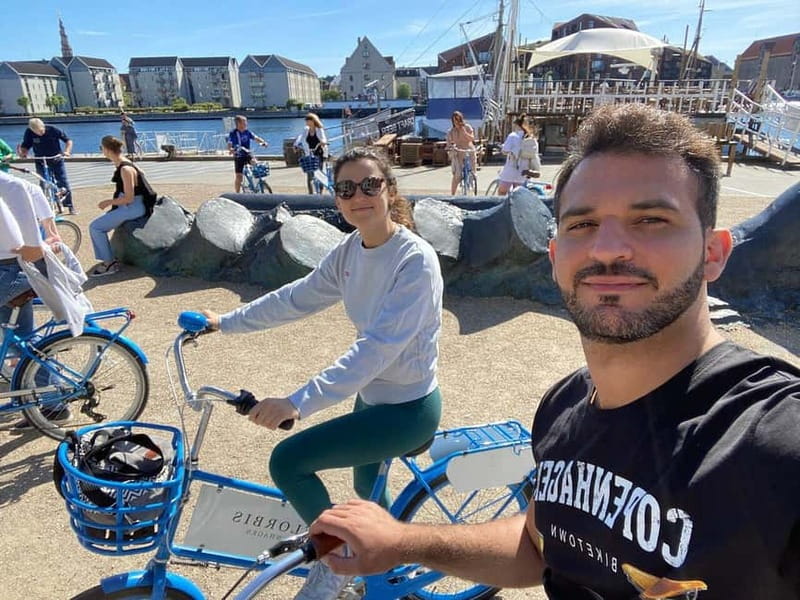
At $84 per person, this is not the cheapest way to see Copenhagen. The price includes the e-bike, an expert English-speaking guide, optional helmet use, and a rain poncho if needed.
The value depends on what you want from a city tour. If you are mainly looking for famous sights and quick photographs, a walking route or self-guided cycle may cost less. You can also explore independently if you already know how to use a bicycle in city traffic.
I think the price makes more sense for you if you want context as you ride. The guide adds the connection between urban design, daily habits, architecture, and sustainability. The e-bike also lets you reach areas that would take longer on foot, without requiring the same effort as a standard bicycle.
There are no food, drink, or admission costs included, but the route is not built around paid attractions. You are paying for the equipment, the guiding, and the three-hour route rather than a bundle of tickets.
The free cancellation option up to 24 hours before departure and the reserve-now, pay-later choice make it easier to fit the tour into a changing schedule. Check the available starting times when you book.
Who will get the most from this ride?
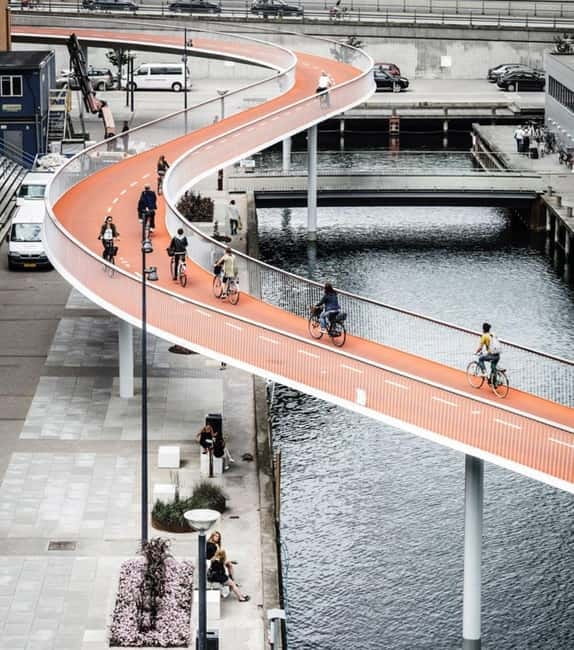
I would recommend this tour to anyone who wants to understand Copenhagen’s present-day identity. It suits first-time visitors who want an overview beyond the central sights, as well as returning visitors who have already seen Nyhavn, the main squares, and the familiar historic streets.
It is especially useful for people interested in architecture, public space, cycling, sustainability, or city planning. You do not need to be a planning expert. Curiosity is enough, provided you can ride a bicycle with confidence.
The tour may also suit couples and small groups who prefer discussion to a large, scripted outing. With only 10 places, the atmosphere should be more personal than a standard city coach tour.
I would think twice if you dislike cycling, want a very slow photo tour, or have trouble keeping pace in traffic. The activity is not suitable for children under 10, babies under one, or people over 70 according to the stated restrictions. Those age limits are firm planning details, not minor suggestions.
What to bring and how to ride well
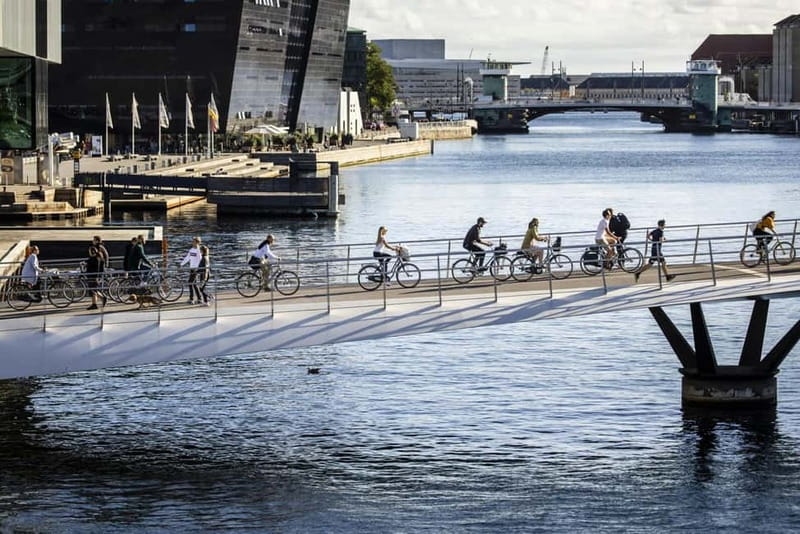
Wear comfortable clothes suited to three hours on a bicycle. You do not need to bring a helmet because one is available, and helmet use is optional. Rain ponchos are provided if the weather is wet, but you should still check the forecast before dressing.
Arrive 10 minutes early at the shop. Use that time to ask how the electric assistance works and to raise any concern about pace, balance, or stopping for photographs.
Keep your attention on the group once you are moving. The tour is designed around urban cycling, so you should be ready to follow directions and remain aware of other road users. If a bike feels difficult to control, report it immediately rather than trying to manage the problem quietly.
Because the tour ends back at the same meeting point, you do not need to plan a separate pickup. That makes it easy to continue exploring around Nyhavn afterward.
Should you book the Urban Design and Livability E-bike Tour?
Book it if you want the story behind Copenhagen’s daily life, not only its famous buildings. The combination of an e-bike, a small group, and a guide-led look at cycling, architecture, public space, and hygge offers a useful three-hour introduction to the city’s design choices.
The strongest reasons to choose it are the small group, the chance to reach areas outside the centre, and the focus on places you might miss on your own. The main reasons to hesitate are the $84 price, the lack of included food or entry tickets, and the need to ride confidently.
If you are comfortable on a bicycle, arrive early, and tell the guide your preferred pace, this should be a worthwhile way to see Copenhagen as a living city. If you want a relaxed sightseeing ride with frequent stops and no concern about cycling ability, choose a walking tour instead.
FAQ
How long does the Urban Design and Livability E-bike Tour last?
The tour lasts three hours. Starting times depend on availability, so check the schedule when booking.
Where does the tour begin?
It begins inside the shop on the corner of Holbergsgade and Peder Skrams Gade, next to the Nyhavn area. Go inside the store for check-in.
Where does the tour end?
The activity ends back at the same meeting point.
What language is the tour conducted in?
The live tour guide conducts the experience in English.
How many people can join the tour?
The group is limited to a maximum of 10 participants.
Is an e-bike included?
Yes. An easy-to-ride e-bike is included in the price.
Are helmets provided?
Yes. Helmets are available, but wearing one is optional.
What happens if it rains?
Rain ponchos are provided in case of rain.
Who cannot join this activity?
The tour is not suitable for children under 10, babies under 1, or people over 70.
Just added around Copenhagen
- a day at North Zealand Castle Tour★ 4.5 · 19 reviews
- The Hunt For The Six Forgotten Giants★ 5.0 · 45 reviews
- Copenhagen Walking Tour with Food Testing (smorrebrod dish & snap)★ 4.5 · 10 reviews
- walking tour – Copenhagen and Christiansborg 3 hours★ 4.0 · 7 reviews
- The Six Forgotten Giants Trolls Hunt with Minibus★ 4.5 · 27 reviews
- The Philosopher’s Last Walk: An audio tour on the life of Søren Kierkegaard★ 4.5 · 5 reviews
- Malmö Full Day Private Trip, Sightseeing Tour & Lunch Option★ 5.0 · 93 reviews
- The Forgotten Giants Private Tour★ 5.0 · 3 reviews
Cycling Tours, compared.
Highlights 3 Hour Bike Tour with a Local Guide
Read our review →
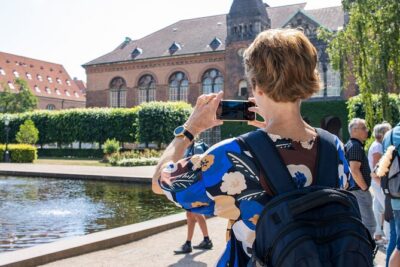
Copenhagen Highlights 3 Hour Bike Tour with local Guide
Read our review →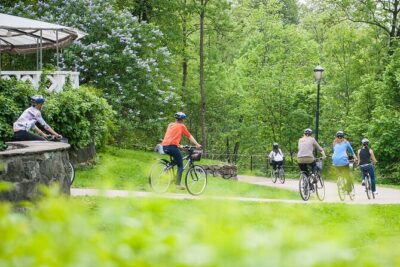
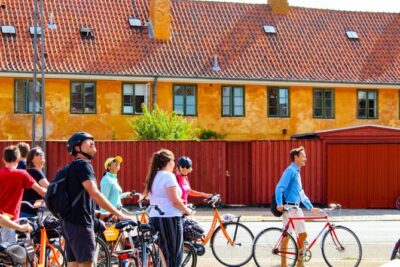
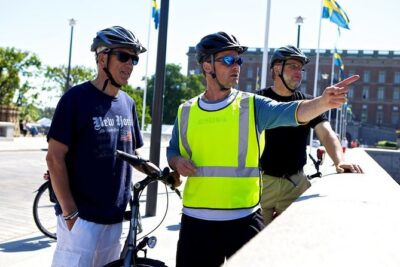
Browse the lists this tour appears in