
Reviewed · HISTORICAL TOURS
From Stockholm: Viking Culture and Heritage Small Group Tour
The most memorable part of this outing is not a museum display but the real countryside sites scattered north of Stockholm. At Broby bro, you see Viking burial ground remains and runestones in the setting where these people lived, traveled, worshiped, and buried their dead. The Jarlabanke Bridge and Arkils tingstad add roads, power, and politics to the story.
I like the small group of no more than 16 because it gives you a better chance to hear the guide and ask questions. I also like the clear focus on evidence: raised stones, graves, a reconstructed bridge, and the remains of a Viking assembly place. The main consideration is weather. In winter, the sites can be snowy and bitterly cold, so proper boots and warm clothing are not optional.
In This Review
- Key points to know before you go
- Why this short Viking tour works
- Leaving Stockholm for Uppland
- Broby bro and the story of Estrid
- Crossing the Jarlabanke Bridge
- Arkils tingstad and Viking decision-making
- What the runestones can and cannot tell you
- Price, timing, and what your $138 covers
- Weather, clothing, and practical comfort
- Who will get the most from this outing
- Should you book the Viking Culture and Heritage tour?
- FAQ
- How long does the Viking Culture and Heritage tour last?
- Where does the tour take place?
- Is hotel pickup included?
- Is the tour conducted in English?
- How large is the group?
- What sites will I visit?
- Is food included?
- Are gratuities included?
- Can I cancel or pay later?
Key points to know before you go
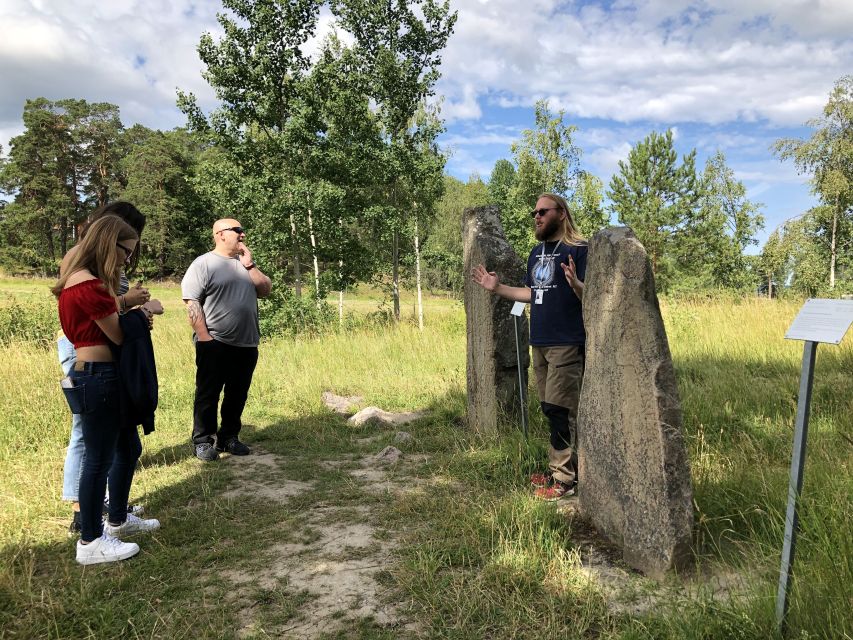
- Broby bro burial ground: Learn about burial customs, including the shift from pagan traditions toward Christianity, beside the Jarlabanke runestones.
- Estrid’s story: Hear about a powerful Viking Age woman whose life is connected to the stones and graves at Broby bro.
- Jarlabanke Bridge: See a reconstructed Viking bridge and learn how roads and causeways were built.
- Arkils tingstad: Visit the remains of a Viking parliament and get a practical look at how local society made decisions.
- Three hours from central Stockholm: Hotel pickup and return are available within 5 kilometers of Stockholm Central Station.
- Winter planning matters: A January outing may include snow, ice, and temperatures around minus 10 degrees Celsius.
Why this short Viking tour works
Stockholm is full of grand museums and polished old-town streets, but the Viking story is easier to understand when you leave the city. This tour takes you into Uppland, an area tied to some of Sweden’s best-known runestones and Viking Age remains.
You are not visiting a theme park or a staged Viking village. The appeal is quieter and more grounded. You walk among old graves, read stones raised roughly 1,000 years ago, and see how waterways and roads shaped local life.
The three-hour length is useful. You get a real taste of the subject without giving up an entire day of your Stockholm visit. The short schedule also keeps the outing focused. You will not see every Viking site in the region, but you will visit several sites that explain different parts of society: family, faith, transport, leadership, and law.
The English-language guide is central to the experience. A guide such as Erik can connect the scattered remains into a story, explain the runic inscriptions, and fill the drive with background about Norse life. One especially useful feature is that the history continues between stops, rather than ending each time you get back in the vehicle.
A few more Stockholm trips to weigh up
- Stockholm: Ghost Walk and Historical Tour
★ 4.7 · 2,206 reviews - The Original Stockholm Ghost Walk and Historical Tour – Gamla Stan
★ 4.5 · 1,165 reviews - Stockholm: Old Town Historical Walking Tour
★ 4.9 · 344 reviews
Leaving Stockholm for Uppland
Pickup is available from hotels and accommodations within 5 kilometers of Stockholm Central Station. That saves you the trouble of finding a meeting point, though you should check the exact pickup arrangement when booking if your lodging sits near the edge of that area.
Once you leave central Stockholm, the change is quick. The city gives way to quieter roads and open countryside. That shift is part of the experience, not just transport between attractions. Viking history here belongs to farms, waterways, wooded paths, and local routes, not only to a display case.
The vehicle ride also makes the three-hour format possible. You are not spending much of the tour figuring out public transport or walking long distances between unrelated sites. Instead, the guide uses the journey to explain the region and set up what you are about to see.
Group size is capped at 16 people. That is still large enough for a lively group, but much more manageable than a full coach. If you care about asking questions or hearing details about the runestones, this limit adds real value.
Broby bro and the story of Estrid
The first major stop is Broby bro, a famous burial ground linked with the Jarlabanke runestones. This is where the tour begins to feel personal. Graves and stones are not only clues about a distant culture. They also preserve names, family ties, beliefs, and claims to status.
Your guide explains Viking burial rites and the difference between pagan and Christian traditions. That matters because the Viking Age was not one fixed period with one uniform set of beliefs. Customs changed, and Christianity gradually entered a society that already had its own gods, rituals, and ideas about the dead.
Broby bro is also connected with Estrid, described as a powerful Viking woman. Her story gives the site a welcome human focus. Viking history is often reduced to male chiefs and raiders, yet the stones and burial places can reveal the importance of women, families, inheritance, and social standing.
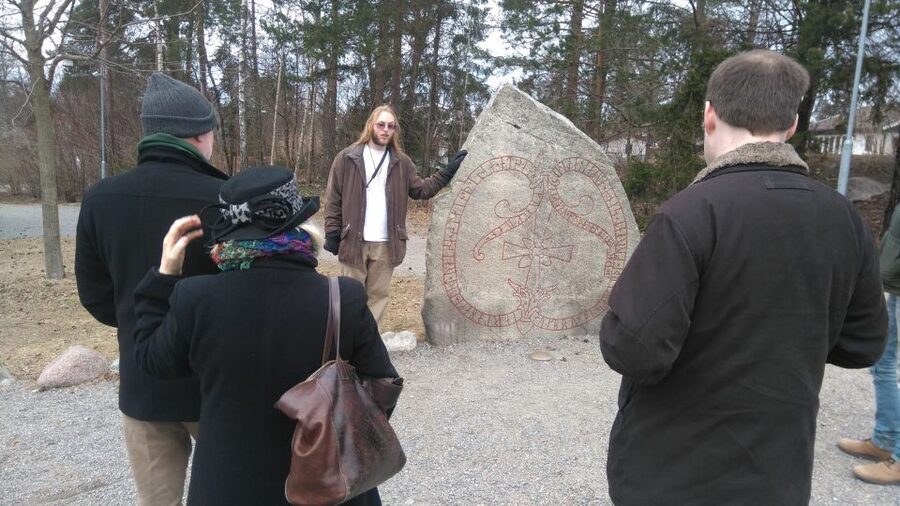
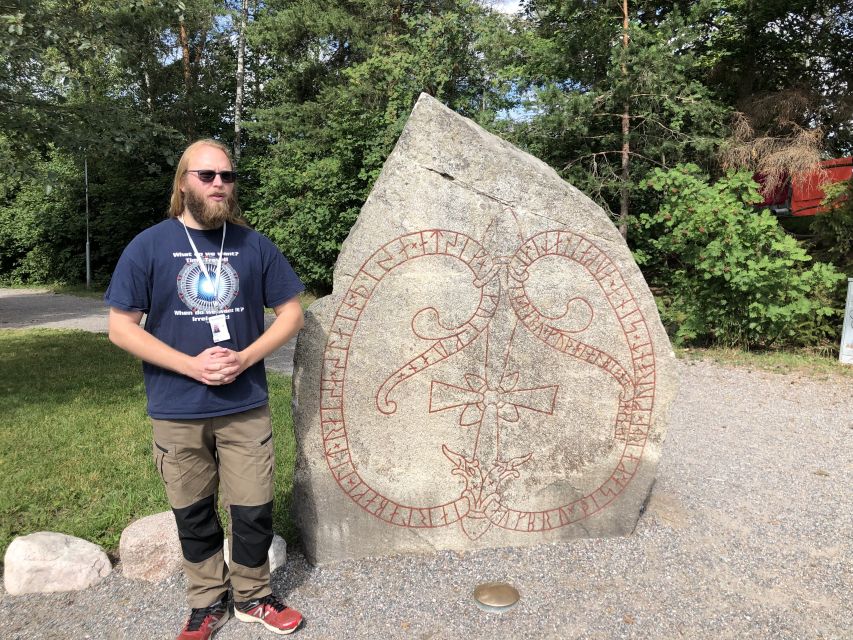
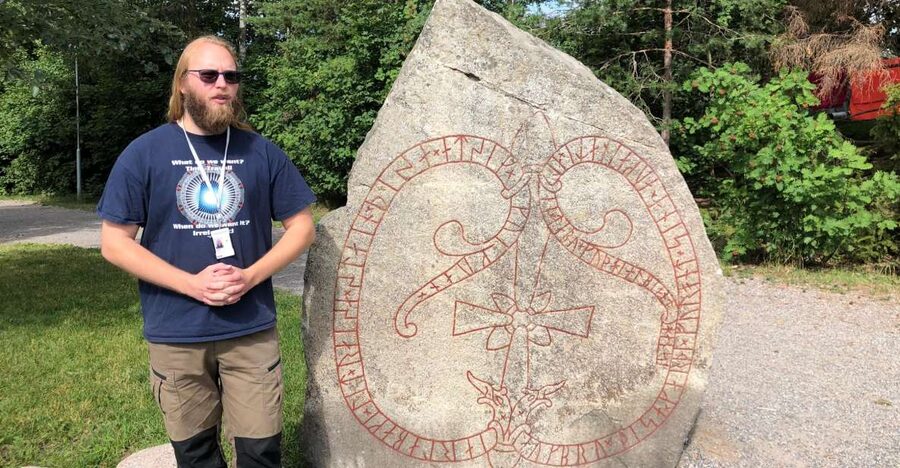
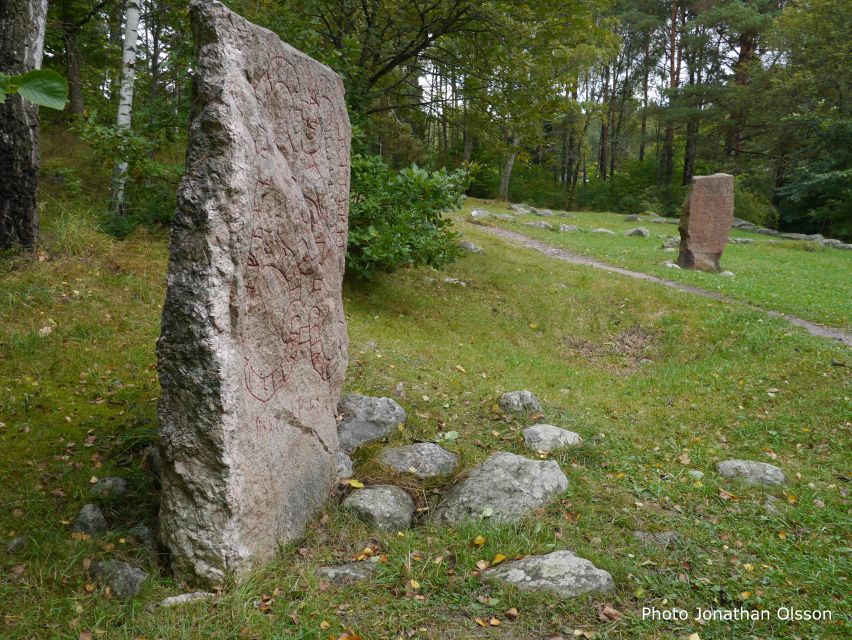
The runestones are the main visual draw. You can see the carved surfaces and learn how they worked as public statements. A stone might honor the dead, record a journey, mark a building project, or announce the influence of the person who raised it.
Do not expect every inscription to be easy to read on your own. The value comes from having the guide explain the names, symbols, and purpose behind the carvings. Without that context, a runestone can look like a weathered slab. With it, the stone becomes a message from a particular community.
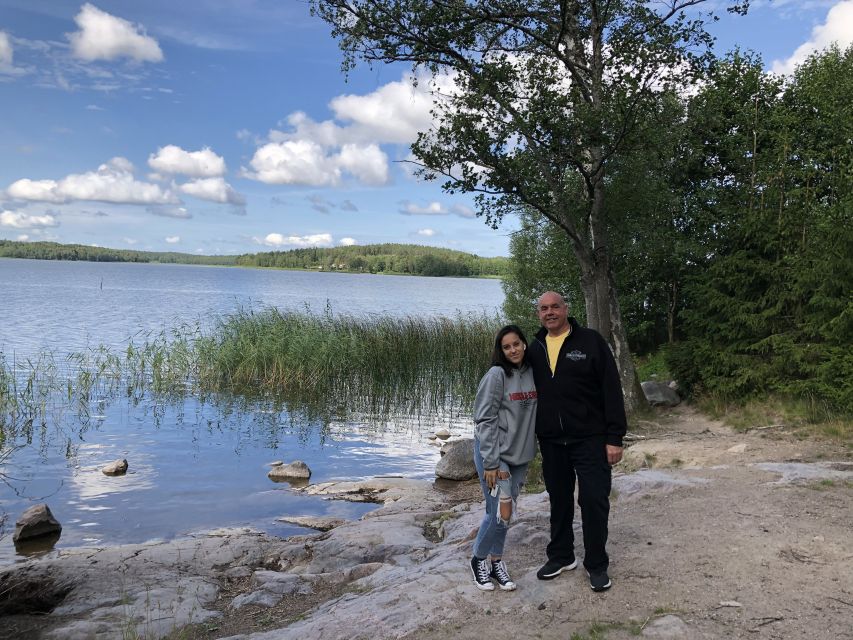
Broby bro is also a place where weather affects the visit. Snow may make the site look striking, but ice and cold can make walking uncomfortable. One winter outing took place at around minus 10 degrees Celsius, with snowy ground and a frozen lake nearby. Bring sturdy winter boots and enough clothing to stay outside while the guide talks.
Crossing the Jarlabanke Bridge
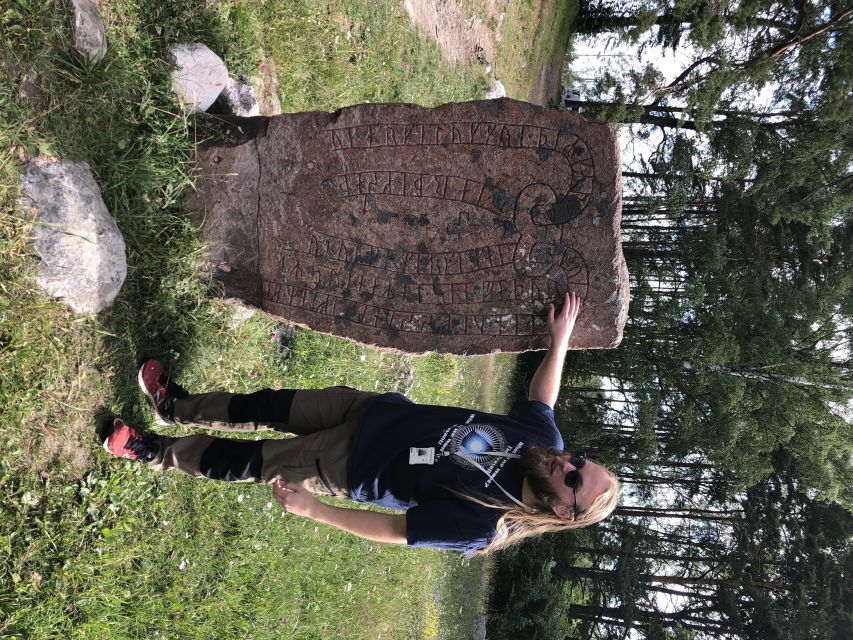
The next stop focuses on the Jarlabanke Bridge and the causeway. A reconstructed bridge helps you picture how people moved through the area, while the surrounding runestones show how Viking leaders presented their work to the public.
The bridge is connected with Jarlabanke, a Viking chief, and his clan. The story is not simply about crossing a stream. Roads and bridges required labor, materials, planning, and authority. Building one could improve local movement, support trade, and advertise the power of the family responsible for it.
This is one of the tour’s strongest stops because it makes Viking engineering easier to imagine. You learn how roads and bridges were raised and maintained, rather than hearing only about ships and raids. The causeway also shows that the Vikings were organized builders and community members, not just warriors from popular television shows.
The runestones here are raised beside the route, where people could see them. That location is significant. The stones were meant to communicate. They might honor a family member, mark a public achievement, or make a claim about who had influence in the area.
The setting around the bridge gives you a better sense of distance and movement. You can look at the route and think about how people, animals, goods, and messages traveled before modern roads. It is a simple lesson, but a useful one: daily life depended on infrastructure.
The bridge is reconstructed, so it is not an untouched medieval structure. That is worth knowing if you want only original remains. Still, reconstruction has a clear benefit here. It gives shape to an otherwise difficult idea and helps you connect the stones with the practical work they describe.
Same fjord country, a very different day out:
- Stockholm: City Archipelago Sightseeing Cruise with Guide
★ 4.3 · 10,798 reviews - Stockholm: Skansen Open-Air Museum Admission Ticket
★ 4.5 · 3,427 reviews - Stockholm: Archipelago Boat Tour
★ 4.4 · 3,110 reviews - Stockholm: Highlights Boat Tour
★ 4.3 · 2,542 reviews
Arkils tingstad and Viking decision-making
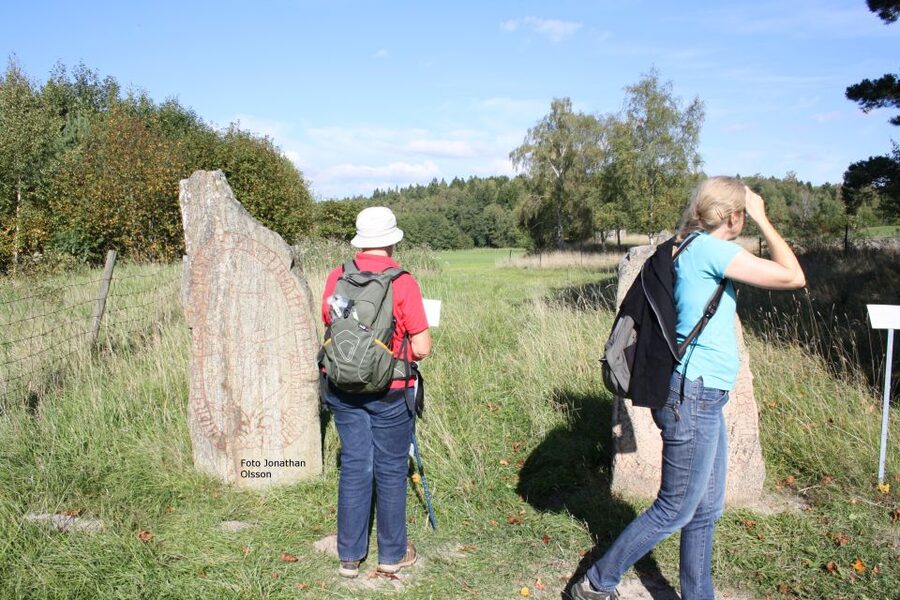
The final featured stop is Arkils tingstad, the remains of a Viking Age parliament or assembly place. This is where the tour moves from family history and transport to government.
The word parliament can sound more modern than the site itself. In practice, a Viking assembly was a place where people gathered to settle disputes, make decisions, discuss law, and organize community matters. Your guide explains how society worked and who had a role in it.
Arkils tingstad helps correct the lazy image of Vikings as people who solved every problem with violence. Conflict certainly existed, but communities also needed rules, agreements, judgments, and recognized authority. An assembly site shows the social machinery behind daily life.
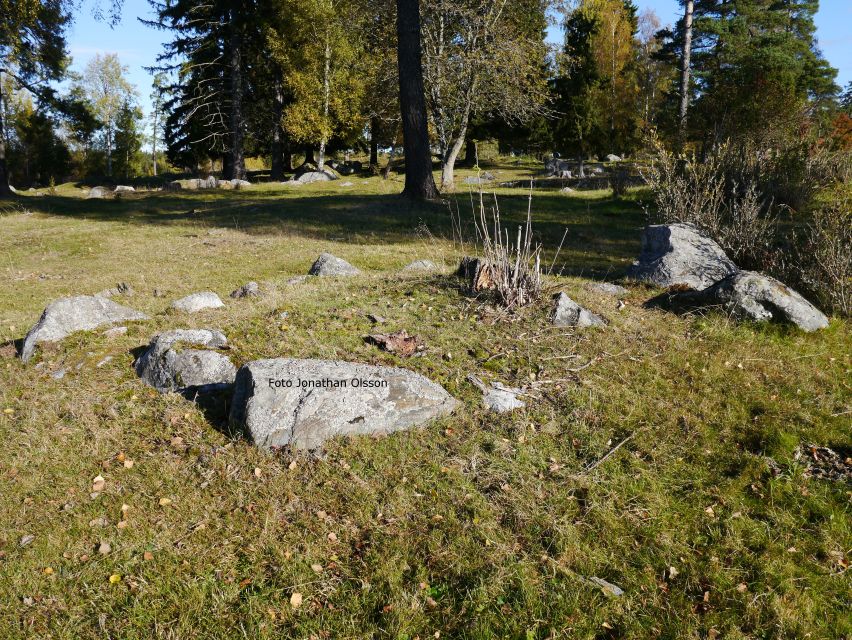
The remains are not a grand building. You are looking at traces of a meeting place, and that means the guide’s explanation does much of the work. If you want towering ruins or an elaborate museum, this may feel modest. If you enjoy piecing together how a society functioned from limited physical evidence, it is a rewarding final stop.
The sequence of the tour is well judged. Broby bro introduces people and belief. The bridge explains movement and public works. Arkils tingstad brings in law and leadership. Together, the stops give you a more complete picture than a single monument could provide.
What the runestones can and cannot tell you
Runestones are the thread tying the tour together. They are among the clearest surviving records of Viking Age life in the area, but they need careful interpretation.
You will see several stones that are about 1,000 years old. Their inscriptions can preserve names and family connections, while their placement tells you something about public memory and local power. They show that writing mattered, and that people wanted certain events and relationships remembered.
At the same time, stones do not tell the whole story. They usually reflect the people with enough status or resources to commission them. Ordinary daily life is harder to see directly. A good guide can help you separate what the evidence shows from what historians infer.
That is why the tour’s emphasis on facts is valuable. You are not being asked to accept a film version of the Vikings. You are encouraged to look at physical remains and understand what they suggest about burial, religion, travel, family, and authority.
The experience is especially useful if you have seen Viking symbols used in popular culture and want a more serious explanation. You get the real places first, then the stories and interpretation that make them understandable.
Price, timing, and what your $138 covers
At $138 per person, this is not a budget sightseeing ride. The value depends on how much you want the guide, transportation, and countryside access to do for you.
The price includes hotel pickup and return within the stated central Stockholm area, a driver and guide, admission or site costs, and a small group capped at 16. Food is not included, and gratuities are extra. Since the tour lasts only three hours, you are paying for a concentrated half-day outing rather than a full-day regional excursion.
I think the cost is easiest to justify if you have limited time or do not want to rent a car. Reaching several rural historical sites independently would require planning, transport, and a good understanding of where the remains are located. The guide also adds interpretation that you would miss by simply looking at stones from a roadside.
The value is less clear if you want a long walk, a full meal, or a large museum collection. This is a compact field trip. You see several sites, but you do not spend hours at each one.
The free cancellation period runs until 24 hours before departure, and you can reserve while paying later. Those terms help if your Stockholm schedule is still shifting, though you should still confirm the available starting time for your date.
Weather, clothing, and practical comfort
Treat this as an outdoor history tour, even if the vehicle connects the stops. You will be outside at burial grounds, bridge remains, runestones, and the assembly site.
Winter can be beautiful and severe. Snow-covered ruins and a frozen lake can create a memorable setting, but cold can shorten your attention and make uneven ground harder to manage. Wear warm layers, solid shoes, and proper winter boots in snowy weather. Do not rely on city shoes.
Food is not provided, so plan around the three-hour schedule. You may not need a meal during the outing, but it is sensible to eat beforehand. Erik has also offered Swedish food suggestions during the drive, which can help you plan the next meal in Stockholm.
The tour is conducted in English. If you want detailed historical explanation, English comprehension matters because much of the value comes from the guide’s stories and interpretation rather than from signs at the sites.
Who will get the most from this outing
I would choose this tour for you if you want Viking history tied to actual places. It suits visitors who enjoy archaeology, old inscriptions, local stories, and the quiet feel of the countryside.
It also works well for first-time visitors who want something beyond central Stockholm. The pickup, short duration, and small group keep the outing fairly simple to fit into a busy itinerary.
Families with older children may appreciate the bridge, graves, and runestones because the sites give history a physical shape. Younger children who need constant activity may find the explanations and modest remains less engaging. The tour is more about listening, looking closely, and asking questions than running from attraction to attraction.
You should think twice if cold weather bothers you or if you need a completely indoor activity. The sites are authentic precisely because they are outdoors and not heavily rebuilt.
The tour is also a good match for anyone tired of Viking stereotypes. You learn about burial customs, Christianity, women such as Estrid, infrastructure, clan power, and decision-making. That broader view is more useful than a narrow focus on warriors and ships.
Should you book the Viking Culture and Heritage tour?
Book it if you want a short, well-organized trip from Stockholm into Viking Age Uppland, especially if you value real sites over theatrical displays. The combination of Broby bro, the Jarlabanke Bridge, and Arkils tingstad gives you three different ways to understand the period.
The strongest reasons to go are the excellent site variety, the English-speaking guide, and the chance to see runestones where they belong in the countryside. A guide such as Erik can turn scattered stones and earthworks into a clear story about people, belief, work, and power.
Skip it if you want a full-day archaeological expedition, a museum-heavy program, or guaranteed indoor comfort. For everyone else, $138 buys a focused and convenient introduction to Sweden’s Viking heritage, provided you dress for the season and arrive ready to walk outside.
FAQ
How long does the Viking Culture and Heritage tour last?
The tour lasts 3 hours.
Where does the tour take place?
It travels from Stockholm into the countryside of Stockholm County and historic Uppland, visiting Broby bro, the Jarlabanke Bridge area, and Arkils tingstad.
Is hotel pickup included?
Yes. Pickup and drop-off are included for hotels and accommodations within 5 kilometers of Stockholm Central Station.
Is the tour conducted in English?
Yes. The live tour guide speaks English.
How large is the group?
The group has no more than 16 people.
What sites will I visit?
You will visit the Broby bro burial ground, see the Jarlabanke runestones and reconstructed bridge, and visit the remains of the Viking Age assembly site at Arkils tingstad.
Is food included?
No. Food is not included, so plan to eat before or after the tour.
Are gratuities included?
No. Gratuities are not included.
Can I cancel or pay later?
You can cancel up to 24 hours in advance for a full refund. A reserve-now, pay-later option is also available.
Just added around Stockholm
- Stockholm: Evening Wildlife Safari with Midsummer Meal★ 4.2 · 130 reviews
- World War II Stockholm Old Town Walking Tour and Army Museum★ 4.6 · 4 reviews
- Stockholm: Archipelago Guided Boat & Walking Tour of Vaxholm★ 3.1 · 23 reviews
- Stockholm: Archipelago Islands Kayak Tour and Outdoor Picnic★ 4.9 · 150 reviews
- Vaxholm & Stockholm Archipelago: Guided Excursion, Day Trip★ 4.8 · 41 reviews
- Stockholm: Underground Metro Art Ride with a Local Guide★ 4.6 · 39 reviews
- Scandinavian Art, Architecture and Design Tour in Stockholm★ 4.5 · 11 reviews
- Stockholm: Sunset Hike in Tyresta National Park with Meal★ 5.0 · 79 reviews
Historical Tours, compared.

Reindeer Camp and Sami Cultural Tour with Lunch
Read our review →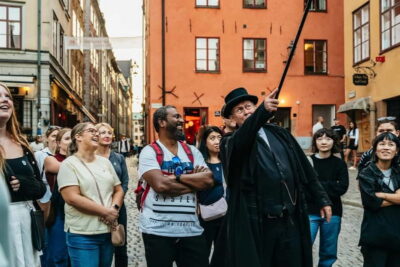
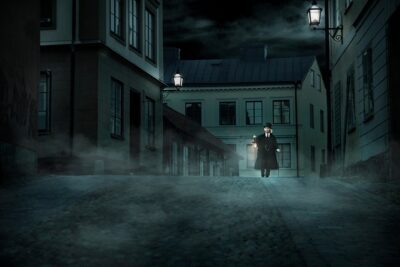
The Original Stockholm Ghost Walk and Historical Tour – Gamla Stan
Read our review →

Viking History, Runes & Countryside 9h Tour to Sigtuna & Uppsala
Read our review →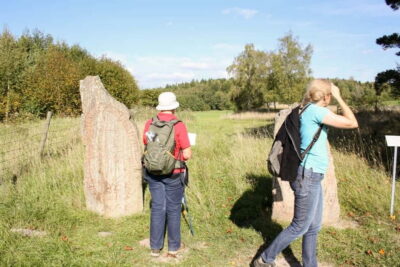
Stockholm Viking History Full Day Tour to Sigtuna + Uppsala
Read our review →Browse the lists this tour appears in