
Reviewed · HISTORICAL TOURS
Private Half Day Tour: Viking History Trip from Stockholm Including Sigtuna
The most revealing part of this Stockholm excursion is not a grand museum or a polished reconstruction. It is the chance to stand beside original runestones and Viking burial grounds in the countryside north of the city, then connect those scattered sites with Sigtuna, Sweden’s early capital. The stones are quiet and easy to miss alone, but a good guide gives them a voice.
I like the private vehicle and hotel pickup, which turn a tricky half-day outing into a tidy five-hour plan. I also like the human stories, especially Estrid, a powerful Viking woman remembered on stones at Broby Bro, and Jarlabanke, a local lord tied to roads and regional power. The main drawback is pace: you cover several sites quickly, and the ruins are modest rather than Rome-sized.
In This Review
- Key points to know before you book
- Why these Viking sites matter
- Broby Bro and the story of Estrid
- Jarlabanke’s causeway and local power
- Arkils tingstad, where law met authority
- Lunch and the wooden streets of Sigtuna
- S:t Olofs Church Ruins and early Christianity
- The guide can make or break the experience
- Is $532.19 per person a fair price?
- Timing, pickup, and practical planning
- Who should book this half-day tour?
- Should you book it?
- FAQ
- How long does the Viking history tour last?
- Is hotel pickup included?
- Is cruise port pickup available?
- Can I be picked up at Nynäshamn?
- What is included in the price?
- Is lunch included?
- How many people can join the private tour?
- Are admission tickets included?
- Can I cancel for a full refund?
Key points to know before you book
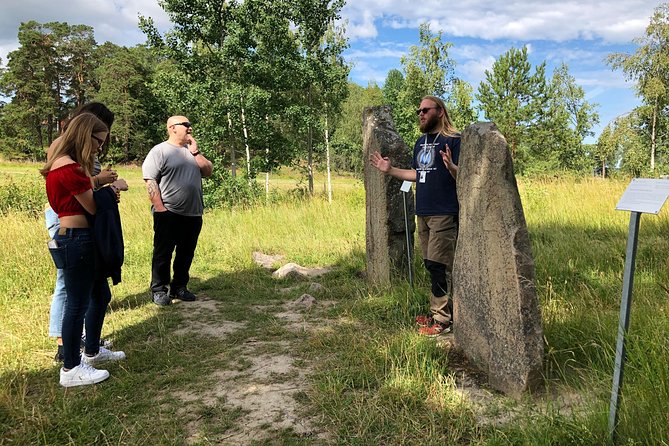
- Original runestones at Broby Bro: See stones linked to Estrid, including one that mentions Jerusalem, along with a Viking grave field.
- Three separate archaeological stops: Broby Bro, Jarlabanke’s causeway, and Arkils tingstad each show a different side of Viking life.
- Sigtuna adds churches and lunch: Walk the old wooden town, see church ruins, and visit Mariakyrkan if it is open.
- Private guiding makes a difference: Guides including Olof, Jakob, Gustav, Gabriel, Calle, and Yonatan have been praised for clear stories and flexible pacing.
- Five hours means limited downtime: Lunch is at your own expense, and one recent assessment found little time to relax.
- Cruise pickup needs care: Pickup is offered at several Stockholm piers, but not at Nynäshamn.
Why these Viking sites matter
Stockholm is a wonderful city, but its Viking story is easier to grasp once you leave the center. The countryside around Täby and Sigtuna contains runestones, grave fields, old roads, and assembly sites tied to the people who lived here during the Viking Age, broadly the eighth through eleventh centuries.
You are not visiting a large open-air Viking village. You are seeing the actual remains that survived in place, often beside ordinary roads and fields. That is both the strength and the limitation. The sites feel authentic and peaceful, but you need explanation to understand what you are seeing.
This tour works well because the stops form a useful sequence. Broby Bro introduces Viking society through graves and memorial stones. Jarlabanke shows how roads and local authority were connected. Arkils tingstad explains public assemblies and law. Sigtuna then adds urban life, trade, Christianity, and medieval Sweden.
The private format lets you ask questions without holding up a larger group. Guides have adapted visits to personal interests, and that matters here. If runic writing, religion, warfare, family life, or political power catches your attention, you can spend more time on that thread.
A few more Stockholm trips to weigh up
- Stockholm: Ghost Walk and Historical Tour
★ 4.7 · 2,206 reviews - The Original Stockholm Ghost Walk and Historical Tour – Gamla Stan
★ 4.5 · 1,165 reviews - Stockholm: Old Town Historical Walking Tour
★ 4.9 · 344 reviews
Broby Bro and the story of Estrid
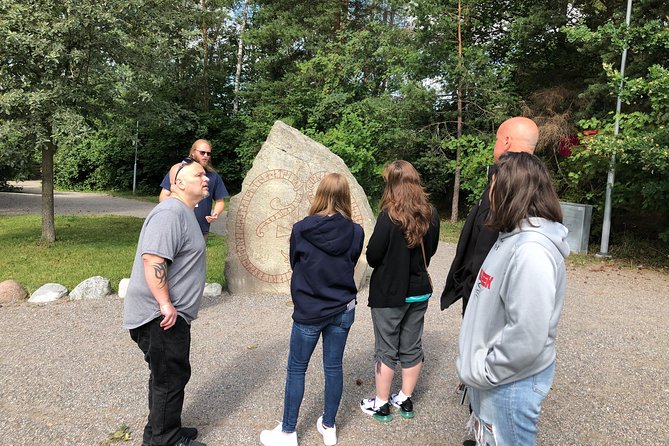
The first stop, Broby Bro, gets about 55 minutes. You see three substantial runestones, a Viking grave field, and the setting where the stones were raised. Admission is free, but the value comes from understanding the markings and the people behind them.
One stone mentions Jerusalem. That small detail widens the story immediately. Viking-age Scandinavians were not cut off in the far north. They traveled, traded, fought, served abroad, and maintained links across Europe and beyond.
The central figure here is Estrid, remembered as one of the most prominent Viking women in the area. Her name appears on stones connected to her family, and her memorials offer a rare way to discuss women’s property, family influence, faith, and public memory during the period.
Your guide also explains basic Viking-age context: why the word Viking originally described an activity rather than an ethnic group, how people lived in Scandinavia, and why the later image of Vikings often narrows a much broader society into raiding alone. This is one of the strongest parts of the tour because the stones become personal records, not just old carvings.
Expect outdoor walking over uneven ground. The stop is not physically extreme, but sturdy shoes make sense, especially if the ground is wet.
Jarlabanke’s causeway and local power
At Jarlabanke Runestones in Täby, the visit lasts about 20 minutes. The stones sit by a reconstructed Viking causeway, giving you a useful picture of how travel routes shaped local power.
Jarlabanke was a major Viking lord, and the guide uses his memorials to explain status, land, roads, and control over the local population. The point is not simply that one man was important. It is that raising stones and improving roads could broadcast authority in a very public way.
This stop is short, so do not expect a long walk or a wide collection of artifacts. Its strength is the connection between inscriptions and infrastructure. You see how a road could serve trade, communication, and political influence.
I would pay close attention here if you are interested in how communities were organized. The tour moves beyond the familiar story of ships and raids and shows the Viking Age as a period of administration, family networks, and local rule.
Arkils tingstad, where law met authority
Arkils tingstad receives about 55 minutes and is one of the tour’s most distinctive stops. It is described as one of the best-preserved Viking assembly places in Europe, with runestones connected to the Skålhamra family.
A thing, or ting, was an assembly where people met to settle disputes, make decisions, hear laws, and manage public affairs. This was not a modern parliament, but it was a real institution with rules, social rank, and competing interests.
Here, your guide explains how the Skålhamra family gained influence through the assembly site and how public authority worked before modern government. You also hear about Viking-age laws, customs, and the social structure sometimes described as a king, warrior, farmer, and thrall society.
This is a valuable stop for anyone who wants a fuller picture of Viking culture. The grave field at Broby Bro tells you about memory and family. Arkils tingstad tells you how the living community handled power and conflict.
The site itself is quiet and archaeological rather than theatrical. If you need reconstructed buildings or hands-on displays, you may find it understated. If you enjoy seeing the actual places where decisions were made, it is likely to be one of the most satisfying stops.
Same fjord country, a very different day out:
- Stockholm: City Archipelago Sightseeing Cruise with Guide
★ 4.3 · 10,798 reviews - Stockholm: Skansen Open-Air Museum Admission Ticket
★ 4.5 · 3,427 reviews - Stockholm: Archipelago Boat Tour
★ 4.4 · 3,110 reviews - Stockholm: Highlights Boat Tour
★ 4.3 · 2,542 reviews
Lunch and the wooden streets of Sigtuna
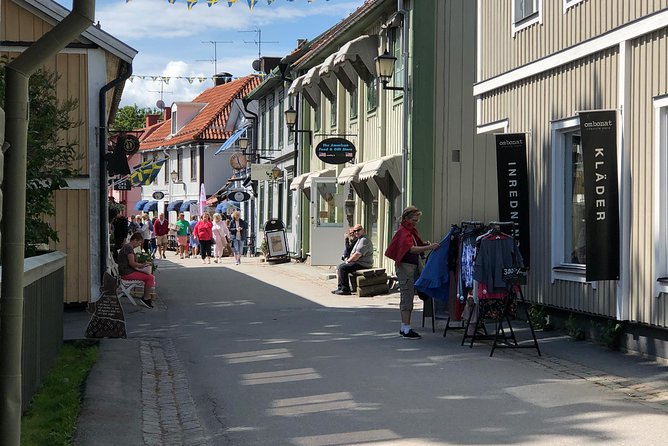
Sigtuna is the tour’s change of rhythm. You have about 40 minutes for lunch at your own expense, followed by another 40 minutes to walk through the town and see its historic sights.
The lunch break is practical rather than elaborate. You choose and pay for your own meal, so budget separately from the tour price. One particularly appealing option mentioned in the experience details is Swedish meatballs, and Sigtuna also has a candy and chocolate shop suitable for small gifts.
The town is known for its old wooden buildings and a main street that still follows a gently curving Viking-era route. That curve is easy to overlook, but it helps connect the modern town with its early layout. Sigtuna was Sweden’s first capital according to the tour material, and it played an important role in the country’s early urban and religious development.
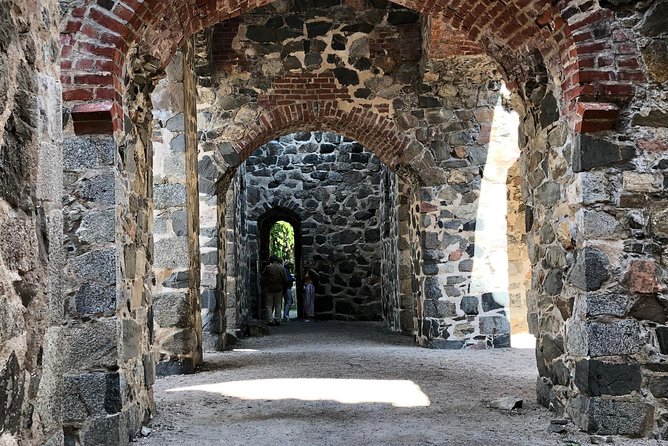
The walk includes church ruins and Mariakyrkan, if open. Mariakyrkan is the surviving reminder of a powerful monastery outside the town itself. Access depends on opening conditions, so treat the interior visit as a possibility rather than a guarantee.
Sigtuna is charming, but the time here is tight. If you want a long lunch, relaxed shopping, and a careful look inside every church, five hours will feel compressed. The longer nine-hour version is worth considering if your schedule allows, especially since there is much more to see around the area.
S:t Olofs Church Ruins and early Christianity
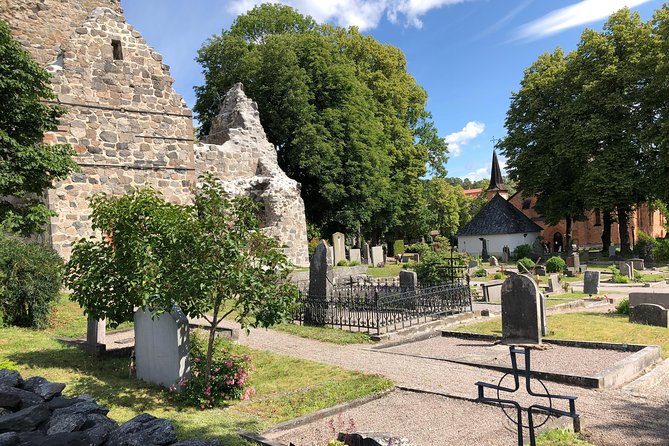
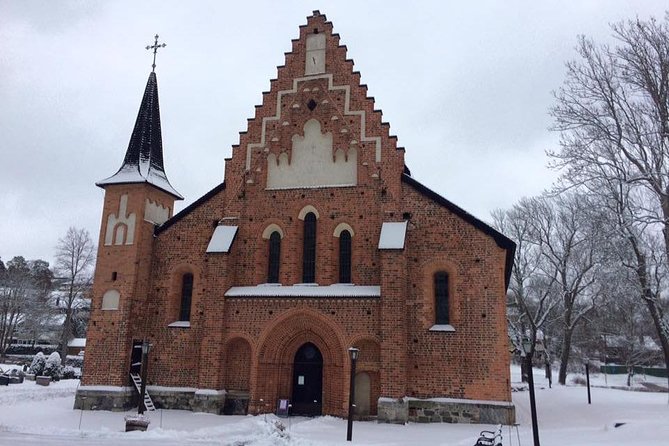
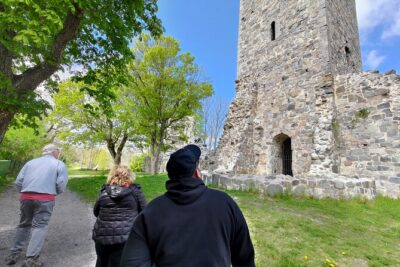
The final listed stop is S:t Olofs Church Ruins, with about 10 minutes set aside. It is described as the largest and best-preserved of the three church ruins around Sigtuna, and also the oldest, built around a holy well between approximately 1080 and 1120.
Ten minutes is enough for a quick look and an explanation of the site, but not for an extended archaeological visit. Its importance is historical: the ruin shows the shift from pre-Christian traditions toward an organized Christian society.
That transition gives the whole excursion a useful arc. At Broby Bro, you encounter memorial stones and Viking beliefs. At Arkils tingstad, you hear about law and social customs. In Sigtuna, you see how Christianity changed the town’s buildings and institutions.
The church ruin is also a reminder that Sigtuna is not only a cute wooden town. Beneath the pleasant streets is a complicated story of power, religion, and urban change.
The guide can make or break the experience
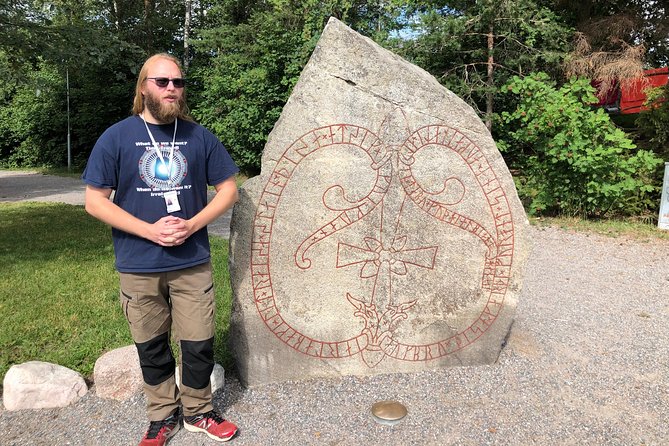
A private tour puts greater weight on the person leading it. The strongest guide reports describe Olof, Jakob, Gustav, Gabriel, Calle, Yonatan, Charles, and others as warm, flexible, and able to turn stones and ruins into stories.
Olof has been singled out for his grasp of Swedish Viking history and his willingness to answer questions. Gustav has been praised for bringing Swedish history to life. Gabriel has been appreciated for clear explanations of the region and its people, while Calle has been described as personable and entertaining.
That said, communication can vary. One assessment described difficulty understanding a guide because of a strong accent, made harder by hearing problems. If you have hearing concerns, tell the operator before the tour and ask if a guide with an easier-to-follow accent can be arranged. The provider has indicated that an English-speaking guide with time in the United States may be available.
The private setting helps, but it cannot fix every communication issue. Ask your guide to slow down, repeat names, or write down important runic terms. You should feel comfortable doing that from the beginning.
Is $532.19 per person a fair price?
At $532.19 per person, this is expensive if you are comparing it with a regular group bus excursion. The price becomes easier to defend when you value door-to-door transport, a private group, and several sites that are awkward to combine independently in only five hours.
The entry fees are free at the listed stops, so you are paying mainly for the vehicle, driver, guide, planning, and private access to the guide’s attention. That makes group size important. The tour requires at least two people and can include up to 16, so the per-person value improves if you are sharing the booking with family or friends.
I would not choose this tour purely for ruins. The physical remains are limited, and one assessment felt the drive was long for the number of stones and buildings seen. I would choose it for interpretation, convenience, and the chance to connect several sites in one morning without renting a car or working out rural transport.
The tour is also a good fit for cruise passengers who have a suitable Stockholm port call. Pickup and drop-off are offered at central hotels, ports, and accommodations within the stated central pickup area. The details give both a three-kilometer and five-kilometer limit in different places, so confirm your exact address before booking.
Timing, pickup, and practical planning
The standard start is 9:30 a.m., with return to Stockholm in the early afternoon. Driving times can change with traffic, so the five-hour duration is approximate.
Pickup instructions are specific for several cruise piers:
- At Stadsgården S165 or S167, walk beyond the fences and guards while following the blue or green lines. Look for a guide holding an A4 sign marked Viking Tours.
- At Frihamnen F638, leave the terminal through the sliding doors. The guide waits outside.
- At Värtahamnen V523, walk toward the tourist buses, less than 10 meters from the ship hull.
- At Nynäshamn, pickup is not included. You must reach central Stockholm by train or cruise bus and arrange a meeting point there.
Check your ship’s pier number with the cruise line. This matters because the pickup instructions are tied to specific berth numbers, not simply the harbor name.
Children must be accompanied by an adult. Most people can participate, and the tour is near public transport, though the experience itself uses a private vehicle. Lunch is not included, and the tour requires at least two people per booking.
Free cancellation is available up to 24 hours before the start time. Changes or cancellations inside that window are not refunded, and the experience may be rescheduled or refunded if the minimum number is not met.
Who should book this half-day tour?
I recommend it most strongly to you if you want Viking history beyond Stockholm’s museums and prefer a guide to explain the meaning of stones, roads, graves, and church ruins. It suits couples, families, and small groups who value a private vehicle and the freedom to ask plenty of questions.
It also works well for cruise passengers with limited time, provided your ship uses one of the included Stockholm piers and the timing fits your departure. The custom pickup and drop-off arrangements have been especially useful for people continuing to an airport or another part of the city, but confirm this in advance.
You may want a longer tour if Sigtuna interests you as much as the Viking sites. The half-day plan gives you a useful introduction, but lunch and town sightseeing are brief. You should also choose the nine-hour option if you want a slower pace or more time for additional historical stops.
Should you book it?
Book this tour if you want context, convenience, and real Viking-era sites rather than a staged show. The best parts are Broby Bro’s Estrid story, Arkils tingstad’s look at law and local power, and the way Sigtuna links Viking Sweden with early Christianity.
Skip it if you expect towering ruins, museum collections, or a relaxed afternoon. The price is high, the route includes a fair amount of driving, and the schedule moves quickly.
For the right audience, this is a strong private introduction to the Viking world around Stockholm. Tell the operator about any hearing needs, confirm your pickup point, and consider sharing the cost with companions. That preparation will help you get the most from the guide and the scattered sites.
FAQ
How long does the Viking history tour last?
The tour lasts approximately five hours, beginning at 9:30 a.m. and returning to Stockholm in the early afternoon. Transfer times can vary with traffic.
Is hotel pickup included?
Pickup and drop-off are offered at central Stockholm hotels, ports, and other accommodations within the stated central pickup area. The details give both three kilometers and five kilometers from Stockholm Central Station, so confirm your exact location with the operator.
Is cruise port pickup available?
Yes, pickup is described for several piers at Stadsgården, Frihamnen, and Värtahamnen. You should check your ship’s exact berth because the meeting instructions depend on the pier number.
Can I be picked up at Nynäshamn?
No. Pickup at Nynäshamn is not included because the harbor is about 50 kilometers from central Stockholm. The operator can provide directions to meet in central Stockholm after you travel by train or cruise bus.
What is included in the price?
The tour includes the guide experience, taxes and surcharges, driver and vehicle, eligible hotel or port pickup and drop-off, and a private small-group format.
Is lunch included?
No. Lunch in Sigtuna is at your own expense. About 40 minutes is set aside for the lunch stop.
How many people can join the private tour?
A minimum of two people is required per booking. The private group can include a maximum of 16 people.
Are admission tickets included?
The listed stops have no admission charge. Entry to Mariakyrkan depends on whether the church is open at the time of your visit.
Can I cancel for a full refund?
Yes, if you cancel at least 24 hours before the experience start time. Cancellations or changes made less than 24 hours in advance are not refunded.
Just added around Stockholm
- Stockholm: Evening Wildlife Safari with Midsummer Meal★ 4.2 · 130 reviews
- World War II Stockholm Old Town Walking Tour and Army Museum★ 4.6 · 4 reviews
- Stockholm: Archipelago Guided Boat & Walking Tour of Vaxholm★ 3.1 · 23 reviews
- Stockholm: Archipelago Islands Kayak Tour and Outdoor Picnic★ 4.9 · 150 reviews
- Vaxholm & Stockholm Archipelago: Guided Excursion, Day Trip★ 4.8 · 41 reviews
- Stockholm: Underground Metro Art Ride with a Local Guide★ 4.6 · 39 reviews
- Scandinavian Art, Architecture and Design Tour in Stockholm★ 4.5 · 11 reviews
- Stockholm: Sunset Hike in Tyresta National Park with Meal★ 5.0 · 79 reviews
Historical Tours, compared.

Reindeer Camp and Sami Cultural Tour with Lunch
Read our review →
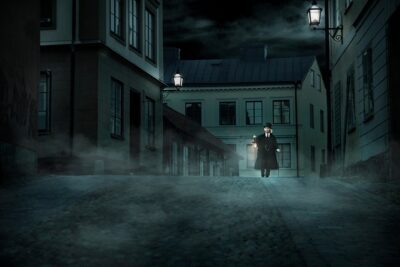
The Original Stockholm Ghost Walk and Historical Tour – Gamla Stan
Read our review →

Viking History, Runes & Countryside 9h Tour to Sigtuna & Uppsala
Read our review →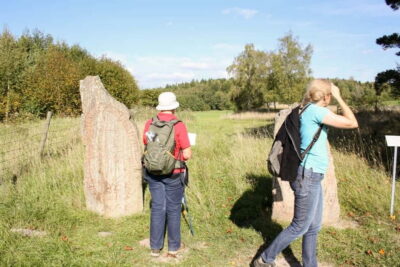
Stockholm Viking History Full Day Tour to Sigtuna + Uppsala
Read our review →Browse the lists this tour appears in