
Reviewed · MUSEUMS
Skip the Line: Disgusting Food Museum Entrance Ticket
The Disgusting Food Museum turns revulsion into a hands-on lesson. You’ll see 80 foods that many people find shocking, then decide how brave you are when the tasting bar invites you to smell and sample some of them. The best moments come from the sharp smells and the sheer surprise of discovering what counts as food around the world.
I like the way the museum gets both kids and adults involved, and I like that the staff keep the tasting area interactive rather than leaving you to read labels in silence. The main drawback is scale: the museum is more boutique-sized than grand, so you may finish sooner than expected, especially if you skip the tasting.
In This Review
- Key points to know before you go
- Malmö’s small museum with a very big gross-out factor
- What you see among the 80 foods
- The tasting bar is the real test
- Why the staff matter here
- How much time should you allow?
- Is $25.25 good value?
- Who will enjoy this most?
- Booking, transport, and cancellation details
- A practical plan for your visit
- Should you book the Disgusting Food Museum?
- FAQ
- How much does admission to the Disgusting Food Museum cost?
- How long does the museum visit take?
- How many foods are displayed?
- Can I smell and taste the foods?
- Is the museum suitable for children?
- What is the cancellation policy?
Key points to know before you go
- Eighty unusual foods: The displays cover a wide range of notorious foods and food customs.
- Smell and taste are optional: You can look through the exhibits without sampling, or test yourself at the tasting bar.
- The tasting can get intense: The final hot sauces may feel less rewarding than the stranger foods earlier on.
- Plan on one to two hours: The museum is compact, making it easy to fit into a Malmö day.
- Book ahead when your schedule matters: Admission is often reserved about nine days in advance.
- A family-friendly oddity: The subject matter suits curious kids and adults, though sensitive visitors may prefer to observe rather than taste.
Malmö’s small museum with a very big gross-out factor
This is not a traditional museum where you quietly move from one glass case to the next. The point is to make you react. You may wrinkle your nose at a famous stinky cheese, wonder why a certain dish is considered a delicacy, or pause before trying a sweet made with metal cleansing chemicals.
That physical reaction is part of the lesson. Food is not judged by taste alone. Smell, texture, memory, religion, local custom, and childhood habits all shape what you find acceptable. Something that seems revolting to you may be ordinary, festive, or prized somewhere else.
I find that idea more useful than a simple parade of strange dishes. The museum asks you to question your own food rules. It also gives families a reason to talk, since children can compare their reactions with the adults beside them without needing a long history lesson.
The museum has around 80 foods on display. That number gives you enough variety to keep the visit lively, but it does not mean you should expect a huge building or a full-day attraction. The setting is closer to a boutique museum, with a compact route and a strong focus on interaction.
A few more Malmo trips to weigh up
- Malmö: Disgusting Food Museum Entrance Ticket
★ 4.5 · 234 reviews - Malmö: Self-Guided Food Tour
★ 4.5 · 18 reviews - The Copenhagen Culinary Experience Food Tour
★ 5.0 · 959 reviews
What you see among the 80 foods
The exhibits focus on foods known for being disgusting, unusual, or difficult for outsiders to accept. The details provided for the visit point to famous stinkers, curious sweets, and foods that challenge basic ideas about cleanliness and safety.
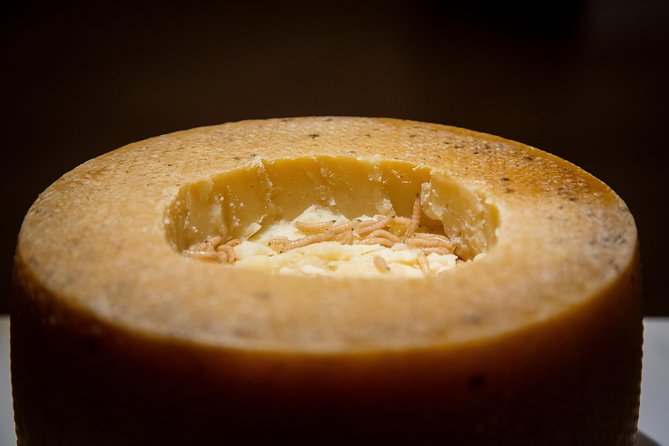
One memorable test is the chance to smell the world’s stinkiest cheese. Smell is often more powerful than sight, so this can be one of the museum’s most effective stops. You do not need to taste anything to take part, and I would advise you to decide your limits before you reach the sampling counter.
The museum also presents sweets made with metal cleansing chemicals. That detail alone shows the range of the collection. Some items are hard to imagine as food because of their ingredients, while others may seem strange mainly because your culture does not serve them.
The value here is the contrast. You are not simply told that a food is gross. You are pushed to notice how quickly your own assumptions take over. The same display can produce laughter, disbelief, curiosity, or a firm refusal to sample.
Because the museum is compact, take time to read and discuss the displays rather than rushing to the tasting bar. If you are with children, this is a good place to explain that disgusting is often a matter of habit and culture, not an objective rule.
The tasting bar is the real test
The tasting portion gives the museum its strongest practical edge. You can smell and sample a range of foods, if you are willing. That choice matters because the exhibits work for cautious visitors, while the tasting bar gives adventurous visitors something they cannot get from photographs or labels.
The smelling and tasting are the parts I would put at the center of your visit. Strange food behind glass is interesting, but scent and flavor turn the idea into a personal experience. You may remember one unexpected bite long after you forget the name of a display.
The staff are described as highly interactive, which helps in a museum built around reaction. A good tasting counter needs someone to explain what you are facing, encourage you without pressuring you, and keep the mood light when a sample goes badly. That human element is especially useful for families and mixed groups, where one person may be eager to try everything and another may prefer to watch.
There is one caution. The tasting bar reportedly finishes with six hot sauces, and that ending may feel less satisfying than the earlier food samples. Hot sauce is a familiar challenge, while the museum’s unusual foods are what make the experience special. You can treat the sauces as an optional final dare rather than the main reason to visit.
You should also remember that tasting is not a contest. The museum works just as well if you smell one item, try a single bite, and then return to the displays. The ticket gives you access to the experience, not an obligation to prove anything.
Why the staff matter here
A small museum can feel flat if the exhibits do all the work. Here, the staff play an important role at the tasting area. Their interactive approach helps turn a short visit into a shared activity instead of a quick walk through unusual objects.
That is useful if you are visiting with children. Kids often respond well to strong smells, bold reactions, and clear choices. Adults may appreciate the cultural questions behind the food. The museum’s family-friendly aim lets both groups take part at their own level.
The staff also help manage the social side of tasting. Trying something odd can feel awkward if you are alone with a counter full of unfamiliar samples. A welcoming host makes it easier to ask questions, laugh at your own reaction, and stop when you have had enough.
No individual guide names are provided, so you should not expect a named tour led by a particular person. This is an admission experience at the museum, with staff interaction rather than a scheduled guided walk.
Same fjord country, a very different day out:
- Malmö: Rundan Sightseeing Boat Tour
★ 4.6 · 856 reviews - Malmö: 3-Hour Guided Walking Tour
★ 4.4 · 34 reviews - Walk Malmö with an audio guide
★ 3.5 · 31 reviews - Copenhagen: Full-Day Trip to Malmö by Train
★ 4.9 · 31 reviews
How much time should you allow?
The visit takes about one to two hours. I would allow the full two hours if you plan to read the displays, talk through the food customs, and sample several items. A quick visit focused on photographs and a few tasting challenges may take less.
The compact size is both a strength and a weakness. It makes the museum easy to add to a Malmö itinerary, even when you have only a free morning or afternoon. You will not spend half a day crossing a large building, and the experience has a clear beginning and end.
On the other hand, you should not buy this ticket expecting a major museum complex. If you move quickly, the displays may feel limited for the $25.25 price. The value improves when you treat the visit as an interactive activity, not just an exhibit of odd foods.
I would pair it with other time in Malmö rather than make it the only plan for the day. Its near-public-transport location should make that practical, though exact directions and travel times are not provided here.
Is $25.25 good value?
At $25.25 per person, the ticket is not the cheapest short museum visit. The price makes more sense if you plan to use the tasting bar and take part in the smell-based displays. Those elements are difficult to replace with a normal sightseeing stop.
The ticket also saves you from arriving without a guaranteed place if the museum is busy. Admission is booked on average about nine days ahead, which suggests that planning matters, particularly if you have fixed dates in Malmö.
I would call the value activity-based rather than collection-based. You are paying for the unusual idea, the chance to taste and smell the foods, and the staff interaction. If you only want to look at displays, the compact scale may leave you wishing the ticket cost less.
For a family or group of friends, the price can buy a memorable shared story. Everyone can compare reactions, and even the person who refuses every sample still has something to discuss. For a solo visitor who dislikes tasting challenges, the value depends more heavily on your interest in food culture.
Who will enjoy this most?
You are a good match for this museum if you like unusual attractions, food traditions, and experiences that give you something to talk about afterward. It suits curious adults, older children, and families who enjoy a little controlled chaos.
It also works well for mixed groups. One person can read and observe, another can smell everything, and the boldest member can attempt the samples. Since participation is flexible, you do not need everyone in your party to have the same level of courage.
I would be more cautious if you are sensitive to strong smells, dislike food-based shock value, or want a large, traditional museum. You can avoid tasting, but the displays are still built around foods that many people find unpleasant.
Language may also affect your visit. Information was not available in German for one visitor, despite the museum attracting many German-speaking visitors. If German text is important to you, check the current language arrangements before booking. Do not assume every display will be available in your preferred language.
Booking, transport, and cancellation details
The museum is near public transportation, so it should be easy to add to a day in Malmö without making a special transport plan. Exact stop names and directions are not included, so check the location details after booking.
You receive confirmation at the time of booking. Most people can participate, and no special fitness requirement is stated. The experience lasts indoors at the museum, but the booking terms say it requires good weather. If poor weather causes cancellation, you will be offered another date or a full refund.
You can cancel for a full refund up to 24 hours before the local start time. Cancellations and changes made within 24 hours are not accepted for a refund. The same 24-hour rule applies to the stated cutoff, so check the local time carefully if your plans are uncertain.
The experience also requires a minimum number of participants. If that minimum is not reached, you will be offered another date or experience, or a full refund.
A practical plan for your visit
Book ahead if you have only one possible day in Malmö. With admission often reserved around nine days in advance, leaving it until the last minute may create unnecessary stress.
Give yourself more than a quick half-hour stop. Start with the displays, read enough to understand why the foods are considered unusual, then approach the smell and tasting section when you are ready. This order lets you build curiosity before confronting the stronger samples.
If you are with children, set expectations early. Tell them they can choose what to smell or taste, and make it clear that refusing a sample is fine. That keeps the experience playful rather than turning it into a dare.
If strong flavors are not your thing, focus on the cultural side. The museum still has value when you treat the tasting bar as a place to watch rather than a test you must pass. If you are adventurous, save room for the samples, but do not assume the six hot sauces will be the highlight.
Should you book the Disgusting Food Museum?
Book it if you want a short, unusual Malmö activity with real participation. The 80 foods, strong smells, optional tasting, and interactive staff give it more personality than a standard exhibit.
Skip it if you need a large museum, a long guided tour, or a low-cost attraction that fills most of the day. The boutique scale is the main limitation, and the $25.25 price asks you to take part rather than simply look around.
For most curious families, food lovers, and friends who enjoy a harmless challenge, I would book in advance and allow the full two hours. Go with an open mind, a willingness to stop when a sample is too much, and a sense of humor about your own food rules.
FAQ
How much does admission to the Disgusting Food Museum cost?
The ticket costs $25.25 per person.
How long does the museum visit take?
The experience lasts approximately one to two hours.
How many foods are displayed?
The museum has 80 of the world’s most disgusting foods on display.
Can I smell and taste the foods?
Yes. Adventurous visitors can smell and taste a range of the foods, including the chance to smell the world’s stinkiest cheese and try unusual sweets. Tasting is not required.
Is the museum suitable for children?
Yes. The institution is aimed at both kids and adults and is described as family-friendly.
What is the cancellation policy?
You can cancel at least 24 hours before the local start time for a full refund. Cancellations or changes made less than 24 hours before the start time are not refunded or accepted. If the experience is canceled because of poor weather or an unmet minimum number of participants, you will be offered another option or a full refund.
More Skip the Line in Malmo
- Stockholm: Avicii Experience Skip-the-Line Entrance Ticket
★ 4.8 · 763 reviews - Stockholm Royal Palace Museums Gamla Stan Skip-the-line Tour
★ 4.8 · 18 reviews - Norsk Folkemuseum Oslo Private Tour & Skip-the-Line Tickets
★ 4.5 · 15 reviews - Copenhagen: Rosenborg Castle Tour with Skip-the-Line Ticket
★ 4.2 · 14 reviews
More Museums in Malmo
- Stockholm: Skansen Open-Air Museum Admission Ticket
★ 4.5 · 3,427 reviews - Stockholm Pass: Save up to 50% – Includes Vasa Museum Ticket
★ 4.1 · 2,392 reviews - Kon-Tiki Museum Entrance Ticket
★ 4.5 · 1,096 reviews - Stockholm: Nobel Prize Museum and Exhibition Entry Ticket
★ 4.3 · 994 reviews
Just added around Malmo
- Surprise Walk of Malmö with a Local★ 4.0 · 9 reviews
- Malmo Bike Rental★ 5.0 · 19 reviews
- Daytrip Bike Tour on the Swedish Countryside Private★ 5.0 · 4 reviews
- Walk Malmö with an audio guide★ 3.5 · 31 reviews
- Lund’s Medieval and Modern History: A Self-Guided Audio Tour★ 4.5 · 11 reviews
- Malmo Walking Tour, 3 hours (small group)★ 4.5 · 26 reviews
- Malmö Walking Tour: Explore Top Sights & Hidden Gems★ 4.0 · 23 reviews
- Old Town Helsingborg: Exploration Game and Self-Guided Tour★ 3.5 · 23 reviews
Museums, compared.

Stockholm Pass: Save up to 50% – Includes Vasa Museum Ticket
Read our review →




Browse the lists this tour appears in