
Reviewed · MUSEUMS
Copenhagen: National Museum of Denmark Entry Ticket
The National Museum of Denmark packs 14,000 years of Danish history into one grand Copenhagen address. You can move from Stone Age tools to Bronze Age sun symbols, Viking beliefs, Danish exploration, and modern social history without changing museums.
I like the freedom to explore at my own speed, and I especially like the famous Viking displays and the striking Viking Sorceress exhibition. The main drawback is simple: this museum is huge. You can spend three to five hours here and still feel you rushed the final rooms.
In This Review
- Key points to know before you go
- What the $21 ticket really gives you
- Entering the National Museum in central Copenhagen
- Start with Denmark’s earliest people
- Bronze Age treasures worth seeking out
- The Viking galleries: more than ships and raids
- The Viking Sorceress and the Völva story
- Danish explorers and the wider world
- Modern displays and everyday society
- How long should you allow?
- A self-guided visit suits independent explorers
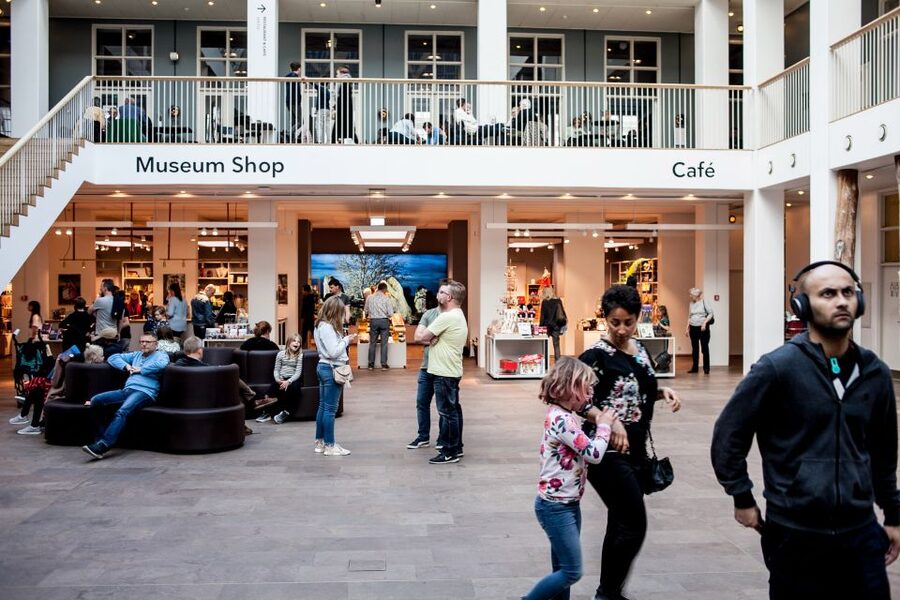
- Café, shop, lockers, and practical comforts
- When this museum works best in Copenhagen
- Who should book the National Museum?
- Should you book it?
- FAQ
- Where is the National Museum of Denmark?
- How much does entry cost?
- How long is the ticket valid?
- What does the ticket include?
- Is the visit guided?
- Can I cancel my booking?
- Can I reserve now and pay later?
- Is the museum wheelchair accessible?
Key points to know before you go
- 14,000 years under one roof: Follow Denmark from the Stone Age through the Bronze Age, Viking Age, and later periods.
- The Viking Sorceress exhibition: See the spiritual side of Viking life through objects, scenes, Eddas, and sagas.
- A self-guided visit: There is no fixed group route, so you decide what deserves your time.
- Major Bronze Age objects: Look for the famous sun chariot, curved lurs, and ancient helmets.
- Plan for several hours: Two or three hours can cover the main sights, but four or five hours is more realistic for a fuller visit.
- Good rainy-day value: The museum has a café, shop, lockers, a cloakroom, toilets, and a children’s area.
What the $21 ticket really gives you
At about $21 per person, this is not a quick museum stop. It is a full cultural visit, closer to a half-day plan than a one-hour attraction.
The ticket gives you entry to the National Museum of Denmark, with access lasting 365 days. That unusually long validity matters if your Copenhagen plans are still shifting. You can book now and pay later, and cancellation is free up to 24 hours before the visit.
The best value comes when you give the museum time. If you rush through in two hours, you will see the headline objects but miss much of the story connecting them. If you have only a short stay in Copenhagen, you need to decide how strongly Danish history ranks against the city’s other sights.
I think the price works well for history fans, families with older children, and anyone facing wet or cold weather. It is less convincing for someone who wants a compact museum with a clear, easy route from entrance to exit.
A few more Copenhagen trips to weigh up
- Copenhagen: Amalienborg Palace Museum Entry Ticket
★ 4.3 · 291 reviews - Exhibition – Home of Carlsberg
★ 4.5 · 281 reviews - Copenhagen: Danish War Museum Entry Ticket
★ 4.7 · 106 reviews
Entering the National Museum in central Copenhagen
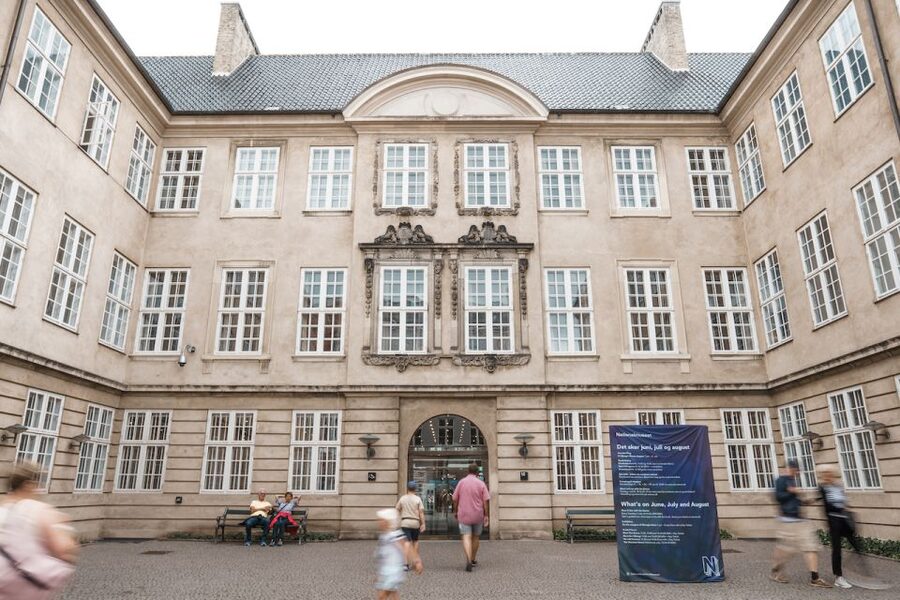
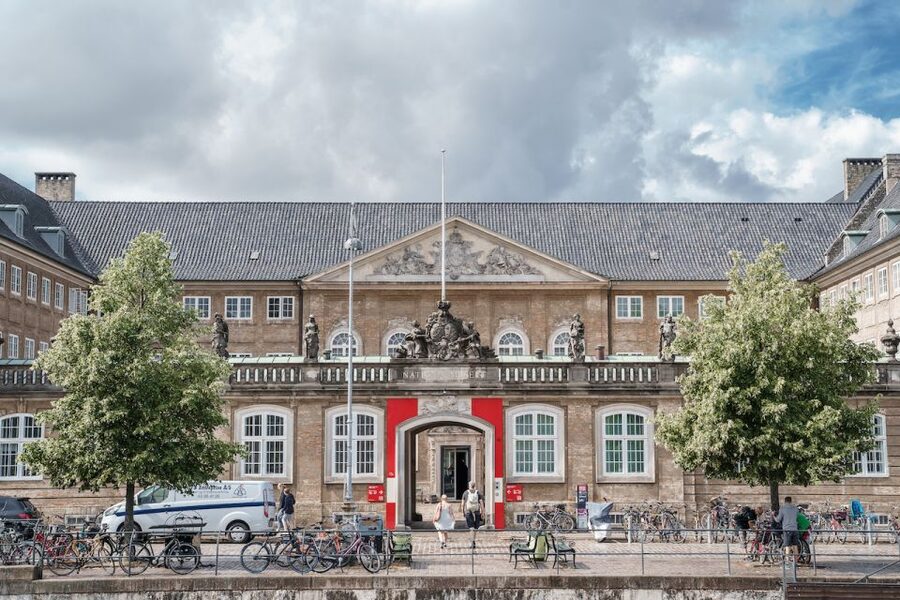
You show your voucher at the ticketing desk of the National Museum of Denmark. The museum is in the center of Copenhagen and is easy to reach from the station, with Christiansborg nearby.
The setting gives you a useful pairing opportunity. You can combine the museum with a walk around the central city and nearby Christiansborg rather than treating it as a distant day trip. The central location also makes it practical for a final-day visit, especially if you want an indoor activity before leaving Copenhagen.
The building contains many connected rooms and several floors. That gives the museum room to display a vast collection, but it can also make the route hard to follow. You may find yourself turning into adjoining galleries and wondering if you have skipped something.
Do not arrive expecting a simple ticket checkpoint with a single obvious path. Keep your voucher ready at the ticket desk, then take a moment to study the layout before charging ahead.
Start with Denmark’s earliest people
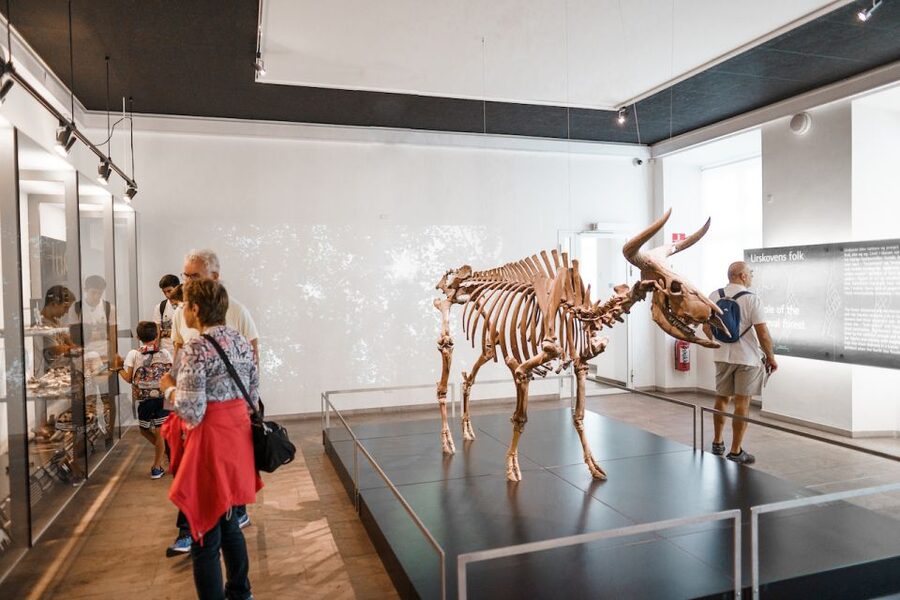
The opening historical sections take you far back before the age of castles, kings, or longships. You can see remains and objects connected with the Stone Age, including material from people who lived in Denmark thousands of years ago.
These early galleries are valuable because they make Danish history feel bigger than the Viking chapter alone. The Viking Age gets most of the popular attention, but the Stone Age and Bronze Age sections explain how long people have lived, worked, worshipped, and traded in this part of northern Europe.
You might find the amount of information heavy if you try to read every label. I suggest choosing a few objects and asking what they reveal about daily life, technology, religion, or contact with other regions.
The museum works best when you treat it as a series of selected stories, not a test you must complete. You do not need to examine every case to get value from the earliest rooms.
Bronze Age treasures worth seeking out
The Bronze Age displays contain some of the museum’s most memorable objects. Look for the sun chariot, the large curved horns known as lurs, and ancient helmets.
The sun chariot is especially useful for understanding how much symbolism can be packed into one object. The lurs have an unusual shape that makes them instantly recognizable, while the helmets help you picture the ceremonial and martial world of Bronze Age Denmark.
These pieces also help balance the museum’s Viking focus. You are not simply looking at a collection of old weapons and jewelry. You are seeing evidence of craft, belief, status, and long-distance connections long before the Viking ships sailed widely.
Give this section proper time. It is easy to hurry toward the Vikings, but the Bronze Age displays contain some of the museum’s clearest visual highlights.
Same fjord country, a very different day out:
- Copenhagen: Canal Cruise with Guide
★ 4.6 · 9,115 reviews - Copenhagen: Hop-On Hop-Off Bus Tour with Boat Tour Option
★ 3.9 · 4,122 reviews - Private Walking Grand Tour of Copenhagen
★ 5.0 · 3,953 reviews - From Copenhagen: Lund and Malmö 2-Country Tour
★ 4.7 · 2,772 reviews
The Viking galleries: more than ships and raids
The Viking collections cover the part of Danish history most people expect, but the museum presents more than battles and sea voyages. You can learn about the Vikings who crossed the seas, reached distant parts of the world, and built a culture shaped by travel, trade, belief, and conflict.
The strongest part of the experience is the sense that Viking life was complex. The objects point to people who were explorers and traders as well as raiders. They also show a society concerned with status, ritual, family, death, and the unseen world.
If Viking history is your main reason for coming, head here early in your visit. This is where the museum feels most focused for many people, and it is easy to lose track of time among the displays.
The Viking section is also a good choice if your party has different interests. One person can focus on objects and warfare, while another can spend more time on religion, mythology, or daily life.
The Viking Sorceress and the Völva story
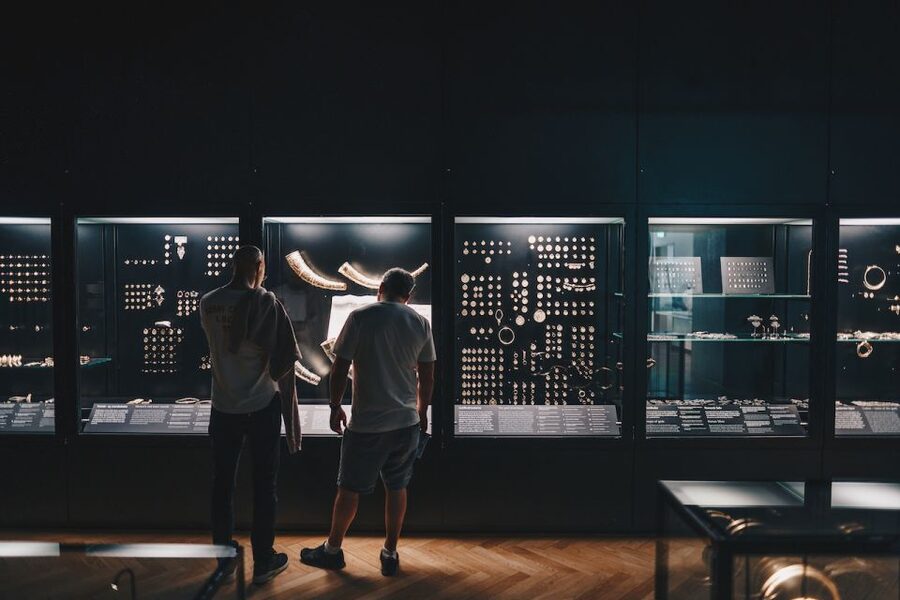
The Viking Sorceress exhibition is one of the museum’s major draws. It introduces the Völva, a powerful female seer or sorceress associated with Viking Age spiritual practice.
The exhibition creates a more atmospheric experience than a standard case-by-case display. Scenes connected with the Eddas and sagas help you picture the beliefs and stories surrounding the Völva, while objects linked to these women give the subject a physical anchor.
This section is particularly good for anyone interested in Norse mythology. It explores how Vikings understood their own age and their future, rather than presenting mythology as a collection of familiar names and dramatic tales.
The audio element may not satisfy everyone, so I would not make it the only way you approach the exhibition. Read the displays, look closely at the objects, and allow time for the scenes to work on their own.
The exhibition has an important limitation: special displays can be temporary. Check what is showing on your chosen date if the Viking Sorceress material is the main reason you want to visit.
Danish explorers and the wider world
The museum also follows Danish explorers and the country’s connections beyond its borders. This broadens the visit beyond a national story and places Denmark within a much larger world of travel, contact, and curiosity.
You can see how the museum presents both Denmark’s internal development and its links with other parts of the world. That makes the visit useful for people who want more than royal objects or Viking artifacts.
The collection covers triumphs and tragedies, so do not expect a purely celebratory account. The museum’s aim is to document culture and history, including difficult chapters and the human consequences of major events.
This part can feel less immediately dramatic than the Bronze Age treasures or Viking galleries. Still, it helps explain why the National Museum is more than a Viking museum with extra rooms.
Modern displays and everyday society
Later galleries carry the story into more recent Danish life. You will find displays about Danish society and culture, giving you a way to connect the ancient objects with the country you are exploring today.
The museum separates art into other museums, which may please you or disappoint you. If you are looking for a general national museum with a major fine-art collection, this is not quite that kind of institution.
Instead, the emphasis is on cultural history, objects, people, and the way Denmark changed over time. I find that focus helpful because it keeps the visit tied to how people lived rather than only to famous paintings or royal portraits.
The modern sections can be easy to skip after several hours of ancient material. Try to save a little energy for them. They provide context for present-day Denmark and prevent the museum from ending with the Viking Age.
How long should you allow?
You can see the main highlights in two or three hours if you move quickly. For a more relaxed visit, allow three to four hours. If you want to read widely and cover most floors, five hours is realistic.
One visitor spent five hours and still had to hurry through a floor near closing. That tells you more than any official duration could. The museum’s 365-day ticket validity also gives you the option of returning, although most people will probably plan one substantial visit.
A practical route might look like this:
- Start with the Stone Age and Bronze Age galleries.
- Move to the Viking rooms while your attention is fresh.
- Spend focused time in the Viking Sorceress exhibition.
- Choose selected rooms on explorers, world culture, and modern Denmark.
- Finish with the café or museum shop.
Do not assume the museum flows perfectly from one period to the next. The connected rooms can be confusing, and you may need to retrace your steps. Wear comfortable shoes. After several hours, the amount of walking becomes noticeable.
A self-guided visit suits independent explorers
This is a self-guided museum visit, so you set the pace. That is a major advantage if you dislike being hurried or want to linger over a favorite subject.
You can spend ten minutes on a Bronze Age object or move quickly through a section that does not interest you. Families and mixed-age groups get the same benefit. Nobody has to follow a guide’s timetable.
The tradeoff is that you must make your own plan. Some areas do not flow as clearly as others, and the size of the building can leave you unsure about what comes next.
Free docent tours have been available according to visitor experience, and a highlight audio tour can help you select the most important objects. Availability of these additions may vary, so treat them as useful extras rather than the central product.
Café, shop, lockers, and practical comforts
The museum has a café that works well for a proper break rather than just a quick drink. It has been praised for its atmosphere, lunch, and range of options.
That matters here because a long museum visit can become tiring. A café inside the building lets you pause without giving up your ticketed visit or hunting for a nearby table.
There is also a museum shop with attractive souvenirs and history-related items. Set a spending limit before you go in if you are easily tempted.
Lockers and a cloakroom make it easier to move through the rooms without carrying every jacket or bag. The museum also has toilets and a children’s area, though more toilets would be helpful at busy times.
The museum is wheelchair accessible. Families should know that the sheer number of objects and the open display style may feel overwhelming for younger children. The children’s area helps, but the full museum is still a substantial cultural visit.
When this museum works best in Copenhagen
This is an excellent rainy-day plan. You can spend several indoor hours here, take a café break, and continue when the weather improves.
It also works well as a first introduction to Denmark. The chronological range lets you see the country through many periods instead of meeting Copenhagen only through palaces, canals, and modern design.
I would choose it early in a longer Copenhagen stay if you want context for later sightseeing. After learning about Danish society, royalty, religion, and exploration, other city sights can make more sense.
For a short city break, be selective. Copenhagen offers many strong choices, and the National Museum may not be the best use of time if you only have a day or two and are not particularly interested in history.
Who should book the National Museum?
I recommend this ticket if you enjoy archaeology, Viking culture, Norse mythology, anthropology, or social history. It is also a smart choice for families with older children who can handle a large museum and choose favorite sections.
It suits independent visitors who want to read, pause, and change direction. It is less suitable if you want a short, tightly organized attraction or a guided tour with a fixed storyline.
The museum can also serve couples and solo visitors well. You can take the galleries at your own speed, stop for lunch, and focus on the periods that appeal to you.
Should you book it?
Book it if you want the broadest single look at Danish culture and history, especially if the Viking Sorceress exhibition, Bronze Age treasures, or Viking collections appeal to you.
At $21, the ticket is fair when you allow at least three hours and use the café and central location to build a half-day around it. The 365-day validity and flexible cancellation make planning easier.
Skip it if you have very limited time in Copenhagen, dislike large museums, or want a clear one-way route with little reading. For everyone else, this is one of the city’s most useful indoor history stops. Go early, choose your priorities, and accept that you will not see every room in one hurried sweep.
FAQ
Where is the National Museum of Denmark?
It is in central Copenhagen in the Zealand Region of Denmark, near Christiansborg and within easy reach of the station.
How much does entry cost?
The listed price is $21 per person.
How long is the ticket valid?
The ticket is valid for 365 days. Check availability for the applicable starting times.
What does the ticket include?
The ticket includes entry to the National Museum of Denmark.
Is the visit guided?
The visit is self-guided, allowing you to explore at your own pace. Free docent tours and a highlight audio tour have also been available.
Can I cancel my booking?
Yes. You can cancel up to 24 hours in advance for a full refund.
Can I reserve now and pay later?
Yes. The activity allows you to reserve your place and pay later.
Is the museum wheelchair accessible?
Yes. The museum is wheelchair accessible.
Just added around Copenhagen
- a day at North Zealand Castle Tour★ 4.5 · 19 reviews
- Copenhagen Walking Tour with Food Testing (smorrebrod dish & snap)★ 4.5 · 10 reviews
- walking tour – Copenhagen and Christiansborg 3 hours★ 4.0 · 7 reviews
- The Hunt For The Six Forgotten Giants★ 5.0 · 45 reviews
- The Philosopher’s Last Walk: An audio tour on the life of Søren Kierkegaard★ 4.5 · 5 reviews
- The Six Forgotten Giants Trolls Hunt with Minibus★ 4.5 · 27 reviews
- Malmö Full Day Private Trip, Sightseeing Tour & Lunch Option★ 5.0 · 93 reviews
- The Forgotten Giants Private Tour★ 5.0 · 3 reviews
Museums, compared.

Stockholm Pass: Save up to 50% – Includes Vasa Museum Ticket
Read our review →


Browse the lists this tour appears in