
Reviewed · HISTORICAL TOURS
Uppsala bloody history 1h- racial biology, 18th century plague, 19th century prostitution etc.
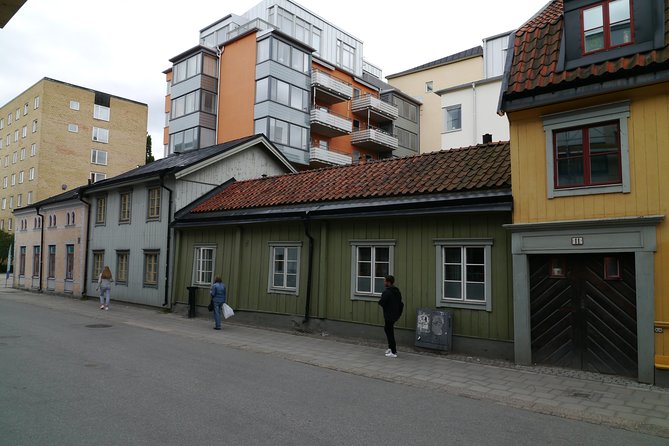
Uppsala’s darker past is not tucked away in a distant museum. It sits along ordinary streets, beside the cathedral, and near the university buildings you might otherwise pass without a thought. This one-hour walk looks at plague, poverty, prostitution, racial biology, and forced sterilization, bringing difficult chapters of Swedish history into the city center.
I like two things right away. First, the route links major national issues to real places, from the old red-light district to the cathedral and Gustavianum. Second, the guide keeps the subject human and connected to modern society, with time for questions and some lighter facts along the way. The main drawback is the pace: one hour is short for such a heavy list of subjects, so some stories receive only a brief treatment.
In This Review
- Key points about Uppsala’s Bloody History
- Why This Walk Shows a Different Uppsala
- Starting at Riddartorget at 3pm
- Svartbäcksgatan and the Poorer Side of Uppsala
- The Old Red-Light District Near Linnéträdgården
- Uppsala Cathedral and Religious Persecution
- The Racial Biology Institute and the Cost of Official Science
- Gustavianum, Anatomy, and the Slave Trade
- What the Guides Add to the Hour
- Price, Length, and Overall Value
- Who Should Take This Tour
- Should You Book Uppsala’s Bloody History?
- FAQ
- Where does the tour start?
- What time does the tour begin?
- Where does the tour end?
- How long is Uppsala’s Bloody History?
- How much does the experience cost?
- What subjects are covered?
- Is entry to Gustavianum included?
- How many people can join the tour?
- Is the tour physically demanding?
- Can I cancel for a full refund?
Key points about Uppsala’s Bloody History
- A compact central walk: The route covers Svartbäcksgatan, the area outside Linnéträdgården, Uppsala Cathedral, and Gustavianum.
- Difficult subjects handled directly: Expect discussion of slave trade, plague, prostitution, persecution, racial biology, anatomy, and forced sterilization.
- A small group format: The tour accepts a maximum of 20 people, which should make questions more practical than on a large coach-style outing.
- An unusual view of Uppsala: This is not a standard cathedral-and-university introduction. It focuses on people pushed aside or harmed by institutions.
- A useful local perspective: Guides Owe and Jonathan are connected with Sweden History Tours, and the tour has been praised for clear answers and a good mix of serious material and lighter facts.
- Good value for a short outing: At $36.58 per person, the price makes most sense if you want a focused history walk rather than a broad city tour.
Why This Walk Shows a Different Uppsala
Uppsala is usually presented through its cathedral, university, royal connections, and scientific traditions. Those subjects matter, but they can make the city seem cleaner and kinder than it was. This walk asks who paid the price for order, religion, science, and public respectability.
That change in viewpoint is the tour’s main strength. You are not simply told that an event happened. You are taken to streets and buildings linked to it. The places may look calm today, but the guide uses them to discuss hunger, disease, punishment, social control, and prejudice.
The subject matter is serious. You will hear about the plague in Uppsala from 1709 to 1712, 19th-century brothels and alcohol problems, persecution of dissenting Christians and atheists, and the Swedish Institute of Racial Biology, which operated from 1920 to 1958. The tour also covers forced sterilizations in the 1940s.
At the same time, the walk is not presented as an hour of horror for its own sake. The guide connects the stories to social tensions and public attitudes. That makes the outing useful for anyone who wants to understand how official decisions affected poor people, minorities, dissenters, and those labeled defective.
A few more Scandinavia trips to weigh up
- Tromsø: Reindeer Camp and Sami Cultural Tour with Lunch
★ 4.7 · 3,326 reviews - Stockholm: Ghost Walk and Historical Tour
★ 4.7 · 2,206 reviews - The Original Stockholm Ghost Walk and Historical Tour – Gamla Stan
★ 4.5 · 1,165 reviews
Starting at Riddartorget at 3pm
The listed meeting point is Riddartorget, on Biskopsgatan, with a 3:00 pm start. Other route information refers to an introduction outside the main entrance of Uppsala City Library, so I would confirm the exact meeting point after booking. The stated end point is the city library at Svartbäcksgatan 17.
That small detail matters because a one-hour tour leaves little spare time for searching. Bring your mobile ticket and arrive early enough to find the group. The ticket is mobile, and confirmation is sent when you book.
The maximum group size is 20 people. That is not a private tour, but it is small enough to make the guide’s explanations easier to hear and questions less awkward. The outing requires a moderate level of physical fitness. You walk between city-center stops, so comfortable shoes are sensible.
The route is described as a walking tour rather than an indoor museum visit. Gustavianum is listed as a stop, but admission is not included. Plan on hearing about the building and its subjects from outside unless the guide explains that entry is available during your departure.
Svartbäcksgatan and the Poorer Side of Uppsala
The first main section looks at Svartbäcksgatan and poor Uppsala. This is a useful opening because it moves the story away from grand buildings and famous scholars. Instead, you begin with people who lived with fewer choices and less protection.
The discussion includes the plague that struck Uppsala between 1709 and 1712. A plague story can easily become a list of dates and death counts, but its value here is the setting. You are standing in the same central city that had to deal with fear, illness, and the breakdown of normal life.
The tour also addresses poverty in the 18th century. That topic helps explain why later stories about crime, prostitution, and institutional control cannot be separated from money and social position. A person’s choices were shaped by housing, work, health, and the help available from authorities.
I like this part of the walk because it gives the darker material a social base. The tour is not just about cruel individuals or shocking events. It asks how a city treated people who had little power.
The limitation is time. The stop is listed at about 20 minutes, and that includes both Svartbäcksgatan and the plague material. If you enjoy detailed local history, you may want to note the names and dates and read more afterward.
The Old Red-Light District Near Linnéträdgården
The walk continues along streets outside Linnéträdgården, the area associated with Uppsala’s 19th-century red-light district. Here the focus shifts to brothels, alcohol problems, and the poorer neighborhoods around them.
This part should interest you if you like social history more than royal or military stories. A red-light district is not only a story about sex. It also raises questions about working conditions, public health, policing, male demand, poverty, and the double standards applied to women and men.
Because the buildings and streets have changed, the guide’s storytelling is especially important. You are not visiting a preserved brothel or a reconstructed neighborhood. You are walking through a modern city and using its street plan as a way into the past.
The subject can be uncomfortable, and that is part of the point. The tour promises to examine forgotten and often ignored parts of Uppsala, including lives that respectable history tends to leave out. You should expect a frank discussion rather than a polished heritage presentation.
This is also where the walk may include some lighter facts. The overall tone has been described as a blend of seriousness and brighter moments, which helps keep one difficult subject from becoming emotionally flat. Still, the central focus remains poverty, alcohol, and prostitution, not entertainment.
Same fjord country, a very different day out:
- Stockholm: City Archipelago Sightseeing Cruise with Guide
★ 4.3 · 10,798 reviews - Copenhagen: Canal Cruise with Guide
★ 4.6 · 9,115 reviews - From Bergen: The Original Fjord Cruise to Mostraumen
★ 4.7 · 8,440 reviews - Tromsø: Reindeer Sledding & Feeding with a Sami Guide
★ 4.8 · 6,417 reviews
Uppsala Cathedral and Religious Persecution
At Uppsala Cathedral, the subject turns to persecution of dissenting Christians and atheists during the 19th century. The location gives the discussion extra force. The cathedral is one of Sweden’s most important religious buildings, yet the guide uses it to consider what happened to people who did not fit accepted beliefs.
You do not need a specialist background in Swedish religious history to follow this section. The basic issue is clear: religious institutions and public authorities have not always treated disagreement as harmless. People who challenged accepted doctrine could face pressure, punishment, or exclusion.
This stop also helps connect the tour’s different subjects. The same society that judged religious belief could also classify people by race, behavior, poverty, or supposed mental ability. The labels changed, but the use of power had familiar patterns.
The cathedral stop is listed at about 10 minutes. That is enough for a focused explanation, but not enough for a long visit inside the building. If you want to explore the cathedral’s architecture or collections, set aside separate time before or after the tour.
The Racial Biology Institute and the Cost of Official Science
The most unsettling section concerns the Swedish Institute of Racial Biology, active from 1920 to 1958. The tour explains what went on inside the institute and how ideas about racial classification affected Swedish society.
This subject deserves attention because it challenges the common picture of Sweden as automatically fair and modern. Scientific language can sound neutral, but it can also be used to rank people and justify discrimination. By placing this story in Uppsala, the guide shows that such ideas were not only imported from somewhere else. They were part of local academic and political life.
The discussion is likely to be more useful when you listen for the link between theory and real people. Racial biology was not simply an odd academic fashion. It shaped how authorities viewed citizens and helped give prejudice an official appearance.
The tour also covers forced sterilizations in the 1940s. This is one of the most important reasons to take the walk seriously. It shows how medical and administrative systems could interfere with a person’s right to have children, particularly when officials considered that person undesirable or defective.
You may find this section emotionally heavier than the stories about old brothels or plague. That is appropriate. The events are closer to the present, and they involved modern institutions that claimed to act for the public good.
Gustavianum, Anatomy, and the Slave Trade
At Gustavianum, the former university museum, the guide discusses the 17th-century slave trade, the anatomical institution, and 19th-century phrenologists. These subjects may seem separate, but they share a concern with how universities and scientific institutions classified, used, and explained human beings.
The slave-trade material widens the tour beyond Uppsala’s streets. It places Swedish history within a larger system of commerce and exploitation. Sweden’s role is often less familiar to visitors than the better-known stories of Britain, France, Portugal, Spain, or the Netherlands, so this can be an important correction to a simplified national story.
The anatomy section is especially unusual. You hear about the rules that decided which crimes could lead to a body ending up under the knife. That detail makes the subject concrete. It is one thing to hear that anatomy departments needed bodies. It is another to learn that punishment and medical study could be linked.
The tour also looks at 19th-century phrenologists, who claimed that the shape of a person’s skull revealed character or ability. In the context of the other stops, phrenology shows how unsupported ideas could be given a scientific look and used to judge people.
Gustavianum is listed as a 10-minute stop, and admission is not included. That means you should not assume the price covers entry to the museum. If seeing the interior is important to you, check opening arrangements separately and allow extra time.
What the Guides Add to the Hour
The tour is associated with guides including Owe and Jonathan. Owe’s response to a participant highlighted the tour’s mix of dark and lighter material, while Jonathan described it as one of the more important walks he leads because it helps explain tensions in society today.
Those details suggest a guide-led experience rather than a simple audio route. You can ask questions, and the tour works best if you are willing to engage. One account specifically praised the guide’s answers and the combination of serious information with unexpected facts.
That is important for this subject. A printed list of grim events can become sensational or exhausting. A guide can explain context, slow down at the difficult parts, and make connections between stops. The small group limit should help, although the actual feel depends on the group and the guide leading on your date.
The wording and style may also vary. The reviews include both English and Swedish comments, and one was auto-translated. If you need a particular tour language, confirm it before booking because the supplied details do not state a fixed language policy.
Price, Length, and Overall Value
The price is $36.58 per person for roughly one hour. That is not bargain pricing for a short walk, especially since Gustavianum admission is not included. You are paying mainly for the guide’s interpretation, route design, and access to a side of Uppsala that is difficult to find in a standard introduction.
I think the price is reasonable if you care about social history and want a focused experience in a small group. The tour covers several subjects that would take much longer to research on your own, and the locations give the stories a physical anchor.
It is less convincing value if you want a broad first look at Uppsala. You will not get a full survey of the cathedral, university, architecture, cafés, or major attractions in one hour. This is a specialist walk, not a general city orientation.
The experience is booked, on average, 34 days in advance. That suggests you should not leave it until the last minute if the timing matters to your visit. Free cancellation is available up to 24 hours before the start time. Cancellations or changes inside that window are not accepted for a refund, and a minimum number of participants is required for the tour to operate.
Who Should Take This Tour
I would choose this walk if you want history that deals with ordinary people, institutional power, and uncomfortable national questions. It suits adults, history students, repeat visitors to Uppsala, and anyone who has already seen the main landmarks and wants a less familiar angle.
It is also a good choice for local residents. One Swedish-speaking participant who lived in Uppsala still learned a great deal, which tells you that the route is not only for first-time visitors.
You should think twice if you want a light sightseeing stroll. The subjects include death, disease, prostitution, religious persecution, racial classification, slave trade, anatomy, and forced sterilization. The walking is manageable for people with moderate fitness, but the emotional material may be more demanding than the physical route.
Service animals are allowed. The tour is limited to 20 people, and all fees and taxes are included. Gratuities are not included, so you can decide separately if you feel the guide added value.
Should You Book Uppsala’s Bloody History?
Book it if you want to understand the city beyond its polished university and cathedral image. The best parts are the direct connection between place and story, the unusual subjects, and the chance to ask questions in a group of no more than 20.
Skip it if you are looking for a traditional sightseeing tour or a longer museum visit. One hour cannot give every topic the space it deserves, and Gustavianum entry costs extra.
For the right audience, this is a thoughtful and revealing addition to an Uppsala visit. It does not let the city hide behind its grand buildings. That is exactly why I would recommend it to curious visitors who want history with some moral weight.
FAQ
Where does the tour start?
The listed start point is Riddartorget, also called Knights’ Square, on Biskopsgatan in Uppsala.
What time does the tour begin?
The scheduled start time is 3:00 pm.
Where does the tour end?
The listed end point is Uppsala City Library at Svartbäcksgatan 17, Svartbäcksgatan 17, Uppsala.
How long is Uppsala’s Bloody History?
The tour lasts approximately one hour.
How much does the experience cost?
The stated price is $36.58 per person.
What subjects are covered?
The walk covers the 17th-century slave trade, gallows hill, the plague from 1709 to 1712, poverty, 19th-century prostitution and alcohol problems, religious persecution, racial biology, anatomy, phrenology, and forced sterilizations in the 1940s.
Is entry to Gustavianum included?
No. Admission to Gustavianum is not included in the tour price.
How many people can join the tour?
The maximum group size is 20 people.
Is the tour physically demanding?
Participants should have a moderate level of physical fitness because the experience involves walking between several central Uppsala stops.
Can I cancel for a full refund?
Yes. You can cancel at least 24 hours before the local start time for a full refund. Changes or cancellations made less than 24 hours before the start are not accepted for a refund.
Just added around Scandinavia
- Stockholm: Evening Wildlife Safari with Midsummer Meal★ 4.2 · 130 reviews
- Wilderness Tour with Snowmobile & Ice Fishing★ 4.9 · 28 reviews
- World War II Stockholm Old Town Walking Tour and Army Museum★ 4.6 · 4 reviews
- Vossevangen: Nærøyfjord Full-Day Guided Kayaking Trip★ 4.8 · 4 reviews
- West Sweden: Sea Kayak Delight in Nature Reserves★ 5.0 · 6 reviews
- From Svolvær: Whale Watching Day Trip to Andenes★ 3.8 · 27 reviews
- Voss: Family Rafting on the Vosso River★ 4.7 · 23 reviews
- Voss: Thrilling Whitewater Rafting Guided Trip★ 4.6 · 56 reviews
Historical Tours, compared.

Reindeer Camp and Sami Cultural Tour with Lunch
Read our review →
The Original Stockholm Ghost Walk and Historical Tour – Gamla Stan
Read our review →

Viking History, Runes & Countryside 9h Tour to Sigtuna & Uppsala
Read our review →
Stockholm Viking History Full Day Tour to Sigtuna + Uppsala
Read our review →Browse the lists this tour appears in