
Reviewed · HISTORICAL TOURS
Viking History and Swedish Countryside Tour to Sigtuna & Uppsala
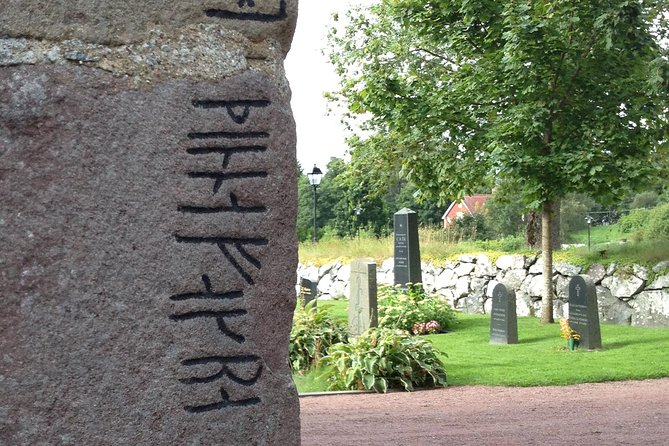
The most unusual part of this Stockholm day trip is its chain of small, genuine Viking sites. You see runestones beside country roads, stand at an old assembly site, walk among longhouse foundations, and visit burial mounds that are far older than Sweden’s medieval churches. It is not a costumed Viking show. It is a serious history day in the countryside.
I like the range of stops, from Jarlabanke’s Viking bridge to the wooden streets of Sigtuna and the great mounds at Old Uppsala. I also like the personal guiding. Urban, Angus, Carl, and other STOEX guides combine driving with stories, and headsets are used on many tours so you can hear more clearly outside the minibus.
The catch is the pace and the subject. This is a long nine-hour outing with plenty of standing outdoors and repeated attention to runestones, churches, and early Swedish history. If you want a relaxed afternoon with lots of shopping time in Sigtuna or Uppsala, this is not the right trip.
In This Review
- Key points to know before booking
- Why this tour gives you more than a standard city outing
- Jarlabanke’s Bridge and the first runestones
- Arkils Tingstad beside Lake Vallentuna
- Granby’s long runic inscription and Viking homes
- Hökeriet and a possible Swedish fika
- Sigtuna, Sweden’s oldest town
- Old Uppsala and the royal burial mounds
- Uppsala Cathedral and time in the newer city
- The minibus ride, guide style, and comfort
- Who will enjoy this nine-hour outing?
- My verdict on the $274.19 price
- Should you book the Viking History and Swedish Countryside Tour?
- FAQ
- How long does the tour last?
- Where does the tour begin?
- Is hotel pickup guaranteed?
- What language is the tour offered in?
- How many people can join the tour?
- Is lunch included?
- Is Swedish fika included?
- Is the tour suitable for young children?
- What historical sites are included?
- Can I cancel for a full refund?
Key points to know before booking
- A real Viking history day: See Jarlabanke’s Bridge, Arkils assembly site, Granby’s runic inscription, Viking house foundations, and the royal mounds at Old Uppsala.
- Two very different towns: Sigtuna offers a small, historic town experience, while modern Uppsala brings a cathedral and more urban surroundings.
- A countryside break from Stockholm: The route passes Lake Vallentuna and the rural Lunda area, with much of the day spent beyond the capital.
- Small-group minibus transport: The vehicle is air-conditioned and holds up to 17 people, though the rearmost seats may feel tight when the group is full.
- Food is not included: Lunch is at your own expense, and a Swedish fika at Hökeriet is available on most, but not all, departures.
- Best for history fans: Bring comfortable shoes, water, a charged phone, and rain gear or warm layers.
Why this tour gives you more than a standard city outing
Stockholm’s museums can introduce you to Viking objects, ships, and burial finds. This tour takes you to the places where early Swedish society actually functioned. The evidence is often modest: a carved rock, a square of stones, a grassy mound, or the faint outline of a house. That is part of the appeal, but it also means your guide matters a great deal.
A good guide turns scattered remains into a story. Urban is praised for his energy, humor, and clear explanations, while Angus and Carl are also named as engaging guides. The best commentary connects family names on a runestone with property, law, religion, and daily life. You are not simply looking at old stones. You are learning how people claimed land, remembered relatives, settled disputes, and displayed power.
The tour uses a comfortable, air-conditioned minibus and offers pickup within a general central Stockholm area. The maximum group size is listed as 17, which keeps the outing more personal than a large coach trip. Still, a full vehicle can feel cramped, especially in the last row. If you are among the final pickups, ask politely about seating before settling in.
The price is about $274.19 per person. That is a serious day-trip cost, but it covers roughly nine hours, hotel pickup and drop-off in the central area, transport, and a professional guide. You are paying for the route and the interpretation as much as for admission. The listed stops do not require separate admission tickets, but you still pay for lunch and any purchases yourself.
A few more Stockholm trips to weigh up
- Stockholm: Ghost Walk and Historical Tour
★ 4.7 · 2,206 reviews - The Original Stockholm Ghost Walk and Historical Tour – Gamla Stan
★ 4.5 · 1,165 reviews - Stockholm: Old Town Historical Walking Tour
★ 4.9 · 344 reviews
Jarlabanke’s Bridge and the first runestones
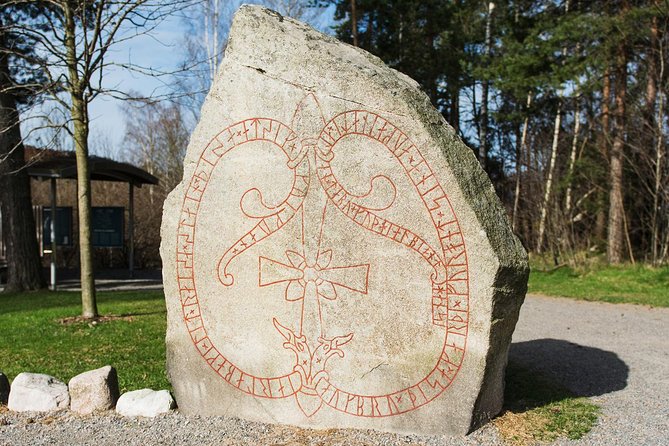
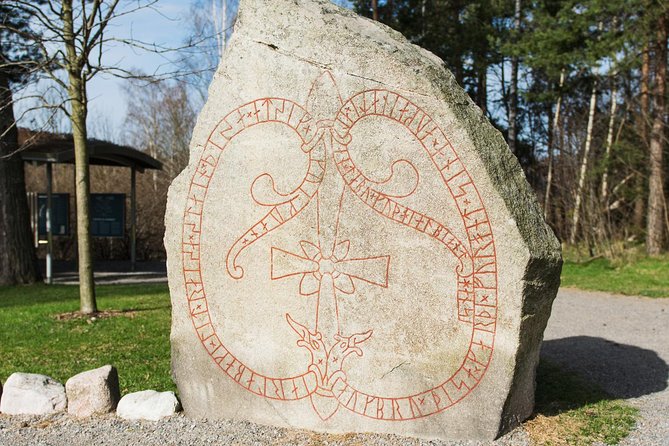
The first substantial historical stop is Jarlabanke’s Bridge in Täby. Despite its name, this is not a complete working bridge carrying modern traffic. It is an archaeological site linked to Jarlabanke, an 11th-century Viking chieftain who ordered the causeway and placed runestones nearby.
The inscriptions connect Jarlabanke with his family and reveal something about how a powerful landowner wanted to be remembered. The bridge was both useful infrastructure and a public statement. In a society where stone inscriptions were expensive and highly visible, building a road or bridge could also advertise authority.
Täby Church is usually a drive-by sight rather than a full visit. The 13th-century building combines Romanesque and Gothic features and gives you an early glimpse of the Christian architecture that followed the Viking period. Do not expect a long church visit here. The value is in seeing how the route moves from pre-Christian and Viking evidence toward medieval Sweden.
Arkils Tingstad beside Lake Vallentuna
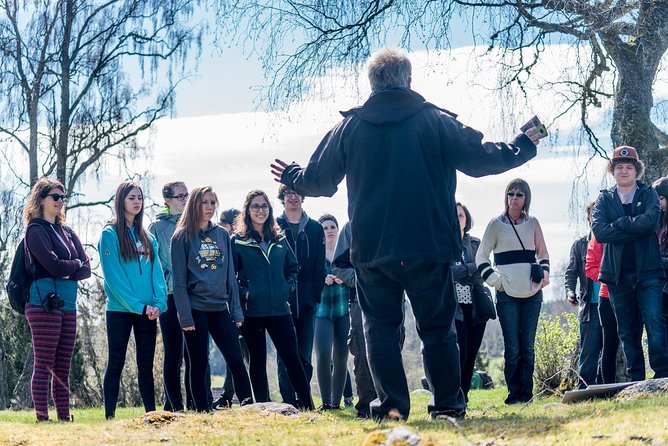
At Arkils Tingstad, you reach one of the tour’s most important stops for understanding Viking government. The stones mark an old assembly site, where local people could gather to settle disputes, make decisions, and establish laws.
The arrangement is simple, with stones set in a square that may have formed seats or boundaries for the meeting. You will need to use your imagination, since there is no reconstructed parliament building. Your guide supplies the missing context by explaining how law and public reputation worked in early Scandinavian society.
The site is near Lake Vallentuna, and the tour goes down to the lake’s banks. The water, woodland, and open views provide a welcome change after the first historical explanations. The lakeside stop is short, about 10 minutes, while the assembly site receives about 30 minutes.
This is a good example of the tour’s method. You are not driven directly from one famous town to another. Instead, you stop at places that explain how people lived across the region. The downside is that the day can feel information-heavy if you prefer broad sightseeing to detailed history.
Granby’s long runic inscription and Viking homes
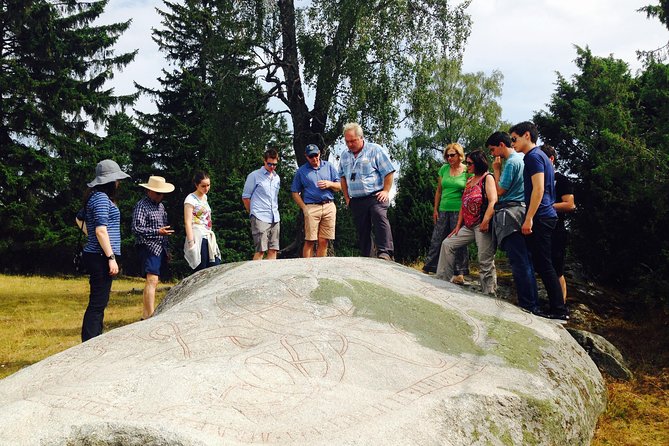
Granby brings together two unusually useful pieces of evidence. The Granbyhällen is a huge rock carved with one of the longest and most informative Swedish runic texts from the Viking Age. The inscription refers to a local family and may have helped establish an inheritance claim.
That detail gives the stone a practical purpose. Runestones were not only memorials to the dead. They could mark family ties, property, religious beliefs, and social standing. As you listen, try to picture the inscription as a public legal and family statement rather than as a mysterious decoration.
Nearby are well-preserved foundations of Viking houses. You can step into the outlines of the longhouse walls and get a clearer sense of domestic life. The remains are low and easy to overlook without explanation, but they help balance the grander stories about chiefs and kings. Here, the focus shifts to the people who cooked, worked, raised children, stored goods, and lived in the family settlement.
The Granby stop lasts about 25 minutes. That is enough for an introduction and a short walk, but not a full archaeological visit. If you are fascinated by runes, you may wish the tour stayed longer. If you find inscriptions hard to follow, this is one of several stops where a long talk can test your attention.
Same fjord country, a very different day out:
- Stockholm: City Archipelago Sightseeing Cruise with Guide
★ 4.3 · 10,798 reviews - Stockholm: Skansen Open-Air Museum Admission Ticket
★ 4.5 · 3,427 reviews - Stockholm: Archipelago Boat Tour
★ 4.4 · 3,110 reviews - Stockholm: Highlights Boat Tour
★ 4.3 · 2,542 reviews
Hökeriet and a possible Swedish fika
Near the Granby farm is Hökeriet, a small provision shop set in a cozy farmhouse. On most, but not every, tour, you have a Swedish fika here. The break may include coffee and a rhubarb tart, served by the farm’s co-owner or someone from the local family and community.
This is one of the day’s nicest human touches. After several archaeological sites, you get a chance to sit down, eat something simple, and see a rural setting that is still connected to local life. The shop also sells regional crafts and Viking-related souvenirs.
Do not count on fika as a guaranteed inclusion. Food and drinks are officially not included, so bring some money and check the arrangement on your departure. Lunch is also at your own expense, usually at a local eatery along the route. Carry water, particularly on a warm day, since there may not be a water tank available in the vehicle.
Sigtuna, Sweden’s oldest town
Sigtuna is likely to be the most immediately charming stop. Founded around AD 980, it is presented as Sweden’s oldest town. The streets are small and atmospheric, with old wooden and stone buildings, historic church remains, gardens, and views toward Lake Mälaren.
You have about an hour to walk independently. That is enough to enjoy the setting, browse small shops, and see key sights such as St. Mary’s Church and the Sigtuna Museum area, but it is not enough for an unhurried town visit plus a long lunch. This is where the schedule can feel tight.
I recommend treating Sigtuna as a walking and orientation stop rather than trying to do everything. Follow the older streets, look at the buildings, and keep track of the meeting time. If Sigtuna is your main reason for booking, you may prefer to return independently on another day. The tour gives you a useful introduction, but its main purpose is to connect the town with the wider Viking and medieval story.
Sigtuna also provides a welcome contrast to the rural stone sites. Instead of standing around a single inscription, you can move through a living town with shops and places to pause. The shift helps keep the day varied, even though the historical theme remains constant.
Old Uppsala and the royal burial mounds
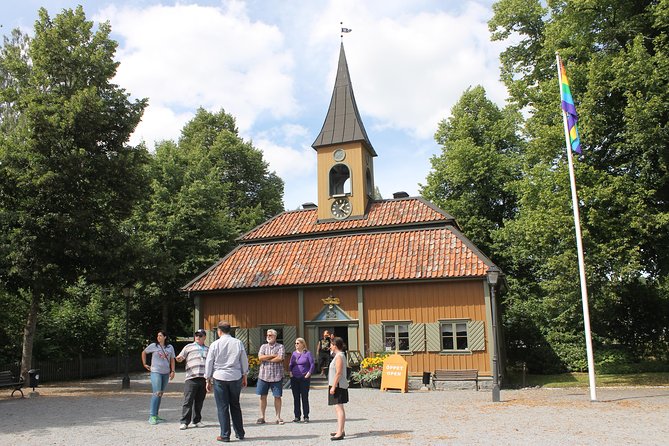
Gamla Uppsala, or Old Uppsala, is the spiritual and royal center of the day. Three large burial mounds dominate the site. They date from the sixth and seventh centuries and are traditionally linked with early Swedish kings such as Aun, Egil, and Adils.
Archaeological finds from the mounds, including weapons and jewelry, point to a society with strong rank divisions, long-distance contacts, and powerful rulers. The grassy shapes are impressive, but the site does not provide the kind of visible ruins you might find at a castle. Again, the guide’s explanation makes the difference.
The area also contains remains associated with an old religious center and a Viking-era assembly tradition. The tour describes Old Uppsala as one of Sweden’s most important sacred sites. You get about 30 minutes here, enough to view the mounds and hear the main story, though not enough for a slow archaeological study.
This is one of the places where weather matters. You stand outside on open ground, and cold wind or rain can make a lecture feel longer. Wear layers and shoes that can handle uneven paths. On a sunny day, the mounds and surrounding countryside should feel much more inviting.
Uppsala Cathedral and time in the newer city
The route then moves to modern Uppsala, home to Sweden’s oldest cathedral. Uppsala Cathedral is a huge Gothic building with tall spires, vaulted interiors, and stained glass. It also holds the tomb of Gustav Vasa, the Swedish Reformation king.
You have about 20 minutes at the cathedral, with time for independent exploration in the surrounding city. That is a short visit for a building of this scale. You can get a strong first impression and see the main interior features, but you should not expect to study the museum, treasury, or bell tower in detail.
The cathedral is an important counterpoint to Old Uppsala. The earlier site represents pre-Christian royal and religious power, while the cathedral reflects the later Christian and Lutheran eras. Seeing both in one day helps you understand that Swedish history did not change overnight. Old beliefs, royal authority, church institutions, and local communities overlapped across centuries.
Several people who enjoyed the tour wished for more time in Uppsala or Sigtuna. That is a fair criticism. The strength of this outing is breadth, not depth. You see many key places in one day, then return to Stockholm with a working map of the region.
The minibus ride, guide style, and comfort
You spend a lot of time in the minibus, traveling between sites across Stockholm County and toward Uppsala. The countryside views are a major part of the experience, with forests, farms, lakes, and small settlements replacing the capital’s streets.
The guide also narrates during the drives. That makes the travel time useful, but it can become tiring when every stop and road section brings another long explanation. Some guides give very detailed talks, and the volume of information is not always well balanced. If you prefer short bursts of commentary, say so kindly or use the drive time to rest.
Headsets or in-ear devices are used on some departures and have been especially useful when the guide is speaking outside the vehicle. They are not a guarantee of perfect sound on every trip, so sit where you can hear and ask for help if the audio is unclear.
The group limit is up to 17 people. That is still a group tour, not a private excursion, but it is small enough for questions and personal attention. Pickup is offered from central Stockholm locations, though the final time and place are confirmed by phone one or two days before departure. In high season, you may be directed to a central meeting point to make the pickup run faster.
Who will enjoy this nine-hour outing?
I would choose this trip if you have a strong interest in Viking-era Sweden, runestones, early law, medieval churches, or archaeology. It is also a good choice if you want to leave Stockholm for a day without arranging several trains, buses, and local connections.
Families with older children may enjoy it, but the operator does not recommend it for children under eight. The amount of standing, outdoor commentary, and detailed history may be hard for younger children. One private family outing included a 2.5-year-old, but that should not be taken as a promise that the standard tour will suit toddlers.
You should also be comfortable with a full day outdoors. Pack:
- Comfortable walking shoes
- Water and money for lunch
- Rain gear and warm layers
- A charged phone for photos
- Patience for long explanations and several rune-related stops
The tour is less suitable if your priority is shopping, dining, or a leisurely Uppsala visit. You will see both towns, but the schedule is built around history sites rather than free time.
My verdict on the $274.19 price
At $274.19, this is not a cheap sightseeing bus. The value depends on how much you would pay for convenience and interpretation. Hotel pickup, a full day of transport, a small group, and a guide who can explain the connection between scattered sites save you a great deal of planning.
The price feels fair for a history-focused visitor who wants a broad regional introduction in one day. It feels less fair if you mainly want to stroll Sigtuna or spend several hours in Uppsala, since both city stops are fairly short and lunch is extra.
Free cancellation is allowed up to 24 hours before the start time. If the minimum number of people is not reached, the operator will offer another date or experience, or a full refund. Keep your phone number active, since the final pickup details are confirmed shortly before the tour.
Should you book the Viking History and Swedish Countryside Tour?
Book it if you want the full story, from Viking bridges and family runes to royal mounds, medieval churches, and later Swedish power. The best guides, including Urban, Angus, and Carl, can make quiet archaeological remains feel surprisingly personal.
Skip it if you dislike long drives, outdoor standing, or repeated discussion of runestones and churches. For the right person, this is an efficient and memorable day beyond Stockholm. For someone seeking a slow town tour, it is simply too full. Bring good shoes, dress for the forecast, and treat Sigtuna and Uppsala as introductions rather than complete visits.
FAQ
How long does the tour last?
The tour lasts approximately nine hours, including travel between Stockholm, the historical sites, Sigtuna, Uppsala, and the return journey.
Where does the tour begin?
Pickup is offered from hotels or preferred locations within the general pickup area in central Stockholm. The final pickup time and place are confirmed by phone one or two days before departure.
Is hotel pickup guaranteed?
No. Pickup at your hotel is not guaranteed if the hotel is outside the specified area. During high season, even people within the pickup zone may be directed to another central meeting point.
What language is the tour offered in?
The tour is offered in English.
How many people can join the tour?
The tour has a maximum group size of 17 people. The minibus has been described as comfortable, though a full vehicle may feel cramped in the last row.
Is lunch included?
No. Food and drinks are not included. You pay for lunch at a local eatery yourself.
Is Swedish fika included?
A fika at Hökeriet is available on most, but not all, tours. Since food and drinks are not included, you should confirm the arrangement and bring money.
Is the tour suitable for young children?
The tour is not recommended for children under eight years old.
What historical sites are included?
The route includes Jarlabanke’s Bridge, Arkils Viking assembly site, Lake Vallentuna, Granbyhällen and Viking house foundations, Hökeriet, Sigtuna, Uppsala Cathedral, and the royal burial mounds at Old Uppsala.
Can I cancel for a full refund?
Yes. You can cancel up to 24 hours before the experience start time for a full refund. Cancellations or changes made less than 24 hours before the start time are not refunded or accepted.
Just added around Stockholm
- Stockholm: Evening Wildlife Safari with Midsummer Meal★ 4.2 · 130 reviews
- World War II Stockholm Old Town Walking Tour and Army Museum★ 4.6 · 4 reviews
- Stockholm: Archipelago Guided Boat & Walking Tour of Vaxholm★ 3.1 · 23 reviews
- Stockholm: Archipelago Islands Kayak Tour and Outdoor Picnic★ 4.9 · 150 reviews
- Vaxholm & Stockholm Archipelago: Guided Excursion, Day Trip★ 4.8 · 41 reviews
- Stockholm: Underground Metro Art Ride with a Local Guide★ 4.6 · 39 reviews
- Scandinavian Art, Architecture and Design Tour in Stockholm★ 4.5 · 11 reviews
- Stockholm: Sunset Hike in Tyresta National Park with Meal★ 5.0 · 79 reviews
Historical Tours, compared.

Reindeer Camp and Sami Cultural Tour with Lunch
Read our review →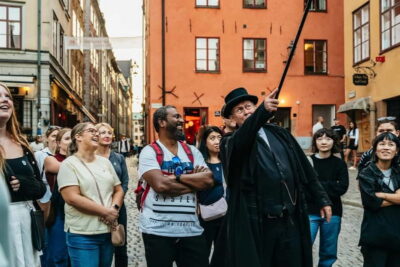
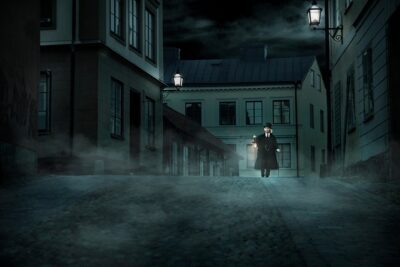
The Original Stockholm Ghost Walk and Historical Tour – Gamla Stan
Read our review →

Viking History, Runes & Countryside 9h Tour to Sigtuna & Uppsala
Read our review →
Stockholm Viking History Full Day Tour to Sigtuna + Uppsala
Read our review →Browse the lists this tour appears in