
Reviewed · WALKING TOURS
Myths and Legends: An Oslo Walking Discovery
Oslo’s old center becomes much more interesting when you hear the stories people once used to explain it. This two-hour walk connects Viking beliefs, ghost tales, and local superstitions with real places, from City Hall to Akershus Fortress and Oslo Cathedral. I like that it turns a simple city walk into a story-led introduction to Norway.
I also like the compact route and the small maximum group of 16. You get a close look at central Oslo without giving up half a day. The main caution is the title: the tales are entertaining and sometimes spooky, but this is not a full-on dark ghost walk. One past departure also moved ahead before everyone had caught up, so stay near the guide.
In This Review
- Key points to know before booking
- What this Oslo myths and legends walk is really about
- Beginning at Oslo City Hall with Viking worldviews
- Christiania Torv and Oslo’s uneasy old stories
- Akershus Fortress, the main event of the walk
- Kvadraturen reveals old Oslo in smaller pieces
- Oslo Cathedral and the final walk to Karl Johans gate
- The guides are the tour’s greatest strength
- What the $42.98 price gets you
- Who will enjoy this walk most
- Timing, group size, and simple planning tips
- My verdict on the Oslo myths and legends experience
- FAQ
- How long does Myths and Legends: An Oslo Walking Discovery last?
- What time does the tour start?
- Where does the walking tour begin?
- Where does the tour finish?
- Is the tour offered in English?
- Can I cancel for a full refund?
Key points to know before booking
- Viking beliefs meet modern Oslo: Learn how Norse people understood the world and the forces around them.
- Akershus Fortress gets the most time: The 50-minute visit is the heart of the route, with castle stories and imposing medieval walls.
- The walk stays in central Oslo: City Hall, Christiania Torv, Kvadraturen, and the cathedral are all linked on foot.
- Guides make or break the experience: Marija, Maria, and Ihor have led departures, with warmth, humor, and strong storytelling praised most often.
- Two hours is an efficient length: You get history and atmosphere without committing to a long city tour.
- Expect exterior sightseeing: City Hall and Oslo Cathedral are outside stops, and admission is free at the listed locations.
What this Oslo myths and legends walk is really about
This is not a standard parade of dates, kings, and construction styles. It uses stories as a way to explain how people in Oslo once viewed danger, luck, death, nature, and the unknown.
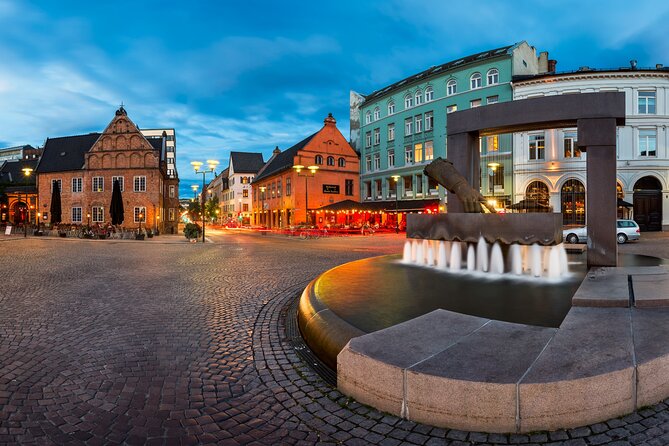
That approach works well in a city where old and modern buildings sit close together. You begin near the grand waterfront-facing City Hall, move through the old square at Christiania Torv, spend the longest stretch around Akershus Fortress, and finish by Oslo Cathedral on Karl Johans gate.
I like this format for a first evening in Oslo. The 6:00 pm start gives you a useful transition from daytime sightseeing to a more atmospheric walk, while the route remains easy to place on a map. You finish near Stortorvet, so you are still in central Oslo rather than being left far from the places most visitors use.
The experience is offered in English and uses a mobile ticket. Confirmation arrives when you book, which keeps the practical side simple. Since the average booking is made 38 days ahead, planning early is sensible if your dates are fixed, especially for a small group capped at 16 people.
A few more Oslo trips to weigh up
- Oslo: Best of Oslo Walking Tour
★ 4.5 · 458 reviews - Oslo: Guided Walking Tour of Central Oslo
★ 4.7 · 438 reviews - Oslo: Historic Myths & Legends Evening Walking Tour
★ 4.8 · 408 reviews
Beginning at Oslo City Hall with Viking worldviews
The walk starts at Fridtjof Nansens plass 8, near Oslo City Hall. The City Hall stop lasts about 15 minutes and takes place outside only, so you are here for the setting and the story rather than an interior visit.
The subject is Viking belief and the way Norse people made sense of the world. This gives the tour a useful foundation. Before you hear about apparitions, omens, and castle ghosts, you first get a picture of the larger belief system behind many northern European legends.
I appreciate that the guide ties belief to a physical place rather than giving you a detached mythology lecture. You are standing in modern Oslo while hearing about an older understanding of gods, fate, and the forces that shaped everyday life.
Do not expect a detailed tour of City Hall itself. The stop is brief and outside. If you want to examine the building’s architecture or learn about Oslo’s municipal government, you will need a separate visit. Here, City Hall is the opening scene.
Christiania Torv and Oslo’s uneasy old stories
From City Hall, the walk reaches Christiania Torv for about 20 minutes. This is where the tone shifts toward ghostly apparitions and local superstition.
The value of this stop is the connection between folklore and daily behavior. You hear about signs people believed could protect them from bad luck, not just supernatural stories told for entertainment. That makes the material feel more human. Fear and hope shaped small choices, warnings, and customs.
Christiania Torv also helps you picture an older Oslo. The square is part of the city’s historic core, and the guide uses its surroundings to point out how beliefs attached themselves to streets and buildings. I like this part because the stories help you look more closely at an area you might otherwise cross quickly on the way to the fortress.
The word ghostly should be taken in the right spirit. The tour includes apparitions and strange tales, but the mood is not designed as a relentless horror show. If you want scary stories at every stop, the experience may feel too light. If you enjoy folklore with a bit of humor and cultural context, the balance should suit you.
Akershus Fortress, the main event of the walk
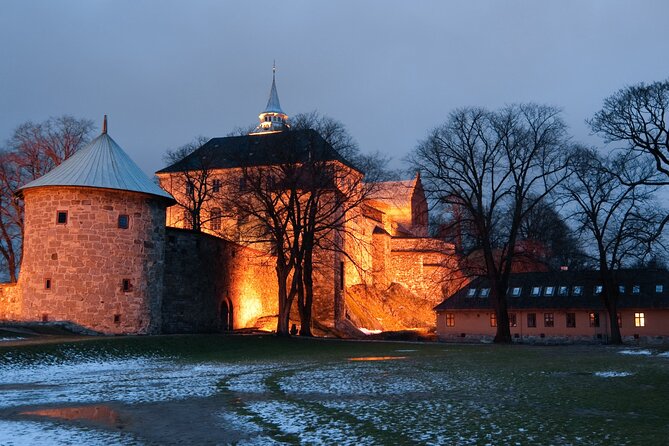
Akershus Castle and Fortress receives about 50 minutes, making it the longest stop by a clear margin. That is a good choice. The fortress has the strongest visual presence on the route, and it offers enough space and history for the guide to build a longer story.
You hear about ghosts associated with Akershus while taking in its formidable architecture. The fortress dates from the late 13th century, and its basic character has remained unchanged since its construction. That gives the stop a sense of place that newer parts of Oslo cannot match.
I like the way this portion joins fact and folklore. The castle is not treated only as a backdrop for spooky tales. Its age, walls, and long role in Oslo’s story give the legends a believable setting, even when the supernatural details are clearly part of oral tradition.
The fortress is also where the tour feels most substantial. You have time to pause, look up at the structures, and let the guide build the atmosphere. The 50-minute block is long enough to feel worthwhile but short enough to keep the overall walk moving.
The stated admission is free. That matters when you compare the tour price with a paid castle visit, but remember that this walk does not promise a separate museum or ticketed interior tour. The value comes from the guide’s interpretation and the route through the grounds, not from admission access.
Wear shoes you can walk in comfortably. The tour requires a moderate level of physical fitness, and a fortress area can involve uneven surfaces or extended standing, although no exact terrain details are provided. If you need frequent rests, keep that in mind before booking.
Same fjord country, a very different day out:
- Oslo: Scenic Fjord Cruise with Audio Guide Commentary
★ 4.5 · 5,375 reviews - Oslo Nature Walks: Island Hopping Tour
★ 4.8 · 2,713 reviews - Oslo: 100% Electric Oslofjord Sightseeing Cruise
★ 4.4 · 2,041 reviews - Oslo: Fjord Evening Cruise with Shrimp Buffet
★ 4.5 · 1,956 reviews
Kvadraturen reveals old Oslo in smaller pieces
The route continues through Kvadraturen for roughly 20 minutes. This is Oslo’s oldest neighborhood area, and the focus here is on secrets, older streets, and the mix of medieval and classic architecture.
This section gives the tour some needed texture. A castle can dominate the story, but a city is also built from ordinary streets and buildings. Kvadraturen lets the guide show how Oslo’s past survives in the shape and feel of the central neighborhood.
I enjoy stops like this because they reward attention. You are not only waiting for the next legend. You are looking at doorways, street lines, façades, and the way older architecture fits beside later construction. The guide’s job is to show you what you might otherwise pass without noticing.
The time here is limited, so think of Kvadraturen as a focused introduction rather than a complete architectural tour. You will not cover every street or receive a full account of Oslo’s urban development. Instead, the guide adds a layer of stories to one of the city’s oldest areas.
Oslo Cathedral and the final walk to Karl Johans gate
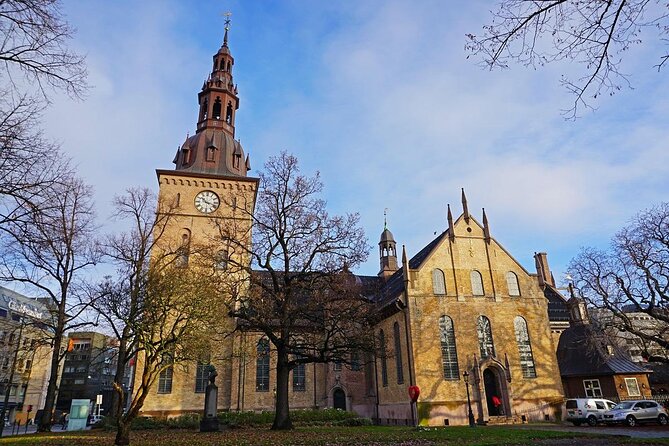
The final listed stop is Oslo Cathedral, with about 15 minutes outside only. The cathedral dates to 1697 and is noted for its Baroque decoration and tall spires. It faces Stortorget Square in the center of Oslo, close to the end point on Karl Johans gate.
This is a strong finishing point because the building gives the walk a clear visual ending. After Viking beliefs, old superstitions, fortress ghosts, and neighborhood secrets, you arrive at a major religious landmark in the heart of the city.
You will not go inside as part of the listed stop, so set your expectations accordingly. The outside view still gives you a chance to see the cathedral’s decoration and position within the square, but anyone wanting a full interior visit should plan that separately.
The official end is Stortorvet, near Oslo Cathedral on Karl Johans gate. That location is useful for continuing your evening in central Oslo. The route begins at Fridtjof Nansens plass and ends at Stortorvet, so you should not need a special transfer between the main stops.
The guides are the tour’s greatest strength
A story walk depends heavily on the person holding the group’s attention. The guides named in recent departures include Marija, Maria, and Ihor. The strongest praise centers on their enthusiasm, warmth, humor, and ability to make history easy to follow.
Marija is described as engaging, funny, and approachable, with a style that helped the information stay in people’s minds. Maria is associated with entertaining stories and a good sense of Oslo’s less obvious areas. Ihor is noted for enthusiasm and strong subject knowledge, though one departure found that he sometimes began speaking before the whole group had arrived.
That last point is practical. Stay close, especially when the group moves between stops. The maximum group size is 16, which is small enough for a personal feel but still large enough for people to spread out on a busy pavement.
The guide style is lively rather than formal. You should expect a mix of history, folklore, explanation, and jokes. That makes the tour a good fit if you prefer a human story to a memorized list of dates.
The English is another strong point. The experience is offered in English, and the guide’s ability to explain Nordic history and local customs clearly is central to its appeal. Still, the exact guide can vary, so the personalities named above should not be treated as a guarantee for every departure.
What the $42.98 price gets you
At $42.98 per person, this is not the cheapest way to walk around central Oslo. You can see the exterior of City Hall, Christiania Torv, Akershus Fortress, Kvadraturen, and Oslo Cathedral without paying admission at the listed stops.
The price makes more sense if you value interpretation. You are paying for a two-hour guided route, a ready-made theme, and stories that connect separate landmarks. Without a guide, you might see the same buildings but miss the beliefs and local tales that give them character.
The strongest value comes from Akershus Fortress and the guide’s storytelling. The walk also saves you the work of researching a route and deciding how long to spend at each place. For a first visit, that structure can be worth more than a simple list of free sights.
I would be less quick to book if you already know central Oslo well or prefer to explore entirely at your own pace. The tour does not include a paid museum entry, a meal, or transportation. Its product is the guided experience itself.
A 4.9 rating from 21 reviews and a 95 percent recommendation rate point to a very strong early response, but the sample is small. I would read those figures as encouraging rather than final proof. The one lower score is useful because it highlights the two main risks: the pace may feel quick, and the stories may not be as dark as the title suggests.
Who will enjoy this walk most
I would recommend this experience to you if you want a short introduction to Oslo with a clear theme. It works especially well for first-time visitors, families with older children, and anyone who likes folklore alongside architecture.
It is also a good choice for an arrival day. The route is compact, the start time is early evening, and you finish in the center. You can use the walk to get your bearings while learning why the old parts of Oslo feel different from the newer city around them.
History fans should enjoy the blend of Viking belief, medieval fortress stories, and later architecture. The walk is not a specialist course in Norse mythology, but it offers enough context to make the city feel more connected.
I would hesitate to recommend it to someone seeking a serious paranormal investigation or a genuinely frightening night tour. The material includes ghosts and apparitions, but the experience also aims to explain culture and history. Its tone is entertaining and friendly, not grim.
You should also consider your walking ability. The tour requires moderate physical fitness, lasts about two hours, and involves standing at several stops. Service animals are allowed, and the starting point is near public transportation.
Timing, group size, and simple planning tips
The start time is 6:00 pm. Plan to arrive early at Fridtjof Nansens plass 8 so you can find the meeting point without rushing. Your mobile ticket is accepted, and confirmation is provided at booking.
Because the group can include up to 16 people, the guide should be easier to hear and approach than on a large coach excursion. Even so, central streets can make it easy to fall behind while taking a photograph. Keep the guide in sight, particularly around the transitions between City Hall, Christiania Torv, and the fortress.
The walk ends at Stortorvet, near Oslo Cathedral and Karl Johans gate. This is a handy place to continue sightseeing or make your own plans after the tour.
Free cancellation is available if you cancel at least 24 hours before the local start time. Changes or cancellations inside that window are not accepted for a refund. That policy gives you some flexibility, but it is still worth checking your schedule before the booking deadline.
My verdict on the Oslo myths and legends experience
I like this tour because it gives Oslo a human voice. The city’s old buildings become more memorable when you hear about the fears, beliefs, and strange stories attached to them.
The best parts are the lively English-speaking guides, the long stop at Akershus Fortress, and the way the route links several central sights in only two hours. The main limits are just as clear: the stops are outside, the price covers guiding rather than admissions, and the stories may feel more playful than dark.
Book it if you want an entertaining orientation to old Oslo and enjoy folklore mixed with solid historical context. Skip it if you want a formal architectural tour, extensive interiors, or a truly frightening ghost walk. For most first-time visitors with a free evening, it offers a smart and manageable introduction to the city’s older character.
FAQ
How long does Myths and Legends: An Oslo Walking Discovery last?
The experience lasts approximately two hours.
What time does the tour start?
The tour starts at 6:00 pm.
Where does the walking tour begin?
It begins at Fridtjof Nansens plass 8, 0160 Oslo, Norway.
Where does the tour finish?
The walk ends at Stortorvet, near Oslo Cathedral on Karl Johans gate.
Is the tour offered in English?
Yes. The experience is offered in English.
Can I cancel for a full refund?
Yes. You can cancel at least 24 hours before the experience start time for a full refund. Cancellations or changes made less than 24 hours before the start are not accepted for a refund.
Just added around Oslo
- 4 hours Best View of the Oslofjord Winter Edition★ 4.0 · 15 reviews
- Unknown war. Oslo and Norway during 1940-45★ 5.0 · 74 reviews
- Oslo Winter Highlights Bike Tour★ 5.0 · 36 reviews
- The Ultimate Norwegian Skiing Experience★ 5.0 · 16 reviews
- The Viking Planet Museum Ticket★ 4.0 · 197 reviews
- The Viking Planet Museum – Mini Group (4 adults)★ 4.0 · 16 reviews
- The Ultimate Study of the Human Form at Vigeland’s Sculpture Park with a Local★ 4.0 · 14 reviews
- The Scenic Roadtrip, Oslo to Bergen via Flam & the Fjords★ 5.0 · 25 reviews
Walking Tours, compared.


Past & Present Small Group Guided Walking Tour
Read our review →
Walking Tour in Bergen of the Past and Present
Read our review →

The Original Stockholm Ghost Walk and Historical Tour – Gamla Stan
Read our review →
Group Walking Tour – City Highlights – 2 Hours
Read our review →Browse the lists this tour appears in