
Reviewed · PRIVATE WALKING TOURS
Oslo: Best of Oslo Walking Tour
Oslo’s best introduction may be on foot, where a single street can shift from royal Norway to modern waterfront design in a few minutes. This two-hour walk links Karl Johan, Christiania, the Opera House, Akershus Fortress, City Hall, and Aker Brygge, giving you a useful picture of how the capital grew and changed.
I like the clear historical storytelling, especially the explanation of Christiania and Oslo’s several name changes. I also like the practical side: guides such as Amelia, Anastasia, Olaf, Oliver, and Judit have helped visitors choose museums, cafés, restaurants, and later walks, while the included app lets you keep exploring after the guide leaves.
The main consideration is pace and weather. Two hours covers a lot of ground, but nearly every sight is viewed from outside, and winter snow or rain can make the walk harder, especially for anyone using a wheelchair.
In This Review
- Key points to know before booking
- Why this two-hour walk works well in Oslo
- Karl Johan, the Parliament, and Oslo’s public face
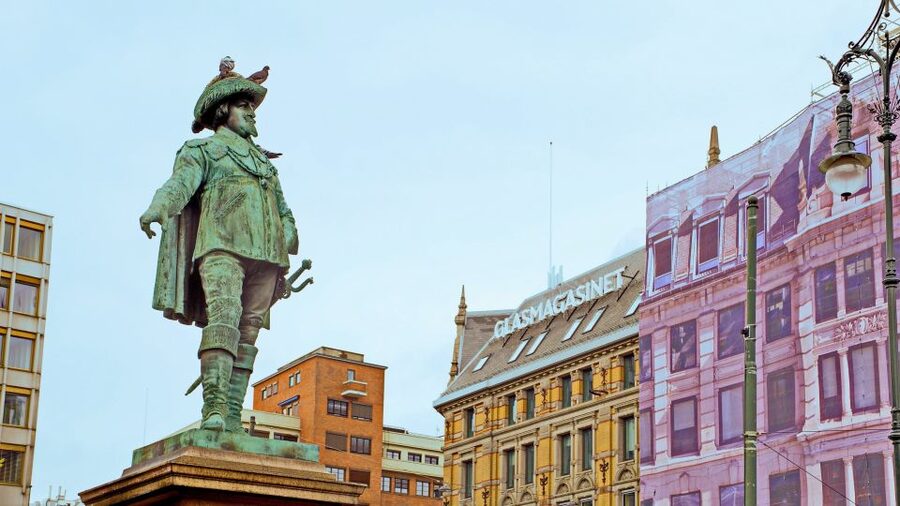
- Oslo Bazaars, GlasMagasinet, and the Cathedral
- The Opera House and the changing waterfront
- Christiania Torv and Kvadraturen’s older streets
- Akershus Fortress and the harbor edge
- Aker Brygge and Tjuvholmen
- What the guides add to the experience
- What $38 gets you
- The included app and independent follow-up
- Weather, walking ability, and the best time to go
- Who should book Best of Oslo
- Should you book this Oslo walking tour?
- FAQ
- How long does the Best of Oslo walking tour last?
- What languages are available?
- Where does the English tour meet?
- Where does the German tour meet?
- Where does the tour finish?
- Are attraction entrance fees included?
- Is public transportation included?
- What does the sightseeing app include?
- Can I cancel the booking?
Key points to know before booking
- Christiania gives the tour its historical backbone: See the old city center at Christiania Torv and learn why Oslo has not always been called Oslo.
- The route joins old and new Oslo: Medieval-era streets, royal buildings, the Opera House, the harbor, and Aker Brygge all fit into one walk.
- The Nobel Peace Center is more than a meeting point: The tour explains why the Peace Prize is awarded in Oslo rather than Sweden.
- The guide makes the difference: English and German tours feature live commentary, with guides praised for humor, local suggestions, and easy-to-follow explanations.
- The app adds value after the walk: Scan the QR code on your voucher for an audio-guided route covering places such as Frogner Stadion, Trinity Church, Grensen, and Aamodt Bridge.
- You pay for orientation, not admissions: The $38 price includes the guide and app, but not public transport or entry to attractions.
Why this two-hour walk works well in Oslo
Oslo is spread along the inner Oslofjord, yet its central sights are close enough to connect by foot. That makes this tour a practical first activity. You are not simply checking off buildings. You are learning how the central streets relate to the harbor, the palace, the old fortress, and the newer waterfront districts.
The route is also well suited to a short stay. If you have only a day or two in Oslo, you can use the walk to decide where to spend your limited museum time. If you are staying longer, the guide’s suggestions can help you choose a café, return to a building, or add a ferry trip around the islands.
The format is straightforward: live commentary in English or German, about two hours on foot, with no attraction admissions included. The tour begins and ends in the central area, but the exact meeting point depends on the language and option you book.
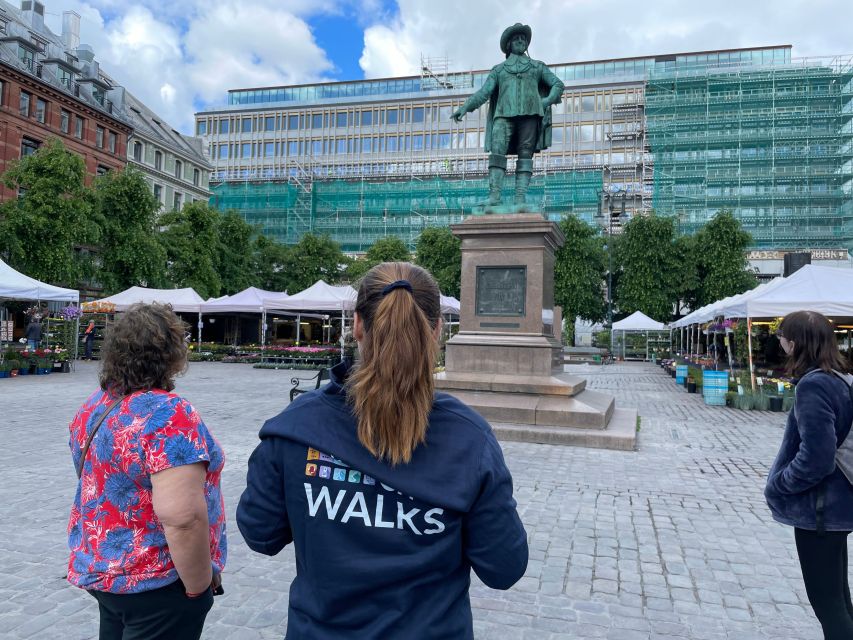
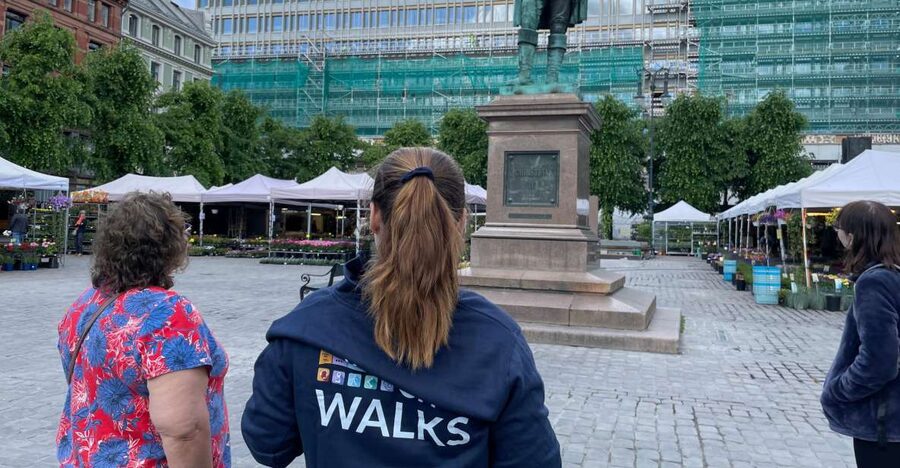
For English, meet near the statue of P.A. Munch by the Faculty of Law entrance at University Aula, Karl Johan Street 47. The German tour meets at the Nobel Peace Center at Brynjulf Bulls plass 1. Arrive about five minutes early. This matters in a city where a group can turn a corner and disappear from sight quickly.
More Private Walking Tours in Oslo
- Oslo: Guided Walking Tour of Central Oslo
★ 4.7 · 438 reviews - Oslo: Historic Myths & Legends Evening Walking Tour
★ 4.8 · 408 reviews - Taste of Oslo Walking Tour
★ 4.5 · 282 reviews
Karl Johan, the Parliament, and Oslo’s public face
The walk takes you through the core of Sentrum, beginning among the central streets and major civic buildings. Paleet, the Norwegian Parliament, the Grand Hotel, and Karl Johan Street form an excellent opening because they show Oslo as a capital rather than just a collection of pretty buildings.
Karl Johan is Oslo’s main ceremonial street. Along it, you pass the Norwegian Parliament, the Grand Hotel, the National Theater, and the Royal Palace. The guide puts these buildings into a political and royal setting, explaining how Norway’s government and monarchy fit into daily life.
The Parliament is a useful stop for understanding modern Norway. You see the building from outside and hear about its role rather than entering it. The same is true of the Grand Hotel, a landmark tied to the city’s public life and the Nobel Peace Prize ceremony.
The Nobel connection is one of the tour’s more distinctive features. The Nobel Peace Prize is the only Nobel award presented outside Sweden, in Oslo. That detail gives the opening section a strong sense of place and helps explain why the Nobel Peace Center is such an important part of the city’s identity.
The guide also explains Oslo’s nickname, the Tiger City. This is not just a fun label to remember. It gives you a small piece of local symbolism to look for as the walk continues.
Oslo Bazaars, GlasMagasinet, and the Cathedral
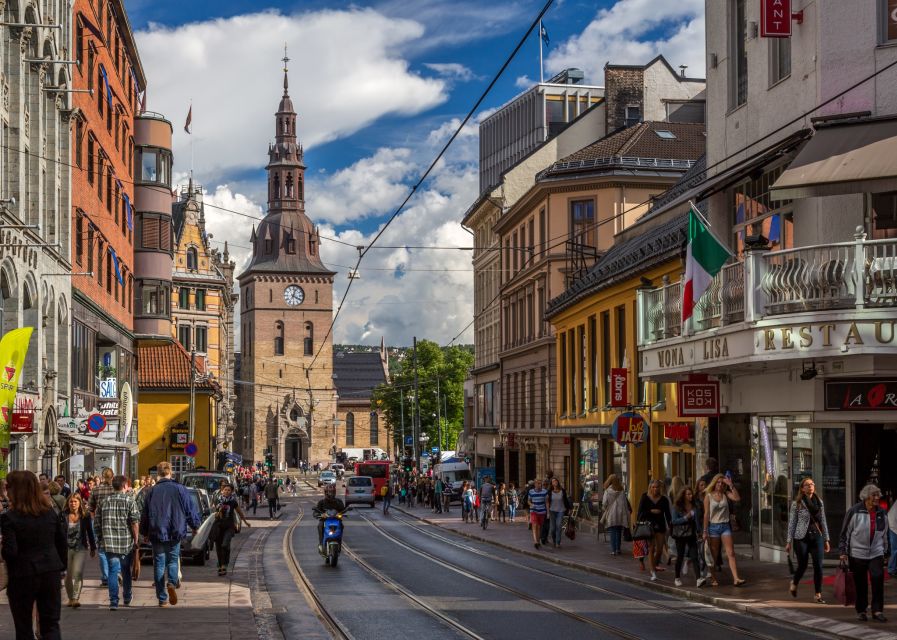
From Karl Johan, the route moves toward Oslo Bazaars, GlasMagasinet Stortorv, and Oslo Cathedral. This section is more commercial and urban, which is useful because it shows you the center where people shop, meet, eat, and pass through on ordinary days.
Oslo Bazaars add an older architectural note beside the cathedral. GlasMagasinet brings you back to the city’s retail side. The contrast is part of the appeal. Oslo does not place all its history behind a gate or inside a museum. You encounter it beside shops, cafés, tram stops, and busy streets.
Oslo Cathedral is another outside stop, so you should not expect a guided interior visit as part of the $38 fee. Still, hearing about the building while standing in this part of the city helps you understand the layout of central Oslo.
This is also where a guide’s local advice can be handy. Several guides have been praised for suggestions about cafés and restaurants. One specific recommendation was W.B. Samson for coffee and cinnamon buns. The tour does not include food, but a practical stop like this can turn the walk into a useful plan for the rest of your morning.
The Opera House and the changing waterfront
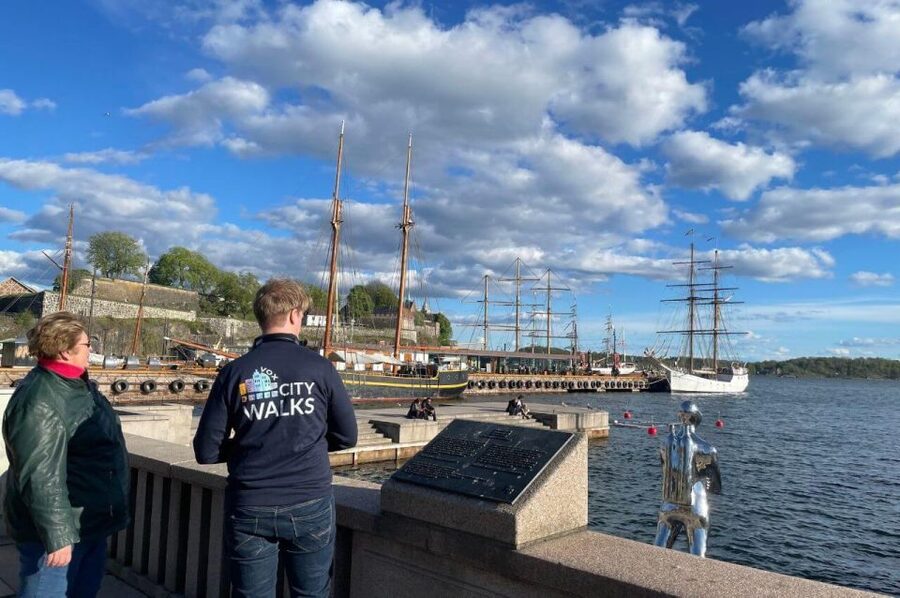
The Norwegian Opera House is one of the route’s most memorable modern sights. Its pale, sloping design reaches toward the water, creating the symbolic image of a pearl in the harbor. You pass by rather than attend a performance, but the building is still easy to appreciate from the outside.
This section helps explain Oslo’s newer relationship with the waterfront. The city’s harbor districts are not only working spaces. They also serve as places for architecture, public walking, dining, and leisure.
The itinerary includes KOK Oslo Sauna at Langkaia, another sign of the way Oslo uses the water’s edge. The stop is a pass-by visit, not a sauna session. It gives you a glimpse of a local habit and a modern waterfront attraction without adding another ticket or time commitment.
I find this old-to-new shift especially useful. In one short route, you move from royal institutions and cathedral streets to contemporary architecture and harbor life. That makes the tour more than a standard parade of monuments.
Same fjord country, a very different day out:
- Oslo: Scenic Fjord Cruise with Audio Guide Commentary
★ 4.5 · 5,375 reviews - Oslo Nature Walks: Island Hopping Tour
★ 4.8 · 2,713 reviews - Oslo: 100% Electric Oslofjord Sightseeing Cruise
★ 4.4 · 2,041 reviews - Oslo: Fjord Evening Cruise with Shrimp Buffet
★ 4.5 · 1,956 reviews
Christiania Torv and Kvadraturen’s older streets
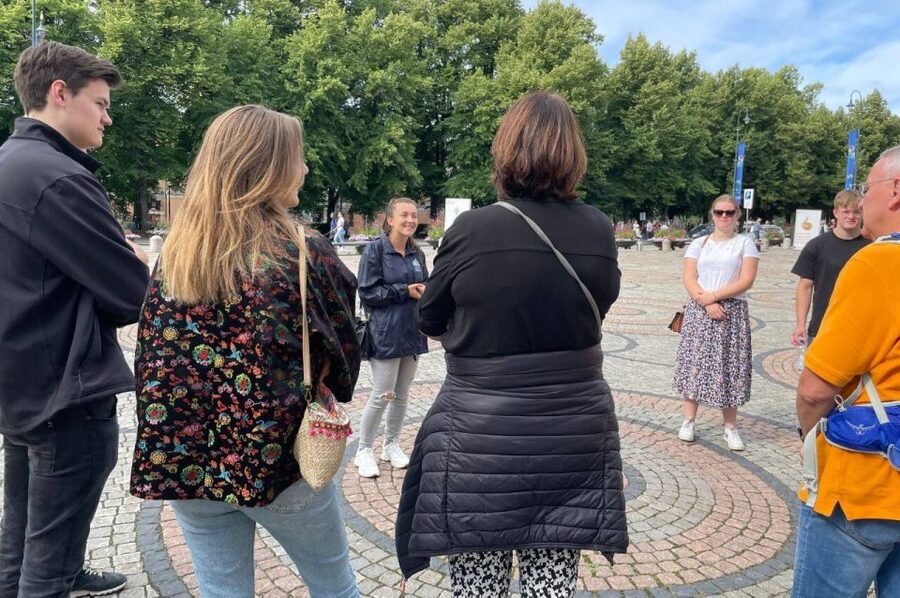
Christiania Torv and Kvadraturen provide the strongest historical section of the walk. Christiania was the original city center after Oslo changed its name, and the guide explains why the capital has been renamed several times during the past 300 years.
That story gives the streets more meaning. You are not just walking through an old quarter. You are seeing the result of fire, rebuilding, political change, and decisions about where the city should sit and how it should be called.
Kvadraturen is a planned central district with a different feel from the long axis of Karl Johan. Here, the route slows down around older streets and buildings, including Gamle rådhus and Anatomigården. The itinerary lists both as pass-by sights, so the value comes from the explanation rather than entry inside.
Christiania Torv is also a helpful place to grasp the relationship between old Oslo and present-day Oslo. The modern city extends well beyond this quarter, but the earlier center remains part of its story. If you enjoy urban history, this is likely one of the most rewarding parts of the walk.
Akershus Fortress and the harbor edge

Akershus Fortress adds a defensive and royal setting to the route. You pass the fortress rather than receive an included interior visit, but its position beside the harbor makes it easy to understand why this location mattered.
The stop works best when paired with the earlier Christiania section. Christiania tells you about the city’s foundation and name changes. Akershus shows the power and protection behind the capital. Together, they provide a stronger picture than either sight would offer on its own.
The walk then continues toward Oslo City Hall and the Ceremony Pier. City Hall is one of the central symbols of Oslo and is closely linked to the Nobel Peace Prize ceremony. The Ceremony Pier brings the route back to the water and helps connect the civic center with the harbor.
You should keep your expectations clear here. The tour is not a fortress tour, a City Hall interior visit, or a museum program. It is a guided outdoor introduction. If one of these places catches your attention, note it and return later with time to explore inside.
Aker Brygge and Tjuvholmen
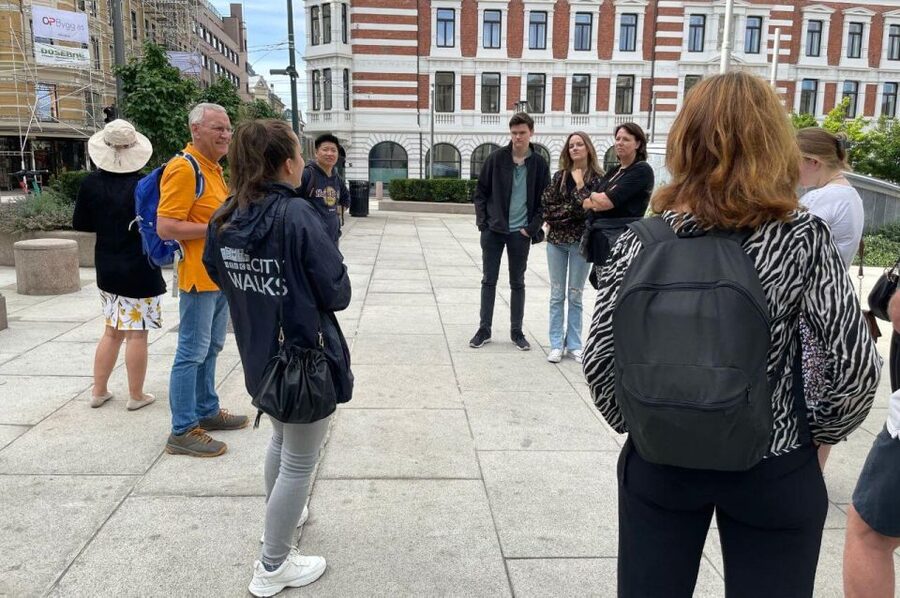
Aker Brygge is presented as Oslo’s alternative quarter, and it gives the walk a more relaxed waterfront finish. Restaurants, bars, public spaces, and harbor views replace the formal tone of Parliament, palace buildings, and civic monuments.
Tjuvholmen extends that modern side of the route. You pass through another contemporary harbor district where dining, public art, and new architecture shape the experience. The contrast with Christiania is sharp and useful.
I would not book this tour expecting a long waterfront outing. Aker Brygge and Tjuvholmen are included as part of a broad city overview, not as a dedicated food or architecture tour. Still, the route gives you enough orientation to return later, perhaps for dinner or a slower walk by the water.
The tour ends at Universitetsplassen or the Nobel Peace Center, depending on the option booked. This central finish makes it easy to continue sightseeing on your own, though public transport tickets are not included.
What the guides add to the experience
The strongest part of this activity is the live guide. The route itself is useful, but a map can show you where the Parliament and Opera House are. A guide adds the stories, connections, and small recommendations that make the walk stick.
Guides named in the feedback include Minji, Amelia, Anastasia, Olaf, Oliver, Judit, Judith, Csilla, Marija, Maria, Emilia, Emily, and Ihor. Their styles vary, but the common strengths are clear: clear English or German, friendly presentation, history explained without rushing, and answers to questions along the route.
Olaf has been noted for humor and stories about Oslo, Norway, and places to visit. Anastasia has led walks praised for strong storytelling and a good overview in a short time. Amelia has been described as warm, well informed, and responsive to questions. Oliver has helped with local suggestions as well as historical context.
Large groups can affect any walking tour. One group of 13 found an earpiece helpful, and another guide waited until everyone was close enough to hear. If you are joining a larger departure, stay near the guide and ask about an audio device if one is offered.
The pace is generally described as manageable, with enough time to listen without feeling hurried. Still, you are walking for two hours, often stopping outdoors. Good shoes and clothing that can handle rain are sensible in any season.
What $38 gets you
At $38 per person, this is not the cheapest way to look at Oslo. You can walk many of these streets for free with a map. The question is what you value.
The fee pays for a live explanation of the city, a planned route, answers to questions, and an app for continued sightseeing. It does not pay for entry to Akershus Fortress, City Hall, the Opera House, the Nobel Peace Center, or other attractions. It also does not include public transportation.
For a first visit, I think the price can make sense if you want context quickly. The tour helps you avoid spending the first day simply trying to understand the center. It also points you toward places worth revisiting, which can save time and help you spend museum money more wisely.
If you already know Oslo well, or prefer exploring at your own pace, the value is less clear. The app may still help, but the main benefit is the live guide. Book it for orientation and stories, not for admission access or a private experience.
The included app and independent follow-up
After the guided walk, scan the QR code on your voucher to access the sightseeing app. Its audio-guided route covers additional sights including Frogner Stadion, the Norwegian Parliament, Trinity Church, Karl Johan’s monument, Grensen, and Aamodt Bridge.
This is a nice extra because the guided route cannot cover every part of central Oslo in two hours. You can use the app later to fill in gaps or create another short walk.
The app does not replace the guide’s ability to answer questions or adapt to the group. Think of it as an extension of the day rather than the main product. It is particularly useful if you want more history without booking another paid tour.
Weather, walking ability, and the best time to go
The tour runs in poor weather. Rain, hail, snow, and cold have not automatically stopped departures, so you need to dress for Oslo rather than hope for perfect skies.
Summer makes the walk easier, but the route can still be pleasant in rain if you have waterproof clothing and shoes. Winter adds atmosphere, yet snow and uncleared sidewalks can create real problems. One winter group found the route difficult for a wheelchair user, and the guide accommodated the situation, but the tour had to be cut short.
The walk is described as reasonably flat and easy by one participant, but flat does not mean fully accessible in every season. Ask the provider about current conditions if mobility is a concern.
I would schedule this tour on your first or second day, preferably early in your stay. That gives you time to return to Christiania, the Opera House, Akershus, or Aker Brygge after you know what deserves more attention.
Who should book Best of Oslo
This tour suits first-time visitors, short-stay visitors, cruise passengers with limited time, and anyone who likes history mixed with practical city advice. It is also a good choice for people who want to understand Norway’s capital before tackling museums on their own.
Families with older children may appreciate the changing scenery and the short duration. Culture-focused visitors will like the links between the Nobel Peace Prize, government, monarchy, religion, urban planning, and modern waterfront development.
You may want another option if you need a wheelchair-friendly winter activity, dislike outdoor walking in bad weather, or want detailed access to the interiors of the sights. This is an overview, not a museum tour or a private architectural walk.
Should you book this Oslo walking tour?
I would book Best of Oslo if this is your first visit and you want a sensible two-hour orientation for $38. The combination of Christiania’s story, Nobel context, royal and civic buildings, the Opera House, Akershus, and the waterfront gives you a useful mental map fast.
Book it early in your stay, arrive five minutes ahead, and dress for the forecast. If you prefer independent sightseeing, use the app and walk the route yourself, but you will give up the guide’s stories, answers, and local suggestions. For most first-time visitors, that human touch is the reason to pay.
FAQ
How long does the Best of Oslo walking tour last?
The guided walking tour lasts approximately two hours.
What languages are available?
The tour is offered with live commentary in English or German. You select your language at checkout.
Where does the English tour meet?
The English tour meets near the statue of P.A. Munch by the Faculty of Law building entrance at University Aula, Karl Johan Street 47.
Where does the German tour meet?
The German tour meets at the Nobel Peace Center at Brynjulf Bulls plass 1.
Where does the tour finish?
The listed drop-off locations are Universitetsplassen and the Nobel Peace Center. The exact finish depends on the option booked.
Are attraction entrance fees included?
No. Entry to attractions is not included in the tour price.
Is public transportation included?
No. You need to pay separately for public transportation.
What does the sightseeing app include?
You can scan the QR code on your voucher to access the app. It provides an audio-guided route with sights including Frogner Stadion, Trinity Church, Karl Johan’s monument, Grensen, Aamodt Bridge, and additional locations.
Can I cancel the booking?
You can cancel up to 24 hours in advance for a full refund. The reserve-now, pay-later option lets you book without paying at the time of reservation.
More Walking Tours in Oslo
- Central Oslo Guided Walking Tour with Local Guide
★ 4.5 · 278 reviews - Oslo: Snowy Forest Torchlight Walk with Campfire
★ 4.6 · 254 reviews - Oslo: City Highlights Walking Tour
★ 4.8 · 197 reviews - Oslo: Grünerløkka Food & Culture Walking Tour
★ 4.5 · 161 reviews
Just added around Oslo
- 4 hours Best View of the Oslofjord Winter Edition★ 4.0 · 15 reviews
- Unknown war. Oslo and Norway during 1940-45★ 5.0 · 74 reviews
- Oslo Winter Highlights Bike Tour★ 5.0 · 36 reviews
- The Ultimate Norwegian Skiing Experience★ 5.0 · 16 reviews
- The Viking Planet Museum Ticket★ 4.0 · 197 reviews
- The Viking Planet Museum – Mini Group (4 adults)★ 4.0 · 16 reviews
- The Scenic Roadtrip, Oslo to Bergen via Flam & the Fjords★ 5.0 · 25 reviews
- Visit the Instaworthy Spots of Oslo’s Vigeland Park with a Local★ 5.0 · 4 reviews
Private Walking Tours, compared.
Past & Present Small Group Guided Walking Tour
Read our review →
Walking Tour in Bergen of the Past and Present
Read our review →
Group Walking Tour – City Highlights – 2 Hours
Read our review →
3h walking tour, small group max 10 people Copenhagen
Read our review →Browse the lists this tour appears in