
Reviewed · PRIVATE WALKING TOURS
Free City Walking Tour in Oslo
Oslo’s center unfolds neatly on foot, and this 90-minute tour links many of its best-known sights in one easy route. You begin at the Tiger sculpture by Oslo Central Station, then walk past the Opera House, Akershus Fortress, Aker Brygge, City Hall, the National Theatre, the Royal Palace, and Parliament.
I like the practical route and the mix of famous buildings with local stories. I also like that guides such as Nicholas, Zoe, Nikola, Yellena, and Mia bring different personalities to the walk, with several praised for making Norwegian culture and daily life easy to understand. The main consideration is that a few people found the tour lighter on explanation than expected, so you should choose it for a brisk city introduction rather than a long historical lecture.
In This Review
- Key points about this Oslo walk
- Why this 90-minute route works well in Oslo
- Meeting the Tiger at Jernbanetorget
- The Opera House and Bjørvika’s new Oslo
- Kvadraturen and Christiania Square
- Akershus Fortress and Alfred Nobel
- Aker Brygge, the National Museum, and the Nobel Peace Center
- Oslo City Hall and the Nobel Peace Prize
- The National Theatre and Henrik Ibsen
- The University Aula and Edvard Munch
- The Royal Palace and Norway’s royal family
- Finishing at the Norwegian Parliament
- Guide style, group size, and the pace
- What the $3.45 price really means
- Practical details before you go
- Who should book this Oslo walking tour?
- Should you book it?
- FAQ
- Where does the Free City Walking Tour in Oslo begin?
- Where does the tour finish?
- How long does the walking tour last?
- What sights are included on the route?
- Does the tour include museum entry?
- How many people can join the tour?
- Is the tour accessible by public transport?
- What is the cancellation policy?
Key points about this Oslo walk
- A compact route through central Oslo: See major sights without needing a bus, tram, or taxi between them.
- A strong first-day activity: The route helps you get your bearings before exploring museums and neighborhoods on your own.
- Stories beyond the buildings: Expect discussion of Norwegian royalty, Alfred Nobel, Edvard Munch, Henrik Ibsen, and everyday life.
- A free-tour format with a tip custom: The displayed price is $3.45 per person, while one review notes that tips of about $10 per person are expected.
- A manageable group size: The tour allows a maximum of 30 people, large enough for an international mix but not an enormous crowd.
- A useful final location: The walk ends near the Norwegian Parliament on Karl Johans gate, about 10 minutes on foot from the starting point.
Why this 90-minute route works well in Oslo
Oslo is spread across a broad area, but many of the sights most people want to see sit within the central districts. This walk makes good use of that compact core. You move from the newer waterfront to older streets, then continue along the city’s grand ceremonial avenue toward the palace and Parliament.
That progression gives you a quick sense of how Oslo fits together. You see modern architecture around Bjørvika, older urban spaces in Kvadraturen, medieval military remains at Akershus, and the institutions of modern Norway around Karl Johans gate.
The pace appears to be steady rather than strenuous. One review specifically praised the easy walking speed, while another said there was more walking than talking. That contrast is useful: you should expect a genuine walking tour, not a series of long stops with a lecture at each one.
The group can reach 30 people and may include people from many countries. One tour group included participants from 11 different countries. That international setting can make the guide’s explanations of Norwegian customs especially useful, since the walk is designed for people who may know little about Norway before arriving.
More Private Walking Tours in Oslo
- Oslo: Best of Oslo Walking Tour
★ 4.5 · 458 reviews - Oslo: Guided Walking Tour of Central Oslo
★ 4.7 · 438 reviews - Oslo: Historic Myths & Legends Evening Walking Tour
★ 4.8 · 408 reviews
Meeting the Tiger at Jernbanetorget
The tour begins at the Tiger sculpture near Oslo Central Station, at Jernbanetorget. It is an easy meeting point if you arrive by train or public transport, and the statue is a clear landmark in a busy part of town.
The tiger is more than a handy meeting marker. It gives the walk an immediate Oslo flavor and places you at the edge of the city center, where the main pedestrian routes lead toward the waterfront and Karl Johans gate.
Allow yourself enough time to find the statue and gather before departure. The confirmation is sent at booking, and the tour uses a mobile ticket, so keeping the booking accessible on your phone is sensible.
This opening portion lasts about eight minutes. It is not a major sightseeing stop in itself, but it sets up the route and gives your guide a chance to explain what you will see. If you are arriving in Oslo for the first time, this is a useful place to start because you can return to the station area later without confusion.
The Opera House and Bjørvika’s new Oslo
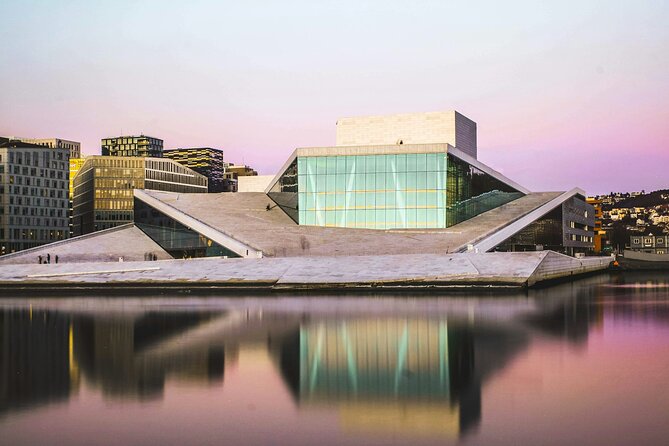
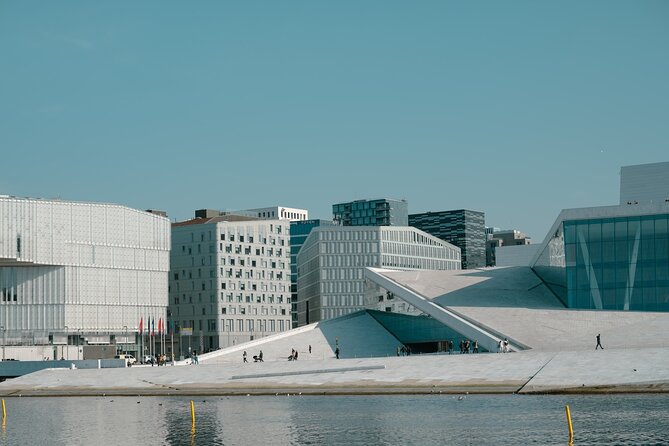
The Oslo Opera House is one of the tour’s most memorable visual stops. Its broad, sloping exterior invites people to walk up toward the roof, and the building opens the route onto the waterfront district of Bjørvika.
The stop takes about 10 minutes and includes stories about the Public Library, the Munch Museum, Bjørvika, and Sørenga. These references help you read Oslo as a city that has been reshaped around the harbor, not simply as a collection of old monuments.
The guide’s role here matters. The Opera House is easy to photograph, but a short explanation adds context to the surrounding public buildings and waterfront development. You may also get a clearer idea of where to return later if you want more time at the Munch Museum or the library.
Do not expect to visit the museums during this walk. They are points of discussion and orientation, not included indoor admissions. That is typical of a short city walk, and it keeps the route moving.
A brief stop at what is described as the world’s smallest stock exchange follows somewhere along the route. The information provided does not give a precise duration, so treat it as a quick curiosity rather than a full stop. Small details like this can make the route more memorable, especially when your guide connects them to Oslo’s business life.
Kvadraturen and Christiania Square
The walk then reaches Kvadraturen, one of central Oslo’s older urban areas. Its name refers to the district’s grid-like street plan, and Christiania Square gives the guide a place to talk about the city’s earlier identity and development.
The stop lasts about seven minutes. That is enough time for a focused story and a look around, but not enough for detailed architectural study. I would think of Kvadraturen as a transition between the modern waterfront and the fortress district.
This part of the route is valuable because it prevents the tour from becoming a parade of only the most polished landmarks. A city’s character often shows up in the spaces between major attractions, and Kvadraturen helps connect Oslo’s present-day center with its older foundations.
If you prefer tours that pause frequently for photographs, this may feel quick. The walk covers a lot in a short period, so your guide will likely keep the group moving.
Same fjord country, a very different day out:
- Oslo: Scenic Fjord Cruise with Audio Guide Commentary
★ 4.5 · 5,375 reviews - Oslo Nature Walks: Island Hopping Tour
★ 4.8 · 2,713 reviews - Oslo: 100% Electric Oslofjord Sightseeing Cruise
★ 4.4 · 2,041 reviews - Oslo: Fjord Evening Cruise with Shrimp Buffet
★ 4.5 · 1,956 reviews
Akershus Fortress and Alfred Nobel
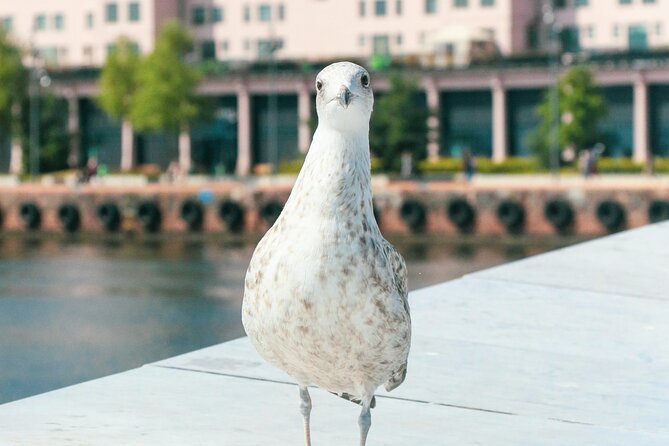
Akershus Castle and Fortress is the route’s strongest historical setting. The fortress rises above the harbor and provides views over the water and central Oslo. The stop lasts about eight minutes, with admission included for the part of the fortress area used by the tour.
This is where the walk gains a sense of age and drama. The fortress offers a sharp contrast to the Opera House’s modern lines, and the elevated position gives you one of the route’s better outlooks. The guide also tells the story of Alfred Nobel here, linking Oslo’s historic defenses with the Nobel Peace Prize and the city’s international role.
Eight minutes is brief for a site with this much to see. You will not explore every corner, visit every interior, or replace a dedicated fortress tour. Still, the stop gives you enough orientation to decide if you want to return for a longer visit.
The fortress can also be the most physically interesting part of the walk because of its higher viewpoints and changing surfaces. Wear comfortable shoes, particularly if you plan to continue exploring after the tour.
Aker Brygge, the National Museum, and the Nobel Peace Center
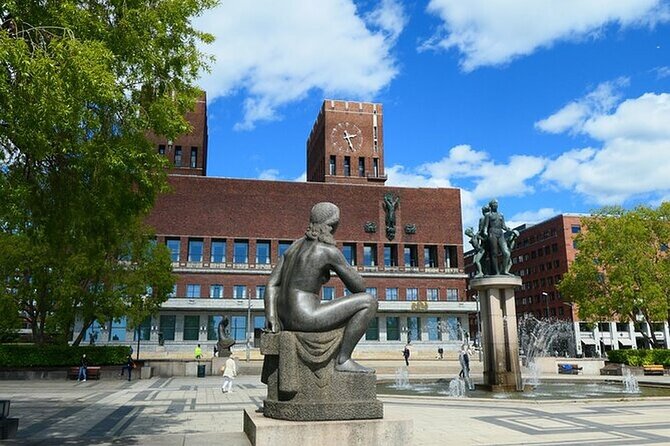
From the fortress, the route moves toward Aker Brygge. This waterfront area is associated with restaurants, public spaces, and views across the harbor. The nearby National Museum and Nobel Peace Center add two important cultural stops to the discussion.
The scheduled time here is about seven minutes. Again, the tour does not include a museum visit. Instead, you receive a quick explanation of what each institution offers and where to find it.
This is useful planning information. If you have only a short stay in Oslo, you can use the guide’s introduction to choose between returning to the Munch Museum, the National Museum, or the Nobel Peace Center. The tour gives you a map in story form, which can save time later.
Aker Brygge also changes the feel of the walk. After older streets and fortress walls, you are back in a more open waterfront setting. If weather is chilly or wet, the exposure near the harbor may make the stop less comfortable. One review specifically described a guide continuing at an unhurried pace despite cold wind, but conditions will still affect your enjoyment.
Oslo City Hall and the Nobel Peace Prize
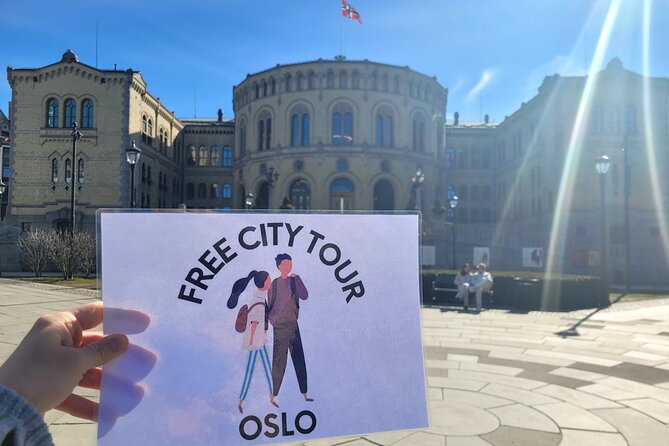
The next major stop is Oslo City Hall, or Rådhuset, with about 10 minutes set aside for the building and its surroundings. This is one of the most important stops on the route because City Hall is tied closely to the Nobel Peace Prize ceremony.
The guide can connect the building to Alfred Nobel and the annual peace prize, giving the earlier fortress discussion a second layer. You also get a chance to look at a central public building rather than only viewing Oslo’s royal and military landmarks.
Ten minutes is relatively generous for this walk. It should allow time for the guide to explain the building’s role and for you to take in the setting. The tour data does not promise an interior visit, so plan on seeing City Hall as an exterior stop unless your guide says otherwise.
I especially like this section for first-time visitors because it links a physical place to a major part of Norway’s place in the world. You are not just collecting façades. You are learning why Oslo appears in international news every December.
The National Theatre and Henrik Ibsen
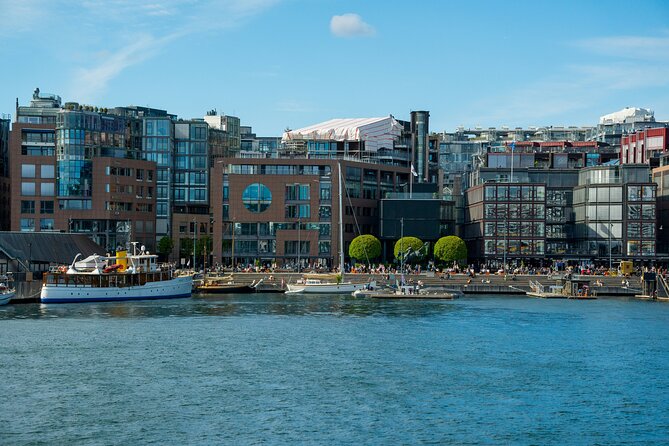
The route continues to Nationaltheatret, the National Theatre. The stop lasts about six minutes and focuses on Henrik Ibsen, one of Norway’s most important playwrights.
This is a short cultural pause, but it adds welcome variety. The tour is not limited to kings, government buildings, and waterfront design. Ibsen gives you a doorway into Norwegian literature and the country’s cultural life.
You should not expect a full literary seminar in six minutes. The value is in receiving enough background to recognize Ibsen’s importance when you see his name elsewhere in Oslo, visit a performance venue, or encounter references to him during the rest of your trip.
The National Theatre also places you on the route toward the Royal Palace and Parliament. The final part of the walk becomes more formal, with broad civic and royal landmarks replacing the harbor scenery.
The University Aula and Edvard Munch
The University Aula is a smaller stop, scheduled for about four minutes, but it has an appealing art connection. Edvard Munch painted inside the Aula, giving the building a direct link to one of Norway’s best-known artists.
This is a good example of the tour’s method. The guide points out a place that you might otherwise pass without noticing, then attaches a person and a story to it. Four minutes will not allow a detailed look at Munch’s work, but it can help you understand why the University Aula matters.
If you are interested in Munch, treat this as a preview rather than a substitute for the Munch Museum. The museum is discussed earlier near Bjørvika, but it is not part of the walking tour’s included admissions.
The Royal Palace and Norway’s royal family
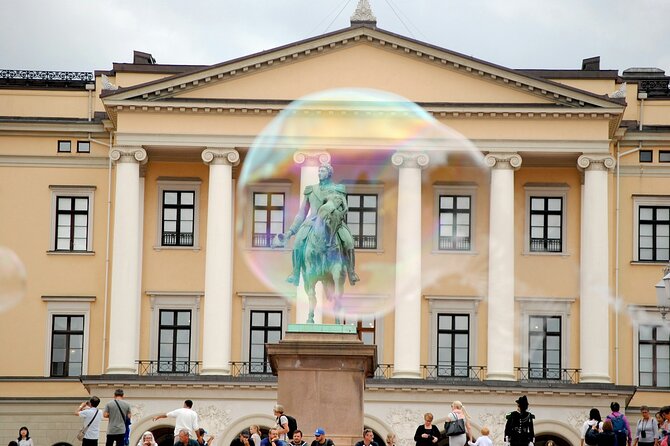
The Royal Palace receives about eight minutes. Here the guide focuses on the Norwegian Royal Family and the role of the palace in the capital.
For many people, this is one of the most anticipated stops. The palace sits at the upper end of Karl Johans gate, and its position makes sense only after you have walked through the city’s civic core. By the time you arrive, you have seen the harbor, fortress, cultural institutions, and City Hall. The palace then becomes part of a wider picture of how Norway’s public life is organized.
The stop is about orientation and stories, not a palace tour. No interior admission is listed. If you want to see royal rooms, you would need to arrange a separate visit.
The guide’s personal style will shape this section. Zoe was praised for being personable and fun, while other guides were described as friendly, entertaining, and good at explaining Norwegian culture. That range is worth keeping in mind. The route is fixed, but the balance between royal facts, humor, and daily-life detail may vary by guide.
Finishing at the Norwegian Parliament
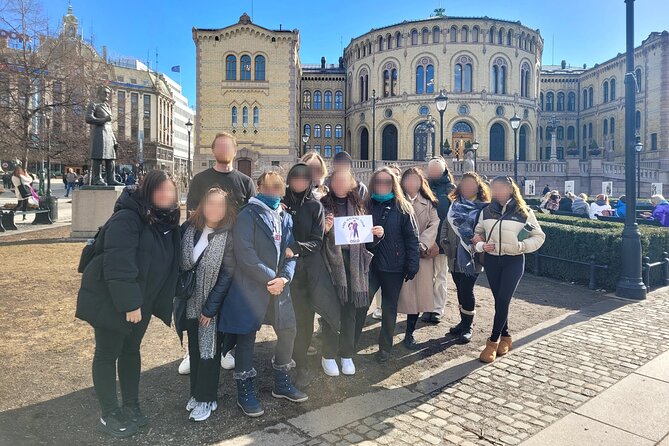
The final stop is the Norwegian Parliament on Karl Johans gate. The walk ends at Karl Johans gt. 22, near the center of Oslo, roughly 10 minutes on foot from the Tiger sculpture.
This is a practical ending point. You finish close to shops, restaurants, public transport, and several of the city’s main streets. It is also a good place to continue sightseeing because you are already near the Royal Palace and central pedestrian routes.
The stop lasts about eight minutes. The guide can close the tour by explaining the role of Parliament and tying together the royal, civic, and cultural institutions you have passed.
Because the tour ends here rather than back at the station, remember that you will need to walk back if you are collecting luggage or catching a train. Ten minutes is not far, but it matters if you are working with a tight departure schedule.
Guide style, group size, and the pace
The strongest praise for this experience centers on the guides. Nicholas was credited with offering a local view of history and daily life while answering questions. Nikola was described as clear and unhurried in cold weather. Yellena was praised for being friendly, fun, and welcoming to people of all ages.
Those details suggest a tour that aims for warmth rather than stiff presentation. Several comments highlight humor, friendliness, and an entertaining approach. That is useful in Oslo, where a short introduction to customs and daily routines can be as valuable as dates and names.
Still, you should allow for variation. One person felt there was too much walking and not enough explanation, while another complaint described a guide speaking too quickly and finishing early. The tour provider disputed some negative comments as possibly belonging to another business, so those criticisms may not apply to this route. Even so, they point to a sensible question: do you want constant narration, or do you prefer a walk with regular stories and time to look around?
The maximum group size is 30. That is not intimate, but it is manageable for a central city walk. Arrive ready to stay near the guide, especially at busy public spaces where the group can spread out.
What the $3.45 price really means
The displayed cost is $3.45 per person, while the experience is presented as a free city walking tour. One review points out that you can find the tour directly through a search and attend without paying the booking price, but that tips are expected, with about $10 per person suggested.
That makes the final cost less simple than the headline price. I would budget for a tip if the guide gives you the lively, useful introduction promised by the experience. In practice, the value comes from getting a quick orientation to central Oslo without paying for museum entry or a full sightseeing vehicle.
You should also compare the walk with what you need. If you want a short introduction before visiting museums, it offers good value. If you want deep site visits, long historical explanations, or a small private group, the low price does not change the fact that this is a brisk overview.
The tour is recommended by 93 percent of the available ratings and carries a 4.8 score from 91 reviews. Those figures point to strong overall satisfaction, while the less favorable comments remind you to keep expectations realistic.
Practical details before you go
The tour lasts approximately one hour and 30 minutes. The meeting point is the Tiger sculpture at Jernbanetorget, and the end point is near Parliament on Karl Johans gate.
A mobile ticket is provided, confirmation arrives at booking, and service animals are allowed. The meeting point is close to public transport, and most people can take part.
Free cancellation is available up to 24 hours before the start time for a full refund. Cancellations or changes made within 24 hours are not refunded or accepted. The experience also requires a minimum number of participants, so a cancellation for that reason results in a different date or experience, or a full refund.
I would wear comfortable shoes and dress for wind near the waterfront. The route is not described as difficult, but it includes a real amount of walking and a fortress stop with elevated views.
Who should book this Oslo walking tour?
I would choose this tour at the beginning of an Oslo stay. The route helps you identify the Opera House, museums, fortress, City Hall, palace, and Parliament before you decide where to spend more time.
It suits you best if you want:
- A quick introduction to central Oslo
- Stories about Norwegian culture and daily life
- A guide-led walk rather than a museum visit
- A low-cost way to see major landmarks
- A route that works for people from many countries
- A final stop near central Oslo’s main streets
I would think twice if you dislike group walks or want every stop explained in great depth. The maximum group is 30, and the entire route fits into 90 minutes. That requires movement, short talks, and some choices about what to leave out.
Should you book it?
Book this walk if you want to get your bearings quickly and see Oslo’s central landmarks in one sitting. The combination of the Opera House, Akershus Fortress, City Hall, Royal Palace, and Parliament gives you a useful framework for the city, while stories about Nobel, Munch, Ibsen, and Norwegian royalty add substance.
Just budget for the expected tip, dress for changing waterfront weather, and view the tour as an introduction rather than a complete study of Oslo. For a first morning or afternoon in the city, that is a sensible trade: a brisk route, several memorable viewpoints, and enough ideas to plan the rest of your visit.
FAQ
Where does the Free City Walking Tour in Oslo begin?
It begins at the Tiger sculpture at Jernbanetorget, near Oslo Central Station.
Where does the tour finish?
The tour finishes at Karl Johans gt. 22, near the Norwegian Parliament. The end point is about a 10-minute walk from the Tiger sculpture.
How long does the walking tour last?
The tour lasts approximately one hour and 30 minutes.
What sights are included on the route?
The route includes the Oslo Opera House, Kvadraturen and Christiania Square, Akershus Castle and Fortress, Aker Brygge, Oslo City Hall, the National Theatre, the University Aula, the Royal Palace, and the Norwegian Parliament.
Does the tour include museum entry?
No museum entry is listed. The guide discusses places such as the Public Library, Munch Museum, National Museum, and Nobel Peace Center, but the walk itself is an outdoor city tour.
How many people can join the tour?
The maximum group size is 30 people.
Is the tour accessible by public transport?
Yes. The meeting point is near public transportation, and the Tiger sculpture is located by Oslo Central Station.
What is the cancellation policy?
You can cancel up to 24 hours before the start time for a full refund. Cancellations or changes made less than 24 hours before the start time are not refunded or accepted.
More Walking Tours in Oslo
- Taste of Oslo Walking Tour
★ 4.5 · 282 reviews - Central Oslo Guided Walking Tour with Local Guide
★ 4.5 · 278 reviews - Oslo: Snowy Forest Torchlight Walk with Campfire
★ 4.6 · 254 reviews - Oslo: City Highlights Walking Tour
★ 4.8 · 197 reviews
Just added around Oslo
- 4 hours Best View of the Oslofjord Winter Edition★ 4.0 · 15 reviews
- Unknown war. Oslo and Norway during 1940-45★ 5.0 · 74 reviews
- Oslo Winter Highlights Bike Tour★ 5.0 · 36 reviews
- The Ultimate Norwegian Skiing Experience★ 5.0 · 16 reviews
- The Viking Planet Museum Ticket★ 4.0 · 197 reviews
- The Viking Planet Museum – Mini Group (4 adults)★ 4.0 · 16 reviews
- The Scenic Roadtrip, Oslo to Bergen via Flam & the Fjords★ 5.0 · 25 reviews
- Visit the Instaworthy Spots of Oslo’s Vigeland Park with a Local★ 5.0 · 4 reviews
Private Walking Tours, compared.
Past & Present Small Group Guided Walking Tour
Read our review →
Walking Tour in Bergen of the Past and Present
Read our review →
Group Walking Tour – City Highlights – 2 Hours
Read our review →
3h walking tour, small group max 10 people Copenhagen
Read our review →Browse the lists this tour appears in