
Reviewed · PRIVATE WALKING TOURS
Hipstoric Grünerløkka Private Walking Tour
Oslo’s most interesting stories often sit away from the big museum route. This private walk leads you from political Youngstorget through street art corridors, old wooden streets, medieval churches, and the former working-class district of Grünerløkka, ending at Mathallen food hall.
I like the local scale of this tour and its mix of art, history, and everyday city life. I also like the private format, which gives your group a better chance to ask questions and shape the conversation. The main drawback is the price: at $237.12 per person, it makes the most sense for a small group that values a private guide.
- A cross-section of Oslo: See political squares, old industry, parks, churches, cemeteries, and food culture in one walk.
- Street art with context: Blå and Brenneriveien offer some of Oslo’s best-known outdoor art areas.
- Strong Munch connections: Visit places linked with Edvard Munch, including the cemetery and Telthusbakken.
- A private English tour: Your group travels alone with a professional guide, with Inger and Björn among the named guides associated with the experience.
- A useful ending: Finish at Mathallen in Vulkan, where you can eat, continue exploring, or walk back toward the start.
- Plan for changing weather: The tour runs in all weather, and you need a moderate level of fitness.
In This Review
- Starting with political Oslo at Youngstorget
- Torggata and the city’s everyday character
- Kulturkirken Jakob, where a church became a stage
- Following Akerselva, Oslo’s green corridor
- Crossing the Fairytale Bridge into Grünerløkka
- Olaf Ryes plass and an Edvard Munch connection
- Blå and the outdoor art scene
- Brenneriveien and old industrial walls
- Damstredet and Oslo’s wooden homes
- Our Saviour’s Memorial Cemetery and famous names
- Old Aker Church, Oslo’s oldest remaining building
- Telthusbakken, wooden houses and a Munch painting
- Vulkan and Mathallen, a practical finish
- What the three-hour format really gives you
- Is $237.12 per person a fair price?
- Who should book this private Oslo walk?
- Should you book the Hipstoric Grünerløkka tour?
- FAQ
- Where does the tour begin?
- Where does the tour end?
- How do I return to the starting point?
- Is the tour private?
- What language is offered?
- Does the tour run in bad weather?
Starting with political Oslo at Youngstorget
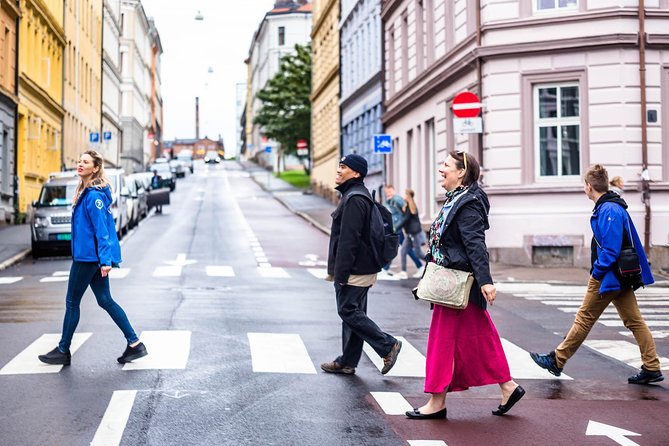
The tour begins at Youngstorget, a square with an unusually direct link to Norway’s political life. Political speeches and rallies take place here, including women’s marches on March 8 and gay pride events.
That setting gives you a useful opening lesson in how Oslo works. The square is close to the Government quarter, so political organizations have their headquarters nearby. Instead of beginning with a postcard view, you start with a place tied to public life and national debate.
Your guide can help you read the square as more than an open space. It is a meeting point, a stage, and a reminder that Oslo is a working capital as well as a sightseeing destination.
The stop lasts about 10 minutes and has no admission charge. Since the tour is private, this is a good time to tell your guide what interests you most. You may want more politics, more art, or more stories about local neighborhoods.
Torggata and the city’s everyday character

From Youngstorget, the walk continues to Torggata, whose name translates as Square Street. The street is represented in the Norwegian edition of Monopoly, a small detail that gives it a place in the country’s popular image of Oslo.
This is not a major monument stop, and that is part of the point. You get a look at a normal urban street and hear why it matters to people who know the city. A guide can make these ordinary spaces useful by explaining how they connect the center with the districts beyond it.
You spend about 10 minutes here. Do not expect a long photo stop or a major interior visit. Think of Torggata as a transition into the more independent, creative side of the route.
More Private Walking Tours in Oslo
- Oslo: Best of Oslo Walking Tour
★ 4.5 · 458 reviews - Oslo: Guided Walking Tour of Central Oslo
★ 4.7 · 438 reviews - Oslo: Historic Myths & Legends Evening Walking Tour
★ 4.8 · 408 reviews
Kulturkirken Jakob, where a church became a stage
Kulturkirken Jakob, also called the Culture Church, is one of the more unusual stops. The building is rented long-term by Kirkelig Kulturverksted, and it is used for theatre, concerts, dance, and other cultural events.
The appeal is not simply the church itself. The building shows how a religious space can take on a new public role without losing its identity. In a city where old buildings often need fresh uses, this is a practical example of Oslo’s cultural life.
The visit lasts around 10 minutes, and admission is free. The available details do not promise a performance during your walk, so you should treat this as an exterior or brief cultural stop rather than a scheduled show.
Following Akerselva, Oslo’s green corridor
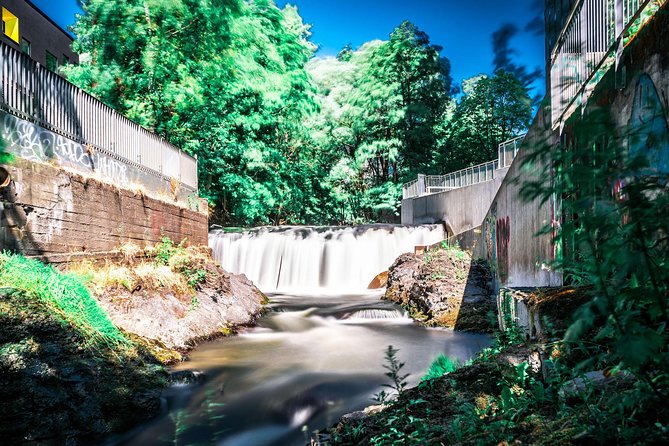
Akerselva River cuts through Oslo and is known as the city’s green lung. Parks and nature paths line the river, offering a change from streets and buildings.
I like this section because it gives your legs and eyes a break. After the political square and city streets, the river creates a calmer route into Grünerløkka. It also helps you understand the city’s shape. Oslo is not only grand civic buildings and waterfront attractions. Its identity also grows along water, footpaths, and former industrial ground.
The stop is listed at about 10 minutes, but the river also forms part of the walk between neighborhoods. Wear comfortable shoes, since this is a walking tour with many stops rather than a short series of vehicle drop-offs.
Crossing the Fairytale Bridge into Grünerløkka
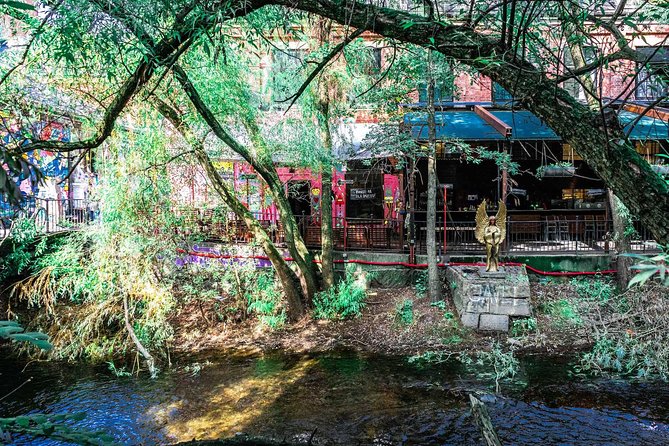
Crossing Akerselva and the Fairytale Bridge marks your entry into Grünerløkka. The district began as a working-class neighborhood, then changed through a gentrification process that gathered pace during the late 1900s.
That change is central to the tour. You are not just looking at cafés, creative spaces, and attractive old buildings. You are also seeing how an older neighborhood changes when new businesses, artists, and residents arrive.
Your guide can help you notice the tension between old and new. Grünerløkka’s appeal comes partly from its past, but its present identity is not frozen in that past. This is one reason the tour suits people who want to understand how locals live, work, and use the city today.
Same fjord country, a very different day out:
- Oslo: Scenic Fjord Cruise with Audio Guide Commentary
★ 4.5 · 5,375 reviews - Oslo Nature Walks: Island Hopping Tour
★ 4.8 · 2,713 reviews - Oslo: 100% Electric Oslofjord Sightseeing Cruise
★ 4.4 · 2,041 reviews - Oslo: Fjord Evening Cruise with Shrimp Buffet
★ 4.5 · 1,956 reviews
Olaf Ryes plass and an Edvard Munch connection
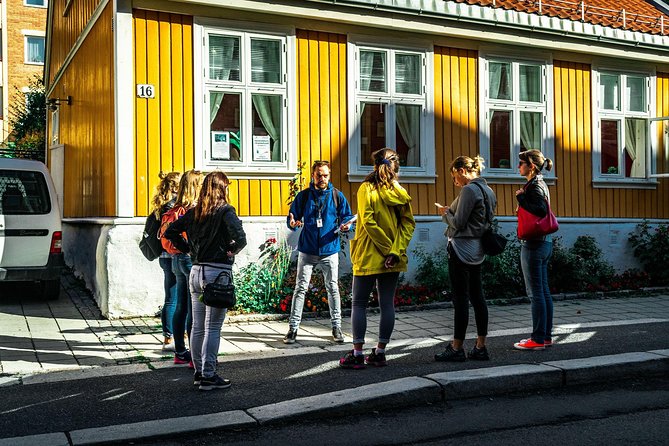
Olaf Ryes plass is surrounded by three- and four-story buildings built mainly in the late 1800s. The park is a pleasant place to pause and look at the neighborhood’s older street pattern.
One of its most interesting links is Edvard Munch. The young painter lived in one of the surrounding buildings, adding a personal connection to what might otherwise seem like a pretty residential square.
The park is also next to Parkteatret, one of Oslo’s well-known concert venues. That pairing captures Grünerløkka neatly: historic homes and public green space beside a modern cultural venue.
You spend about 10 minutes here. It is a good stop for architecture and local context, though visitors seeking a full Munch museum experience should remember that this tour focuses on places connected with his life, not a gallery collection.
Blå and the outdoor art scene
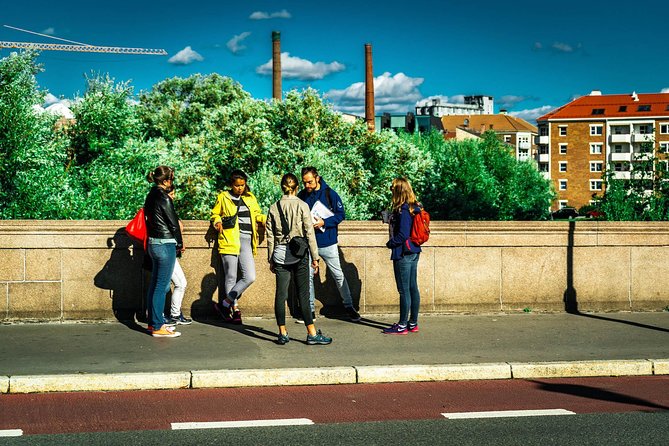
Blå is an alternative music venue, and the surrounding area is one of Oslo’s key street art spots. Bring your camera, since the art is the main attraction here.
Street art can be easy to reduce to quick photographs. A private guide adds value by pointing out how the works fit the area and explaining the role of local artists and creative venues. The setting also shows that art in Oslo is not limited to formal museums or concert halls.
The stop lasts about 10 minutes. Outdoor art changes, so you should think of this as a look at the area’s creative character rather than a fixed exhibition with guaranteed works in a particular condition.
Brenneriveien and old industrial walls
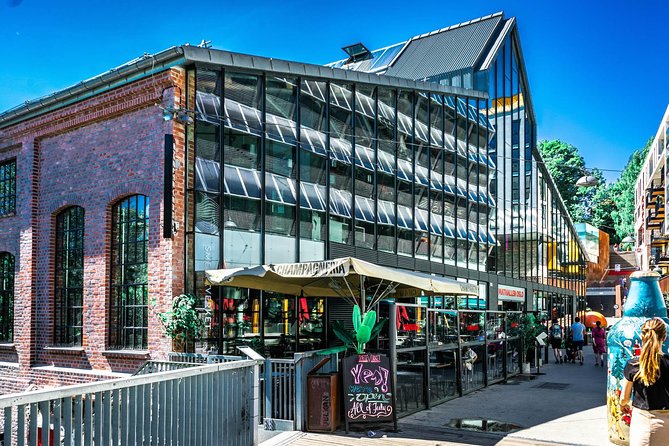
Brenneriveien continues the street art theme. Old, unused industrial buildings have been turned into a setting for work by local art students.
This is one of the tour’s clearest examples of reuse. Buildings that once served industry now provide walls and space for new artistic expression. You get a sense of the district’s shift from production toward culture, nightlife, and creative work.
The setting may appeal most to you if you enjoy rough edges and changing city districts. It is less suited to someone looking for polished monuments at every turn. The tour’s strength lies in showing Oslo as a city still being reshaped.
Damstredet and Oslo’s wooden homes
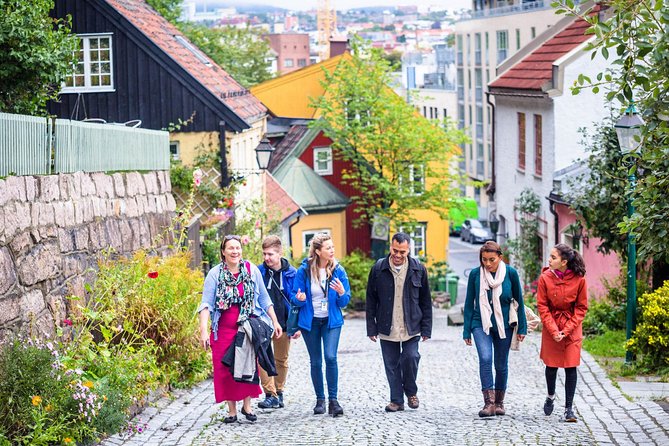
Damstredet brings a different kind of charm. Its hillside wooden houses are well preserved and still inhabited, making this a photo stop with real neighborhood life behind it.
The houses help you picture an older Oslo that can be hard to find in the modern center. Because people still live here, you should treat the street as a residential place rather than a stage set. Keep voices low and avoid blocking entrances while taking photographs.
This section balances the industrial and artistic parts of the walk. After street murals and converted buildings, you see modest homes with color, age, and a human scale.
Our Saviour’s Memorial Cemetery and famous names
Our Saviour’s Memorial Cemetery is the resting place of several major Norwegian figures, including playwright Henrik Ibsen and painter Edvard Munch.
For me, this stop gives the earlier Munch references more weight. You have already heard about his connection to Olaf Ryes plass, and now you encounter the place where he was buried. The cemetery also links Oslo’s visual art and literary culture in one quiet setting.
The stop lasts about 15 minutes, the longest single pause on the route. It is worth keeping a respectful tone here. This is a working cemetery, not simply a sightseeing site.
Old Aker Church, Oslo’s oldest remaining building
Old Aker Church, or Gamle Aker Kirke, is described as Oslo’s oldest remaining building and the only remaining church from the Middle Ages.
This is a major historical stop, especially because the route has already shown you modern street art and changing neighborhoods. The church gives you a direct link to Oslo’s medieval past, long before Grünerløkka became an arts district.
The stop lasts about 10 minutes and has no admission charge. The available tour details do not guarantee an interior visit, so ask your guide what access is possible on your date. Even from outside, the church is an important anchor for understanding how old Oslo is beneath its modern surface.
Telthusbakken, wooden houses and a Munch painting
Telthusbakken is another hillside street lined with colorful wooden houses. One side is home to roughly 50 people, while allotment gardens occupy the other side.
The street also appears as the subject of one of Edvard Munch’s paintings. That connection makes this more than a pretty lane. You can compare the lived-in setting with its artistic image and see how a real Oslo neighborhood entered the work of one of Norway’s best-known painters.
The allotment gardens add a useful local detail. They show that small-scale growing spaces can survive close to the city center. At around 10 minutes, this is a compact stop, but it may be one of the most memorable for photographs.
Vulkan and Mathallen, a practical finish
The route ends at Vulkan, a former industrial area beside Akerselva that has been redeveloped into a new city district. Mathallen, one of Oslo’s food halls, is the final stop.
This ending works well because it gives you choices. You can stay for food, continue exploring Grünerløkka, or use the end of the tour as a natural break in your day. Mathallen is closed on Mondays, so check the day before you book if eating there is part of your plan.
The return walk to Youngstorget is about 15 minutes, or 1 kilometer. Public transport is another option, but your ticket is not included. Since the tour ends in Grünerløkka rather than returning you to the start, plan your next move before the guide leaves.
What the three-hour format really gives you
The advertised duration is about three hours, with stops generally lasting 10 minutes and the cemetery receiving 15 minutes. The route covers 13 locations, so the pace is steady.
You will not spend long inside one attraction. Instead, you get a connected walk through several parts of Oslo. That makes the tour useful early in your stay, when you want to learn the city’s layout and decide where to return later.
The route also requires moderate physical fitness. You should expect sustained walking, neighborhood streets, river paths, and hillside areas. Comfortable clothing is important, and the tour operates in all weather. Oslo weather can shift quickly, so bring suitable outerwear rather than assuming a clear forecast will hold.
Is $237.12 per person a fair price?
At $237.12 per person, this is not a budget walk. The value depends heavily on group size. A private tour can be expensive for one or two people, but the per-person cost becomes easier to justify when shared by a larger private group, especially since group discounts are available.
You are paying for a professional guide, a private format, and a route that joins many separate parts of Oslo into one story. There are no paid admissions listed, so the cost is mainly for guiding, local interpretation, and the convenience of having the walk shaped around your group.
The strongest value comes if you want to ask questions. Inger is praised for answering questions and explaining Oslo’s history, while Björn is described as informative and helpful in covering a long list of desired sights. Those details matter because this route works best through conversation, not through entry tickets.
If you prefer to walk independently and read about street art, churches, and neighborhoods on your own, the price may feel high. If you want a private introduction to areas you might otherwise miss, it is easier to see the logic.
Who should book this private Oslo walk?
I would recommend it to you if you have already seen, or plan to see, Oslo’s main central attractions and want a different side of the city. It is especially good for people interested in street art, architecture, local neighborhoods, Norwegian artists, and urban change.
It also suits a private family group or friends who want to set the pace and ask personal questions. The route has enough variety to keep different interests in play: politics at Youngstorget, culture at Kulturkirken Jakob, nature along Akerselva, art at Blå and Brenneriveien, and food at Mathallen.
You may want to skip it if your time in Oslo is very limited and you only want major museums and landmark interiors. You should also think twice if long walks, hills, or outdoor touring in poor weather are difficult for you.
Should you book the Hipstoric Grünerløkka tour?
Book it if you want Oslo explained through its neighborhoods rather than reduced to a checklist of famous sights. The route links political life, working-class roots, gentrification, street art, Munch connections, medieval buildings, and modern food culture in a compact three-hour walk.
The private format and strong guide feedback are the main reasons to choose it. Ask for a guide such as Inger or Björn if available, and plan to linger at Mathallen after the tour. I would treat the $237.12 price as reasonable for a group that values personal guiding, but hard to justify for a solo visitor on a tight budget.
Free cancellation is available when you cancel at least 24 hours before the start time. Service animals are allowed, public transportation is nearby, and confirmation arrives at booking. Those are useful details, but the real decision comes down to one question: do you want to see the Oslo that lies between the headline attractions? If so, this walk makes a strong case.
FAQ
Where does the tour begin?
The tour begins at Youngstorget in Oslo, Norway.
Where does the tour end?
It ends at Mathallen Oslo, Vulkan 5, in the Grünerløkka district. From there, you can continue exploring or visit the food hall.
How do I return to the starting point?
You can walk back to Youngstorget in about 15 minutes, covering roughly 1 kilometer. Public transportation is also available, but the ticket is not included.
Is the tour private?
Yes. Only your group participates in the private tour or activity.
What language is offered?
The tour is offered in English.
Does the tour run in bad weather?
Yes. It operates in all weather conditions, so dress comfortably and appropriately. You should have a moderate level of physical fitness.
More Walking Tours in Oslo
- Taste of Oslo Walking Tour
★ 4.5 · 282 reviews - Central Oslo Guided Walking Tour with Local Guide
★ 4.5 · 278 reviews - Oslo: Snowy Forest Torchlight Walk with Campfire
★ 4.6 · 254 reviews - Oslo: City Highlights Walking Tour
★ 4.8 · 197 reviews
Just added around Oslo
- 4 hours Best View of the Oslofjord Winter Edition★ 4.0 · 15 reviews
- Unknown war. Oslo and Norway during 1940-45★ 5.0 · 74 reviews
- Oslo Winter Highlights Bike Tour★ 5.0 · 36 reviews
- The Ultimate Norwegian Skiing Experience★ 5.0 · 16 reviews
- The Viking Planet Museum Ticket★ 4.0 · 197 reviews
- The Viking Planet Museum – Mini Group (4 adults)★ 4.0 · 16 reviews
- The Scenic Roadtrip, Oslo to Bergen via Flam & the Fjords★ 5.0 · 25 reviews
- Visit the Instaworthy Spots of Oslo’s Vigeland Park with a Local★ 5.0 · 4 reviews
Private Walking Tours, compared.
Past & Present Small Group Guided Walking Tour
Read our review →
Walking Tour in Bergen of the Past and Present
Read our review →
Group Walking Tour – City Highlights – 2 Hours
Read our review →
3h walking tour, small group max 10 people Copenhagen
Read our review →Browse the lists this tour appears in