
Reviewed · PRIVATE WALKING TOURS
Oslo: Private Walking Tour
Oslo’s story is written across its streets, from the Nobel Peace Center and harbor to a medieval fortress and an Opera House shaped like a rising iceberg. I like that this private two-hour walk connects old and new Oslo without wasting time on transport. I also like the choice of guides, including Tine, Amanda, Inger, and Anya, who have been praised for warmth, clear explanations, and adapting the pace for children.
The main concern is price. At $461 for the listed group size of up to one, this is a costly way to see a city whose central sights are close together. It makes the most sense when you want a personal introduction, have only one afternoon, or can share the private cost with the booking group shown at checkout.
In This Review
- Key points to know before you book
- Starting beside the Nobel Peace Center and Aker Brygge
- City Hall and the civic heart of Oslo
- National Theatre, University Square, and Karl Johans gate
- The Royal Palace and Norwegian Parliament
- Akershus Fortress and Oslo’s older story
- Christiania Torv, Bank Square, and the Stock Exchange
- Finishing at the Opera House and Langkaia
- What the private format adds
- Is $461 a fair price for two hours?
- Who will get the most from this walk?
- Should you book the Oslo private walking tour?
- FAQ
- Where does the Oslo private walking tour start?
- How long does the tour last?
- Which landmarks are included?
- What languages are available?
- Is this a private group tour?
- What should I bring?
Key points to know before you book
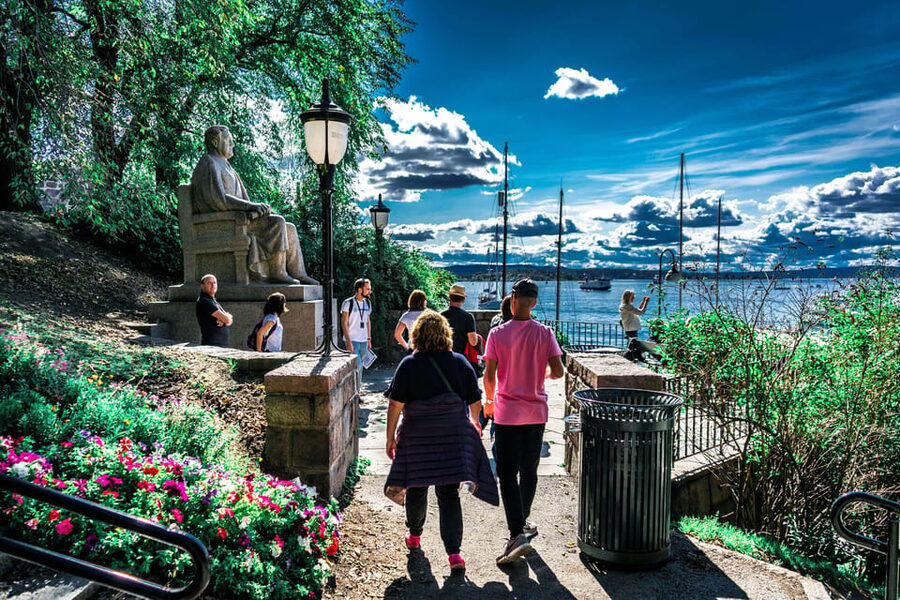
- Starts at the Nobel Peace Center: Begin beside Aker Brygge and Oslo Harbour, then work inland through the city center.
- Covers Oslo’s essential landmarks: The route includes City Hall, the National Theatre, the Royal Palace, Parliament, Akershus Fortress, and the Opera House.
- Private guide and flexible language choice: Tours are offered in English, Spanish, French, German, Italian, and Norwegian.
- A useful old-meets-new route: Christiania Torv and Akershus Fortress supply historic Oslo, while the Opera House and nearby urban farming show its newer side.
- Best for a short stay: Two hours gives you a quick orientation, but it does not allow a full visit inside every landmark.
- Wear proper walking shoes: Traffic noise is unavoidable in much of the center, and weather-appropriate clothing matters in Oslo.
Starting beside the Nobel Peace Center and Aker Brygge
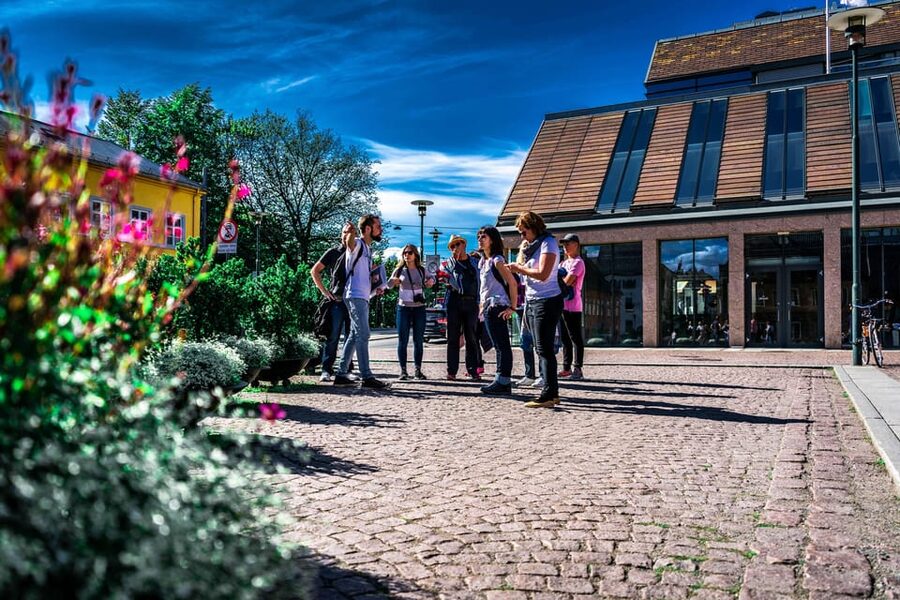
The tour begins outside the Nobel Peace Center at Brynjulf Bulls plass 1. Your guide is expected to arrive about 10 minutes before departure and will hold a sign with the local partner’s name, so you should not need to wonder which person is leading the walk.
This is a smart starting point. You are near Aker Brygge, Oslo Harbour, and the Oslo Fjord, giving you an immediate sense of the city’s relationship with the water. The tour does not begin in an anonymous square or at a distant transport stop. It starts in a part of Oslo that feels open, modern, and closely tied to the city’s public life.
The Nobel Peace Center is also a useful place to begin because it gives the walk a civic tone. Oslo is the city where the Nobel Peace Prize ceremony takes place, and the nearby City Hall is part of that story. The route uses these sights to explain how Norway presents itself today, not just how the city looked centuries ago.
Do not expect a long museum visit at the start. The experience is a guided walk, and the listed stops are sightseeing points rather than promised interior tours. If you want to visit the Nobel Peace Center or another attraction inside, plan separate time.
More Private Walking Tours in Oslo
- Oslo: Best of Oslo Walking Tour
★ 4.5 · 458 reviews - Oslo: Guided Walking Tour of Central Oslo
★ 4.7 · 438 reviews - Oslo: Historic Myths & Legends Evening Walking Tour
★ 4.8 · 408 reviews
City Hall and the civic heart of Oslo
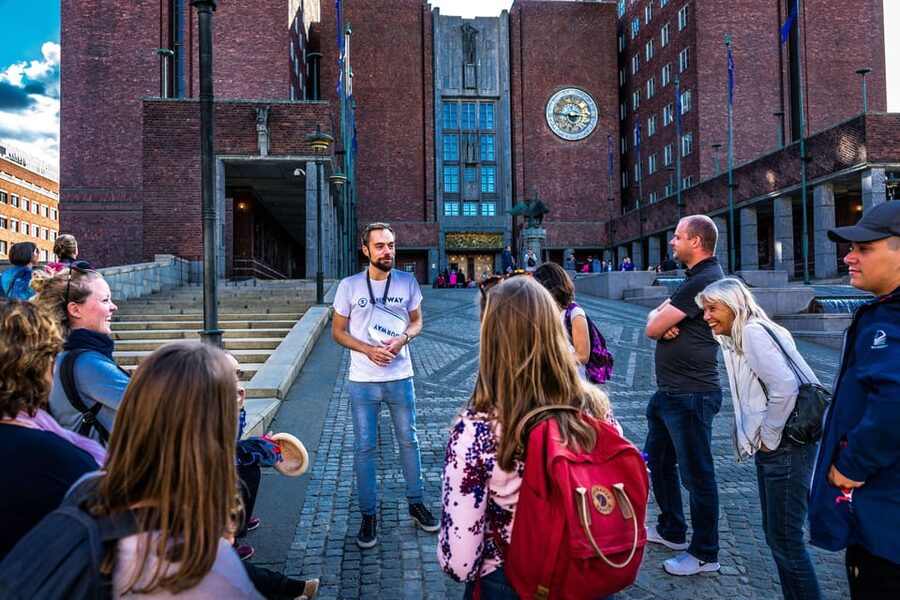
From the harbor area, the walk heads toward Oslo City Hall. This is one of the city’s key public buildings, and its importance goes beyond its size and architecture. It is the home of the Nobel Peace Prize ceremony, which gives the building a strong link to Norway’s international identity.
Your guide can help turn a quick look at the exterior into a useful piece of the city’s story. That matters on a short tour. Without context, City Hall is simply another large building on a central route. With an explanation of its civic role, it becomes part of a bigger picture about Oslo as a capital and working city.
The route then moves through Sentrum, Oslo’s central district. Here, you get a practical orientation to the streets, public buildings, and main routes you are likely to use during the rest of your stay. This is especially helpful if you arrive with only an afternoon. One guest who had limited time in Oslo found the tour useful as a way to capture the city’s general feel quickly.
Traffic noise is part of this section. The tour information makes clear that much of the walk takes place in the city center, where surrounding traffic can be heard. If you want a quiet stroll through parks and waterfront paths, this is not that kind of experience. The trade-off is that you see the capital’s central working streets rather than only its calmest corners.
National Theatre, University Square, and Karl Johans gate
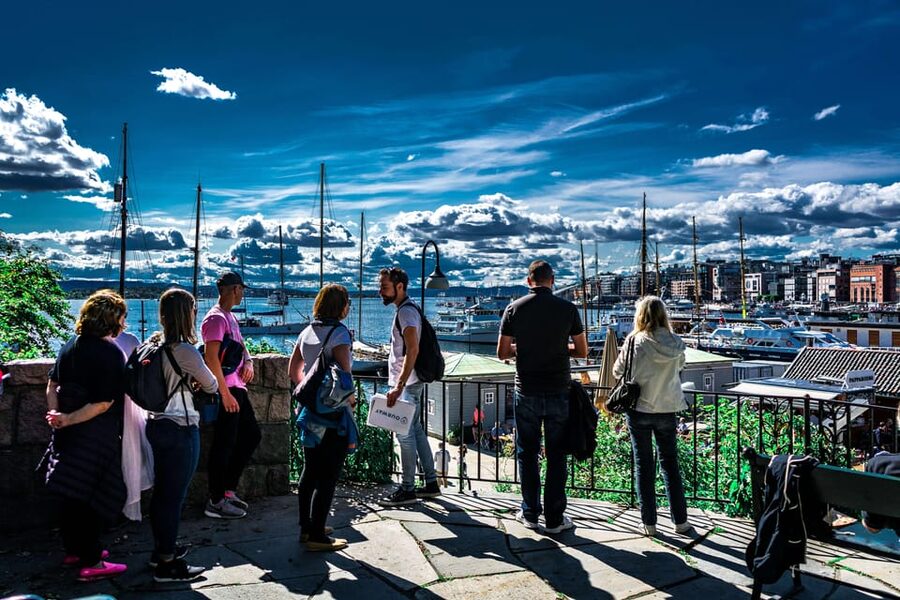
The National Theatre is one of the route’s architectural highlights. It helps shift the focus from government and international affairs to Oslo’s cultural life. The building is also near University Square and Karl Johans gate, the main shopping street.
This section should give you a feel for the city’s formal center. You pass places linked with theatre, education, shopping, and public ceremonies within a compact area. I like this part of the route because it shows how Oslo’s major institutions sit close together. You are not simply ticking off isolated buildings. You are seeing how the central streets fit together.
Karl Johans gate is useful for orientation, even if shopping is not your goal. It is one of the easiest streets to remember after the tour, and it provides a straightforward route through the center. Your guide can point out how the street relates to the Royal Palace at one end and Parliament farther along the route.
The National Theatre and University Square are sightseeing stops, not scheduled performances or indoor visits. That distinction matters. If your priority is entering museums, theatres, or government buildings, you will need a longer plan. If your priority is learning what you are looking at while walking between major sights, the route does that well.
The Royal Palace and Norwegian Parliament
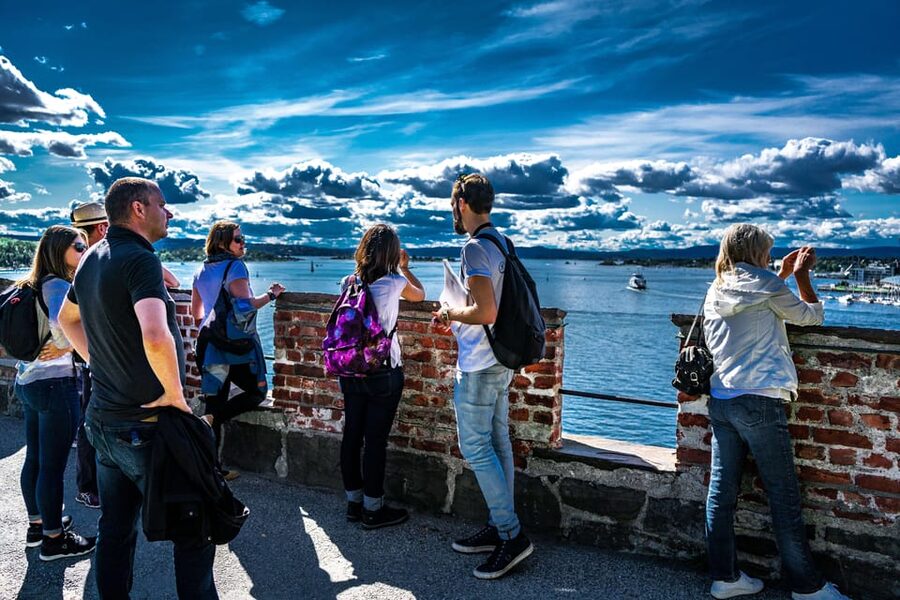
The Royal Palace brings a ceremonial note to the walk. It is one of the most recognizable sights in central Oslo, and its position along the city’s main axis makes it easy to connect with Karl Johans gate and the surrounding public buildings.
The tour also passes the Norwegian Parliament. Together, the palace and Parliament give you a quick lesson in Norway’s national institutions. You see the country’s royal and political symbols within the same central district, which makes this more useful than viewing each building separately.
This is where a good guide can make a real difference. Amanda has been praised for answering questions and explaining both the city and daily life in Norway. Anya was described as friendly and well informed, and Inger adjusted the tour for a group with four children. Those details suggest that the guide’s personality and ability to respond to your questions may shape the experience as much as the route itself.
Because the tour is private, you can ask about the buildings that interest you most. Still, two hours passes quickly. If you stop for long explanations or photographs at every point, the guide may need to keep the walk moving. Tell your guide early if you care more about political history, architecture, city life, or family-friendly pacing.
Same fjord country, a very different day out:
- Oslo: Scenic Fjord Cruise with Audio Guide Commentary
★ 4.5 · 5,375 reviews - Oslo Nature Walks: Island Hopping Tour
★ 4.8 · 2,713 reviews - Oslo: 100% Electric Oslofjord Sightseeing Cruise
★ 4.4 · 2,041 reviews - Oslo: Fjord Evening Cruise with Shrimp Buffet
★ 4.5 · 1,956 reviews
Akershus Fortress and Oslo’s older story
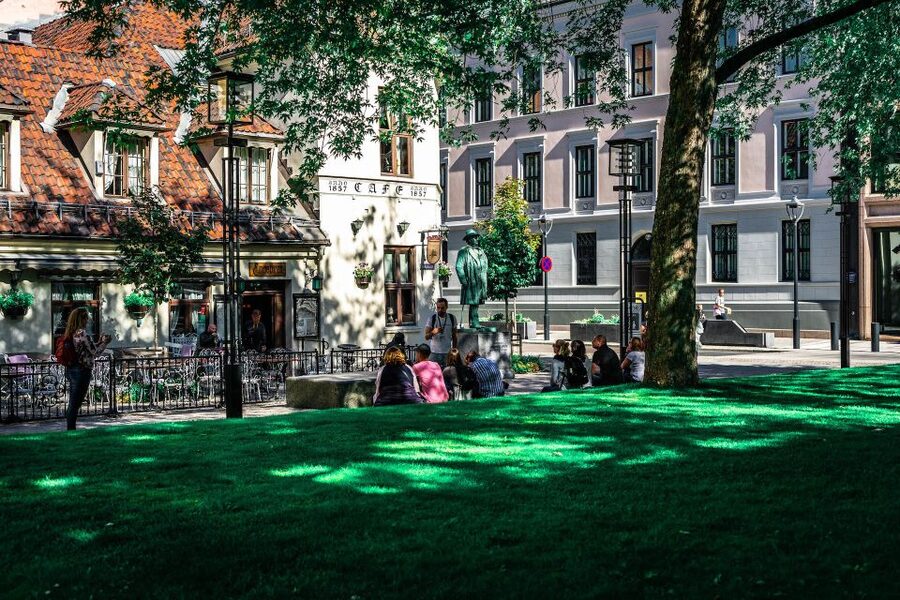
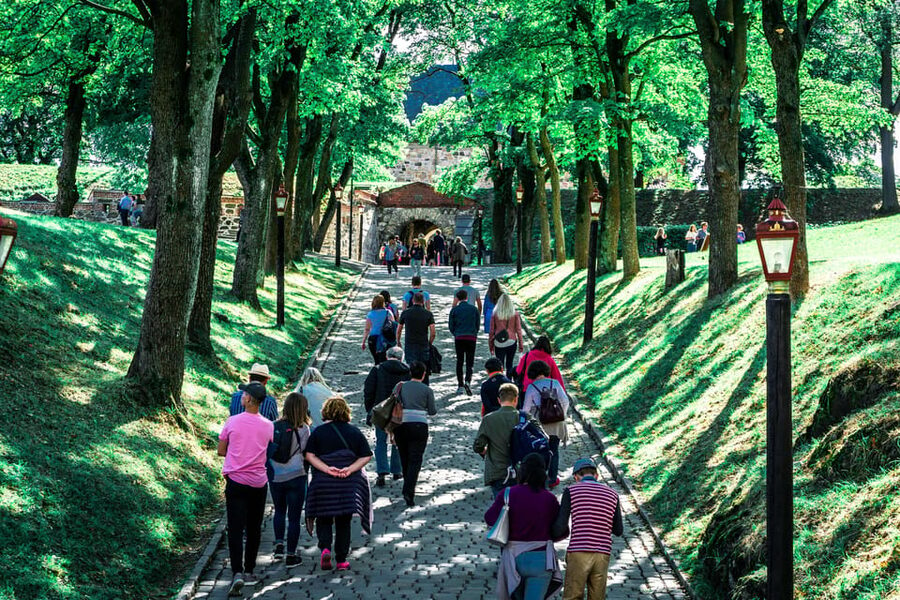
Akershus Fortress is the route’s strongest historic stop. It overlooks the Oslo Fjord and gives you a different view of the city after the formal streets around the palace and Parliament. The fortress adds a sense of age and defense to a capital that can otherwise feel very modern.
The tour’s historical frame reaches back to Viking-era Oslo and then to King Christian IV in the 1600s. After a major fire, Christian IV moved and rebuilt the city rather than restoring it in the same place. That decision helps explain why Oslo’s story includes both an older settlement and a later city center shaped by royal planning and reconstruction.
At Akershus, you get a chance to connect those broad events with an actual place. The fortress is not just a photo stop. Its position above the fjord helps you understand why this part of Oslo mattered, and it gives the route a strong visual break from the streets of Sentrum.
The available information does not promise entry into the fortress buildings or a detailed interior visit. Treat it as a sightseeing stop during the walk. If you want to explore every courtyard, museum, or interior area at length, allow extra time after the tour.
Christiania Torv, Bank Square, and the Stock Exchange
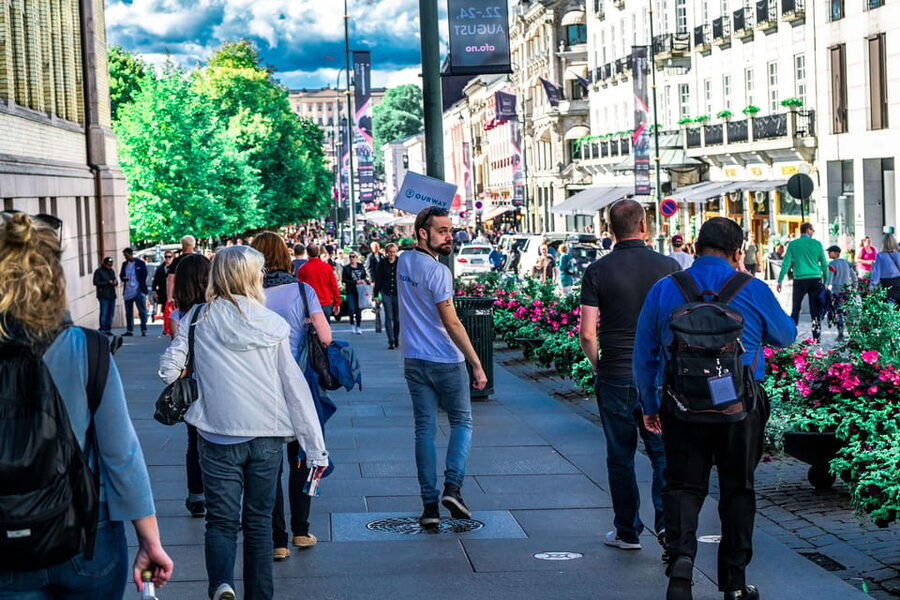
After Akershus Fortress, the route includes Christiania Torv, Bank Square, and the Oslo Stock Exchange. These stops add detail to the city’s development and help fill in the spaces between the better-known landmarks.
Christiania Torv is tied to the city’s post-fire identity and the name Christiania, which Oslo used for part of its history. It gives the guide a useful place to explain how the city changed after the fire and how older areas relate to modern Oslo.
Bank Square and the Stock Exchange continue the civic and commercial theme. You are looking at places connected with finance, trade, and the business side of the capital. They may not have the instant recognition of the Opera House or Royal Palace, but they make the walk feel less like a list of famous façades.
I appreciate these smaller stops because they help you read the city. A short tour needs major landmarks, but it also needs connecting pieces. These squares and institutional buildings supply some of that structure. They may be less exciting if you want only spectacular architecture, yet they are useful for understanding how central Oslo functions.
Finishing at the Opera House and Langkaia
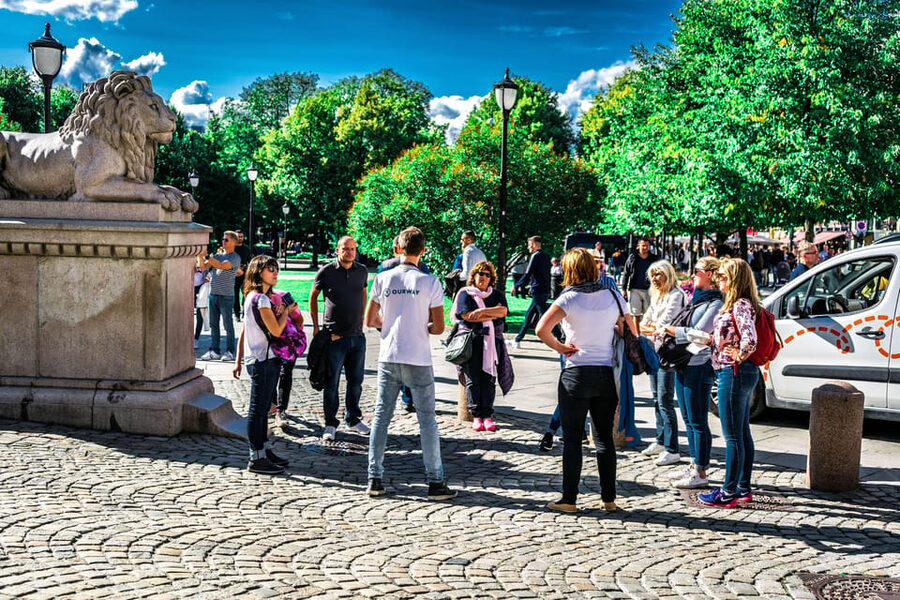
The final major sight is the Oslo Opera House, at Langkaia 1, 0150 Oslo. Its bold form is often compared to an iceberg, and its sloping roof is one of the most distinctive public spaces in the newer part of the city.
This is a strong finish because the architecture changes sharply from the fortress, palace, and older squares. The Opera House belongs to a more contemporary Oslo, one associated with new development, public access, and unusual urban design.
You are encouraged to climb to the top of the Opera House after the guided portion ends. That extra walk is worth keeping in mind when planning your time. The tour itself finishes at Langkaia, so you can continue exploring the building and enjoy views across the surrounding area without needing to retrace the whole route.
The area behind the Opera House also includes urban farming, an unexpected detail in a northern capital. It adds a small but memorable example of Oslo’s interest in new ways of using city space. You may not spend much time there during the scheduled walk, but it gives you another reason to linger after the guide departs.
The Opera House is also a practical endpoint. From here, you can continue your day in the newer waterfront district or use the orientation you gained to plan another part of Oslo. Just remember that this experience does not include a meal, transport, or a separate attraction admission.
What the private format adds
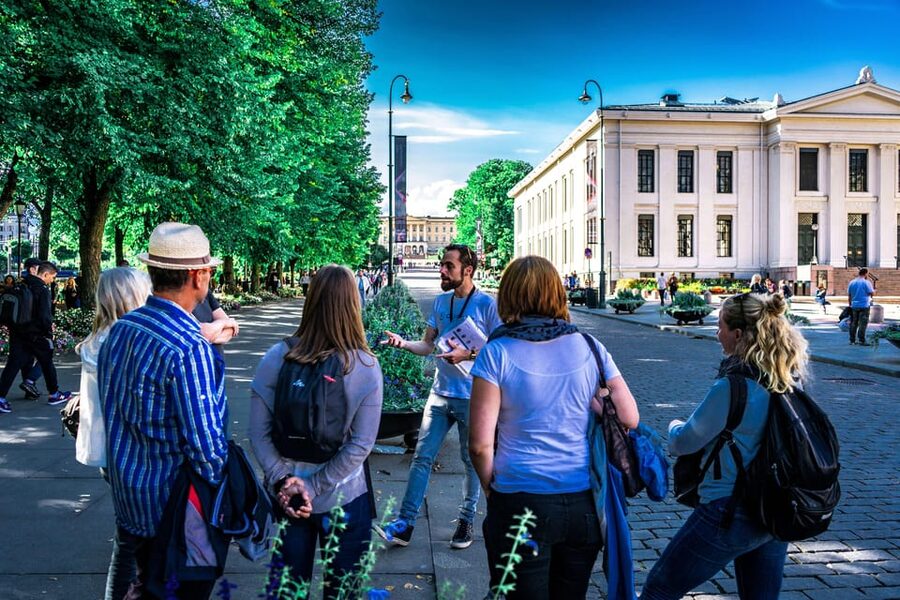
The private format is the main reason to consider this tour at its price. You are not following a large crowd or waiting while a guide repeats the same explanation to several unrelated groups. You can ask questions, request more detail at a stop, and tell the guide if children need a slower pace.
Inger’s work with a group of six adults and four children is useful evidence that the walk can be adjusted for different ages. That does not guarantee the same guide or the same pacing on your date, but it shows why a private arrangement can help families.
Language choice is another advantage. You can book a guide in English, Spanish, French, German, Italian, or Norwegian. If you are more comfortable discussing history and daily life in a language other than English, that can make a short tour much more worthwhile.
The guide names associated with strong feedback include Tine, Amanda, Inger, and Anya. Tine was praised for showing less obvious parts of Oslo, including the futuristic library, while Amanda was noted for her warmth and careful answers. These touches suggest you should ask about more than the listed landmarks. A private guide may point out a detail you would otherwise walk past.
Is $461 a fair price for two hours?
The listed price is $461 per group up to one, which is high for a two-hour walk. Oslo’s center is compact, and you can see some of these exteriors independently with a map and a pair of comfortable shoes.
The value comes from the guide, not from admission tickets or transport. You are paying for a private explanation of the city’s history, architecture, institutions, and newer waterfront development. If your stay is short, that can save planning time and help you understand what deserves a longer visit later.
The cost is easier to justify if you want a personal guide in a specific language, are traveling as a private booking group, or want a fast first orientation before exploring alone. It is harder to justify if you are a solo budget visitor who enjoys researching landmarks independently.
One price-related complaint described the experience as too expensive for a simple walk through Oslo. That is a fair warning. The route is useful and well chosen, but the price should be your deciding factor. Compare it with the cost of other private guides and confirm exactly how the booking platform defines the group size before paying.
Who will get the most from this walk?
I would choose this tour if you have only a few hours in Oslo and want to see the main central sights in a logical order. It is also a good fit for a first morning or afternoon, when you want someone to explain the city before you return to places that caught your interest.
Families may appreciate the private setting, especially if children need breaks or a different pace. The route includes visual variety: water, a fortress, grand public buildings, a shopping street, historic squares, and the unusual Opera House.
It also suits visitors who care about architecture and civic history. You will see the National Theatre, City Hall, Parliament, the palace, Akershus Fortress, and the Opera House in one compact outing.
I would skip it if you want extensive interior visits, a quiet nature walk, or a low-cost introduction. The route is mainly outdoors, traffic noise is part of the central streets, and two hours is enough for orientation rather than a full study of Oslo.
Wear comfortable shoes and dress for the weather. The tour covers central streets and ends by the waterfront, so conditions can change during the walk. Free cancellation is available up to 24 hours before departure, and you can reserve now and pay later if you need flexibility.
Should you book the Oslo private walking tour?
Book it if you value a personal guide more than the lowest possible price. The route gives you a well-shaped introduction, from the Nobel Peace Center and City Hall to the Royal Palace, Parliament, Akershus Fortress, and Opera House.
I especially like the contrast between Christiania Torv and the modern waterfront, plus the chance to continue up the Opera House roof after the official walk. Ask your guide about local life and less obvious places, as Tine, Amanda, Inger, and Anya have each been associated with a friendly, responsive style.
Skip it if $461 feels out of proportion to a two-hour exterior sightseeing walk. Oslo’s central landmarks are close enough to explore independently. For everyone else, this is a focused way to get your bearings fast, understand the city’s past and present, and leave with a clear plan for the rest of your stay.
FAQ
Where does the Oslo private walking tour start?
It starts outside the entrance to the Nobel Peace Center at Brynjulf Bulls plass 1. The guide is expected to arrive about 10 minutes before departure and will hold a sign with the local partner’s name.
How long does the tour last?
The guided walking tour lasts two hours. You can continue sightseeing at the Oslo Opera House after the tour ends.
Which landmarks are included?
The route includes the Nobel Peace Center, Oslo City Hall, the National Theatre, the Royal Palace, Karl Johans gate, the Norwegian Parliament, Akershus Fortress, Christiania Torv, Bank Square, the Oslo Stock Exchange, and the Oslo Opera House.
What languages are available?
The tour is offered in Spanish, English, French, German, Italian, and Norwegian.
Is this a private group tour?
Yes. It is described as a private guided walking tour, with the listed price applying to a group size of up to one.
What should I bring?
Bring comfortable shoes and clothing suitable for the weather. Much of the walk takes place in central Oslo, where traffic noise is unavoidable.
More Walking Tours in Oslo
- Taste of Oslo Walking Tour
★ 4.5 · 282 reviews - Central Oslo Guided Walking Tour with Local Guide
★ 4.5 · 278 reviews - Oslo: Snowy Forest Torchlight Walk with Campfire
★ 4.6 · 254 reviews - Oslo: City Highlights Walking Tour
★ 4.8 · 197 reviews
Just added around Oslo
- 4 hours Best View of the Oslofjord Winter Edition★ 4.0 · 15 reviews
- Unknown war. Oslo and Norway during 1940-45★ 5.0 · 74 reviews
- Oslo Winter Highlights Bike Tour★ 5.0 · 36 reviews
- The Ultimate Norwegian Skiing Experience★ 5.0 · 16 reviews
- The Viking Planet Museum Ticket★ 4.0 · 197 reviews
- The Viking Planet Museum – Mini Group (4 adults)★ 4.0 · 16 reviews
- The Scenic Roadtrip, Oslo to Bergen via Flam & the Fjords★ 5.0 · 25 reviews
- Visit the Instaworthy Spots of Oslo’s Vigeland Park with a Local★ 5.0 · 4 reviews
Private Walking Tours, compared.
Past & Present Small Group Guided Walking Tour
Read our review →
Walking Tour in Bergen of the Past and Present
Read our review →
Group Walking Tour – City Highlights – 2 Hours
Read our review →
3h walking tour, small group max 10 people Copenhagen
Read our review →Browse the lists this tour appears in