
Reviewed · MUSEUMS
The Fram Museum Admission Ticket
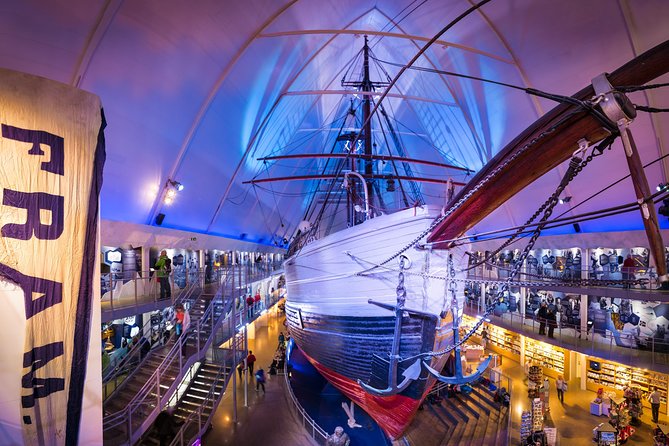
The best part of Oslo’s Fram Museum is wonderfully direct: you walk onto the actual ships that carried explorers into the Arctic. Fram’s cramped cabins, engine room, working areas, and lower levels make polar travel feel physical rather than distant. The ship is the exhibit.
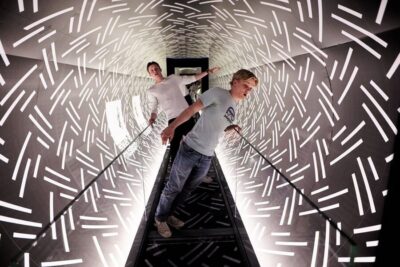
I like the combination of original vessels and clear historical displays. I also like the cold-weather touches, including the storm and iceberg film effects, the ice tunnel, and the cinema screening every 15 minutes. The main drawback is that the museum can feel crowded and some areas may be dim, so you should allow enough time instead of rushing through before a ship departure or dinner.
In This Review
- Key points at a glance
- Why Fram feels different from an ordinary maritime museum
- Start with the Fram building and its three expeditions
- Boarding Fram is the main event
- Follow Gjøa through the underground tunnel
- Use the cinema and interactive effects to set the mood
- The High North section connects past exploration to today
- How long should you spend inside?
- Is the $19.38 admission good value?
- Who will enjoy this museum most?
- Practical ways to get more from your visit
- Should you book the Fram Museum ticket?
- FAQ
- Where is the Fram Museum located?
- What are the opening hours?
- How much does admission cost?
- How long should I allow for the museum?
- Can I use a mobile ticket?
- Can I board the original Fram ship?
- Is Gjøa included?
- Is the polar film included?
- Is food or drink included?
- Can I cancel for a refund?
Key points at a glance
- Walk aboard Fram: Explore the original polar ship from deck to lower sections and see how the crew lived.
- See Gjøa in its own building: The ship that first navigated the entire Northwest Passage is linked to Fram by an underground tunnel.
- Follow three Fram expeditions: Displays explain the ship’s major journeys with text in ten languages.
- Watch the High North film: A 116-seat cinema presents a polar introduction movie every 15 minutes.
- Allow two hours for a proper visit: You can finish in about an hour, but the exhibits and ships reward a slower pace.
- Pay about $19.38 for admission: Prepaid mobile entry saves a little time, though the value depends on how much of the museum you explore.
Why Fram feels different from an ordinary maritime museum
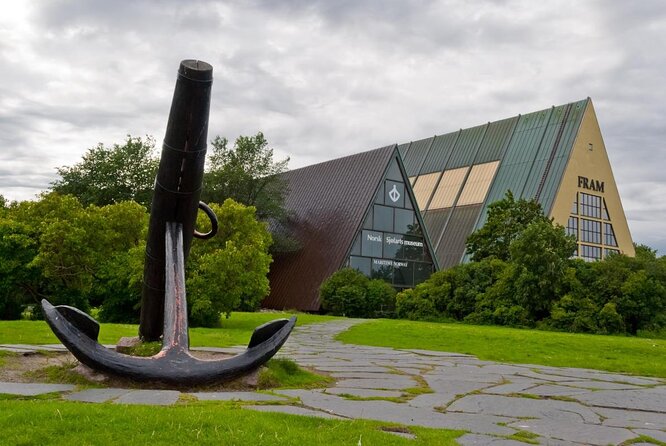
Many museums show ship models, photographs, and polished instruments behind glass. Fram lets you step onto the real vessel. That changes the scale of the story at once.
You see narrow passageways, compact rooms, and the working parts of a ship built for long polar expeditions. The experience is not simply about famous names and dates. It asks you to picture daily life in a cold, enclosed place, with the crew depending on the ship, its equipment, and one another for months at a time.
The original Fram is the heart of the visit. Its survival and expedition record give the museum a strong sense of purpose, while the surrounding displays explain what the crew set out to do and why the ship mattered. You can walk through areas that show the practical side of exploration, including the engine room and lower parts of the vessel.
I found this especially useful for families and younger visitors. A wall panel can explain an expedition, but climbing through a ship gives the story a shape. Children have something to explore, while adults can stop and read the maps, timelines, and object labels.
A few more Oslo trips to weigh up
- Kon-Tiki Museum Entrance Ticket
★ 4.5 · 1,096 reviews - Oslo: Paradox Museum Entry Ticket
★ 4.3 · 799 reviews - Oslo: Oslo Discovery Tour with 2 Museums Included
★ 4.6 · 334 reviews
Start with the Fram building and its three expeditions
Begin in the main Fram building, where the exhibitions explain the three great Fram expeditions. The displays use maps, written panels, historical objects, and expedition information to set up the ship before you board it.
The explanatory text is available in ten languages, which makes this a practical choice if not everyone in your group reads English. Take a little time with the route maps. They help you understand the distances, the ice, and the purpose behind each voyage before the ship itself becomes the focus.
You do not need to read every panel to enjoy the museum. Still, I recommend spending at least 30 to 45 minutes with the main displays. If you rush straight to the ship, you will enjoy the physical experience but lose some of the reason Fram was designed and used as it was.
The museum is not arranged like a single, tightly scripted story. One useful approach is to watch the polar film first, then work through the exhibitions and finish aboard Fram. That gives you a quick introduction before you tackle the details.
Boarding Fram is the main event
Once you step aboard Fram, the museum becomes more personal. You can move around the ship and see spaces connected with crew life, work, storage, and machinery.
The most valuable part is the change in scale. A polar expedition can sound grand and heroic when described on a wall. Inside Fram, the story becomes a matter of narrow rooms, limited space, and hard routines. You begin to understand the conditions the men endured rather than simply admiring the route on a map.
The lower sections are particularly worthwhile. You can see the engine room and reach areas that make the ship feel like a working machine, not just a preserved object. The ability to walk through several levels also helps you understand how the vessel was organized.
There are staged areas and original objects that add to the effect. They are not a substitute for the ship itself, but they help connect the equipment to everyday life. Give yourself time to look closely rather than treating Fram as a quick photo stop.
The ship can become busy, especially when several groups arrive together. Narrow passageways do not leave much room for everyone to stop at once. If you prefer quiet photos and a slower look at the interior, arriving near the 10 a.m. opening is a sensible plan.
Follow Gjøa through the underground tunnel
The newer Gjøa building connects to Fram by an underground tunnel. The tunnel is more than a shortcut. It creates a clear transition from one ship and set of expeditions to another.
Gjøa was the first ship to navigate the entire Northwest Passage. Its story gives the museum a second maritime focus and prevents the visit from becoming only a Fram biography.
You can see Gjøa as an original vessel and explore the related exhibitions. The building also covers the expeditions of Maud, the N24 and N25 aircraft, and the airship Norge. These displays broaden the story from ship-based exploration to later efforts to reach and study the polar regions by air.
The exhibitions also include John Franklin’s famous expedition, along with the work of Henry Larsen and Eivind Astrup. I like this wider approach because it shows that polar exploration was not one single achievement. It developed through different ships, routes, technologies, and personalities.
If you have only an hour, prioritize Fram and Gjøa. If you have closer to three hours, read the additional expedition displays and spend time with the aircraft and airship material.
Same fjord country, a very different day out:
- Oslo: Scenic Fjord Cruise with Audio Guide Commentary
★ 4.5 · 5,375 reviews - Oslo Nature Walks: Island Hopping Tour
★ 4.8 · 2,713 reviews - Oslo: 100% Electric Oslofjord Sightseeing Cruise
★ 4.4 · 2,041 reviews - Oslo: Fjord Evening Cruise with Shrimp Buffet
★ 4.5 · 1,956 reviews
Use the cinema and interactive effects to set the mood
Admission includes the N25 flight 4D cinema experience. The museum describes it as a polar introduction movie, shown in a 116-seat cinema every 15 minutes.
The film is a useful first stop because it gives you a broad introduction before you get lost in the details. It also adds motion and atmosphere to a museum built around static objects and preserved ships.
The visit includes other sensory touches tied to polar conditions. A stormy weather simulation, icebergs, and a cold walk-through tunnel help you imagine the physical setting. One especially memorable feature is the effect of watching the storm scene while seated on a rocking bench on Fram’s deck.
These features are not the main reason to buy a ticket, but they help younger visitors stay engaged. They also break up the reading and make the museum feel more active. The cinema area was reportedly closed at one point, so it is wise to check what is operating when you arrive if the film is important to your plans.
The High North section connects past exploration to today
The museum does not stop with old expeditions. It also presents current issues affecting the High North, including polar bears, melting ice, gas, and oil.
This section adds useful context. The ships and explorers belong to the past, but the polar regions remain tied to present-day science, industry, climate concerns, and international attention.
I appreciate this balance. The museum can celebrate courage and technical skill without suggesting that the Arctic is only a stage for heroic adventure. The modern displays encourage you to think about what has changed and what remains at stake.
Allow extra time here if environmental questions interest you. The museum can work as a straightforward family outing, but it also offers enough material for adults who want more than an attractive ship and a few dramatic stories.
How long should you spend inside?
The advertised visit length is about one to three hours. That range is realistic because your pace makes a large difference.
Use this rough plan:
- One hour: Watch the film, see the main Fram displays, and walk aboard both ships if the museum is quiet.
- Two hours: Read the key maps and expedition panels, explore Fram carefully, visit Gjøa, and see the cinema.
- Three hours: Add the Maud, Franklin, aircraft, airship, and modern High North exhibitions, with time for interactive features and photographs.
Several parts of the museum reward patience. Reading wall panels and maps can take an hour before you even board Fram. Then you may want another hour to explore the ship itself.
I would plan for two hours for a satisfying first visit. Three hours makes sense if you have a strong interest in polar history or are traveling with children who want to try every interactive feature. One hour is possible, but it will feel like a highlights stop.
Is the $19.38 admission good value?
At about $19.38 per person, the ticket is fairly priced if you use the museum as a two-hour visit rather than a quick walk-through. You are paying to see original ships, not a recreated set, and the admission includes Gjøa and the N25 flight cinema.
The value improves if you care about maritime history, exploration, engineering, or Arctic issues. Families may also find the ship access and film elements more engaging than a museum made entirely of text panels.
Prepaid admission provides easy entrance with a mobile ticket. The ticket price is reported to be the same as buying in person, so the main benefit is saving a little time at the door rather than securing a major discount.
Food and drinks are not included. Plan around that, especially if you are allowing three hours. The museum is near public transportation, but one useful practical point is that the location can take some planning from central Oslo. Check your bus route and departure times so you do not lose part of the day getting there or returning.
The ticket is free to cancel up to 24 hours before the experience start time. If you cancel later, or make changes within that 24-hour window, you should not expect a refund.
Who will enjoy this museum most?
I would recommend Fram to anyone who wants history you can physically experience. It suits people interested in polar exploration, ships, engineering, Norwegian expeditions, and the practical demands of life at sea.
It is also a strong family choice. The ships give children a reason to keep moving, while the cinema, cold tunnel, storm effects, and interactive elements add variety. Adults who want a quiet, highly structured chronological museum may find the layout less direct.
The museum works well for independent sightseeing because you do not need a guide to explain the exhibits. Text is available in ten languages, and the films and displays provide a clear introduction. The supplied experience is offered in English, but the museum’s written material gives non-English readers more options.
Most people can participate, and service animals are allowed with identification. The stated maximum for the activity is 14 travelers, though this is an admission experience rather than a traditional guided tour with a scheduled group itinerary.
Practical ways to get more from your visit
Arrive close to opening if you want clearer photographs and less crowding around the ships. The museum is open daily from 10 a.m. to 5 p.m. for the stated operating period, from September 1, 2021, through April 2, 2027.
Watch the film early. Because it runs every 15 minutes, you should not need to build your whole visit around a particular screening time. Starting there gives you useful background and helps the later displays make sense.
Wear shoes you can walk in comfortably. The museum involves moving through ship spaces, tunnels, exhibition areas, and lower sections. The supplied information does not promise special access details for every part of the ships, so contact the museum directly if you have specific mobility needs.
Do not plan a rushed visit between fixed appointments. The most memorable details are easy to miss if you only board Fram, take a few photographs, and leave. Read enough of the expedition material to understand what you are seeing.
Finally, keep an eye on the cinema and interactive areas when you arrive. One part of the museum has been closed during a past visit, and missing it can change the balance of the experience.
Should you book the Fram Museum ticket?
Yes, if you have an interest in polar exploration or want one of Oslo’s most hands-on museum experiences. The original Fram and Gjøa make the admission worthwhile, and the ship interiors explain the human cost of exploration better than a display case can.
Book it if you can spare about two hours and do not mind traveling a little beyond the busiest central sights. It is less suitable if your schedule allows only a very short stop, if you dislike reading-heavy museums, or if you need every exhibition area to be open on a precise day.
For the best visit, arrive near 10 a.m., watch the film first, follow the expedition displays, and save plenty of time for Fram’s lower levels. At $19.38, that is a solid use of an Oslo afternoon.
FAQ
Where is the Fram Museum located?
The Fram Museum is in Oslo, Norway. It is near public transportation, though you should check routes and times because the location may require planning from other parts of the city.
What are the opening hours?
The stated opening hours are daily from 10 a.m. to 5 p.m. for the operating period listed from September 1, 2021, through April 2, 2027.
How much does admission cost?
The listed price is $19.38 per person.
How long should I allow for the museum?
Plan on one to three hours. One hour covers the main highlights, while two to three hours gives you time for the ships, films, expedition displays, and High North material.
Can I use a mobile ticket?
Yes. Mobile admission is offered, and prepaid entry provides easy entrance.
Can I board the original Fram ship?
Yes. Admission lets you explore the original Fram, including its shipboard spaces and lower areas.
Is Gjøa included?
Yes. Gjøa is included with admission. It is displayed in a building connected to the Fram building by an underground tunnel.
Is the polar film included?
Yes. The N25 flight 4D cinema is included. The 116-seat cinema shows a polar introduction movie every 15 minutes.
Is food or drink included?
No. Food and drinks are not included with admission.
Can I cancel for a refund?
You can cancel up to 24 hours before the experience start time for a full refund. Cancellations or changes made less than 24 hours before the start time are not accepted for a refund.
Just added around Oslo
- 4 hours Best View of the Oslofjord Winter Edition★ 4.0 · 15 reviews
- Unknown war. Oslo and Norway during 1940-45★ 5.0 · 74 reviews
- Oslo Winter Highlights Bike Tour★ 5.0 · 36 reviews
- The Ultimate Norwegian Skiing Experience★ 5.0 · 16 reviews
- The Viking Planet Museum Ticket★ 4.0 · 197 reviews
- The Viking Planet Museum – Mini Group (4 adults)★ 4.0 · 16 reviews
- The Scenic Roadtrip, Oslo to Bergen via Flam & the Fjords★ 5.0 · 25 reviews
- Visit the Instaworthy Spots of Oslo’s Vigeland Park with a Local★ 5.0 · 4 reviews
Museums, compared.


Stockholm Pass: Save up to 50% – Includes Vasa Museum Ticket
Read our review →




Browse the lists this tour appears in